
Share with the poor
Our human family is presently experiencing something of a turning point in its own history, if we consider the advances made in various areas. We can only praise the positive achievements which contribute to the authentic welfare of mankind, in fields such as those of health, education, and communications. At the same time, we must also acknowledge that the majority of the men and women of our time continue to live daily in situations of insecurity, with dire consequences. Certain pathologies are increasing, with their psychological consequences; fear and desperation grip the hearts of many people, even in the so-called rich countries; the joy of life is diminishing; indecency and violence are on the rise; poverty is becoming more and more evident. People have to struggle to live and, frequently, to live in an undignified way. One cause of this situation, in my opinion, is in our relationship with money, and our acceptance of its power over ourselves and our society. Consequently the financial crisis which we are experiencing makes us forget that its ultimate origin is to be found in a profound human crisis. In the denial of the primacy of human beings! We have created new idols. The worship of the golden calf of old (cf. Ex 32:15-34) has found a new and heartless image in the cult of money and the dictatorship of an economy which is faceless and lacking any truly humane goal.
The worldwide financial and economic crisis seems to highlight their distortions and above all the gravely deficient human perspective, which reduces man to one of his needs alone, namely, consumption. Worse yet, human beings themselves are nowadays considered as consumer goods which can be used and thrown away. We have started a throw-away culture. This tendency is seen on the level of individuals and whole societies; and it is being promoted! In circumstances like these, solidarity, which is the treasure of the poor, is often considered counterproductive, opposed to the logic of finance and the economy. While the income of a minority is increasing exponentially, that of the majority is crumbling. This imbalance results from ideologies which uphold the absolute autonomy of markets and financial speculation, and thus deny the right of control to States, which are themselves charged with providing for the common good. A new, invisible, and at times virtual tyranny is established, one which unilaterally and irremediably imposes its own laws and rules. Moreover, indebtedness and credit distance countries from their real economy and citizens from their real buying power. Added to this, as if it were needed, is widespread corruption and selfish fiscal evasion which have taken on worldwide dimensions. The will to power and of possession has become limitless.
Concealed behind this attitude is a rejection of ethics, a rejection of God. Ethics, like solidarity, is a nuisance! It is regarded as counterproductive: as something too human, because it relativizes money and power; as a threat, because it rejects manipulation and subjection of people: because ethics leads to God, who is situated outside the categories of the market. God is thought to be unmanageable by these financiers, economists, and politicians; God is unmanageable, even dangerous, because he calls man to his full realization and to independence from any kind of slavery. Ethics—naturally, not the ethics of ideology—makes it possible, in my view, to create a balanced social order that is more humane. In this sense, I encourage the financial experts and the political leaders of your countries to consider the words of Saint John Chrysostom: “Not to share one’s goods with the poor is to rob them and to deprive them of life. It is not our goods that we possess, but theirs” (Homily on Lazarus, 1:6 –PG 48, 992D).
Dear Ambassadors, there is a need for financial reform along ethical lines that would produce in its turn an economic reform to benefit everyone. This would nevertheless require a courageous change of attitude on the part of political leaders. I urge them to face this challenge with determination and far-sightedness, taking account, naturally, of their particular situations. Money has to serve, not to rule! The Pope loves everyone, rich and poor alike, but the Pope has the duty, in Christ’s name, to remind the rich to help the poor, to respect them, to promote them. The Pope appeals for disinterested solidarity and for a return to person-centred ethics in the world of finance and economics.
For her part, the Church always works for the integral development of every person. In this sense, she reiterates that the common good should not be simply an extra, simply a conceptual scheme of inferior quality tacked onto political programmes. The Church encourages those in power to be truly at the service of the common good of their peoples. She urges financial leaders to take account of ethics and solidarity. And why should they not turn to God to draw inspiration from his designs? In this way, a new political and economic mindset would arise that would help to transform the absolute dichotomy between the economic and social spheres into a healthy symbiosis.
Address of Pope Francis to the new non-resident ambassadors to the Holy See
Thursday, 16 May 2013
© Libreria Editrice Vaticana
© Life Ethics Information Centre 2013

Saint Kateri , Canada’s Protectress
This was the title given to Saint Kateri Tekakwitha, by Pope Benedict XVI, when he canonized her on October 28th, 2012, along with six others, in Saint Peter’ Square (she had been beatified by Pope John Paul II back in 1980). With Saint Joseph as our protector, along with the Canadian martyrs, we seem to[…]Continue reading→

Remembering Father Alphonse de Valk
(Today marks the sixth anniversary of the death of Father Alphonse de Valk, C.S.B., a faithful, courageous and indefatigable Basilian priest, pro-life-and-family apostle, and the founder of Catholic Insight magazine. Here is what we wrote those on his entering into eternity five years ago, as we continue to remember him in our prayers and thoughts)[…]Continue reading→

My Name is Bernadette
April 16th is a propitious day, for besides the anniversary of Father de Valk’s death, who founded Catholic Insight in its print form decades ago, and the commemoration of the ‘two Benedicts’, mentioned in accompanying posts, today we also recall Saint Bernadette Soubirous, the young visionary to whom the Virgin Mary appeared numerous times at[…]Continue reading→

Canonizing Sister Faustina and Divine Mercy
HOMILY OF THE HOLY FATHER MASS IN ST PETER’S SQUARE FOR THE CANONIZATION OF SR MARY FAUSTINA KOWALSKA Sunday, 30 April 2000 1. “Confitemini Domino quoniam bonus, quoniam in saeculum misericordia eius”; “Give thanks to the Lord for he is good; his steadfast love endures for ever” (Ps 118: 1). So the Church sings on the Octave of[…]Continue reading→

Divine Mercy Sunday – An Echo of Every Mass
Reach out your hand and put it in my side. Do not doubt but believe’… ‘My Lord and my God!’ (Jn. 20:18)). Today is Divine Mercy Sunday, and as we celebrate the end of the Easter Octave, we contemplate the wounded side of our Saviour, the Church’s source of life. On Good Friday in the[…]Continue reading→

First Holy Communion: Sermon from May 16, 1943
Here is a sermon from the good old days by +Rev. Msgr. Vincent Nicholas Foy (August 14, 1915 – March 13, 2017), from 1943. Readers may recall that Pope Saint Pius X, by the decree Quam Singulari in 1910, lowered the customary age of reception of Holy Communion – after the rigours of the plague[…]Continue reading→
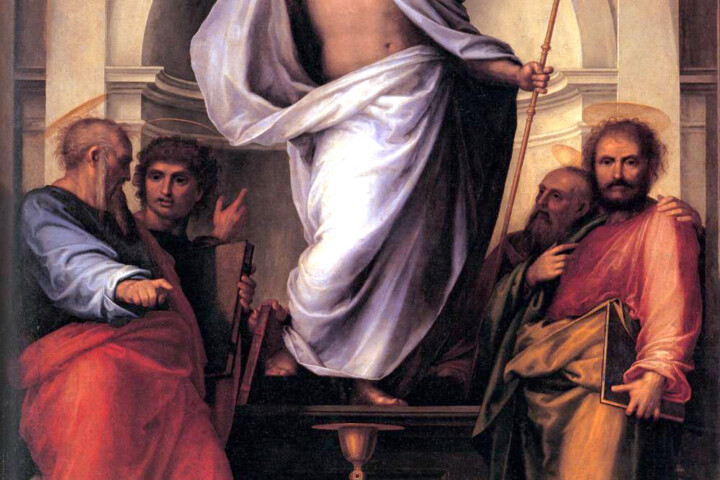
In the Glorious Light of Easter, Alleluia!
Set your minds on things that are above, not on things that are on earth, for you have died, and your life is hidden with Christ in God. When Christ who is your life is revealed, then you also will be revealed with him in glory (Col. 3:3-4). The Resurrection of Our Lord and Saviour[…]Continue reading→
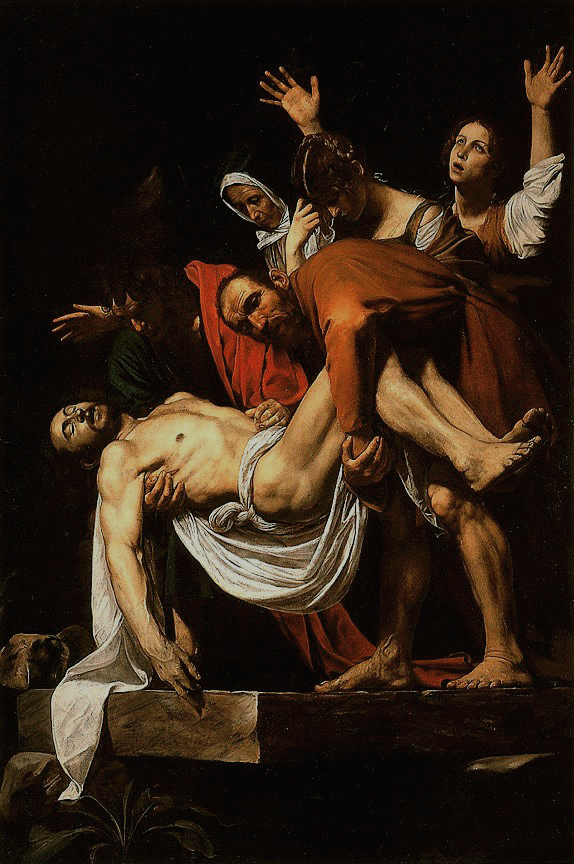
An Ancient Homily for Holy Saturday
The time between Good Friday and Easter Sunday is one of waiting, in silence, as the world wonders – anticipates – what will happen, after the death of Christ. We re-live this time each year in the anamnesis of our liturgy, and in turn look forward to the glorious re-creation of all things at the[…]Continue reading→
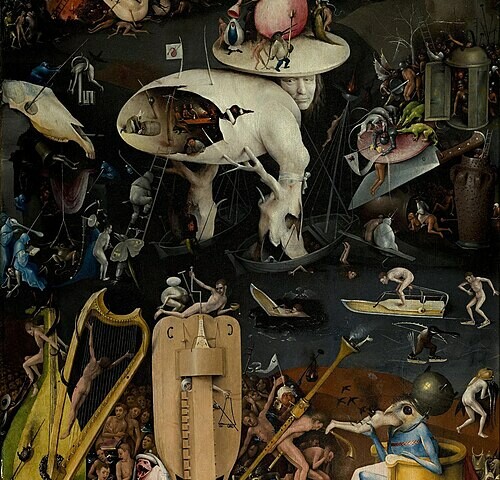
Europe’s Long Descent
(As we meditate on this day on Christ’s burial, and His descent into hell, it is fitting to ponder here with contributor Peter Marcus how the world seems to be heading there as well. The difference is that, although God cannot ‘redeem’ hell, nor those therein, He can and did redeem the world. There is[…]Continue reading→
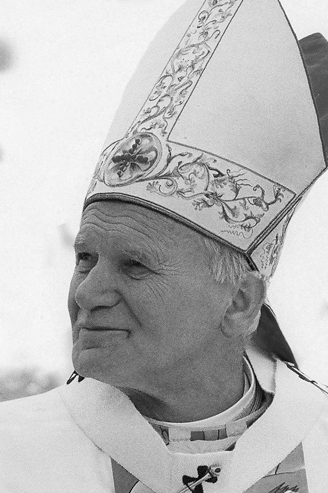
Pope Saint John Paul II’s First Good Friday Homily
ADDRESS OF HIS HOLINESS JOHN PAUL II AT THE CONCLUSION OF THE STATIONS OF THE CROSS AT THE COLOSSEUM Good Friday, 13 April 1979 When we make the Way of the Cross from one station to the next, in spirit we are always at the spot wherethis journey had its “historical” place: where it[…]Continue reading→