
When platitudes fail
The one thing the moderns will not trust a man to do is to conduct his own life. – G. K. Chesterton, Abolishing the Ordinary
I have two books by Lord Baden Powell, the founder of the Boy Scouts. The books are called Scouting for Boys and Rovering to Success. In these, Baden Powell gives advice to young men about the problems they will face in the world and how to achieve success. They are good books filled with little catch phrases to help get over the humps and bumps of life. Among these gems is this suggestion: “If you are in pain or trouble, make yourself smile at it. If you remember to do this, and force yourself, you will find it really does make a difference.” Further on, Baden Powell also suggests whistling happy tunes and going for walks.
Indeed, he places a great emphasis on walking. Walking, he writes, improves the digestion, increases the health of the blood, and clears the mind. Of course, it is not enough just to walk; one must walk the correct way. Slouching is out. So is wearing a hat at a jaunty angle. These, according to Baden Powell, are signs of a weak character. And for Baden Powell, strong character is synonymous with self-reliance.
I was talking with a friend of mine who had recently been in a car accident, nothing life threatening, but he was rather broken up by the fact that his car was completely destroyed. I was at a loss of what to say in the way of comforting words. Then, I remembered Baden Powell’s advice.
“Why don’t you try smiling, or whistling? Lord Baden Powell says that whenever one is feeling downhearted, or having gloomy thoughts, smiling and whistling a cheerful song always helps. He said that when he whistles a cheerful song he feels better right away. Have you tried this yet?”
“What did you say?”
“I said you should try whistling a cheerful song, something light-hearted. It will make you feel better. Lord Baden Powell said so.”
“Lord Baden Powell can go to hell. I am not downhearted or feeling glum, I am totally freaked out about my car!”
“But did you try it? Here, let me start.” I began to whistle Marching to Pretoria.
“Just shut up, will you?” he asked. He had not been a Boy Scout.
It is funny how the book makes such good sense when I read it, yet somehow fails in execution. Baden Powell has a gripping section on personal hygiene in which he talks about the importance of tooth-brushes: “Scouts in the jungle cannot always find tooth-brushes, but they make substitutes out of dry sticks, which they fray out at the end, and make an imitation of a brush.”
I tried this when I was a boy. I cut sticks from my dad’s hedge in the backyard and chewed the ends of these to make them into a week’s supply of tooth brushes. When dad came home from work and found my pile of chewed sticks beside the sink, he was not pleased. Nor, for that matter, was he happy about the new gaps in the hedge.
I find it enlightening being a father, going through similar experiences with my own sons in a kind of perpetual state of déjà vu. I had given my two boys BB guns and suggested that they go behind the barn and do some target shooting. They did so cheerfully, and ran behind the barn. After about an hour, I went back to see how they were doing. They had improved upon my original idea by using the barn windows as the targets. Being the dad, my duty required that I correct them, as my dad did with me. Yet I knew that I would have done (and did) the same thing myself, as would have my own father when he was young.
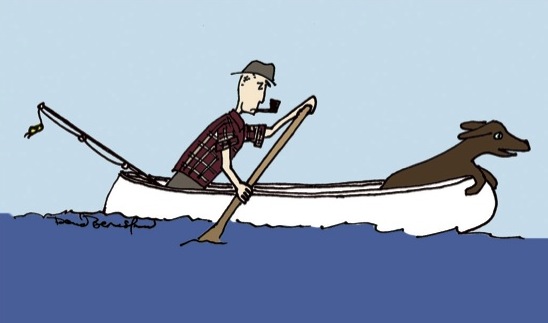
Perhaps Baden Powell’s most famous saying is “paddle your own canoe.” He explains that this was a proverb of the Canadian Voyageurs, and it means to do your own duty, look out for your own work, independently pursue your own goals relying on your own strength. I once tried this bit of advice on a friend who had slipped on some ice and broken his arm. He was justly irritated at the red tape that he needed to go though at the hospital before they put on a cast.
“Why don’t you paddle your own canoe?” I asked.
“How do you mean?”
“Your own canoe, why not paddle it?”
“What canoe is that?”
“Not a canoe, literally, but a figurative canoe. Baden Powell says you should paddle your own canoe.”
“Do you think I broke my arm in a canoe?” he growled.
“No, no, I just figured that some words of wisdom were called for in the circumstances, that’s all,” I said, retreating.
Not everyone appreciates Baden Powell.

Saint Kateri , Canada’s Protectress
This was the title given to Saint Kateri Tekakwitha, by Pope Benedict XVI, when he canonized her on October 28th, 2012, along with six others, in Saint Peter’ Square (she had been beatified by Pope John Paul II back in 1980). With Saint Joseph as our protector, along with the Canadian martyrs, we seem to[…]Continue reading→

Remembering Father Alphonse de Valk
(Today marks the sixth anniversary of the death of Father Alphonse de Valk, C.S.B., a faithful, courageous and indefatigable Basilian priest, pro-life-and-family apostle, and the founder of Catholic Insight magazine. Here is what we wrote those on his entering into eternity five years ago, as we continue to remember him in our prayers and thoughts)[…]Continue reading→

My Name is Bernadette
April 16th is a propitious day, for besides the anniversary of Father de Valk’s death, who founded Catholic Insight in its print form decades ago, and the commemoration of the ‘two Benedicts’, mentioned in accompanying posts, today we also recall Saint Bernadette Soubirous, the young visionary to whom the Virgin Mary appeared numerous times at[…]Continue reading→

Canonizing Sister Faustina and Divine Mercy
HOMILY OF THE HOLY FATHER MASS IN ST PETER’S SQUARE FOR THE CANONIZATION OF SR MARY FAUSTINA KOWALSKA Sunday, 30 April 2000 1. “Confitemini Domino quoniam bonus, quoniam in saeculum misericordia eius”; “Give thanks to the Lord for he is good; his steadfast love endures for ever” (Ps 118: 1). So the Church sings on the Octave of[…]Continue reading→

Divine Mercy Sunday – An Echo of Every Mass
Reach out your hand and put it in my side. Do not doubt but believe’… ‘My Lord and my God!’ (Jn. 20:18)). Today is Divine Mercy Sunday, and as we celebrate the end of the Easter Octave, we contemplate the wounded side of our Saviour, the Church’s source of life. On Good Friday in the[…]Continue reading→
First Holy Communion: Sermon from May 16, 1943
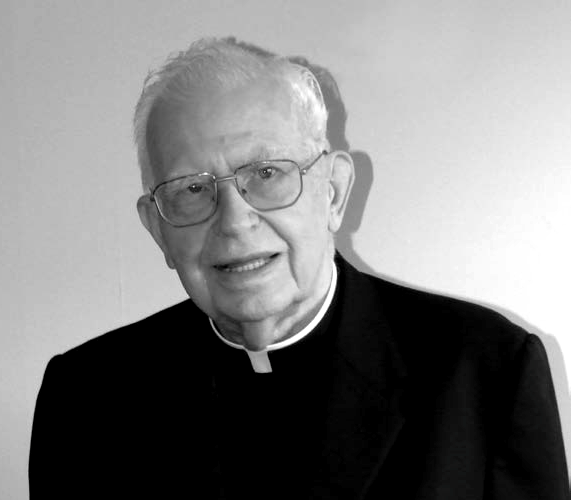
Here is a sermon from the good old days by +Rev. Msgr. Vincent Nicholas Foy (August 14, 1915 – March 13, 2017), from 1943. Readers may recall that Pope Saint Pius X, by the decree Quam Singulari in 1910, lowered the customary age of reception of Holy Communion – after the rigours of the plague[…]Continue reading→
In the Glorious Light of Easter, Alleluia!
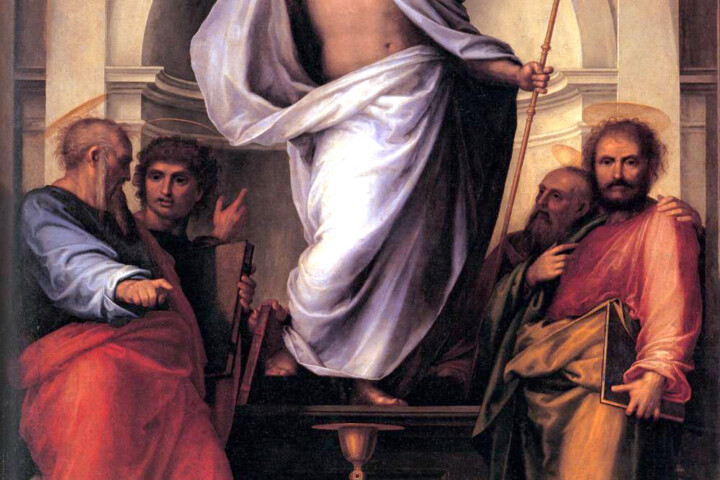
Set your minds on things that are above, not on things that are on earth, for you have died, and your life is hidden with Christ in God. When Christ who is your life is revealed, then you also will be revealed with him in glory (Col. 3:3-4). The Resurrection of Our Lord and Saviour[…]Continue reading→
An Ancient Homily for Holy Saturday
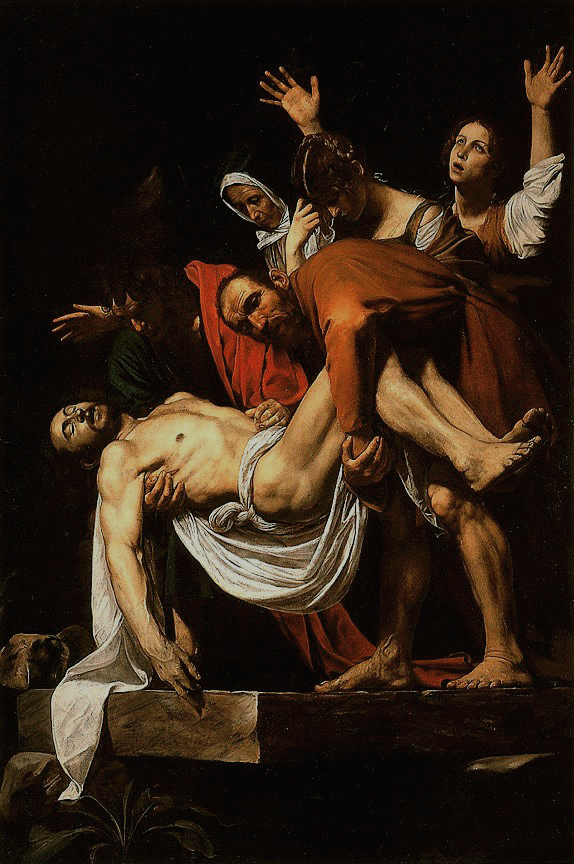
The time between Good Friday and Easter Sunday is one of waiting, in silence, as the world wonders – anticipates – what will happen, after the death of Christ. We re-live this time each year in the anamnesis of our liturgy, and in turn look forward to the glorious re-creation of all things at the[…]Continue reading→
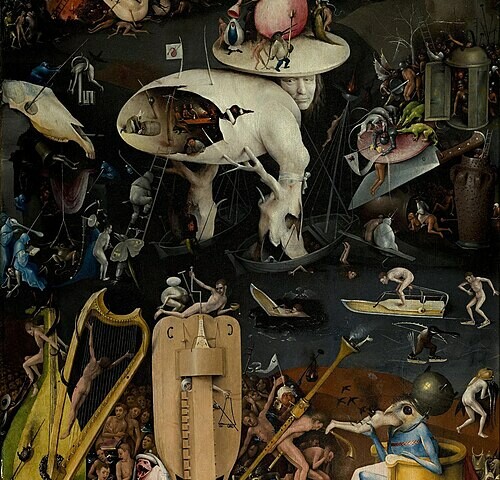
Europe’s Long Descent
(As we meditate on this day on Christ’s burial, and His descent into hell, it is fitting to ponder here with contributor Peter Marcus how the world seems to be heading there as well. The difference is that, although God cannot ‘redeem’ hell, nor those therein, He can and did redeem the world. There is[…]Continue reading→
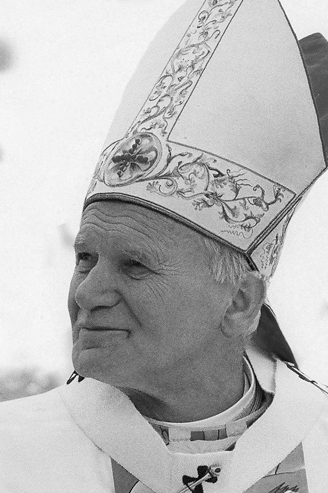
Pope Saint John Paul II’s First Good Friday Homily
ADDRESS OF HIS HOLINESS JOHN PAUL II AT THE CONCLUSION OF THE STATIONS OF THE CROSS AT THE COLOSSEUM Good Friday, 13 April 1979 When we make the Way of the Cross from one station to the next, in spirit we are always at the spot wherethis journey had its “historical” place: where it[…]Continue reading→