
Chiara Lubich
“The Focolare Movement is an international movement inspired by the Gospel that works for unity in all spheres of life. For over sixty years it has drawn together people from all Christian traditions, many of the world’s religions, and those with no formal faith who share the aim of building a more united world.”
Chiara Lubich founded the Focolare Movement, which was approved by Pope John XXIII in 1962 as “The Work of Mary.” Today it is present in 194 countries, with centres in 81 countries, and has approximately two million followers. In 1943, as she was on her way to fetch some milk a few kilometers from home, Chiara heard a call from God: “Give yourself totally to me.” She wasted no time and, in a letter to Father Casimiro Bonetti, a Capuchin priest, she requested permission to consecrate herself totally to God. On 7 December 1943, at six am, in the nearby church, she consecrated her life to God forever. On that day Chiara did not have the slightest intention of founding anything: she recounts she was simply “marrying God.”
World War II began and Chiara and her first companions, attracted by her life, followed her. As they ran together to the air-raid shelters while the bombers approached, they carried a small Gospel with them, which they would read together under candlelight. Those eternal words became alive for them and they would start to live them. Even though they had heard them many times before at Mass, they knew they had to put them into practice in a radical way.
In war-torn Trent the pain around them was tangible, palpable, constant; and, at every turn, the city was in shambles. One day Chiara said the Lord had revealed himself to her as the Abandoned Christ in a particular way. It happened when one of her first companions, Doriana Zamboni, contracted a facial disease after visiting many poor and sick people in the war-torn tenement buildings in Trent. A Capuchin friar brought the Eucharist to Doriana and later asked Chiara when she thought Jesus suffered the most during his Passion. She said she had always heard that it was when he was in the Garden of Gethsemane and sweated blood. The priest answered, “Instead I believe it was when He was on the Cross and cried out, ‘My God, My God, Why have You Forsaken me?’”
Chiara, who always saw the priest as the servant of the Lord, believed his words and said to her companions, “If the biggest suffering of Jesus was the abandonment by his Father, we will choose him as our Spouse and follow him like that.” She understood every suffering from then on had a name, Jesus Forsaken—their beloved Spouse and they loved him. An effect of that pure act of love was that their unity returned, which did not, however, always mean the suffering disappeared. But they knew Who it was and loved him in whatever form he was present.
The Focolare founder committed her entire life to working for unity, always united to the hierarchy of the Catholic Church. And even in the most difficult moments of this new spirituality of communion, when there was a time of scrutiny by the Church (as in every Work of God), the founder, with absolute trust, saw all as God’s love. The moments of trial passed and the Movement was approved. After WWII ended, the first focolarini moved to various cities in Italy to study and work. People they met, touched by their evangelical life, wanted to know more about this new way of living the Gospel and as they told them, it spread. In 1956 the Movement spread throughout Europe. In 1958 it arrived in South America; in 1961 in North America; in 1963 in Africa; in 1966 in Asia; and in 1967 it arrived in Australia. In Canada, Archbishop Philip Pocock, who had heard about the Movement in Rome, invited the Focolare to Toronto and the first women’s centre opened in 1967 and the men’s centre opened in 1968. There was already a small group of people living the new spirituality. Today there are centers in Montreal and Vancouver and regular local meetings are held for those who wish to know more about the spirituality.
Although there are twenty-six offshoots of the Movement the founder always stressed the unity of the Movement as being the most important thing: “Before speaking of the structure of the Movement, of its branches, etc., I’d like to point out that we see the Movement as a single entity, as a whole, an entity which first lives within itself the message that it then tries to bring to the world: unity. We are one and we feel that we are what we truly should be when we are one.”
The single men and women (called focolarini and focolarine) live in their respective communities and have three vows—poverty, chastity, and obedience. The married men and women put Christ first in their lives and are an integral part of the Focolare and live in their own homes. The Volunteers of God are men and women who do not take vows or promises, but who live like the first Christians and bring Christ into their professional life. The GEN (new generation) is the youth branch who bring this life into their homes and school life and work towards a united world.
“I had no plan, I knew nothing”—and so the founder thought, in the beginning, that this new charism was only for Catholics. However, various significant events along the way confirmed this was not so and dialogue opened with Christians of other churches, people of other religions, and those with no religious convictions.
Maria Voce, elected in 2008 as the new Focolare president, participated as an auditor in the session of the Synod of Bishops on The New Evangelization for the Transmission of the Christian Faith. She said that the Movement welcomes the invitation launched by Pope Benedict XVI at the solemn celebration that opened the Year of Faith, and that celebrates the fiftieth anniversary of the beginning of the Second Vatican Council.
“Humanity,” affirmed Voce, “needs to encounter God through love of neighbour This is the way to evangelize perceived by Chiara Lubich and appropriated by the members of the Focolare: a commitment lived out daily, alongside people, intended to fulfill always and everywhere Jesus’ prayer to the Father, ‘That all may be one’ (Jn 17:21), and to make humanity one family, even now.”
In a world of turmoil where wars, natural disasters, and catastrophes of every kind are almost our daily fare, perhaps in this Year of Faith, with the grace that comes with it, we can all become better protagonists for a united world. As the Focolare movement proposes, we begin with those we meet in our daily life, those behind our own walls, and then go out to our community, our city, our country, and beyond, until Christ’s Last Will and Testament is fulfilled.
For more information on the Focolare Movement please visit: www.focolare.ca.

Saint Kateri , Canada’s Protectress
This was the title given to Saint Kateri Tekakwitha, by Pope Benedict XVI, when he canonized her on October 28th, 2012, along with six others, in Saint Peter’ Square (she had been beatified by Pope John Paul II back in 1980). With Saint Joseph as our protector, along with the Canadian martyrs, we seem to[…]Continue reading→

A Tale of Two Benedicts
A grace-filled Holy Week to all our readers! As we await and prepare for the Resurrection about to dawn upon us, we might keep in mind two Benedicts: Pope Emeritus Benedict XVI, requiescat in pace, elected on this day in 2005; and today’s commemoration of the mystic pilgrim, Benedict Joseph Labre, who died on this[…]Continue reading→

My Name is Bernadette
April 16th is a propitious day, for besides the anniversary of Father de Valk’s death, who founded Catholic Insight in its print form decades ago, and the commemoration of the ‘two Benedicts’, mentioned in accompanying posts, today we also recall Saint Bernadette Soubirous, the young visionary to whom the Virgin Mary appeared numerous times at[…]Continue reading→

Saint Lydwina of Schiedam and Suffering Joyfully
Saint Lydwina of Schiedam (1380 – 1433) was one of the countless and glorious ‘victim souls’ in the history of the Church, those whose lives are filled with suffering, often of an unimaginable intensity, but who suffer joyfully. She was a fifteen-year old Dutch girl, out skating one day, when she fell and broke one[…]Continue reading→

The Glorious Martyrdoms of Martin and Maximus
As we enter into Eastertide, we recall on this 13th of April Pope Saint Martin I (+655), one of the noblest, if most tragic, of the successors of Saint Peter. Born in Umbria, Italy, he was of noble lineage, with great intelligence combined with charity and love of the poor and the Church. While still[…]Continue reading→

Canonizing Sister Faustina and Divine Mercy
HOMILY OF THE HOLY FATHER MASS IN ST PETER’S SQUARE FOR THE CANONIZATION OF SR MARY FAUSTINA KOWALSKA Sunday, 30 April 2000 1. “Confitemini Domino quoniam bonus, quoniam in saeculum misericordia eius”; “Give thanks to the Lord for he is good; his steadfast love endures for ever” (Ps 118: 1). So the Church sings on the Octave of[…]Continue reading→
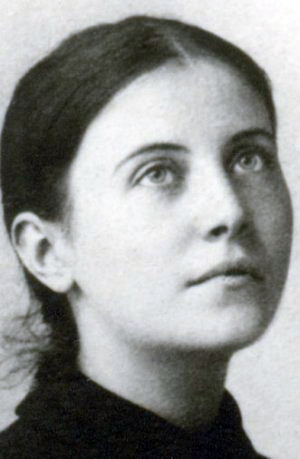
Saint Gemma Galgani
On this April 11th, in 1903 – the same year that the Italian Guiseppe Sarto was elected Pope later that summer as Pius X – a lovely, young Italian woman died, by the name of Gemma Galgani. She lived a brief life of 24 years, as did a number of other young saints, including Pier[…]Continue reading→
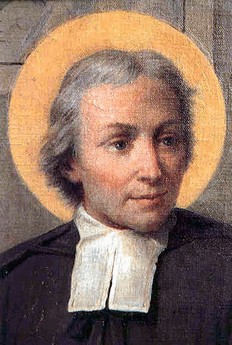
Saint Jean-Baptiste de la Salle: A Teacher for Teachers
Jean-Baptiste de la Salle (1651 – 1719), a French nobleman, ordained a priest, founded the first order in the Church’s history entirely without priests, and this came about almost by accident. I say ‘almost’, for, of course, there are no accidents with God. Destined for ordination from an early age, Jean-Baptiste never looked back, even[…]Continue reading→
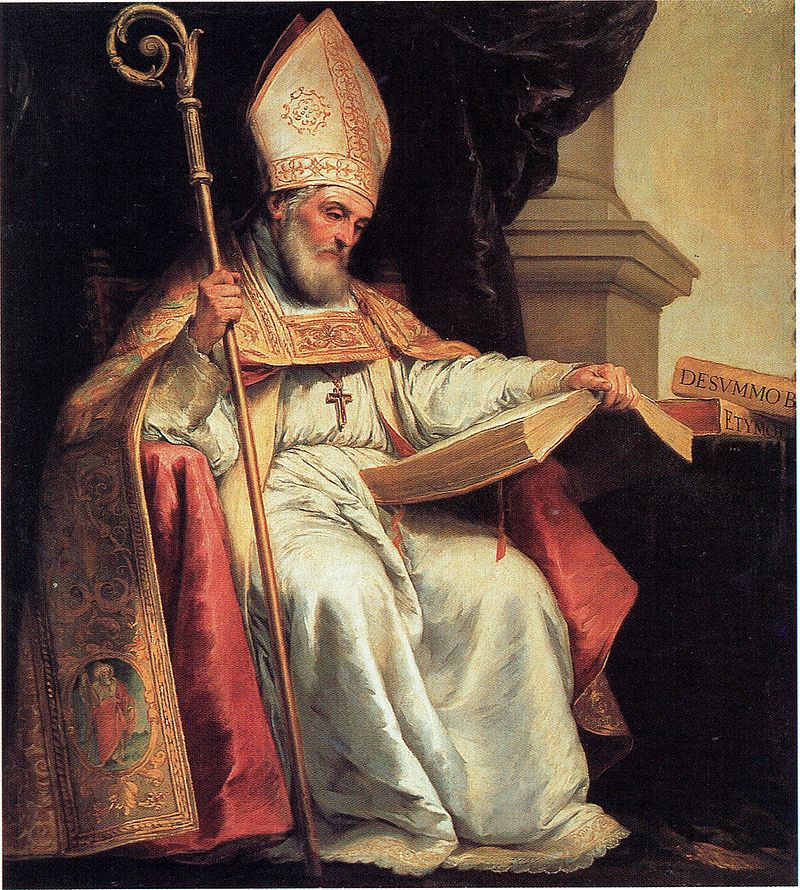
Saint Isidore of Seville, the Internet and Industriousness
Today, April 4th, muted this year by Holy Saturday, is the commemoration of Saint Isidore of Seville (560-636) a bishop and doctor of the Church during a tumultuous age, when civilization was crumbling, coming apart at its very seams, which may sound sort of au courant. Then again, the form of this world has always[…]Continue reading→
A Minimal Friar and the Death of a Great Pope
This April the second- overshadowed by Holy Thursday this year – marks the memorial of Saint Francis of Paola (1417-1507), founder of the ‘Minim’ friars, so called for their humility and poverty, who interpreted the rule of Saint Francis of Assisi in quite a literal sense: extreme poverty, trust in God, foregoing all animal and[…]Continue reading→