
Veni ad salvandum nos!
He was sent by God the Father to save us above all from the evil deeply rooted in man and in history: the evil of separation from God, the prideful presumption of being self-sufficient, of trying to compete with God and to take his place, to decide what is good and evil, to be the master of life and death. This is the great evil, the great sin, from which we human beings cannot save ourselves unless we rely on God’s help, unless we cry out to him: “Veni ad salvandum nos!—Come to save us!”
The very fact that we cry to heaven in this way already sets us aright; it makes us true to ourselves: we are in fact those who cried out to God and were saved. God is the Saviour; we are those who are in peril. He is the physician; we are the infirm. To realize this is the first step towards salvation, towards emerging from the maze in which we have been locked by our pride. To lift our eyes to heaven, to stretch out our hands and call for help is our means of escape, provided that there is Someone who hears us and can come to our assistance.
Jesus Christ is the proof that God has heard our cry. And not only this! God’s love for us is so strong that he can- not remain aloof; he comes out of himself to enter into our midst and to share fully in our human condition. The answer to our cry which God gave in Jesus infinitely transcends our expectations, achieving a solidarity which cannot be human alone, but divine. Only the God who is love, and the love which is God, could choose to save us in this way, which is certainly the lengthiest way, yet the way which respects the truth about him and about us: the way of reconciliation, dialogue, and cooperation.
Dear Brothers and Sisters, let us turn our gaze anew to the grotto of Bethlehem. The Child whom we contemplate is our salvation! He has brought to the world a universal message of reconciliation and peace. Let us open our hearts to him; let us receive him into our lives. Once more let us say to him, with joy and confidence: “Veni ad salvandum nos!”
Ubi et Orbi Message of His Holiness Pope Benedict XVI.
Reprinted with permission from ZENIT.org.

Saint Kateri , Canada’s Protectress
This was the title given to Saint Kateri Tekakwitha, by Pope Benedict XVI, when he canonized her on October 28th, 2012, along with six others, in Saint Peter’ Square (she had been beatified by Pope John Paul II back in 1980). With Saint Joseph as our protector, along with the Canadian martyrs, we seem to[…]Continue reading→

A Tale of Two Benedicts
A grace-filled Holy Week to all our readers! As we await and prepare for the Resurrection about to dawn upon us, we might keep in mind two Benedicts: Pope Emeritus Benedict XVI, requiescat in pace, elected on this day in 2005; and today’s commemoration of the mystic pilgrim, Benedict Joseph Labre, who died on this[…]Continue reading→

My Name is Bernadette
April 16th is a propitious day, for besides the anniversary of Father de Valk’s death, who founded Catholic Insight in its print form decades ago, and the commemoration of the ‘two Benedicts’, mentioned in accompanying posts, today we also recall Saint Bernadette Soubirous, the young visionary to whom the Virgin Mary appeared numerous times at[…]Continue reading→

Saint Lydwina of Schiedam and Suffering Joyfully
Saint Lydwina of Schiedam (1380 – 1433) was one of the countless and glorious ‘victim souls’ in the history of the Church, those whose lives are filled with suffering, often of an unimaginable intensity, but who suffer joyfully. She was a fifteen-year old Dutch girl, out skating one day, when she fell and broke one[…]Continue reading→

The Glorious Martyrdoms of Martin and Maximus
As we enter into Eastertide, we recall on this 13th of April Pope Saint Martin I (+655), one of the noblest, if most tragic, of the successors of Saint Peter. Born in Umbria, Italy, he was of noble lineage, with great intelligence combined with charity and love of the poor and the Church. While still[…]Continue reading→

Canonizing Sister Faustina and Divine Mercy
HOMILY OF THE HOLY FATHER MASS IN ST PETER’S SQUARE FOR THE CANONIZATION OF SR MARY FAUSTINA KOWALSKA Sunday, 30 April 2000 1. “Confitemini Domino quoniam bonus, quoniam in saeculum misericordia eius”; “Give thanks to the Lord for he is good; his steadfast love endures for ever” (Ps 118: 1). So the Church sings on the Octave of[…]Continue reading→

Saint Gemma Galgani
On this April 11th, in 1903 – the same year that the Italian Guiseppe Sarto was elected Pope later that summer as Pius X – a lovely, young Italian woman died, by the name of Gemma Galgani. She lived a brief life of 24 years, as did a number of other young saints, including Pier[…]Continue reading→
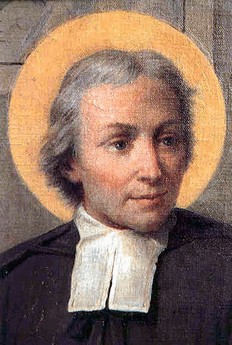
Saint Jean-Baptiste de la Salle: A Teacher for Teachers
Jean-Baptiste de la Salle (1651 – 1719), a French nobleman, ordained a priest, founded the first order in the Church’s history entirely without priests, and this came about almost by accident. I say ‘almost’, for, of course, there are no accidents with God. Destined for ordination from an early age, Jean-Baptiste never looked back, even[…]Continue reading→
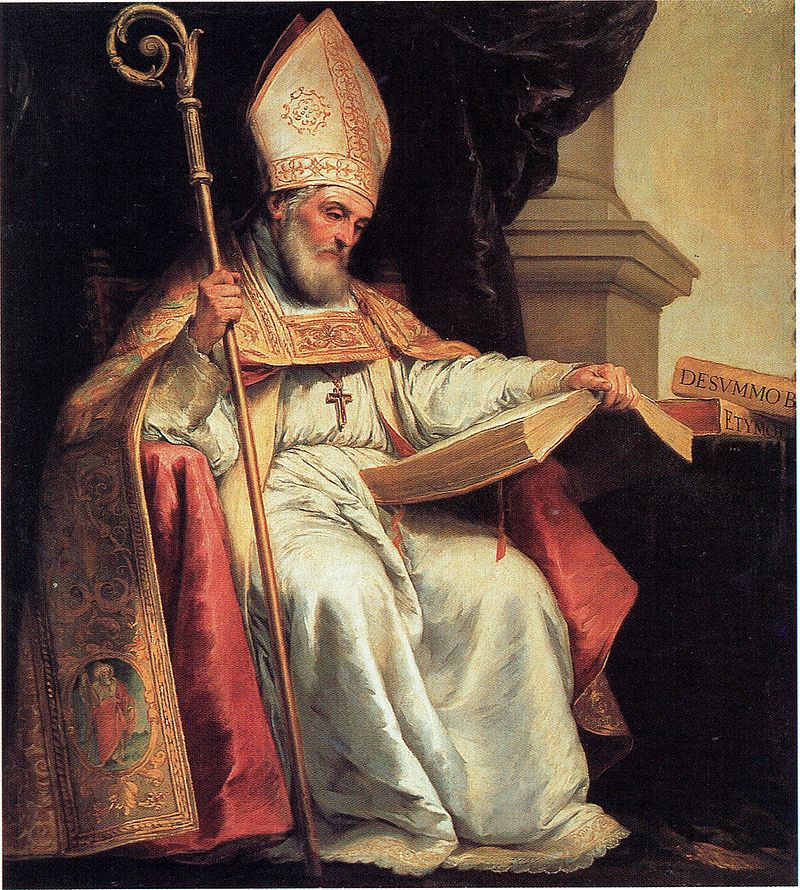
Saint Isidore of Seville, the Internet and Industriousness
Today, April 4th, muted this year by Holy Saturday, is the commemoration of Saint Isidore of Seville (560-636) a bishop and doctor of the Church during a tumultuous age, when civilization was crumbling, coming apart at its very seams, which may sound sort of au courant. Then again, the form of this world has always[…]Continue reading→
A Minimal Friar and the Death of a Great Pope
This April the second- overshadowed by Holy Thursday this year – marks the memorial of Saint Francis of Paola (1417-1507), founder of the ‘Minim’ friars, so called for their humility and poverty, who interpreted the rule of Saint Francis of Assisi in quite a literal sense: extreme poverty, trust in God, foregoing all animal and[…]Continue reading→