
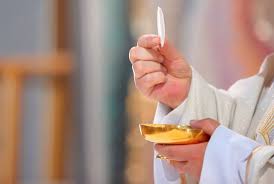
When Refusing Communion is an Act of Love and Healing
‘Shunning’, ‘exclusion’, ‘forbidding’, even, dare we add, ‘excommunication’ – hardly words that are often connected with ‘love’, which on the contrary oft goes along – at least in our common usage – with the affirming nature of ‘everyone is welcome’ and ‘who am I to judge’. But charity, love in the truest sense, to will the good of someone, at times requires that we say no, that we ‘exclude’, so that the someone to whom we ‘will the good’ may either preserver or achieve the good that we will.
Sounds all a bit metaphysical and transcendental, but it is only in this light – as an act of love – that we may appreciate Archbishop Chaput’s public criticism of fellow bishop Gregory Wilton’s promise – or threat – that he will give Joseph Biden Holy Communion each time he approaches the rail. (‘Rail’ here, metaphorically speaking, for such liturgical accoutrements have been removed from most churches, as, yes, ‘exclusive’).
Archbishop Chaput’s point is that Mr. Biden, along with much of his chosen administration, and, we might add, our own Prime Minister Trudeau and his own team, are at odds with the Church on almost every fundamental issue of life and family. (For a brief summary of Mr. Biden’s destructive legacy, see here and here).
Chaput writes:
Public figures who identify as “Catholic” give scandal to the faithful when receiving Communion by creating the impression that the moral laws of the Church are optional. And bishops give similar scandal by not speaking up publicly about the issue and danger of sacrilege.
Rather than take heed of his fellow bishop, Cardinal Wilton has doubled down, after a parish priest quite courageously recently did just that – refused Biden the Body of Christ. Biden declined to comment, citing his ‘personal life’.
The sacramental storm around Biden mirrors that of our own Prime Minister, Justin Trudeau, who was photographed receiving Communion from his own Ordinary back in 2017, at a large Mass with a number of other bishops present. His Grace defended his action – or, perhaps, inaction – describing it as a ‘gesture of hope’. We might presume that Trudeau has received any number of times before and since.
Cardinal Timothy Nolan has now entered the fray, on the side of Wilton, claiming that he cannot ‘peer into someone’s soul’, and would not make a snap decision as someone approaches to receive Communion.
But, as canonist Edward Peters points out, that’s not the point.
If not, what is?
The Code of Canon Law states #915:
Those upon whom the penalty of excommunication or interdict has been imposed or declared, and others who obstinately persist in manifest grave sin are not to be admitted to holy communion.
Might Joseph Biden wiggle out, with the defence that he ‘personally opposes abortion’, which is what he claimed in a 2012 vice-presidential debate, but, as he continued:
“I just refuse to impose that on others, unlike my friend here,” he said, referring to then-Republican vice presidential nominee Paul Ryan. “I do not believe we have a right to tell women that they can’t control their body. It’s a decision between them and their doctor.”
The notion of ‘personally opposed’ may hold for lesser and more private evils, like, say masturbation and fornication, to which I’m also ‘personally opposed’, but don’t think should be against the law. Abortion, however, is a more manifest and grave evil, murder of the most defenceless, which has no place in the laws of any civilized society. Here is an intriguing historical aside, from the late columnist Charles Krauthammer:
“In 1857, Chief Justice Robert B. Taney handed down the Dred Scott decision upholding and extending slavery. Taney’s opinion was, it is generally agreed, “the worst constitutional decision of the 19th century” (the words are Robert Bork’s). Yet there is a curious and little known fact about Judge Taney. More than 30 years earlier he had freed his own slaves. Today, therefore, we would say that while he was “personally” opposed to slavery he did not want to “impose” his views on others”.
The reason slavery could not be left to the conscience is that there is another person involved, and need Mr. Biden be reminded that the widespread holocaust of abortion is also predicated on the ‘non-personhood’ of the unborn, a status into which other oppressed groups were once placed?
As with other crimes against human dignity, respecting the conscience and freedom of others definitely has limits, as Pope Saint John Paul II makes clear in his 1995 encyclical Evangelium Vitae, on the sanctity of human life:
The legal toleration of abortion or of euthanasia can in no way claim to be based on respect for the conscience of others, precisely because society has the right and the duty to protect itself against the abuses which can occur in the name of conscience and under the pretext of freedom. (E.V., 71)
As the Holy Father continues:
In the case of an intrinsically unjust law, such as a law permitting abortion or euthanasia, it is therefore never licit to obey it, or to “take part in a propaganda campaign in favour of such a law, or vote for it“. (72)
Even more, there is an obligation, and a grave one at that, to oppose such laws (73).
The role of those bishops and priests for such recalcitrant Catholics is made clear in the 2004 Instruction from the Congregation for the Doctrine of the Faith, under then-Cardinal Josef Ratzinger, ‘On Worthiness to Receive Holy Communion: General Principles’:
- Regarding the grave sin of abortion or euthanasia, when a person’s formal cooperation becomes manifest (understood, in the case of a Catholic politician, as his consistently campaigning and voting for permissive abortion and euthanasia laws), his Pastor should meet with him, instructing him about the Church’s teaching, informing him that he is not to present himself for Holy Communion until he brings to an end the objective situation of sin, and warning him that he will otherwise be denied the Eucharist.
- When “these precautionary measures have not had their effect or in which they were not possible,” and the person in question, with obstinate persistence, still presents himself to receive the Holy Eucharist, “the minister of Holy Communion must refuse to distribute it” (cf. Pontifical Council for Legislative Texts Declaration “Holy Communion and Divorced, Civilly Remarried Catholics” [2002], nos. 3-4). This decision, properly speaking, is not a sanction or a penalty. Nor is the minister of Holy Communion passing judgment on the person’s subjective guilt, but rather is reacting to the person’s public unworthiness to receive Holy Communion due to an objective situation of sin.
This is not, as the document says, a judgement on the definitive state of their souls, but rather serves two purposes: The first is medicinal: Refusing Communion hopefully prompts those ‘obstinately persevering in manifest grave sin’ to repent and reform their ways, before they face the judgement of Christ. Otherwise, they may be left a state of spiritual complaisance, or even defiance and sacrilege, which bodes not well for their fate, in this life or the next. The New Testament is quite clear that malefactors – the doers, aiders and abetters of evil – will not inherit the kingdom of God, without metanoia, conversion of mind and soul, a message all of us should take to heart in our own, perhaps more secret, sins. Simply put, denying Communion is itself a sign that contumacy in grave sin sins may well result in that terrible, eternal and ‘definitive self-exclusion from communion with God and the blessed’ which our Tradition calls ‘hell’ (cf., CCC, 1033). We should do what we might to save ourselves and others from that fate, and rather, with God will their, and our own, salvation and eternal beatitude.
Second, the ‘significance’ of Holy Communion must first and foremost presuppose a ‘communion’ in a shared belief and praxis, which is why we don’t offer the Host to non-Catholics, without judging the ultimate ‘state of their souls’. To insist upon such a priori communion before receiving Communion prevents scandal to the faithful, avoiding the false message that membership in, as well as adherence to the binding teachings of the Church on fundamental matters of faith and morals, are somehow optional. To partake without such discernment is quite literally to dis-integrate – to wound, divide and confuse – the very Body of Christ.
In his 1981 post-synodal exhortation Familiaris Consortio, Pope Saint John Paul II explains in the context of divorced Catholics ‘remarried’ outside the Church and, hence, ‘living in sin’ and open defiance of the moral law:
However, the Church reaffirms her practice, which is based upon Sacred Scripture, of not admitting to Eucharistic Communion divorced persons who have remarried. They are unable to be admitted thereto from the fact that their state and condition of life objectively contradict that union of love between Christ and the Church which is signified and effected by the Eucharist. Besides this, there is another special pastoral reason: if these people were admitted to the Eucharist, the faithful would be led into error and confusion regarding the Church’s teaching about the indissolubility of marriage. (F.C., 84)
The Pope’s stern warning from four decades ago has not been heeded, and thus ‘error and confusion’ run rampant on any number of issues. Father Raymond de Souza makes a valid point, that we should not just focus on Biden, Trudeau and other politicians, for there are any number of public figures in ‘manifest grave sin’. And the Bishops of the United States after their recent conference are drafting a document on ‘Eucharistic Coherence’ for all Catholics to discern their own state before they present themselves for Communion. At the very least, consuming the Body and Blood of the Salvator Mundi should presuppose an awareness of, reparation for, and a need to be saved from, our sins.
True, fatherly mercy requires not just comfort, welcome and a vague ‘hope’, but also discipline and firmness in the truth. This is the parrhesia, the boldness, of the Apostles, strengthened by the grace that Christ offers, even, or especially, in the face of persecution – even, if it comes to such a pass, death itself.
But eternal life awaits, if we but choose life, and Life Himself.

Carney’s Amoral Majority
After five defections – euphemistically described as ‘crossing the floor’ – and three by-elections, Mark Carney and his Liberals how have their coveted majority. One wonders what bowls of pottage were offered in back-room deals. In the archaic monarchical system that is the Dominion of Canada, this majority allows the newly-minted Prime Minister to rule[…]Continue reading→

Saint Kateri , Canada’s Protectress
This was the title given to Saint Kateri Tekakwitha, by Pope Benedict XVI, when he canonized her on October 28th, 2012, along with six others, in Saint Peter’ Square (she had been beatified by Pope John Paul II back in 1980). With Saint Joseph as our protector, along with the Canadian martyrs, we seem to[…]Continue reading→
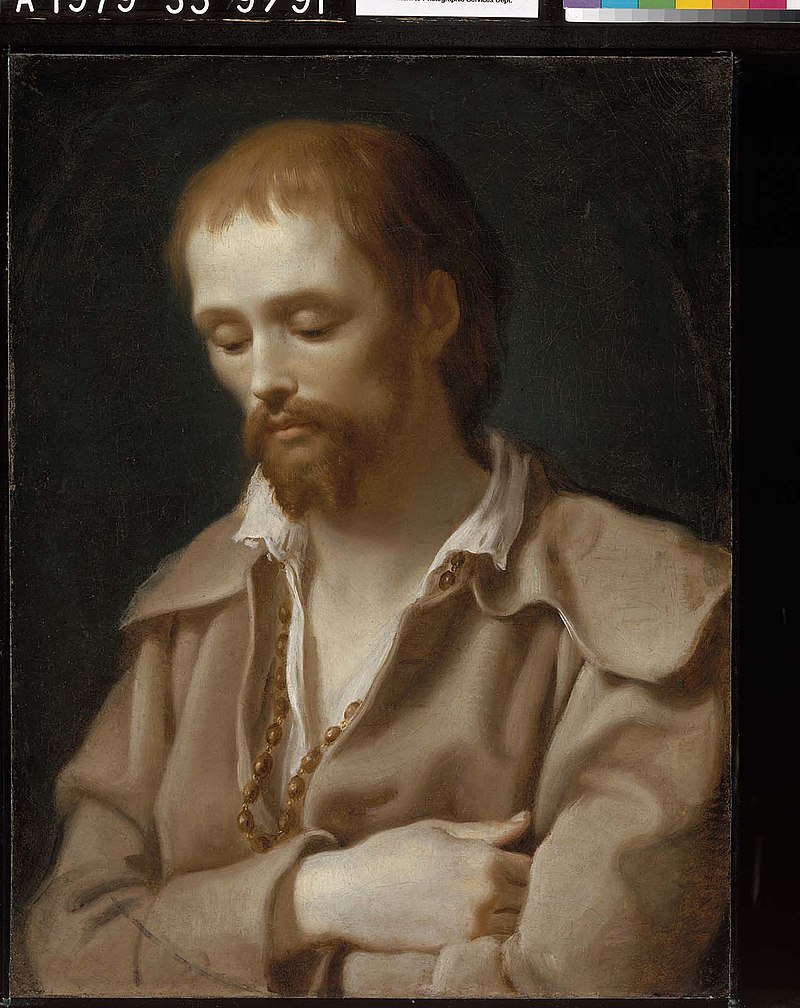
A Tale of Two Benedicts
A grace-filled Holy Week to all our readers! As we await and prepare for the Resurrection about to dawn upon us, we might keep in mind two Benedicts: Pope Emeritus Benedict XVI, requiescat in pace, elected on this day in 2005; and today’s commemoration of the mystic pilgrim, Benedict Joseph Labre, who died on this[…]Continue reading→

My Name is Bernadette
April 16th is a propitious day, for besides the anniversary of Father de Valk’s death, who founded Catholic Insight in its print form decades ago, and the commemoration of the ‘two Benedicts’, mentioned in accompanying posts, today we also recall Saint Bernadette Soubirous, the young visionary to whom the Virgin Mary appeared numerous times at[…]Continue reading→
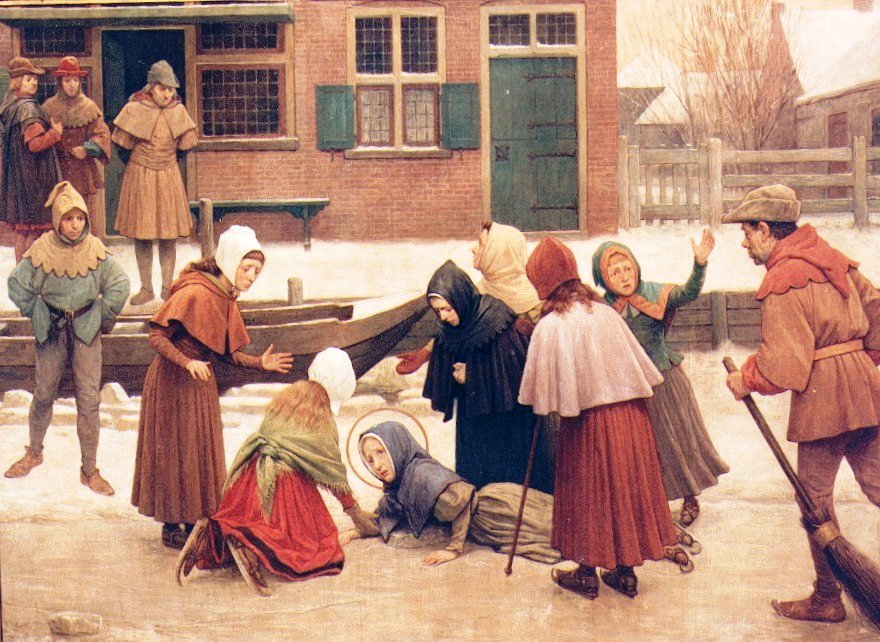
Saint Lydwina of Schiedam and Suffering Joyfully
Saint Lydwina of Schiedam (1380 – 1433) was one of the countless and glorious ‘victim souls’ in the history of the Church, those whose lives are filled with suffering, often of an unimaginable intensity, but who suffer joyfully. She was a fifteen-year old Dutch girl, out skating one day, when she fell and broke one[…]Continue reading→
The Glorious Martyrdoms of Martin and Maximus
As we enter into Eastertide, we recall on this 13th of April Pope Saint Martin I (+655), one of the noblest, if most tragic, of the successors of Saint Peter. Born in Umbria, Italy, he was of noble lineage, with great intelligence combined with charity and love of the poor and the Church. While still[…]Continue reading→

Saint Stanislaus of Szczepanów
We celebrate Saint Stanislaus today (+ April 11, 1079), in light of this Easter Octave, a bishop and martyr who accepted the episcopacy only at the direct order of Pope Alexander II. He proved a wise and courageous leader of his flock, put to death by his own king, Boleslaus, for rebuking the monarch’s ‘immoral[…]Continue reading→
Saint Gemma Galgani
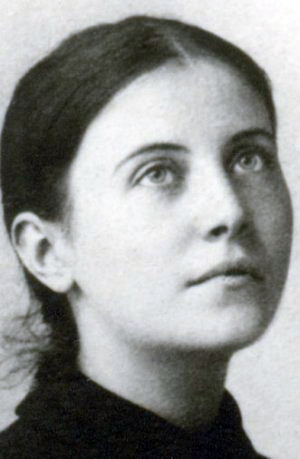
On this April 11th, in 1903 – the same year that the Italian Guiseppe Sarto was elected Pope later that summer as Pius X – a lovely, young Italian woman died, by the name of Gemma Galgani. She lived a brief life of 24 years, as did a number of other young saints, including Pier[…]Continue reading→
An Ideological and Improper Translation
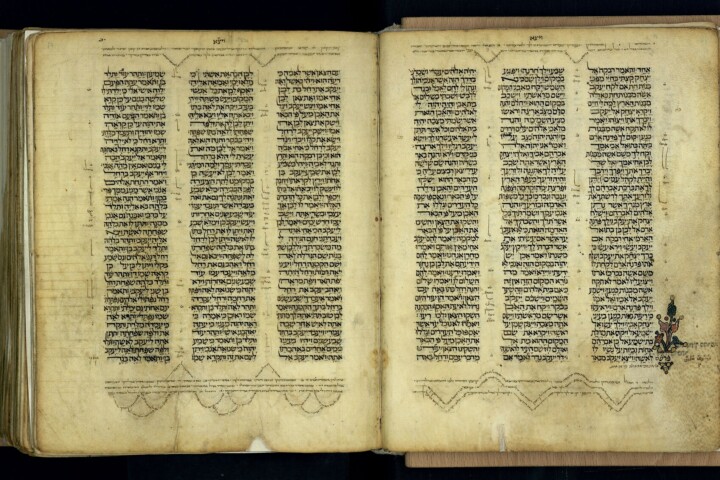
I noticed something odd with the psalm reading at Mass the other day. Our bishops’ conference here in Canada has decreed that the Mass in English – Novus Ordo – use the ‘NRSV’, the ‘New Revised Standard Version’, an ‘updated’ translation of the original RSV, first published in 1952. This ‘new translation’ has the tendency[…]Continue reading→
Saint Jean-Baptiste de la Salle: A Teacher for Teachers
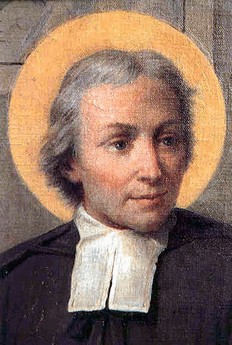
Jean-Baptiste de la Salle (1651 – 1719), a French nobleman, ordained a priest, founded the first order in the Church’s history entirely without priests, and this came about almost by accident. I say ‘almost’, for, of course, there are no accidents with God. Destined for ordination from an early age, Jean-Baptiste never looked back, even[…]Continue reading→