
The Extraordinary Ordinary
Last Saturday was the feast of the Triumph of the Cross and for me, this one has always been a conundrum of a feast day. How can The Cross – and everything that represents defeat, death and finality – be triumphant? How can it be a win if there were no points scored? Because the last time I checked, death is about as un-victorious as you can get.
If you’re reading this in hopes of finding some definitive answers, I’m sorry to disappoint you but I don’t have them, or any good ones at least. I only know that God makes sense out of everything. God is a sense-giving God, even though sometimes I wonder if he sat down amongst himself and said, “Hey, lets make three equal one and a torturous death on a cross equal success and see what happens. Hardy har har.” Be that as it may, since God is God, he can do anything he wants to do. He can even attach depth and significance to whatever he chooses – putting it in the most unlikely of places.
He’s a God that uses the common to give our lives context and substance. A God that takes the meaningless ordinary – things like bread and wine and water and words – and through them, gives us eternity. And for what purpose? So that we wretched little peasants whom he loves with an engulfing and fiery passion can be with him forever. And that just doesn’t make SENSE to me. Why not use the noble and grand to signify, well, the noble and grand? He does that too. But I suppose he realized that not everyone had access to the noble and grand, and because he can’t wait a moment longer for us to come back to him, he’s got to use everything he possibly can to put the thought of him back in our minds.
Take, for example, the two little words “I do”. Under normal circumstances they’re innocuous enough. “Do you have the remote?” “I do.” Yet they have monumental significance when they’re spoken with intent, between a man and a woman with rings and an officiant and witnesses. God allowed those seemingly insignificant words to denote a lifetime of commitment and love between spouses, giving us an opportunity to reflect on the significance of his own commitment and love to and for us.
Or what about the words, “This is my body.” Mere words, straightforward and plain, but in the proper context they represent something – or should I say, someone – more deep and wide and high than we could ever imagine. And yet shortly after these words are spoken and the power and condescension of God transubstantiates a mere wafer into Himself and all the angel choirs sing ecstatic songs of praise and thanksgiving, the priest washes his ‘dishes’ and cleans off his ‘table’, slowly and carefully performing the ablutions done after every meal is through.
Our God embeds the extraordinary in the ordinary and it’s all for us and our salvation. The saints lived it. Archbishop Fulton Sheen referred to it as the Divine Sense of humour – Jesus’ ability to take the utterly normal and use it to communicate to our hearts everything that mattered to His Heart. Sheen said,
“There was nothing in this world that [Jesus] ever took seriously, except the salvation of a soul. …Sheep and goats and talents, wheat and cotton and wine patches on clothing. None of these things to him were serious. They told him about something else, maybe about the Father’s love. And so he saw flax, and the reed. He was described by the prophets saying that the burning flax he would not quench. That is to say when one had lighted a candle and thrown away the little flax, sometimes the light was so feeble that a breath could put it out. And he would not step on that. And by that little sacramental sign he was saying that’s how gentle I will be. As long as a character has just a spark in it, I can fan it into a flame. The reed he would not crush, the shepherd as you know would take reeds and cut holes into them, they would pipe a tune, and throw them away. That broken reed he would not tread upon, because he said maybe there’s just melody there, one single note.”
So why is the Cross triumphant? Because God used even the ordinariness (in the sense that every human being dies) of Jesus’ death to give us hope – the hope that we are all desperately longing for and seeking. The hope of life after death, which gives us an overarching depth and significance and purpose to our lives. We are all broken reeds and feeble bits of flax, and if God refuses to crush or snuff out the tiniest spark of life within us, he certainly couldn’t allow us to rot in the prison of death and despair. Now we can look death straight in the eye and see not the final end of all things, but a new and glorious beginning – the hope of an eternity chock full of life and love, happiness and fulfillment. Can I get an AMEN?
I don’t feel too badly for missing the boat on this one for so long. The Jewish people of Jesus’ time were expecting the great and powerful Oz-of-the-Messiah to ride in on his dashing steed, take down the Romans, build a few more temples, rule the land and solve all their problems – so much so that they missed Jesus’ humble life altogether. And so will we – if we don’t adjust our expectations and pay attention to the presence of God that falls “upon us like the dewfall” every morning, speaks to us through our workday and sets with the sun each evening. We might miss it – miss Him – if we’re not attentive. But try not to worry, because everything around you from the air you breathe to the vast oceans to your pet ferret contains within it somewhere, the Divine Fingerprint. If you’re not careful, you will think of Him.
A Closed, Unsustainable, Descending Loop
As a follow-up to my thoughts on Payette’s payout, here be a stark image of where are here in Canada. As the graph shows in, well, graphic terms, since 2025, the public sector has contributed to 95.5% of economic growth. The private sector – which funds the public sector, or is supposed to – has[…]Continue reading→
Pope Leo and a Rosary for Peace
Pope Leo XIV has asked Catholics across the world to join him in a Rosary for peace today, at 18:00 Rome time (6 pm), which would be noon from where I write (EST). If you are able, whether at that time or another, and in whatever way you pray, to join in intercession with the[…]Continue reading→
Payette’s Payout
I was glancing through some headlines, and noticed a mention of Julie Payette – engineer and astronaut and sometime the Queen’s representative in Canada – which brought back vague memories. She was appointed Governor-General by Justin Trudeau in 2017. Ms. Payette resigned in 2021, amidst claims that she created a ‘toxic work environment’, with allegations[…]Continue reading→
Your Easter Prayer
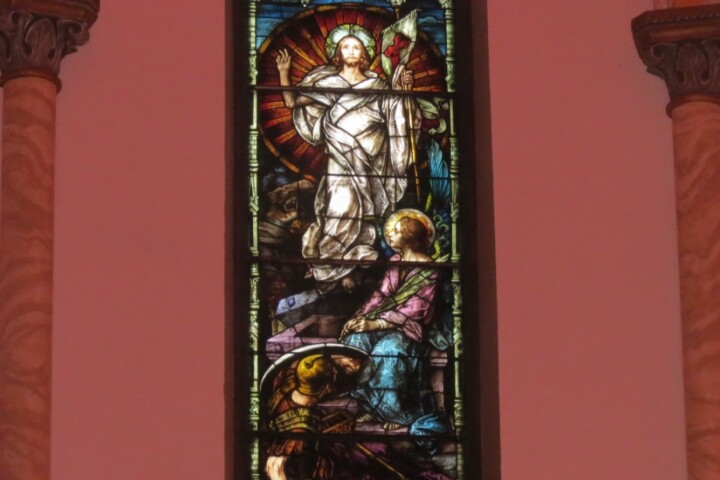
Happy Easter Lord Jesus Christ. It’s Easter day and we smile In the Lord’s in gentle light and His tomb is bare the stone is rolled A story new that must be told And Lord Jesus Christ We love you it’s so true and Lord Jesus Christ has risen From his sleep and the Promises[…]Continue reading→
Three Musical Offerings for the Annunciation
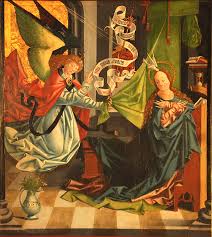
A very blessed Solemnity of the Annunciation to one and all! This March 25th marking the greatest event in history – the Incarnation of the Son of God – goes back to the very origins of the Church, and changed everything. What was lost, is now found, what was dead, is now very much alive.[…]Continue reading→
Eleganti Sums up the SSPX
Bishop Marian Eleganti, auxiliary emeritus of Chur, Switzerland, through which I happened to pilgrimage last summer, sums up the irregular situation of the SSPX. His thoughts bear pondering: Firstly, acting with full autonomy without papal mandate or confirmed mission; secondly, operating with bishops not in union with the Pope and the episcopal college; thirdly, maintaining[…]Continue reading→
The Perils of Sedevacantism
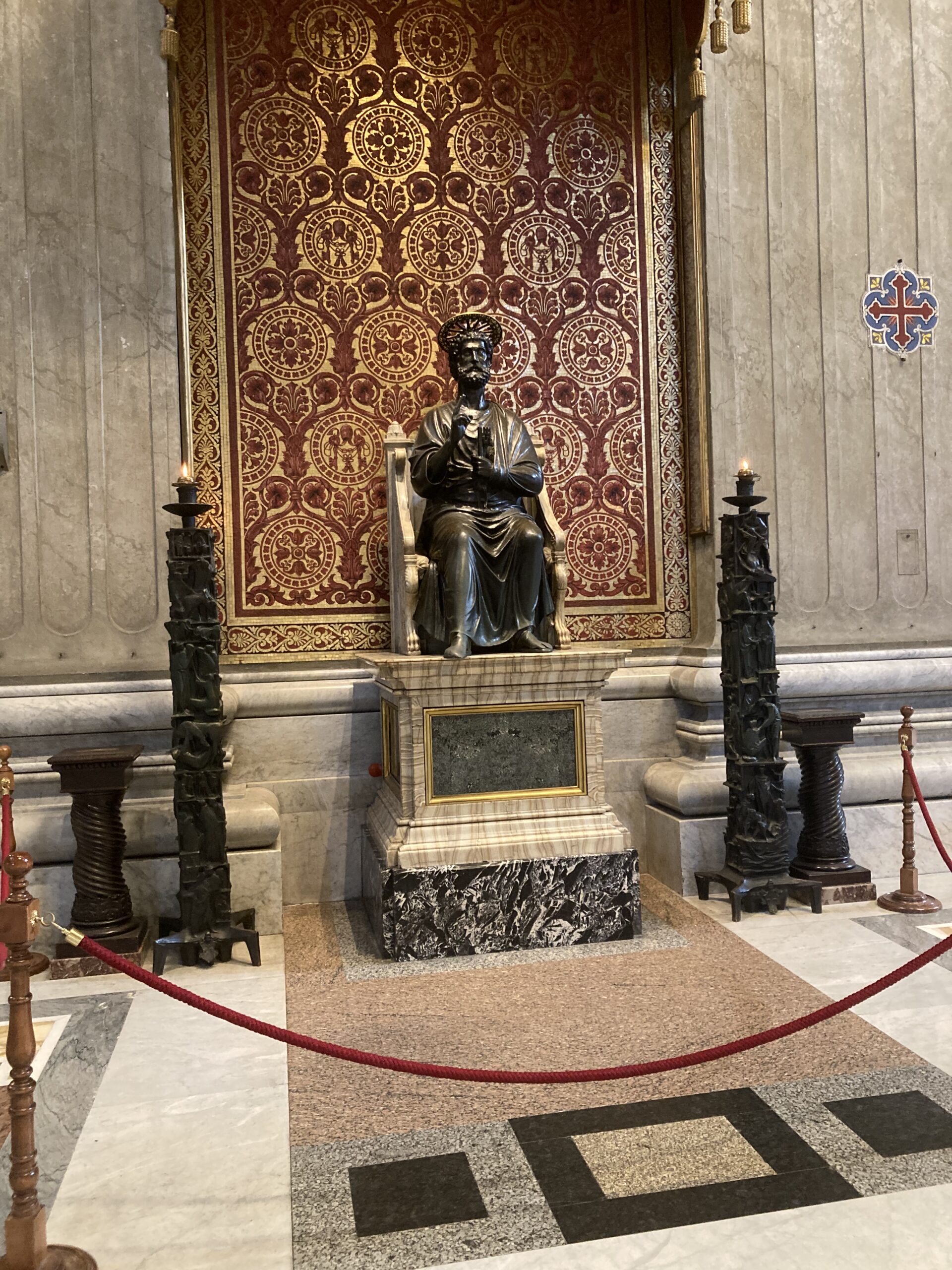
(With John-Henry Westen of LifeSite raising the question of sedevacantism, urging a petition for the cardinals to question the validity of Francis’ and Leo’s papacies, here is a re-post of something I wrote earlier, on why we must tread with great caution in declaring a papacy, or any given pope, null and void. Whatever good[…]Continue reading→

Entropic AI
Entropy may be described as the tendency of all things degrade, to move from order to disorder, from cosmos to chaos, from specificity to entropy. It is the inevitable consequence of any closed system, and encapsulated as the Second Law of Thermodynamics. Any such system – whether that be a machine, a living organism, a[…]Continue reading→
How Do We Know Christ Really Lived?
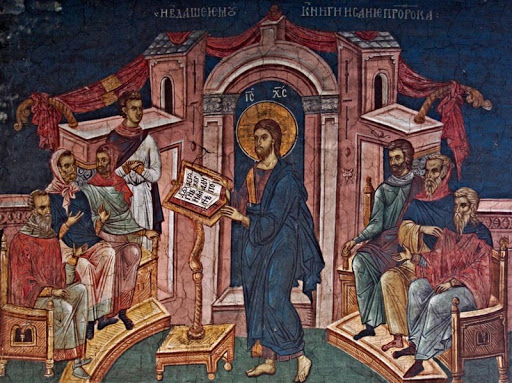
Every now and then we hear in various and sundry places one of the greatest blasphemies of them all: that Jesus never really lived and that the reports of his life and teachings, his death and resurrection, were all made up by unscrupulous men apparently bent on exploiting others for greed and power. At this[…]Continue reading→
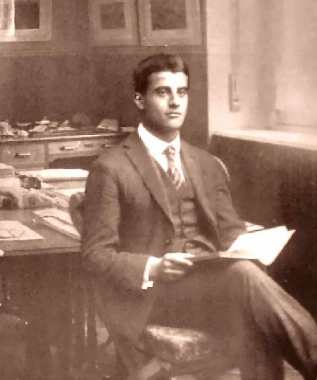
“Verso L ’Alto” – A Meditation on the Hidden Sanctity of Pier Giorgio Frassati
The Italian Alps — that formidable stretch of Europe’s great mountain arc — rise in dramatic splendour above the landscape that so enduringly shaped St. Pier Giorgio Frassati’s life of prayer and adventure. The Australian Alps, sharing the name only in part, resemble their European counterparts more in spirit than in scale. In the former,[…]Continue reading→