
Canadian errant
David Warren, former editor of the Idler and columnist for the Ottawa Citizen, now writes an “anti-blog” entitled Essays in Idleness at davidwarrenonline.com. He was born in Toronto in the old Dominion of Canada in 1953.
“Canada Day” has again come upon us: as a redundant summer holiday for the young, and as a reminder to many who have achieved their half-century that their country is under foreign occupation.
What could I possibly mean by that? For there are no soldiers in our streets (even the Canadian Army is small and usually invisible), nor other signs of physical occupation, and everything is outwardly glib—very glib.
Yet the Dominion of Canada into which I was born has been altered beyond recognition. It has a new flag (as of 1964), a new name (the “Dominion” was suppressed); even the words of the national anthem were rewritten. Any number of more subtle things my parents’ generation once took for granted, such as “Canada is a Christian country,” no longer apply.
Except for an aggregation of landscapes that, despite our tireless efforts, have not changed significantly in two generations, we live in a different country today. According to state propaganda, drummed into the little ones by rote in state schools, it is much better than that bad old country. And they are taken out to dance their enthusiasm with red maples painted on their little faces, like so many sweet little savages.
I will not, and vow I will never, call it “Canada Day” without inverted commas. It would not matter to me if every other living Canadian called it that without further thought. It continues to be Dominion Day, in my view: the patriotic anniversary of my own country. God Himself cannot rewrite history; I recognize no Act of Parliament that attempts to do so.
Our progressive masters have attempted a similar “update” to our national motto, to make it: “From sea to sea to sea.” Like the other changes, it is an exercise in puerility. Those who have seen a map will grasp that there is an Arctic Ocean in addition to the Atlantic and Pacific. A motto is a motto, however: part of heraldry intended to emphasize not change but continuity. The effort is made by men themselves emblematic of that class of Martians who occupied this country in the 1960s: of manipulative men whose earthly loyalties were only to themselves.
Their efforts were very much associated with Party. Each of these “cosmetic changes” was instituted by one Party in particular. In each case, something was purposefully deleted from our actual heritage, which occluded the vanity of the Liberal Party. And we “the people,” I am ashamed to say, let them get away with it. Very few made a fuss, and those who did were mocked.
The Canada to which I remain loyal was not a creature of bureaucratic edicts, but of heroic human acts. She was, from Cabot, Cartier, and Champlain, the very embodiment of human loyalty. For I am not referring only to the United Empire Loyalists among my own ancestors, who for all their distinction were one fragment of the whole. The very implantation of what is called Canada, in the wilderness of this New World, was an act of divine loyalty. It was a loyalty recalled in blood and guts, centuries later, in the battlefields of France. And while I am by no means “ethnically” French, I am in my heart a mediaeval Frenchman, instinctively loyal to a Crown and a Cross.
In conversation with Americans, I have often been struck by a national attitude quite different from my own. A friend in Minnesota calls it, “the fiction of self-sufficiency.” Americans have been told they are self-sufficient, as part of their national mythology, even self-made; that the United States is the world’s only self-created country. The rest of us are “slaves of history.”
While the idea may be related to several admirable traits in the American character (and we could debate what those are), it undermines the most fundamental truth about life and history. No person, no nation, ever invented itself. Whether individual or society, we are the products of circumstances that go vastly beyond ourselves, and humility is impossible without this realization.
Our own Canadian self-understanding was, from the beginning, more mature. It did not involve self-sufficiency, nor self-creation. It began to do so only in the 1960s.
We understood ourselves to be transplants, from the Old World to the New; to have arrived as adults, not babies. We understood that without a governing moral and, yes, symbolic order—that without the Christian civilization we carried in our souls—we were little savages, zilch, nothing. We did not exist in and of ourselves. Even our purpose was prefigured: to spread Christendom in our own persons, and at the cost, if necessary, of our lives. When we formed an independent state, our motto harkened back to our true origins. It was: A mari usque ad mare, from sea unto sea.
Et dominabitur a mari usque ad mare, et a flumine usque ad terminos terrae. The passage was taken directly from the Psalms. “And He shall have Dominion, from the sea also unto the sea, and from the river unto the ends of the earth.” The river was taken to be the St. Lawrence, along which we first settled; the “He” was, unambiguously, not us, but Christ.
Merely to remember this, today, is to “reveal” oneself as a “theocrat”—notwithstanding neither I, nor any of the Fathers of Confederation, nor even the Pope in Rome, has ever proposed to put our civil government under priests. But if the word is to be abused, to denote all those who believe the Christian religion should be maintained as the foundation of our social, legal, political, and cosmological order, then I shall be proud to assume the title of Theocrat, and make it my precious badge.
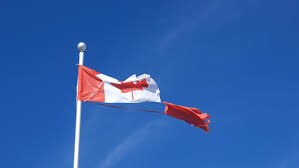
Carney’s Amoral Majority
After five defections – euphemistically described as ‘crossing the floor’ – and three by-elections, Mark Carney and his Liberals how have their coveted majority. One wonders what bowls of pottage were offered in back-room deals. In the archaic monarchical system that is the Dominion of Canada, this majority allows the newly-minted Prime Minister to rule[…]Continue reading→

A Tale of Two Benedicts
A grace-filled Holy Week to all our readers! As we await and prepare for the Resurrection about to dawn upon us, we might keep in mind two Benedicts: Pope Emeritus Benedict XVI, requiescat in pace, elected on this day in 2005; and today’s commemoration of the mystic pilgrim, Benedict Joseph Labre, who died on this[…]Continue reading→

Saint Lydwina of Schiedam and Suffering Joyfully
Saint Lydwina of Schiedam (1380 – 1433) was one of the countless and glorious ‘victim souls’ in the history of the Church, those whose lives are filled with suffering, often of an unimaginable intensity, but who suffer joyfully. She was a fifteen-year old Dutch girl, out skating one day, when she fell and broke one[…]Continue reading→

The Glorious Martyrdoms of Martin and Maximus
As we enter into Eastertide, we recall on this 13th of April Pope Saint Martin I (+655), one of the noblest, if most tragic, of the successors of Saint Peter. Born in Umbria, Italy, he was of noble lineage, with great intelligence combined with charity and love of the poor and the Church. While still[…]Continue reading→

Saint Stanislaus of Szczepanów
We celebrate Saint Stanislaus today (+ April 11, 1079), in light of this Easter Octave, a bishop and martyr who accepted the episcopacy only at the direct order of Pope Alexander II. He proved a wise and courageous leader of his flock, put to death by his own king, Boleslaus, for rebuking the monarch’s ‘immoral[…]Continue reading→
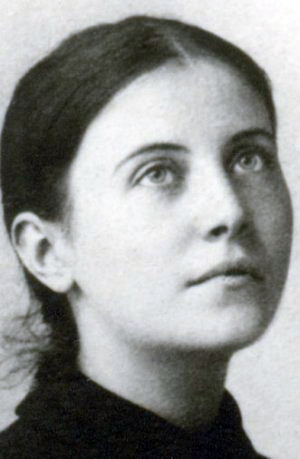
Saint Gemma Galgani
On this April 11th, in 1903 – the same year that the Italian Guiseppe Sarto was elected Pope later that summer as Pius X – a lovely, young Italian woman died, by the name of Gemma Galgani. She lived a brief life of 24 years, as did a number of other young saints, including Pier[…]Continue reading→
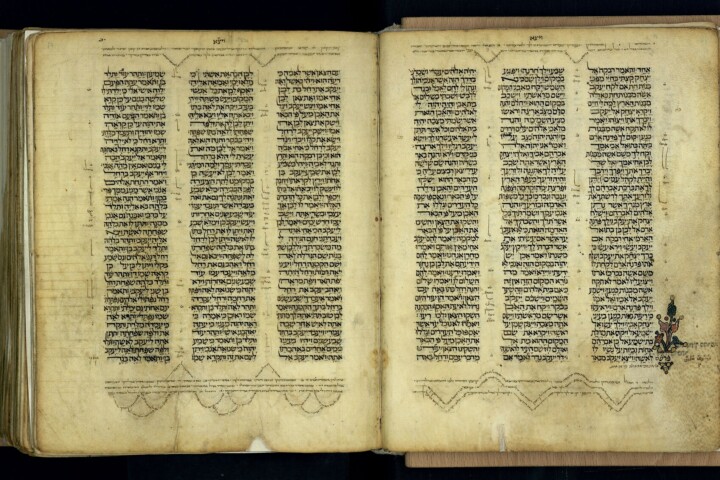
An Ideological and Improper Translation
I noticed something odd with the psalm reading at Mass the other day. Our bishops’ conference here in Canada has decreed that the Mass in English – Novus Ordo – use the ‘NRSV’, the ‘New Revised Standard Version’, an ‘updated’ translation of the original RSV, first published in 1952. This ‘new translation’ has the tendency[…]Continue reading→
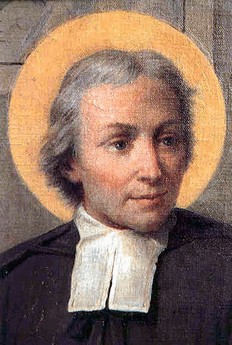
Saint Jean-Baptiste de la Salle: A Teacher for Teachers
Jean-Baptiste de la Salle (1651 – 1719), a French nobleman, ordained a priest, founded the first order in the Church’s history entirely without priests, and this came about almost by accident. I say ‘almost’, for, of course, there are no accidents with God. Destined for ordination from an early age, Jean-Baptiste never looked back, even[…]Continue reading→
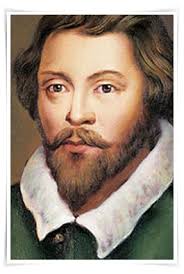
Three Easter Musical Gems: Bach, Palestrina and Byrd
A very blessed and glorious Easter! Christus surrexit vere, alleluia! As we begin this Easter Octave with the great Solemnity of Easter, music to lift the soul would be one of Bach’s Easter cantatas, composed during his time at Leipzig in the early 1700’s, for the six Sundays of this festive season, leading up to[…]Continue reading→
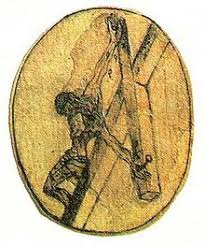
Good Friday and Suffering
Evil and pain is always a mystery, that whole mysterium iniquitatis, of which Saint Paul writes (2 Thess 2:7). In 1984, Pope Saint John Paul II penned an Apostolic Letter on the nature and purpose of human suffering, Salvifici Doloris (curiously, now looking back, the same year he made his first apostolic journey to Canada).[…]Continue reading→