
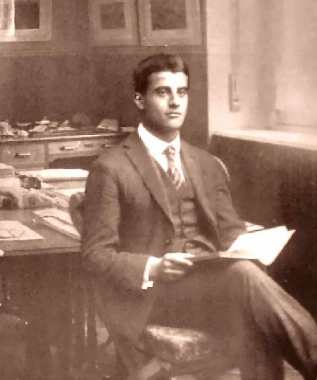
“Verso L ’Alto” – A Meditation on the Hidden Sanctity of Pier Giorgio Frassati
The Italian Alps — that formidable stretch of Europe’s great mountain arc — rise in dramatic splendour above the landscape that so enduringly shaped St. Pier Giorgio Frassati’s life of prayer and adventure. The Australian Alps, sharing the name only in part, resemble their European counterparts more in spirit than in scale. In the former, the first snow-caps have already appeared; in the latter, the slopes are beginning to burst into bloom. The marvellous beauty of nature delights the eyes and reveals the hand of the Creator.
Saint Pier Giorgio Frassati, the “man of the Beatitudes,” as St. John Paul II called him, was an ardent mountaineer whose spiritual life was deeply bound to the Alpine peaks of northern Italy. His favourite climbs lay in the ranges surrounding Pollone, among the majestic summits of the Piedmont and Aosta regions.
A man who walks among high mountains often seeks not only beautiful vistas but also the meaning of his own existence. There, upon the summits, one may feel nearer to God. In the Bible, the mountain is a sacred space — the meeting ground between God and His people. On Mount Horeb, God gave the Law to Israel (Exodus 19:2–25), and in the time of David, He chose Mount Zion as the dwelling of His presence. Jesus Himself ascended a mountain to appoint the twelve Apostles (Mark 3:13–14).
Anyone who has ever had the chance to follow Alpine trails, to climb among the high peaks, or to ski along the Italian slopes will surely understand this sense of divine proximity — that mysterious nearness to God which Pier Giorgio Frassati experienced so intensely.
Regarding St. Pier Giorgio’s love for the Holy Eucharist, we see in the biography penned by his sister, Luciana, the recollections of a Clergyman who wrote:
It was the morning of 14 September 1920, the Feast of the Exaltation of the Holy Cross and it was customary for a Mass to be celebrated before a large Cross on top of a mountain in that area. When everyone had reached the summit, the Priest was about to start the Mass when Pier Giorgio suddenly appeared from behind a boulder, having climbed all the way up on foot from the other side of the mountain.
Although drenched in perspiration he immediately asked to serve at Mass. There must have been about a hundred people present, and they were deeply struck by that young man whose only desire after long hours of solitary walking was to receive Holy Communion!
Everyone wondered who he was; and we must not forget that those were times in which even the best were reluctant to show their faith openly for fear of being ridiculed. Pier Giorgio feared nothing, and he prayed and served Mass with a fervour even greater than us clerics!” („Il cammino di Pier Giorgio”)
Pier`s father, Alfredo — an agnostic — was the founder and editor-in-chief of the liberal daily La Stampa and exerted considerable influence on Italian political life. Differing from his father’s political views, Pier Giorgio became an active member of the newly founded “Partito Popolare Italiano” (Italian Popular Party), inspired by the principles of Leo XIII’s encyclical Rerum Novarum. He believed that “charity is not enough; social reform is also needed.”
Pier Giorgio lived in an era marked by turmoil and upheaval, not unlike the challenges we face today. The Great War shaped his teenage years. Though a member of many organizations, Pier Giorgio was no mere joiner; records attest to his wholehearted engagement and sense of duty in each. He made no bones about his anti-fascist and anti-communist convictions. His sister recalled him going around Turin at night hanging anti-communist flyers, thus risking confrontation with armed communists.
During a Church-led demonstration in Rome, he braved police violence, seizing a fallen banner and raising it high while fending off blows. When arrests followed, he declined the privileges his father’s influence could have secured, choosing instead to share his companions’ fate. On another occasion, when fascists stormed his family home, he faced them down single-handedly—sending them packing before they knew what hit them.
How powerful his holiness must have been, that even in an age without the Internet or television, a young student at the Faculty of Polish at the Jagiellonian University — Karol Wojtyła, born nineteen years later, that is in 1920, — in a country in Central and Eastern Europe, could still feel the radiance of Pier Giorgio`s spirit.
“I, too, in my youth, felt the beneficial influence of his example and, as a student, I was impressed by the force of his Christian testimony.” said the Holy Pontiff, John Paul II.
From childhood, he astonished those around him with his “imagination of mercy” toward the poorest. He would carry food parcels to the needy on foot. Though the son of a prosperous politician and an editor, and entitled to the comfort of a chauffeur, he preferred to walk.
Nearly every coin he managed to save was quietly diverted to the relief of others’ hardship.
Pier Giorgio gave his shoes to barefoot children in the streets, his time to the work of the St Vincent de Paul Society, and even his bus fares and graduation savings to struggling families. When his father reproached him for giving his good coat to a beggar in winter, the young man replied simply, “But Papa, it was cold.” And when friends wondered why someone of his background would travel third class on the train, he answered with a wry smile, “Because there’s no fourth class.”
I had the privilege of visiting Pier Giorgio’s home in the mountains above Turin with his niece Wanda, seeing his rooms and various relics of his sporting, social and spiritual life, and hearing from those who treasured his memory as a friend of youth and the poor. When his body came to Sydney for World Youth Day in 2008, we installed a pathway of prayer in this cathedral so young people could venerate his relics here. Archbishop Anthony Fisher, O.P. said in a homily.
Many see in Pier Giorgio a sanctity that wears modern clothes and shares in the fabric of our daily lives — and perhaps even try to make of him a contemporary philanthropist. Here and there one encounters such observations: “His story contains no miracles, visions, or other supernatural phenomena—only an unwavering response to God.” “Ordinary holiness,” “a holiness we can all imitate” — really?
Is sanctity truly within arm’s reach? I doubt it; the gate is narrow, the path climbs steeply uphill, and there are no shortcuts.
We know nothing of his most intimate relationship with Jesus. I would venture to say, with almost absolute certainty, that since Pier Giorgio kept his mortal illness hidden even from his family, he was even more unwilling to expose his inner spiritual life. In this, too, the true humility and deep love between the Creator and His creation are revealed.
What we do manage to uncover, however, seems to be only the tip of the iceberg. Pier Giorgio Frassati never missed the night adorations and seeing him during these vigils — his edifying composure, absorbed in prayerful recollection — was striking, standing in complete contrast to the lively energy he displayed among his companions. At times he would take part in night worship, spending entire hours in prayer within the church, from which he would emerge at dawn, joining his friends in shouts of shared joy.
Pier Giorgio’s life was oriented by an intense spiritual depth. The daily Eucharist was the central point of reference in his journey. So as not to miss this appointment, he rose early and would forgo excursions if they prevented him from attending Mass. He was nourished each day by meditation on St. Paul’s Hymn of Charity (1 Corinthians) and by the writings of St. Catherine of Siena. For him, receiving Communion meant sharing in intimacy with Jesus; he was often seen in the pew, absorbed in a profound recollection from which nothing could distract him.
From an early age, Pier Giorgio displayed a spiritual maturity well beyond his years. His mother introduced him to the fundamentals of the Christian faith, nurturing in him a quiet yet deep-rooted sense of devotion. By the age of six, he was already known for his keen curiosity about spiritual matters.
He explicitly framed his charity as a response to Christ. «Jesus visits me every morning in Holy Communion. I return it to Him, with my poor means, by visiting the poor. »
Documentary biographies and the canonization committee record that Pier Giorgio carried the Rosary constantly and made pilgrimages to numerous Marian shrines.
For him, the most marvelous army consisted of young people following the Eucharist. In a letter written in 1922, Frassati describes “more than 20,000 enthusiastic young men marching before the Blessed Sacrament through the streets of Novara.” He believed that Christians should draw courage from daily encounters with Christ in the Eucharist and through prayer, to face the world and bring about the “moral regeneration” that society so greatly needed.
On 28 May 1922, Pier Giorgio entered the Order of Preachers as a Dominican tertiary, taking the name Fra Girolamo in memory of Savonarola. His membership was in the Dominican laity — which prescribed among its observances the daily recitation of a special Office in honour of the Madonna.
In a 1925 address to FUCI students, Pier Giorgio called on young Catholics to take an active role in transforming the world, urging them to “cooperate generously in the moral regeneration of society worldwide so that a radiant dawn may break, in which all nations recognize Jesus Christ as King not only in words but in all their people’s lives…”
Only shortly before earning his engineering degree did Frassati contract poliomyelitis — the disease that would claim his life on July 4, 1925, at the age of twenty-four. His doctors later speculated that he had caught the infection while serving the ill.
It is not difficult to imagine that, had Pier Giorgio lived in our own time, he should have met the draconian restrictions of the recent COVID-19 pandemic in the State of Victoria, Australia, with the same spirit of discernment, quiet courage and resilience that marked all his choices — guided first and foremost by conscience than by conformity. “We must obey God rather than men.”(Acts 5:29)
For Alfredo and Adelaide Frassati, their son’s death signaled the beginning of a new and deeper relationship with him. At his funeral, they were astonished to see crowds of strangers gathered, each bearing grateful testimony to the young man’s quiet generosity. Only then did the Frassatis begin to comprehend the life their son had truly led.
With such an intercessor now in heaven on their behalf, further transformations followed: their marriage was restored to harmony, and Alfredo—long estranged from the practice of his faith—was eventually reconciled with the Church and returned to the Sacraments.
In concluding my reflections, I shall once again draw on a brief quotation from a much longer statement by his sister Luciana. It concerns an aspect that is notoriously difficult to master, both for adolescents and for those of mature years — purity:
You might underestimate Pier Giorgio’s charity, piety, or intelligence, but his purity was evident even to the least observant onlooker. It was his most visible virtue; his whole being was imbued with it, and not even his modesty could conceal it…” (Source: Catholic magazine, Trwajcie w Miłości, no. 4, 2025)
The times which we are going through are difficult because persecution against the Church rages as fiercely as ever. Yet God, in His providence, sends saints precisely when they are most needed. It is no coincidence—for coincidences exist only in grammar, most clearly in the Romance tongues.
Each person, whether young or old, may draw from him a living spring of inspiration, in a manner suited to one’s own path.
At the same time, one senses a certain tendency—among both clergy and laity—to shape Pier Giorgio Frassati into a flawless emblem of social virtue, emphasizing above all his care for the poor, the excluded, and the marginalized. There is, however, a subtle temptation in this. In no way is the Church a humanitarian institution or an NGO, though she does not entirely renounce the opportunity to offer help; the Church is sent, like Mary, to bear Christ and His Gospel to the world.
St. Pier Giorgio Frassati, ora pro nobis!
[Someone might ask what really prompted me to write this essay. Of course, his recent canonisation played a part, but there are also more down-to-earth reasons. My eldest son, like the subject of this piece, is named Peter George. I too used to spend a lot of time hiking in the mountains, and I would try to plan my routes so that, whenever possible, I could attend Mass that same day. Sadly, back then—being a few years younger than Frassati—I had not yet discovered the blessings of Adoration. Mea culpa, mea maxima culpa! – Author`s note.]

Saint Kateri , Canada’s Protectress
This was the title given to Saint Kateri Tekakwitha, by Pope Benedict XVI, when he canonized her on October 28th, 2012, along with six others, in Saint Peter’ Square (she had been beatified by Pope John Paul II back in 1980). With Saint Joseph as our protector, along with the Canadian martyrs, we seem to[…]Continue reading→
A Closed, Unsustainable, Descending Loop
As a follow-up to my thoughts on Payette’s payout, here be a stark image of where are here in Canada. As the graph shows in, well, graphic terms, since 2025, the public sector has contributed to 95.5% of economic growth. The private sector – which funds the public sector, or is supposed to – has[…]Continue reading→

Remembering Father Alphonse de Valk
(Today marks the sixth anniversary of the death of Father Alphonse de Valk, C.S.B., a faithful, courageous and indefatigable Basilian priest, pro-life-and-family apostle, and the founder of Catholic Insight magazine. Here is what we wrote those on his entering into eternity five years ago, as we continue to remember him in our prayers and thoughts)[…]Continue reading→

A Tale of Two Benedicts
A grace-filled Holy Week to all our readers! As we await and prepare for the Resurrection about to dawn upon us, we might keep in mind two Benedicts: Pope Emeritus Benedict XVI, requiescat in pace, elected on this day in 2005; and today’s commemoration of the mystic pilgrim, Benedict Joseph Labre, who died on this[…]Continue reading→

My Name is Bernadette
April 16th is a propitious day, for besides the anniversary of Father de Valk’s death, who founded Catholic Insight in its print form decades ago, and the commemoration of the ‘two Benedicts’, mentioned in accompanying posts, today we also recall Saint Bernadette Soubirous, the young visionary to whom the Virgin Mary appeared numerous times at[…]Continue reading→

Saint Lydwina of Schiedam and Suffering Joyfully
Saint Lydwina of Schiedam (1380 – 1433) was one of the countless and glorious ‘victim souls’ in the history of the Church, those whose lives are filled with suffering, often of an unimaginable intensity, but who suffer joyfully. She was a fifteen-year old Dutch girl, out skating one day, when she fell and broke one[…]Continue reading→

The Glorious Martyrdoms of Martin and Maximus
As we enter into Eastertide, we recall on this 13th of April Pope Saint Martin I (+655), one of the noblest, if most tragic, of the successors of Saint Peter. Born in Umbria, Italy, he was of noble lineage, with great intelligence combined with charity and love of the poor and the Church. While still[…]Continue reading→

Canonizing Sister Faustina and Divine Mercy
HOMILY OF THE HOLY FATHER MASS IN ST PETER’S SQUARE FOR THE CANONIZATION OF SR MARY FAUSTINA KOWALSKA Sunday, 30 April 2000 1. “Confitemini Domino quoniam bonus, quoniam in saeculum misericordia eius”; “Give thanks to the Lord for he is good; his steadfast love endures for ever” (Ps 118: 1). So the Church sings on the Octave of[…]Continue reading→

Divine Mercy Sunday – An Echo of Every Mass
Reach out your hand and put it in my side. Do not doubt but believe’… ‘My Lord and my God!’ (Jn. 20:18)). Today is Divine Mercy Sunday, and as we celebrate the end of the Easter Octave, we contemplate the wounded side of our Saviour, the Church’s source of life. On Good Friday in the[…]Continue reading→
Pope Leo and a Rosary for Peace
Pope Leo XIV has asked Catholics across the world to join him in a Rosary for peace today, at 18:00 Rome time (6 pm), which would be noon from where I write (EST). If you are able, whether at that time or another, and in whatever way you pray, to join in intercession with the[…]Continue reading→