
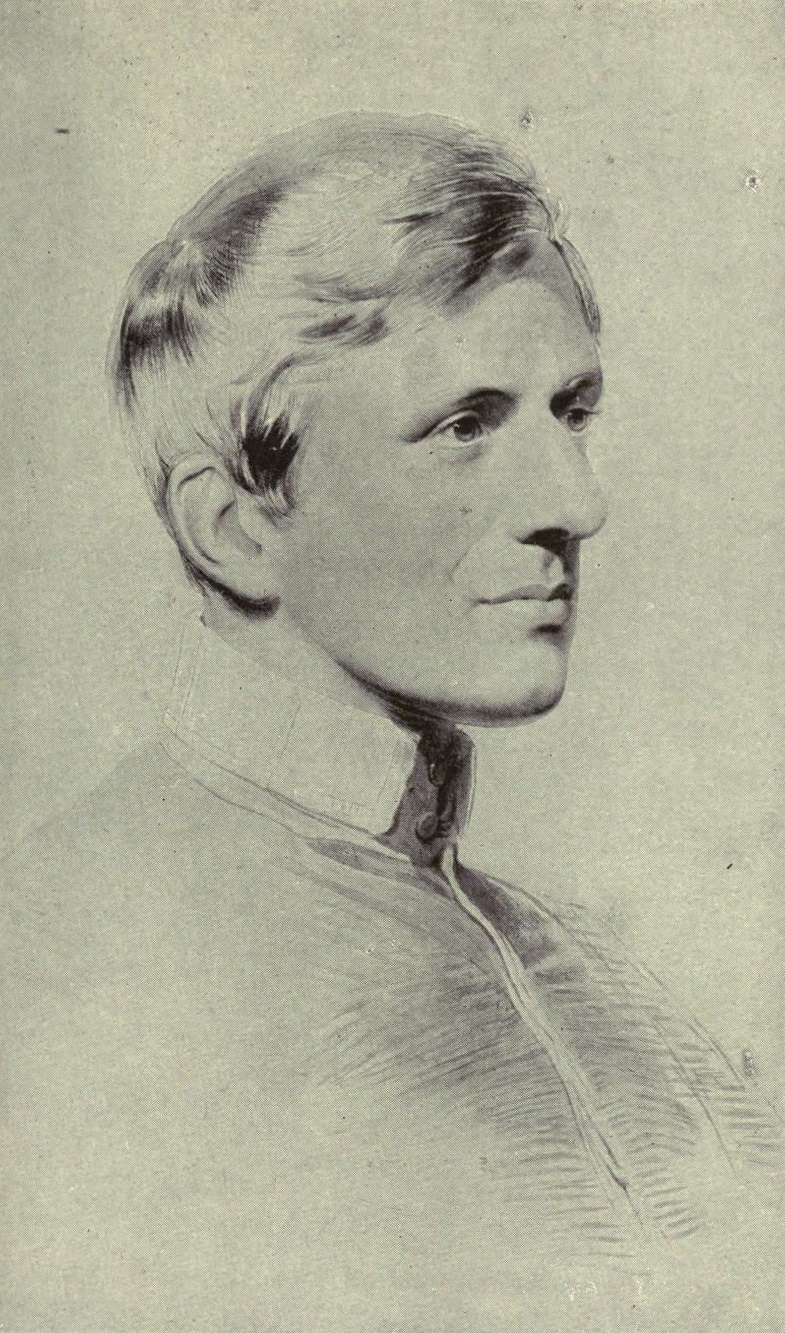
From 19th-Century Convert to 21st-Century Doctor: Newman’s Theology Speaks to Today
Introduction
In a time of quick changes in culture, and of secularism, and doctrinal arguments within the Church, the theology of St. John Henry Newman (1801–1890) stands out as very prescient. Newman was born in London and grew up in the Church of England. He went through a number of major changes in his life, including going from being sceptical of supernatural truths to being an evangelical Christian at the mere age of 15, leading the Oxford Movement to bring Anglicanism back to its roots, and finally becoming a Roman Catholic in 1845. He was ordained a Catholic priest, founded the Birmingham Oratory, was the rector of the Catholic University of Ireland, and was appointed a cardinal in 1879. Newman was canonized in 2019, and in July 2025, Pope Leo XIV named him a Doctor of the Universal Church, honouring his lasting contributions to theology.
Newman’s writings, including the Essay on the Development of Christian Doctrine, An Essay in Aid of a Grammar of Assent, and The Idea of a University, deal with some of the most important issues of modern life, such as change and continuity, personal conscience and authority, faith and reason, and the purpose of education. His focus on organic growth in truth, the inner voice of God, and the integration of knowledge provides a guide for dealing with today’s problems, from bioethical issues to calls for reform in the Church. Newman exemplifies fidelity in the face of complexity as a convert who reconciled traditions through diligent truth-seeking. His recent appointment as Doctor shows how his ideas continue to help the Church move forward.
Development of Doctrine: Organic Continuity in a Changing World
Newman’s most important work is his 1845 Essay on the Development of Christian Doctrine, in which he discusses how Christian doctrine has changed over time. He contended that revealed truth, though constant in its essence, progressively unfolds as the Church contemplates Scripture and Tradition within novel historical contexts. Doctrines are not created but “developed” – akin to a seed transforming into a tree – through enhanced understanding. An infallible magisterium is needed to protect this process from corruption. Newman suggested seven “notes” or tests to tell the difference between real development and corruption: preservation of type (keeping the core identity), continuity of principles, power of assimilation (adding new elements without losing essence), logical sequence, anticipation of its future, conservative action upon the past (making things clear without contradicting them), and chronic vigour (keeping vitality across ages).
This framework significantly influences modern Catholic theology. It backs a “hermeneutic of continuity” when it comes to understanding the Second Vatican Council, which goes against claims of breaks in areas like marriage, sexuality, or synodality. In contemporary discussions – whether regarding doctrinal proposals that seem to contradict enduring teachings or cultural demands for paradigm shifts – Newman’s criteria caution against discontinuity. Real development takes in culture while cleaning it up, keeping apostolic faith instead of going along with the times. As the Church goes through post-conciliar reception and synodal processes, Newman’s insight reminds us that real growth deepens what has always been believed, bringing clarity to confusion.
Conscience: God’s Voice in a New Landscape
Newman famously called conscience “the aboriginal Vicar of Christ” and “the voice of God within the human heart.” Newman does not believe in modern ideas of subjective autonomy or “self-will.” Instead, he believes that conscience is an objective moral sense given to us by God that points to divine law and demands obedience. It is dynamic and needs to be shaped by the Bible, Church teaching, prayer, and advice from parents, teachers, and spiritual leaders. It is always right to “do good, avoid evil,” but it can make mistakes if it is shaped by bias or ignorance. This is why it is important to keep it informed. This lesson is very important in today’s bioethical crises. As technology gets better, like genetic editing and making decisions about the end of life, patients and professionals have to make tough choices. Newman’s framework supports informed consent based on truth and safeguards conscientious objection. It strikes a balance between personal responsibility and the authority of the Church: people must follow their own conscience, but the Church shows them how to do it correctly. Newman dismissed both inflexible legalism and relativistic “freedom” divorced from God, proposing a route through moral relativism. His perspective shaped Dignitatis Humanae at Vatican II and continues to serve as a defence for human dignity against coercion or secular reinterpretations of morality.
Faith, Reason, and the Purpose of Education
Newman skilfully harmonised faith and reason, perceiving them as “two wings” elevating the soul to truth (reflecting subsequent papal imagery). In An Essay in Aid of a Grammar of Assent, he differentiated “notional” assent (intellectual agreement) from “real” assent (personal, imaginative commitment). Faith is not blind; it emerges from converging probabilities – life’s cumulative evidence – directed by the “illative sense,” an intuitive faculty analogous to a mountaineer’s instinct. Conscience serves as the fundamental evidence of God’s existence, an internal affirmation of objective morality that reason cannot refute. This epistemology directly influences The Idea of a University, in which Newman advocates for liberal education as the development of the intellect for its intrinsic value. A university is a place where all fields of study come together under philosophy and theology to form “universal knowledge.” This goes against utilitarianism (putting job training ahead of wisdom), fragmentation (putting departments in separate groups), secularism (not including revelation), and unchecked autonomy (competing with Church authority). The curriculum is based on theology, which keeps the sciences from going too far into metaphysics.
These ideas still have a lot of power and relevance today. Newman’s vision for Catholic universities is to help people grow in mind and soul in relation to Christ the Logos, even though they are becoming more specialised, have online credentials, and have secular campuses that don’t focus on faith. It is in line with Ex Corde Ecclesiae (John Paul II), which calls for the integration of truth against relativism and vocationalism. In a knowledge economy that breaks up human experience, Newman’s university helps people become wise, morally imaginative, and able to talk about faith and culture. This prepares believers to deal with secular problems in a smart way.
Ecumenism and the Quest for Unity
Newman’s personal journey – from Anglican priest and leader of the Oxford Movement to Catholic cardinal – embodies ecumenism before it was even a thing. He studied the Church Fathers deeply, bringing a patristic, Catholic view to Anglicanism and a scholarly Anglican view to Catholicism. His Essay on the Development of Christian Doctrine and his ongoing conversations with Tractarian friends showed how to look for the truth without giving up. He is called a “prophet of ecumenism” because he is passionate about bringing people together based on apostolic continuity, not compromise.
Today, as the Church talks to people of different faiths and Christians, Newman’s approach strikes a balance: the goal is full communion, but we should also listen respectfully to what we have in common. His focus on the laity’s role in doctrine (“On Consulting the Faithful”) and probabilistic reasoning encourages open and honest conversation. In a world that is divided, his example of being loyal to the truth helps people work toward visible unity and protects against indifference.
Conclusion – A Guide for the Modern Church
St John Henry Newman’s theology prepares the Church for the realities of the 21st century by developing doctrine, forming the mind, and building ecumenical bridges. His 2025 elevation to Doctor of the Church affirms what many have long known: in an era craving authenticity amid flux, Newman points to the living Tradition that develops without rupture, the conscience illumined by truth, and the integrated pursuit of wisdom. He said, “To be deep in history is to cease to be a Protestant.” Today, being deep in the tradition of Newman means being ready to witness faithfully. This holy cardinal’s heart still speaks to our own hearts, so both Catholics and seekers should turn to him.

Saint Kateri , Canada’s Protectress
This was the title given to Saint Kateri Tekakwitha, by Pope Benedict XVI, when he canonized her on October 28th, 2012, along with six others, in Saint Peter’ Square (she had been beatified by Pope John Paul II back in 1980). With Saint Joseph as our protector, along with the Canadian martyrs, we seem to[…]Continue reading→

Remembering Father Alphonse de Valk
(Today marks the sixth anniversary of the death of Father Alphonse de Valk, C.S.B., a faithful, courageous and indefatigable Basilian priest, pro-life-and-family apostle, and the founder of Catholic Insight magazine. Here is what we wrote those on his entering into eternity five years ago, as we continue to remember him in our prayers and thoughts)[…]Continue reading→

My Name is Bernadette
April 16th is a propitious day, for besides the anniversary of Father de Valk’s death, who founded Catholic Insight in its print form decades ago, and the commemoration of the ‘two Benedicts’, mentioned in accompanying posts, today we also recall Saint Bernadette Soubirous, the young visionary to whom the Virgin Mary appeared numerous times at[…]Continue reading→
Canonizing Sister Faustina and Divine Mercy
HOMILY OF THE HOLY FATHER MASS IN ST PETER’S SQUARE FOR THE CANONIZATION OF SR MARY FAUSTINA KOWALSKA Sunday, 30 April 2000 1. “Confitemini Domino quoniam bonus, quoniam in saeculum misericordia eius”; “Give thanks to the Lord for he is good; his steadfast love endures for ever” (Ps 118: 1). So the Church sings on the Octave of[…]Continue reading→

Divine Mercy Sunday – An Echo of Every Mass
Reach out your hand and put it in my side. Do not doubt but believe’… ‘My Lord and my God!’ (Jn. 20:18)). Today is Divine Mercy Sunday, and as we celebrate the end of the Easter Octave, we contemplate the wounded side of our Saviour, the Church’s source of life. On Good Friday in the[…]Continue reading→

Saint Stanislaus of Szczepanów
We celebrate Saint Stanislaus today (+ April 11, 1079), in light of this Easter Octave, a bishop and martyr who accepted the episcopacy only at the direct order of Pope Alexander II. He proved a wise and courageous leader of his flock, put to death by his own king, Boleslaus, for rebuking the monarch’s ‘immoral[…]Continue reading→
First Holy Communion: Sermon from May 16, 1943
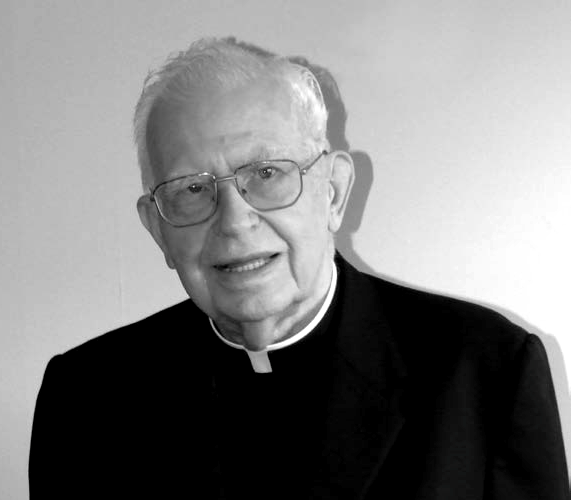
Here is a sermon from the good old days by +Rev. Msgr. Vincent Nicholas Foy (August 14, 1915 – March 13, 2017), from 1943. Readers may recall that Pope Saint Pius X, by the decree Quam Singulari in 1910, lowered the customary age of reception of Holy Communion – after the rigours of the plague[…]Continue reading→
In the Glorious Light of Easter, Alleluia!
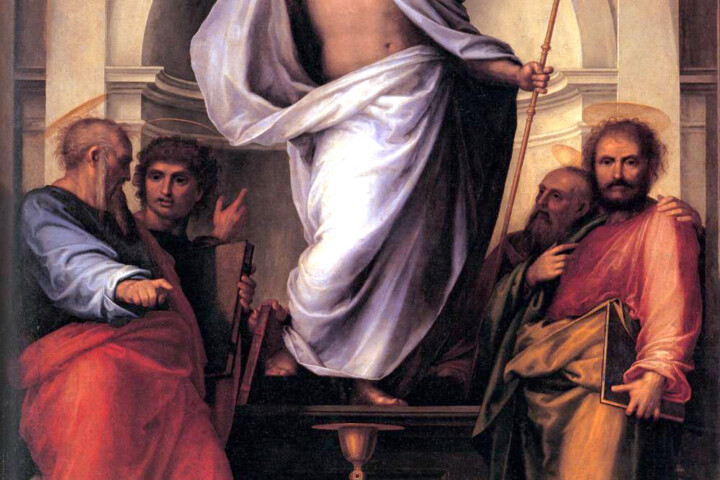
Set your minds on things that are above, not on things that are on earth, for you have died, and your life is hidden with Christ in God. When Christ who is your life is revealed, then you also will be revealed with him in glory (Col. 3:3-4). The Resurrection of Our Lord and Saviour[…]Continue reading→
An Ancient Homily for Holy Saturday
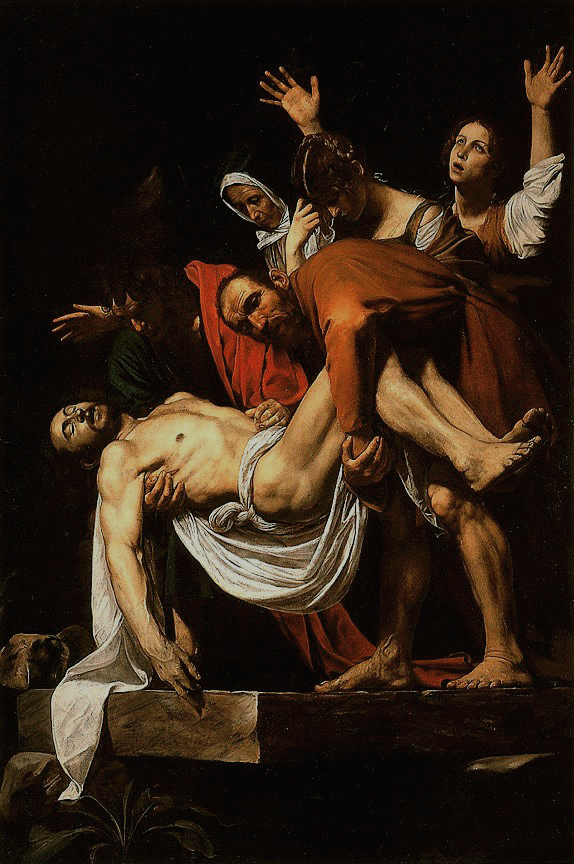
The time between Good Friday and Easter Sunday is one of waiting, in silence, as the world wonders – anticipates – what will happen, after the death of Christ. We re-live this time each year in the anamnesis of our liturgy, and in turn look forward to the glorious re-creation of all things at the[…]Continue reading→
Europe’s Long Descent
(As we meditate on this day on Christ’s burial, and His descent into hell, it is fitting to ponder here with contributor Peter Marcus how the world seems to be heading there as well. The difference is that, although God cannot ‘redeem’ hell, nor those therein, He can and did redeem the world. There is[…]Continue reading→