
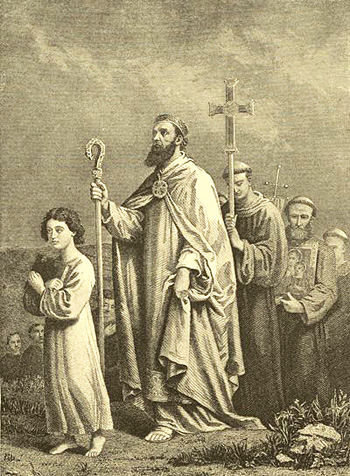
Saint Patrick and His Emerald Isle
A very happy Saint Patrick’s Day, to all our readers, and we extend that to all who are of Irish lineage, or those who would like to be, or those who just enjoy participating in the rich culture of the Emerald Isle in a more spiritual and vicarious way, which pretty much includes everyone. After all, who doesn’t love Irish music?
I have a double devotion I have to the missionary saint, being both Scottish, by birth, and Irish, by genealogy. Patrick may have been the opposite: He himself was not Irish, but a Roman citizen sold into hard and brutal slavery as a boy into then-pagan Ireland. He may well have been born near Dumbarton, in Scotland, then a Roman outpost of sorts, and, as providence would have it, also my home town. But then, he adopted his new land as his own, determined to bring them to the Catholic Faith to which he had dedicated his own life.
We learn of his life from his own Confessio, which is not quite the same as his near-contemporary, Augustine’s, work of nearly the same title. A series of 62 brief meditations and reflections, it displays the devout soul of the saint. Other works are attributed to him: his Breastplate hymn, and his Letter to the Soldiers of Coroticus, a condemnation of the king’s forces brutal attacks on newly-baptized Christians.
Patricius, or Patrick, or Padraig, led a disciplined and focused life, finding his way to studies and the priesthood in a manner that was well-nigh miraculous. His six years in meditative servile solitude, biblically – and prophetically – tending sheep, led to his conversion to full truth of Catholicism. After escaping from his pagan slave-master, he trod the 200 miles across rough terrain to the shore, begging access to a ship to take him across to England and France, where, after another miraculous trek during which he and his rough companions all nearly starved, he found his way to various monasteries, refuges of learning and culture, wherein he received a solid spiritual and intellectual formation – a quasi-liberal arts education, if you will.
Towards the end of his spiritual journey, his ‘beloved Irish’ appeared to him in a vision, begging him to return and bring the Faith to them, the land that had treated him so harshly. It is to his credit that the saint not only forgave them, but gave everything for them. As he wrote in his famed Confession, one upon which our priests and bishops, as well as we lay Catholics, would do well to meditate, and imitate:
If I am worthy, I am ready also to give up my life, without hesitation and most willingly, for his name. I want to spend myself in that country, even in death, if the Lord should grant me this favor. I am deeply in his debt, for he gave me the great grace that through me many peoples should be reborn in God, and then made perfect by confirmation and everywhere among them clergy ordained for a people so recently coming to believe, one people gathered by the Lord from the ends of the earth.
The rest of the story is familiar: Patrick’s return, his appointment as bishop of Armagh, and the nearly overnight conversion of the fiery and impetuous Irish people, who took to the truths of Catholicism like a thirsty man to water, or to whiskey, as the case may be.
Whatever it was about the Irish, the harmony between their native traditions and Catholicism, tempered and perfected by their profound suffering, produced a culture that has endured and caught the imagination the world over, in literature, prayer, music, dancing, singing, their winsome brogue, their zeal and devotion, if not their food. But, fine Irish stew, and home-grown potatoes certainly have their place.
It is disheartening, to say the least, that the faith in Catholic Ireland is diminishing, now just about vitiated, with churches emptied. Along with that the recent legalization of divorce and abortion, families destroyed, and the blood of innocents shed for the first time in her recorded history, a land that so far has lived without the stain of this worldwide scourge. Euthanasia may soon be on its way. We may hope Patrick and the myriad Celtic saints will intervene; if not, Saint Malachy’s prophecy may well prove true, that Ireland will be ‘deluged’ before she so loses the Faith.
I have some patience and sympathy with the ersatz version of St. Paddy’s day-Irish-ness, the green glasses and beer, the pub nights, the belted-out ballads, the ‘kiss me, I’m Irish’, and all the rest of the kitsch. Patrick would frown at the excess of debauchery and the hedonism, not least during Lent (during which his memorial always falls). He would likely tell them to make a good confession, attend Mass, and do a bit of penance, to prepare their souls to meet their Maker.
Yet behind all the excesses of this day, there is something real, some glimpse of the perfection that Catholicism brings to a people, the capacity to suffer with joy, to smile through pain and loss, and to play music and sing, always to sing, regardless of one’s travails, especially during one’s travails, something our own culture, such as it is, is losing.
As Augustine said, ‘qui cantat, bis orat’, he who sings, prays twice. He actually added ‘bene’, as in, he who sings ‘well’. But singing well is not always singing in tune, but rather singing with devotion, with love, from the heart.
And that is something the Irish could always do, and their songs echo through the ages, lifting the soul from hearth and home to heaven and to God.
As Chesterton once wrote, “The Gaels, the men from the Ireland, the race that God made mad. For all their wars are merry, and all their songs are sad”. But their music is of a joyful sadness, or a joy tinged with sadness, with the awareness that Saint Patrick instilled in his beloved people that this life is not all there is, and we are made for another, a far more perfect life, of which the beauty of the Emerald Isle is but a glimpse and an image.
So sing today, belt it out of your windows and porches, whether in or out of tune, so long as you sing with devotion, your heart reposing in the God, whose salvific truth Patrick gave to Ireland, and Ireland gave to the world.
Saint Patrick, ora pro nobis!

Carney’s Amoral Majority
After five defections – euphemistically described as ‘crossing the floor’ – and three by-elections, Mark Carney and his Liberals how have their coveted majority. One wonders what bowls of pottage were offered in back-room deals. In the archaic monarchical system that is the Dominion of Canada, this majority allows the newly-minted Prime Minister to rule[…]Continue reading→

Saint Kateri , Canada’s Protectress
This was the title given to Saint Kateri Tekakwitha, by Pope Benedict XVI, when he canonized her on October 28th, 2012, along with six others, in Saint Peter’ Square (she had been beatified by Pope John Paul II back in 1980). With Saint Joseph as our protector, along with the Canadian martyrs, we seem to[…]Continue reading→

A Tale of Two Benedicts
A grace-filled Holy Week to all our readers! As we await and prepare for the Resurrection about to dawn upon us, we might keep in mind two Benedicts: Pope Emeritus Benedict XVI, requiescat in pace, elected on this day in 2005; and today’s commemoration of the mystic pilgrim, Benedict Joseph Labre, who died on this[…]Continue reading→

My Name is Bernadette
April 16th is a propitious day, for besides the anniversary of Father de Valk’s death, who founded Catholic Insight in its print form decades ago, and the commemoration of the ‘two Benedicts’, mentioned in accompanying posts, today we also recall Saint Bernadette Soubirous, the young visionary to whom the Virgin Mary appeared numerous times at[…]Continue reading→

Saint Lydwina of Schiedam and Suffering Joyfully
Saint Lydwina of Schiedam (1380 – 1433) was one of the countless and glorious ‘victim souls’ in the history of the Church, those whose lives are filled with suffering, often of an unimaginable intensity, but who suffer joyfully. She was a fifteen-year old Dutch girl, out skating one day, when she fell and broke one[…]Continue reading→

The Glorious Martyrdoms of Martin and Maximus
As we enter into Eastertide, we recall on this 13th of April Pope Saint Martin I (+655), one of the noblest, if most tragic, of the successors of Saint Peter. Born in Umbria, Italy, he was of noble lineage, with great intelligence combined with charity and love of the poor and the Church. While still[…]Continue reading→

Canonizing Sister Faustina and Divine Mercy
HOMILY OF THE HOLY FATHER MASS IN ST PETER’S SQUARE FOR THE CANONIZATION OF SR MARY FAUSTINA KOWALSKA Sunday, 30 April 2000 1. “Confitemini Domino quoniam bonus, quoniam in saeculum misericordia eius”; “Give thanks to the Lord for he is good; his steadfast love endures for ever” (Ps 118: 1). So the Church sings on the Octave of[…]Continue reading→

Saint Stanislaus of Szczepanów
We celebrate Saint Stanislaus today (+ April 11, 1079), in light of this Easter Octave, a bishop and martyr who accepted the episcopacy only at the direct order of Pope Alexander II. He proved a wise and courageous leader of his flock, put to death by his own king, Boleslaus, for rebuking the monarch’s ‘immoral[…]Continue reading→
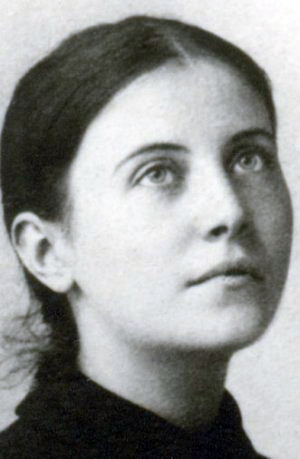
Saint Gemma Galgani
On this April 11th, in 1903 – the same year that the Italian Guiseppe Sarto was elected Pope later that summer as Pius X – a lovely, young Italian woman died, by the name of Gemma Galgani. She lived a brief life of 24 years, as did a number of other young saints, including Pier[…]Continue reading→
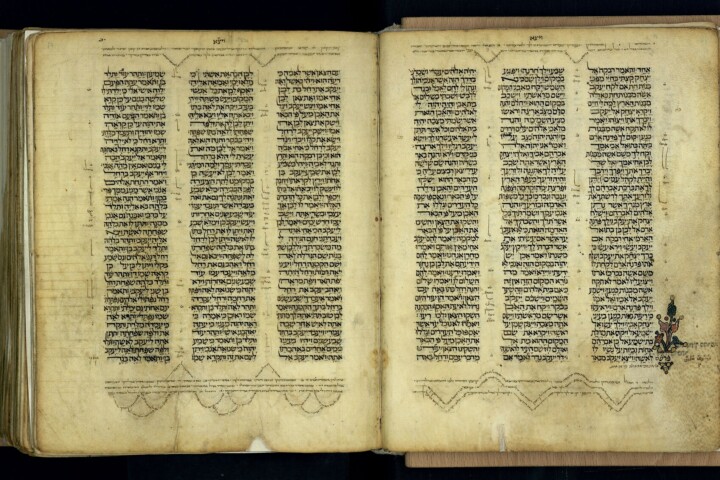
An Ideological and Improper Translation
I noticed something odd with the psalm reading at Mass the other day. Our bishops’ conference here in Canada has decreed that the Mass in English – Novus Ordo – use the ‘NRSV’, the ‘New Revised Standard Version’, an ‘updated’ translation of the original RSV, first published in 1952. This ‘new translation’ has the tendency[…]Continue reading→