
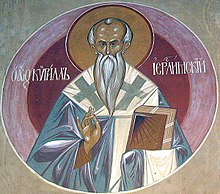
Saint Cyril of Jerusalem: The Renewal of Catechetics
The saints during Lent – with few exceptions, such as Saint Joseph – are celebrated as muted ‘commemorations’, but that does not decrease their significance as saints, and we should still remember them for what their always remarkable and unique lives have to teach us.
So it is with Saint Cyril of Jerusalem (315 – 386/7), bishop of the ancient city during the tumultuous fourth century, with the Church rent by the virulent heresy of Arianism and the ensuing political domination of all things ecclesiastical; when as the contemporary Saint Jerome lamented, the whole groaned to find itself Arian. The orthodox bishops faithful to Tradition had to stand firm, immovable and implacable in the truth. Cyril suffered much for this truth, and was exiled a number of times from his see. Even though some at the time questioned his orthodoxy, Cyril fully accepted and defended the Nicene formula of the homo-ousios, which the Arians just as fully denied: that Christ was the same ‘substance’ as the Father, true God from true God, reiterated at the Council of Constantinople in 381, which Cyril attended.
To ground his fellow Catholics in the truth, Cyril presented his now-famous ‘Catecheses’, a series of 23 addresses on the sacraments of initiation: Baptism, Confirmation and the Holy Eucharist; fitting, in this Lententide, when new converts prepare for their own Baptism. Cyril emphasized the high moral standard requisite for living a full Christian life, and the need for Faith to undergird all things:
It is not only among us, who are marked with the name of Christ, that the dignity of faith is great; all the business of the world, even of those outside the Church, is accomplished by faith. By faith, marriage laws join in union persons who were strangers to one another. By faith, agriculture is sustained; for a man does not endure the toil involved unless he believes he will reap a harvest. By faith, seafaring men, entrusting themselves to a tiny wooden craft, exchange the solid element of the land for the unstable motion of the waves.
Recent Popes have taught the dire need for a new catechetical formation. All the laity – and priests! And bishops! – should be grounded in the most necessary and fundamental teachings of the Church, in Christian Doctrine, in what Christ has revealed for our salvation. Peruse, when you might, the Credo of the People of God, by Paul VI (June 30, 1968, the memorial of the first martyrs of Rome) and the Catechesi Tradendae by John Paul II (October 16, 1979, one year to the day after he was elected Pope). Of course, most of all, the Catechism of the Catholic Church. How many Catholics there are, who go through the motions of their religion, with little idea of why or what it’s all about? That is likely so many leave the Church, and wander into watery mists of their own devising. Only by knowing our Faith can we pray and live our our Faith. Lex orandi, lex credendi, lex vivendi – the law of praying, the law of believing and the law of living – are all inextricably linked.
My people perish for lack of knowledge! lamented the prophet Hosea – and that perhaps has never been more true than in our own age.
And just as Cyril believed in the Incarnation – the Word made Flesh – so too in Transubstantiation – the Bread made Flesh, the very Body and Blood of Jesus Christ:
Since Christ Himself said in reference to the bread: “This is My Body,” who will dare remain hesitant? And since with equal clarity He asserted: “This is My Blood,” who will dare entertain any doubt and say that this is not His Blood?… You have been taught these truths. Imbued with the certainty of faith, you know that what seems to be bread is not bread but the Body of Christ, although it seems to be bread when tasted. You also know that what seems to be wine is not wine but the Blood of Christ although it does taste like wine.
Saint Cyril’s time, like all times, including our own, was filled with apocalyptic expectation, with wars and rumours of wars, and those for and against Christ. But the Church must hold an even keel, as Cyril knew, always ready for the ‘end’. So should we all in our own personal pilgrimages through life, still live in the ‘now’, which is all the time we really have.
Saint Cyril went to his own eternal reward, likely on this day, in 386. May he intercede for our own bishops, priests and all of us, in our own tumultuous and, yes, ‘apocalyptic’ time.
Sancte Cyrille de Ierusalem, ora pro nobis!
(source, with gratitude: Catholic Encyclopedia, and Wikipedia)

Carney’s Amoral Majority
After five defections – euphemistically described as ‘crossing the floor’ – and three by-elections, Mark Carney and his Liberals how have their coveted majority. One wonders what bowls of pottage were offered in back-room deals. In the archaic monarchical system that is the Dominion of Canada, this majority allows the newly-minted Prime Minister to rule[…]Continue reading→

Saint Kateri , Canada’s Protectress
This was the title given to Saint Kateri Tekakwitha, by Pope Benedict XVI, when he canonized her on October 28th, 2012, along with six others, in Saint Peter’ Square (she had been beatified by Pope John Paul II back in 1980). With Saint Joseph as our protector, along with the Canadian martyrs, we seem to[…]Continue reading→
A Tale of Two Benedicts
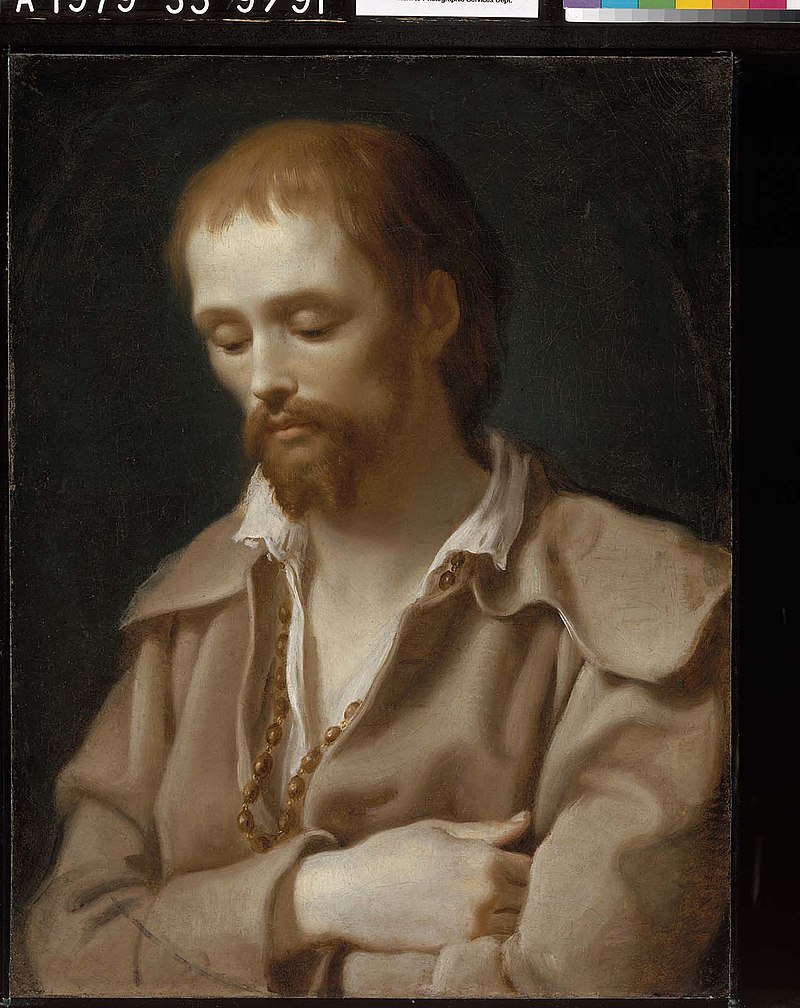
A grace-filled Holy Week to all our readers! As we await and prepare for the Resurrection about to dawn upon us, we might keep in mind two Benedicts: Pope Emeritus Benedict XVI, requiescat in pace, elected on this day in 2005; and today’s commemoration of the mystic pilgrim, Benedict Joseph Labre, who died on this[…]Continue reading→

My Name is Bernadette
April 16th is a propitious day, for besides the anniversary of Father de Valk’s death, who founded Catholic Insight in its print form decades ago, and the commemoration of the ‘two Benedicts’, mentioned in accompanying posts, today we also recall Saint Bernadette Soubirous, the young visionary to whom the Virgin Mary appeared numerous times at[…]Continue reading→
Saint Lydwina of Schiedam and Suffering Joyfully
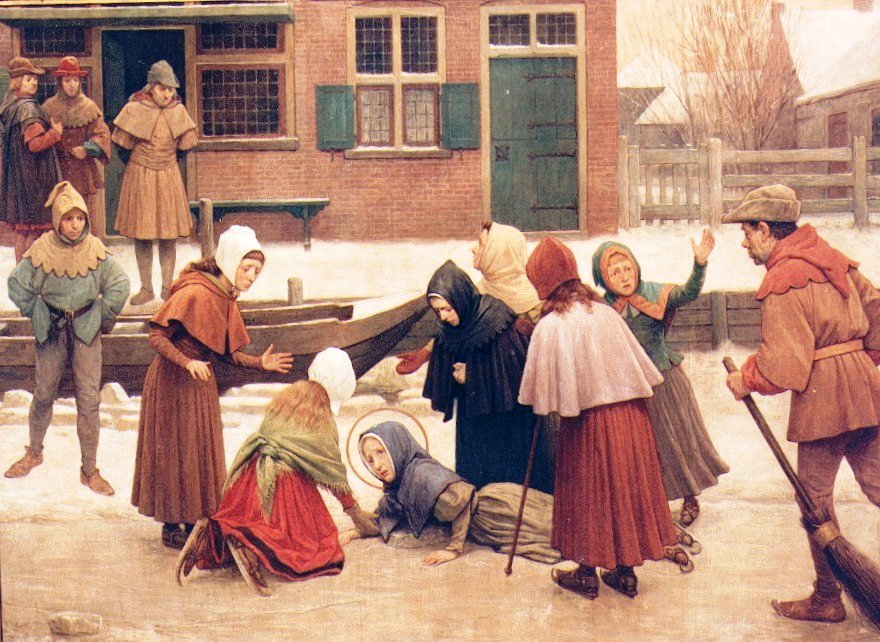
Saint Lydwina of Schiedam (1380 – 1433) was one of the countless and glorious ‘victim souls’ in the history of the Church, those whose lives are filled with suffering, often of an unimaginable intensity, but who suffer joyfully. She was a fifteen-year old Dutch girl, out skating one day, when she fell and broke one[…]Continue reading→
The Glorious Martyrdoms of Martin and Maximus
As we enter into Eastertide, we recall on this 13th of April Pope Saint Martin I (+655), one of the noblest, if most tragic, of the successors of Saint Peter. Born in Umbria, Italy, he was of noble lineage, with great intelligence combined with charity and love of the poor and the Church. While still[…]Continue reading→
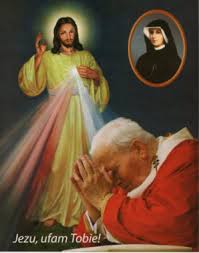
Canonizing Sister Faustina and Divine Mercy
HOMILY OF THE HOLY FATHER MASS IN ST PETER’S SQUARE FOR THE CANONIZATION OF SR MARY FAUSTINA KOWALSKA Sunday, 30 April 2000 1. “Confitemini Domino quoniam bonus, quoniam in saeculum misericordia eius”; “Give thanks to the Lord for he is good; his steadfast love endures for ever” (Ps 118: 1). So the Church sings on the Octave of[…]Continue reading→

Saint Stanislaus of Szczepanów
We celebrate Saint Stanislaus today (+ April 11, 1079), in light of this Easter Octave, a bishop and martyr who accepted the episcopacy only at the direct order of Pope Alexander II. He proved a wise and courageous leader of his flock, put to death by his own king, Boleslaus, for rebuking the monarch’s ‘immoral[…]Continue reading→
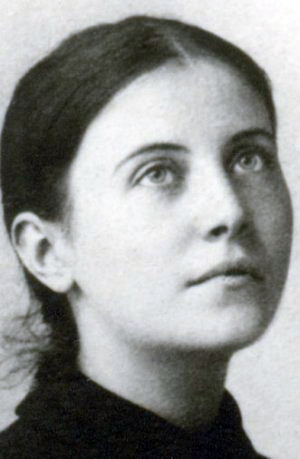
Saint Gemma Galgani
On this April 11th, in 1903 – the same year that the Italian Guiseppe Sarto was elected Pope later that summer as Pius X – a lovely, young Italian woman died, by the name of Gemma Galgani. She lived a brief life of 24 years, as did a number of other young saints, including Pier[…]Continue reading→
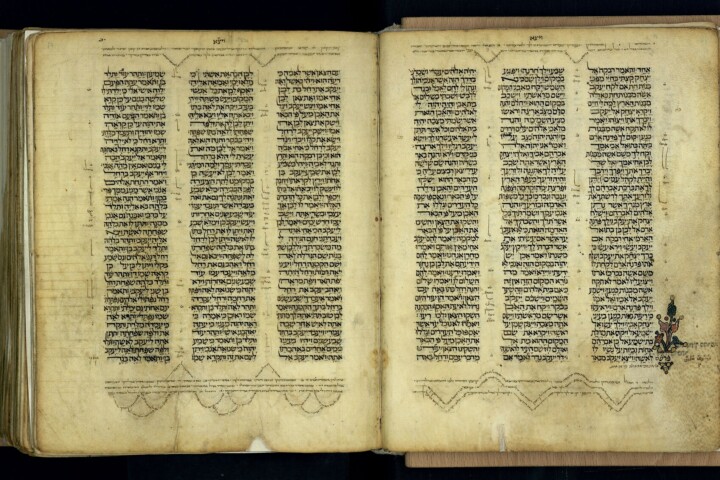
An Ideological and Improper Translation
I noticed something odd with the psalm reading at Mass the other day. Our bishops’ conference here in Canada has decreed that the Mass in English – Novus Ordo – use the ‘NRSV’, the ‘New Revised Standard Version’, an ‘updated’ translation of the original RSV, first published in 1952. This ‘new translation’ has the tendency[…]Continue reading→