
“This is MY Body—But I Don’t Want It!”
From the CCBR blog.
Fellow feminists,
In case you haven’t noticed, women (or “womyn,” if you prefer) are immensely powerful. And I’m not just talking “Lady Macbeth” meets “Charlie’s Angels.” While there is something to be said about feminine beauty and strength, our power lies in the very thing that makes us fundamentally different from men. In case you need a reminder, it’s that women have the extraordinary ability to help create and facilitate the development of another human being—inside her body! The life within her begins as a tiny single-celled human organism which then rapidly grows and develops over the next nine months or so. And she (the mother) can in a way “grow” that little person within her while going for a walk or checking the mail or even in her sleep.
Strangely enough, I know of some people who would actually be offended by some of the simple statements I have just made. Some might accuse me of reducing “womyn” to barefoot baby-making machines who have no other function in society than to be a soft, pretty incubator for the “products of conception” within her. Some might accuse me of overlooking men’s capacity to nurture. I sincerely believe that these accusations are born of a fearful, confused ideology. Since when does the natural function of the womb make a woman less of a woman? Since when does the absence of a womb excuse callous or negligent behavior from our male counterparts?
The differences between males and females (and, yes, they do exist) do not lessen the intrinsic value of either sex. Biologically speaking, the male anatomy and the female anatomy were designed to complete one another, ultimately to bring about the life of a new human being. This is not to say that every man and every woman must “claim” their sexuality by becoming parents—otherwise, what would I be at this stage in my life?
At my university, we dismiss the idea that a woman’s ability to bear children somehow renders her incapable of doing anything else. No one should reduce women to human incubators any more than they should reduce them to objects of pleasure. That is why truly chivalrous men honor women’s unique receptivity to the gift of life as part of who she is as a whole, unique individual, instead of coercing her into rejecting such an integral aspect of herself. As women, we should not have to compromise our ability to bear children in order to keep up with men in the workforce, or elsewhere. Besides, if fertility in women is a sign of good health, why are we using pills and hormones to make her sick? Only a poseur “feminist” would drive a women to reject her womb—it’s an utter paradox.
Republished with permission from the Canadian Centre for Bio-Ethical Reform.

Saint Kateri , Canada’s Protectress
This was the title given to Saint Kateri Tekakwitha, by Pope Benedict XVI, when he canonized her on October 28th, 2012, along with six others, in Saint Peter’ Square (she had been beatified by Pope John Paul II back in 1980). With Saint Joseph as our protector, along with the Canadian martyrs, we seem to[…]Continue reading→

A Tale of Two Benedicts
A grace-filled Holy Week to all our readers! As we await and prepare for the Resurrection about to dawn upon us, we might keep in mind two Benedicts: Pope Emeritus Benedict XVI, requiescat in pace, elected on this day in 2005; and today’s commemoration of the mystic pilgrim, Benedict Joseph Labre, who died on this[…]Continue reading→

My Name is Bernadette
April 16th is a propitious day, for besides the anniversary of Father de Valk’s death, who founded Catholic Insight in its print form decades ago, and the commemoration of the ‘two Benedicts’, mentioned in accompanying posts, today we also recall Saint Bernadette Soubirous, the young visionary to whom the Virgin Mary appeared numerous times at[…]Continue reading→

Saint Lydwina of Schiedam and Suffering Joyfully
Saint Lydwina of Schiedam (1380 – 1433) was one of the countless and glorious ‘victim souls’ in the history of the Church, those whose lives are filled with suffering, often of an unimaginable intensity, but who suffer joyfully. She was a fifteen-year old Dutch girl, out skating one day, when she fell and broke one[…]Continue reading→

The Glorious Martyrdoms of Martin and Maximus
As we enter into Eastertide, we recall on this 13th of April Pope Saint Martin I (+655), one of the noblest, if most tragic, of the successors of Saint Peter. Born in Umbria, Italy, he was of noble lineage, with great intelligence combined with charity and love of the poor and the Church. While still[…]Continue reading→

Canonizing Sister Faustina and Divine Mercy
HOMILY OF THE HOLY FATHER MASS IN ST PETER’S SQUARE FOR THE CANONIZATION OF SR MARY FAUSTINA KOWALSKA Sunday, 30 April 2000 1. “Confitemini Domino quoniam bonus, quoniam in saeculum misericordia eius”; “Give thanks to the Lord for he is good; his steadfast love endures for ever” (Ps 118: 1). So the Church sings on the Octave of[…]Continue reading→
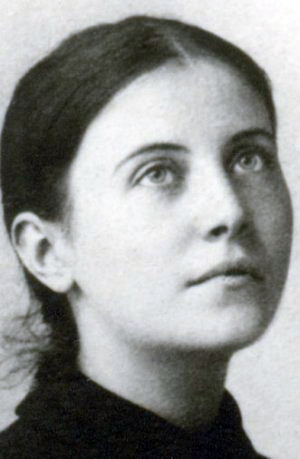
Saint Gemma Galgani
On this April 11th, in 1903 – the same year that the Italian Guiseppe Sarto was elected Pope later that summer as Pius X – a lovely, young Italian woman died, by the name of Gemma Galgani. She lived a brief life of 24 years, as did a number of other young saints, including Pier[…]Continue reading→
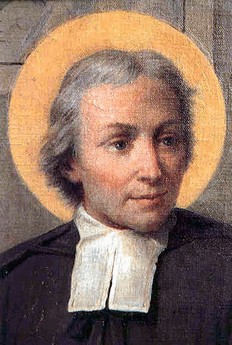
Saint Jean-Baptiste de la Salle: A Teacher for Teachers
Jean-Baptiste de la Salle (1651 – 1719), a French nobleman, ordained a priest, founded the first order in the Church’s history entirely without priests, and this came about almost by accident. I say ‘almost’, for, of course, there are no accidents with God. Destined for ordination from an early age, Jean-Baptiste never looked back, even[…]Continue reading→
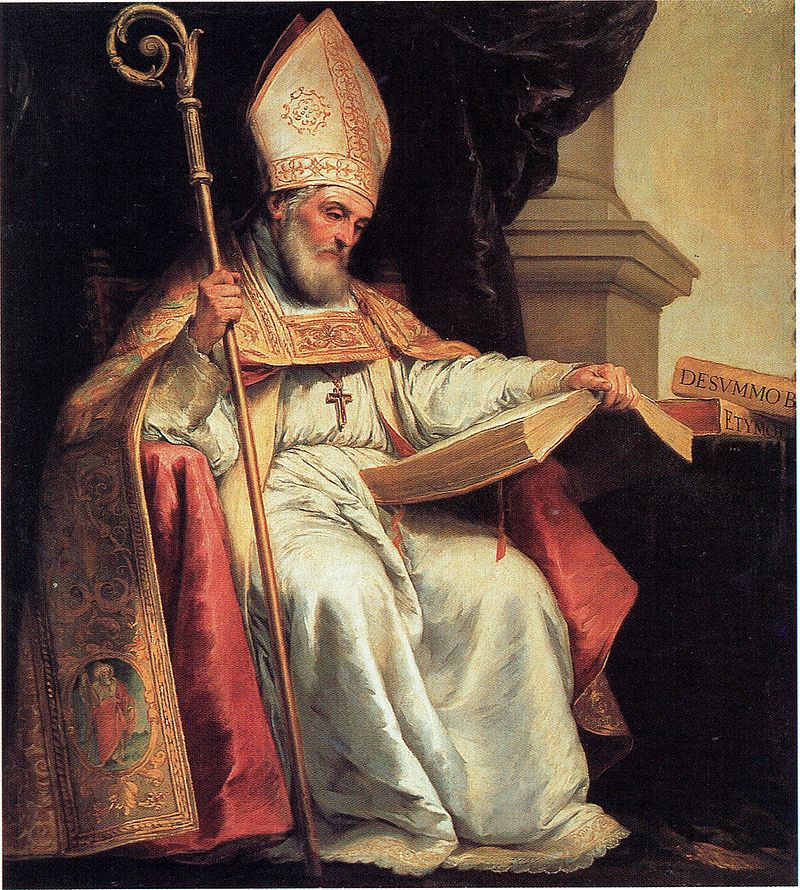
Saint Isidore of Seville, the Internet and Industriousness
Today, April 4th, muted this year by Holy Saturday, is the commemoration of Saint Isidore of Seville (560-636) a bishop and doctor of the Church during a tumultuous age, when civilization was crumbling, coming apart at its very seams, which may sound sort of au courant. Then again, the form of this world has always[…]Continue reading→
A Minimal Friar and the Death of a Great Pope
This April the second- overshadowed by Holy Thursday this year – marks the memorial of Saint Francis of Paola (1417-1507), founder of the ‘Minim’ friars, so called for their humility and poverty, who interpreted the rule of Saint Francis of Assisi in quite a literal sense: extreme poverty, trust in God, foregoing all animal and[…]Continue reading→