
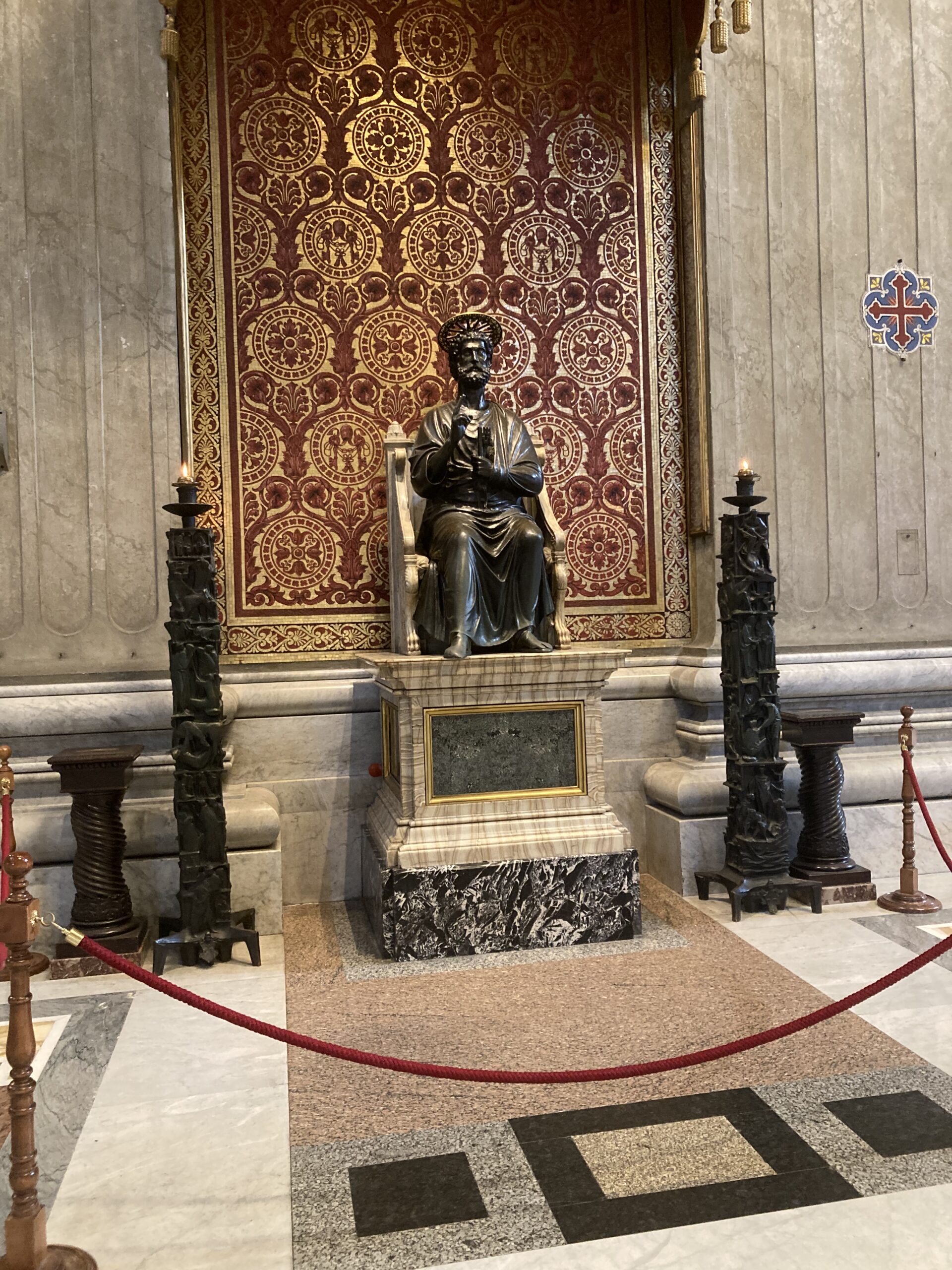
Nicene and the Filioque
This year marks the 1700th anniversary of the Council of Nicaea, which first promulgated the creed that goes by its name. As the recent Apostolic Letter of Pope Leo, In Unitate Fidei, the council was called to respond to the heresy of Arius, who denied the full divinity of Jesus Christ, the Word made Flesh. In the creed, the term homo-ousios was adopted to signify the relation between the Father and the Son: They are of the same nature, essence or substance, and the Son, ‘true God, from true God’, and ‘begotten, not made’. As Saint Irenaeus put it, God became Man, so that Man might become God.
Nothing’s been the same ever since.
Yet the Creed is not just that of Nicaea, as Pope Leo’s letter goes on to make clear, but also of the subsequent council of Constantinople in 381, when some in turn denied the divinity of the Holy Spirit. The creed was then expanded, to clarify that He too is the ‘Lord, the giver of life’ and Who is ‘worshiped and glorified’.
So far, so good. The Incarnation changed all of history, and to every person the path to heaven is now open, if they but avail themselves of God’s salvific grace and truth offered through Jesus Christ and His one, holy, catholic and apostolic Church.
The controversy – besides the odd insertion into a letter on the Creed to care for creation – is the glossing over the filioque clause. This was added after Constantinople and the following council of Chalcedon (451), that the Holy Spirit proceeds from the Father and the Son. The Pope quotes the original version of the creed, stating simply that the Holy Spirit proceeds from the Father:
And in the footnote (#10), the following clarification is made:
First Council of Constantinople, Expositio fidei: CC, Conc. Oec. Gen. Decr. 1, 57 20-24. The statement “and proceeds from the Father and the Son ( Filioque)” is not found in the text of Constantinople; it was inserted into the Latin Creed by Pope Benedict VIII in 1014 and is a subject of Orthodox-Catholic dialogue.
The Catechism goes further and is somewhat more dramatic, making clear that the filioque had been confessed much earlier, by the first Leo, the Great, around the time of the Council of Chalcedon:
The affirmation of the filioque does not appear in the Creed confessed in 381 at Constantinople. But Pope St. Leo I, following an ancient Latin and Alexandrian tradition, had already confessed it dogmatically in 447,76 even before Rome, in 451 at the Council of Chalcedon, came to recognize and receive the Symbol of 381. the use of this formula in the Creed was gradually admitted into the Latin liturgy (between the eighth and eleventh centuries). the introduction of the filioque into the Niceno-Constantinopolitan Creed by the Latin liturgy constitutes moreover, even today, a point of disagreement with the Orthodox Churches. (#247)
‘Disagreement’, since the filioque is necessary to properly understand the nature of the Trinity. The divine Persons are distinguished by their ‘relations of origin or opposition’. The Father is identified by His relation to the Son, and the Son to the Father, and the Holy Spirit to both. To paraphrase Saint Thomas, it’s not as though the Persons are related to one another – rather, they are the relations of one to the other. The Father is subsistent paternity, the Son filiation, and the Holy Spirit is the procession from the Father and the Son.
If the Son and the Holy Spirit both simply proceed from the Father, then they would be the same relation and, hence, the same Person. We need the filioque, or something like it. The Catechism goes on to make this clear:
At the outset the Eastern tradition expresses the Father’s character as first origin of the Spirit. By confessing the Spirit as he “who proceeds from the Father”, it affirms that he comes from the Father through the Son.77 The Western tradition expresses first the consubstantial communion between Father and Son, by saying that the Spirit proceeds from the Father and the Son (filioque). It says this, “legitimately and with good reason”,78 for the eternal order of the divine persons in their consubstantial communion implies that the Father, as “the principle without principle”,79 is the first origin of the Spirit, but also that as Father of the only Son, he is, with the Son, the single principle from which the Holy Spirit proceeds.80 This legitimate complementarity, provided it does not become rigid, does not affect the identity of faith in the reality of the same mystery confessed. (#248)
The East rejects the filioque for complex historical and theological reasons. That it was added under a ‘barbarian’ emperor (Charlemagne). As well, they wanted to emphasize the ‘monarchy’ of the Father, as the source without source, or, as stated, the principle without principle. This is still held in the Latin formulation with the filioque. The phrase ‘through the Son’ – per Filium – has its own metaphysical issues, not least subordinating the Son and the Holy Spirit, but is a compromise, and one that the East does not put into their own version of the creed.
Pope Leo has his ecumenical reasons for doing what he does, in the midst of which we may be confident he will leave the Creed as it is, which we may recite with gusto and with fullness of Faith in the Father, Son and Holy Spirit, three Person, one God, with whom we hope to live in eternal beatitude, in saecula saecolrum. Amen.
Carney’s Amoral Majority
After five defections – euphemistically described as ‘crossing the floor’ – and three by-elections, Mark Carney and his Liberals how have their coveted majority. One wonders what bowls of pottage were offered in back-room deals. In the archaic monarchical system that is the Dominion of Canada, this majority allows the newly-minted Prime Minister to rule[…]Continue reading→

Saint Kateri , Canada’s Protectress
This was the title given to Saint Kateri Tekakwitha, by Pope Benedict XVI, when he canonized her on October 28th, 2012, along with six others, in Saint Peter’ Square (she had been beatified by Pope John Paul II back in 1980). With Saint Joseph as our protector, along with the Canadian martyrs, we seem to[…]Continue reading→
A Tale of Two Benedicts
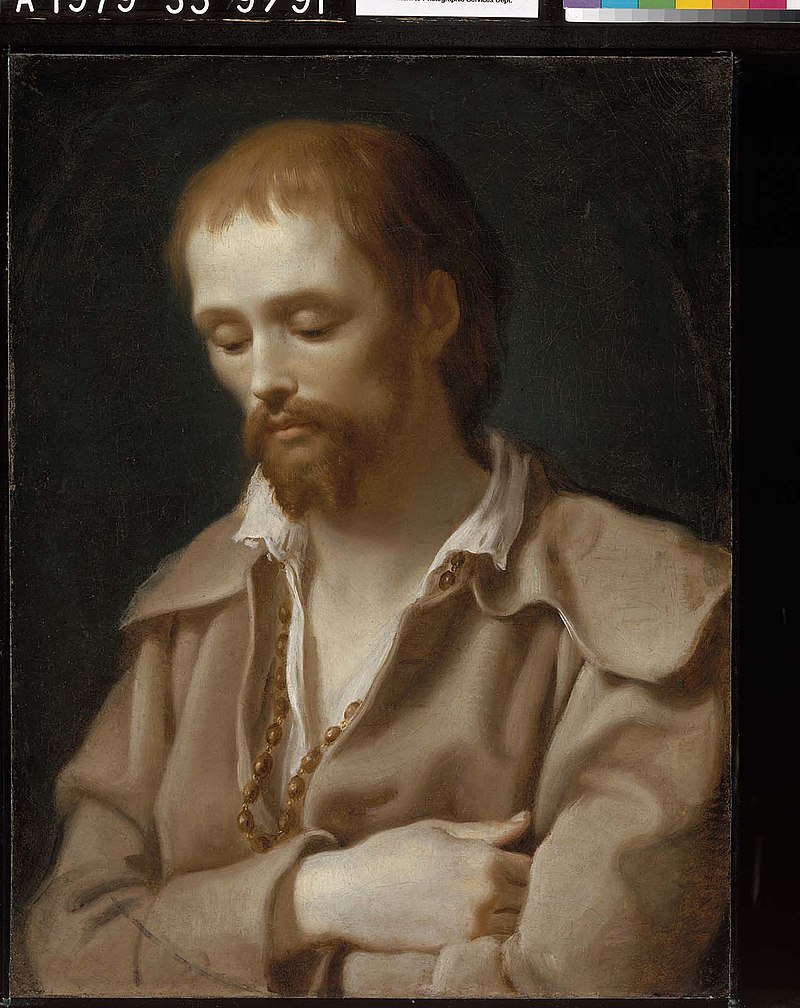
A grace-filled Holy Week to all our readers! As we await and prepare for the Resurrection about to dawn upon us, we might keep in mind two Benedicts: Pope Emeritus Benedict XVI, requiescat in pace, elected on this day in 2005; and today’s commemoration of the mystic pilgrim, Benedict Joseph Labre, who died on this[…]Continue reading→

My Name is Bernadette
April 16th is a propitious day, for besides the anniversary of Father de Valk’s death, who founded Catholic Insight in its print form decades ago, and the commemoration of the ‘two Benedicts’, mentioned in accompanying posts, today we also recall Saint Bernadette Soubirous, the young visionary to whom the Virgin Mary appeared numerous times at[…]Continue reading→
Saint Lydwina of Schiedam and Suffering Joyfully
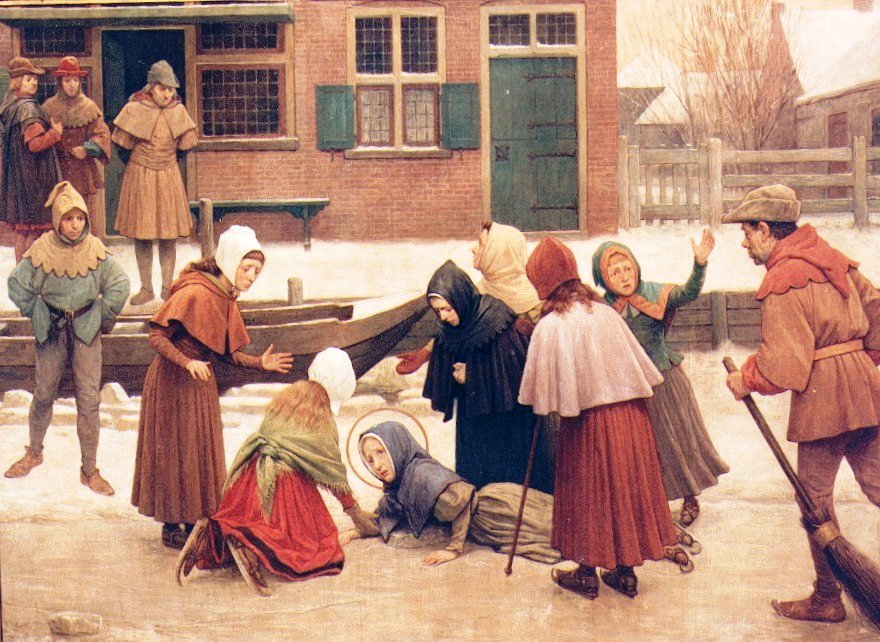
Saint Lydwina of Schiedam (1380 – 1433) was one of the countless and glorious ‘victim souls’ in the history of the Church, those whose lives are filled with suffering, often of an unimaginable intensity, but who suffer joyfully. She was a fifteen-year old Dutch girl, out skating one day, when she fell and broke one[…]Continue reading→
The Glorious Martyrdoms of Martin and Maximus
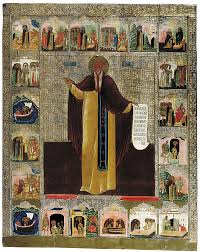
As we enter into Eastertide, we recall on this 13th of April Pope Saint Martin I (+655), one of the noblest, if most tragic, of the successors of Saint Peter. Born in Umbria, Italy, he was of noble lineage, with great intelligence combined with charity and love of the poor and the Church. While still[…]Continue reading→

Saint Stanislaus of Szczepanów
We celebrate Saint Stanislaus today (+ April 11, 1079), in light of this Easter Octave, a bishop and martyr who accepted the episcopacy only at the direct order of Pope Alexander II. He proved a wise and courageous leader of his flock, put to death by his own king, Boleslaus, for rebuking the monarch’s ‘immoral[…]Continue reading→
Saint Gemma Galgani
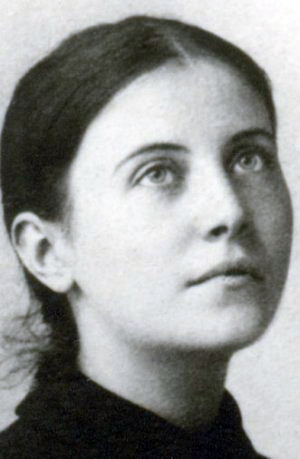
On this April 11th, in 1903 – the same year that the Italian Guiseppe Sarto was elected Pope later that summer as Pius X – a lovely, young Italian woman died, by the name of Gemma Galgani. She lived a brief life of 24 years, as did a number of other young saints, including Pier[…]Continue reading→
An Ideological and Improper Translation
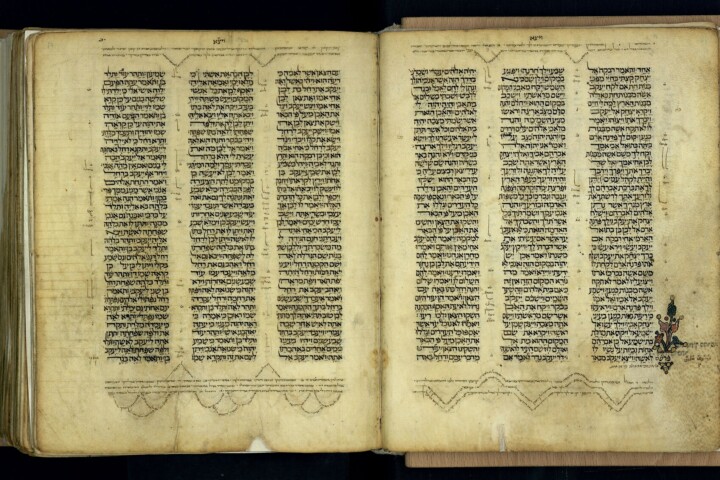
I noticed something odd with the psalm reading at Mass the other day. Our bishops’ conference here in Canada has decreed that the Mass in English – Novus Ordo – use the ‘NRSV’, the ‘New Revised Standard Version’, an ‘updated’ translation of the original RSV, first published in 1952. This ‘new translation’ has the tendency[…]Continue reading→
Saint Jean-Baptiste de la Salle: A Teacher for Teachers
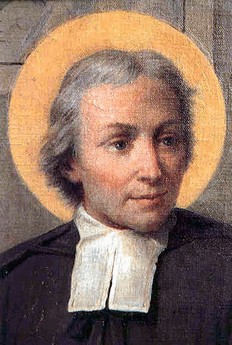
Jean-Baptiste de la Salle (1651 – 1719), a French nobleman, ordained a priest, founded the first order in the Church’s history entirely without priests, and this came about almost by accident. I say ‘almost’, for, of course, there are no accidents with God. Destined for ordination from an early age, Jean-Baptiste never looked back, even[…]Continue reading→