
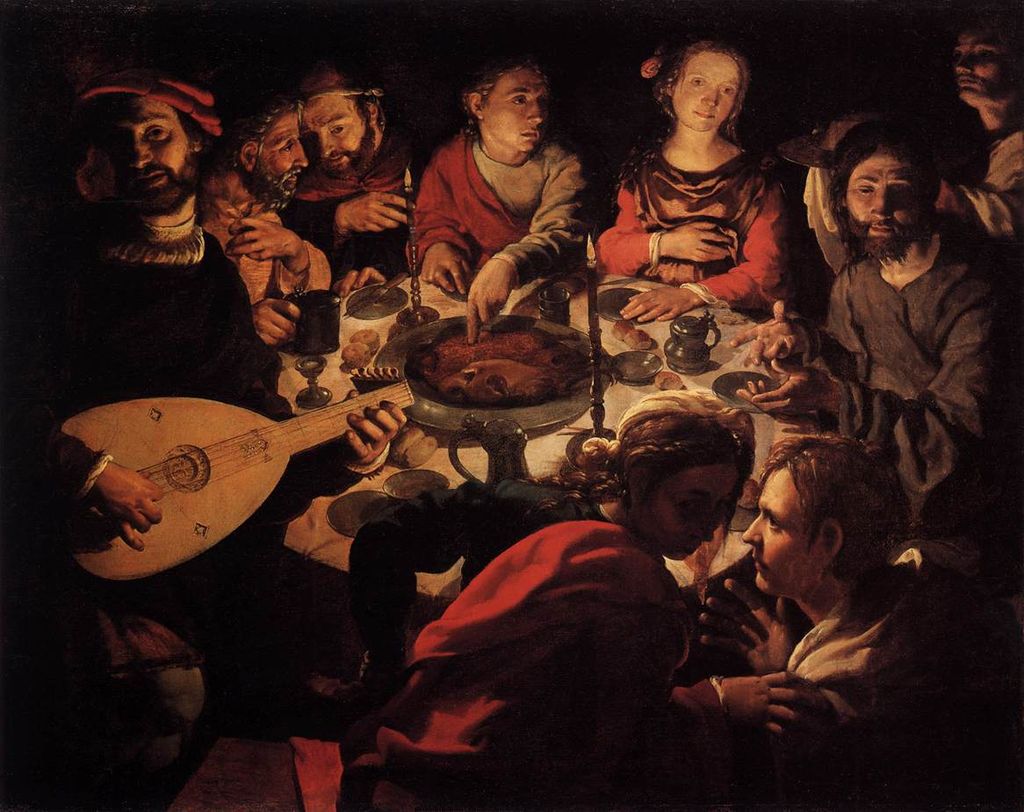
Divine Courtship
I started reading Jesus the Bridegroom by Brant Pitre. In the first chapter of the book, he discusses how the ancient Jews viewed God and the Messiah as a divine bridegroom who wants to marry His people, and how Jesus fulfills this prophecy. Modern Christians are not entirely ignorant of this point of view, since we know that the relationship of Christ and the Church is likened to a spousal relationship (cf. Eph. 5:31-32). However, it can be said that we lack the understanding and appreciation of the theological depths and beauty of this “profound mystery”.
As I contemplate on the idea that God seeks to marry His people, I realize that while this is a mystery that our minds may never fully grasp as long as we’re here on earth, it’s something that our hearts already understand to some extent. For example, we know what it means to long for someone and to yearn for their affection. We know how it feels to deeply desire the company of another person, maybe to the point that what we want is not just to be with them, but to be in union with them, physically and spiritually. We know how it is to love another and, if we’re blessed, to love them with a love that is as strong as death. Now imagine that there is Someone who longs for you and yearns for your affection, even without you knowing. He desires that you be united with Him, and that you share in His inner life. Imagine this Someone loving you with a kind of love that is stronger than death, the love that makes all things possible, the love that is the foundation of all reality.
Others might say that this is just wishful thinking, that this kind of love is too good to be true. Maybe. But when others say, “this love is too good, therefore it’s not true,” then I suggest an alternative, that this love is too good because it’s so true. Perhaps the fact that it’s true is what makes it too good. For true love is always good, so the truest of all loves can really be too good.
So, the next time we feel a deep longing for someone, or whenever we feel a strong desire to be united with a beloved, let us consider it a gift. The yearning itself is already a gift, whether it will ever be satisfied or not. For through this longing for another, we can get a glimmer of what it means to say that God seeks to marry us. To deeply feel and deeply care for someone is to take a step closer to understanding the profound mystery. As the famous line from the musical Les Misérables goes, “to love another person is to see the face of God.” Whenever we love, however imperfect that love may be, we get an intimation of God’s loving nature.
Again, the skeptics might argue that one can truly love without necessarily believing in a loving God, that loving someone does not help them “see the face of God.” I understand, and perhaps I can’t convince them otherwise. The patient and gentle suitor does not force his beloved to believe in his love when she’s not yet ready; he simply asks her to be open in receiving this love and see where it goes. In the same way, we can’t be forced believe that the Source of all things, whatever or whoever that may be, loves us. We can only open our heart to the possibility of this Love and see where it goes. Because after all, in order to come to know God, loving another is just one side of the story; being open to receive love is just as essential and even more primary. This is beautifully expressed by Cardinal Ratzinger (Pope Benedict XVI) in his book Introduction to Christianity:
Accordingly, from the point of view of the Christian faith, man comes in the most profound sense to himself, not through what he does, but through what he accepts. He must wait for the gift of love, and love can only be received as a gift…. And one cannot become wholly man in any other way than by being loved, by letting oneself be loved.
Therefore, to truly understand what it means to say that God seeks to marry us, I think this is already a good starting point: to love and allow oneself to be loved; or more appropriately, to allow oneself to be loved and love others in turn. For we are able to love only because God first loved us (cf. 1 Jn. 4:19). But to take a step further, let us contemplate on what it means to accept and receive this love.
The Christian faith teaches us that God loves us unconditionally, and that we are free to accept or reject this love. What does it mean to accept the love of God? In our culture today, we have the tendency to see only one side of love: the side that is affirming, compassionate, and kind. We overemphasize this side of love and tend to forget that there is more to love than just affirming the person for who they are. There is also the side of love that is transformative, the side that encourages and corrects, the side that rejoices in truth and not in wrongdoings. While love truly accepts the person for who they are, it also wishes for the person to become the best that they could be. To borrow a quote from C. S. Lewis: “Love, in its own nature, demands the perfecting of the beloved…. Love may forgive all infirmities and love still in spite of them: but Love cannot cease to will their removal.” I imagine then that God’s perfect love is infinitely compassionate towards who I am right now, while being infinitely hopeful that I could be the best version of myself. And from the Christian perspective, this “best version” that any person could become is no less than perfection. “Be perfect,” Jesus says, “as your heavenly Father is perfect” (Mt. 5:48).
If we accept the love of God, we accept it as a whole: the part that affirms our intrinsic worth despite our faults, and the part that transforms us and brings us to perfection. If we accept His love, we accept His perfect vision for us and we participate in the process of reaching this vision. This means that we give up our sinful ways and strive to be perfect, allowing His grace to work through us and trusting that His love will pick us up every time we fail. In the context of spousal love, this means that we allow ourselves to be transformed into the perfect bride that He wants us to be, “without spot or wrinkle,” “holy and without blemish” (cf. Eph. 5:27).
I reckon that all the talks about striving to be perfect and giving up sin may have put off some people, that everyone was fine about loving and being loved until we consider the demands of this love. It’s likely that those who thought that a loving God is too good to be true now think that His love is too hard to accept. People might object in the following manner: “Is this not too demanding? Isn’t marriage supposed to be a compromise between the parties involved? If God wants to marry His people, why should the people be the ones to abide by His standards? Why shouldn’t God adjust to our level also?” But the thing is, He already did. God already emptied Himself, became man, lived among us, and delivered Himself to the hands of men. He offers Himself completely to us and holds nothing back. It’s up to us if we accept this love or not. If we accept this love, if we accept His “marriage proposal,” it means we also surrender everything to Him – our sins and struggles, our desires and ambition, our strengths and weaknesses, our joys and sorrows, our whole selves. We might think that marriage is about compromise, but what God wants with us is a marriage without compromise: He offers His very life to us, we surrender everything to Him.
Is it difficult? It would be a lie to say otherwise. Jesus Himself warns those who want to follow Him that it would cost them greatly. But I don’t think there’s any other way if we want to be truly happy. What’s the alternative? We strive to be good enough for this world while we cling to some parts of ourselves that we could not let go? That might work for some people for some time, but it wouldn’t work for everyone for eternity. At some point in any person’s life, they would have to make a choice between something that they hold dearly, and a truly higher good or principle. Essentially, everyone has to make a choice between oneself and the Good that is outside oneself. That is why the Christian faith insists that total offering of oneself to God is the only way, because a partial, indefinite, and uncertain offering of oneself does not work. And this, I think, is another way to understand God as the Divine Bridegroom: what He seeks with us is marriage – all or nothing, without reservations – not merely “cohabitation” or some kind of an intimate relationship that lacks commitment.
So yes, it’s difficult. But we should not fear, for it is also, in a sense, easy. As C. S. Lewis has also pointed out in Mere Christianity, the One who commands us to deny ourselves and carry our crosses also assures us that His yoke is easy and burden is light. The One who invites us to offer ourselves has already offered Himself for us. The One who wants us to be perfect is already delighted by our “baby steps” and our willingness to be transformed.
All we need to do is give Him our “yes”, hold on to this “yes”, and hold even more strongly on to His grace. The promise is that when a person gives up oneself to God, then they arrive at their true and complete self; when we surrender everything, then we gain everything. For whoever would save his life will lose it, but whoever loses his life for my sake will find it (Mt. 16:25). This is especially true in the context of spousal love: it is only through the mutual and total offering of oneself to the other that the joy of nuptial union is consummated. The Bridegroom has done and continues to do His part. When will the Bride give her “yes”?

Saint Kateri , Canada’s Protectress
This was the title given to Saint Kateri Tekakwitha, by Pope Benedict XVI, when he canonized her on October 28th, 2012, along with six others, in Saint Peter’ Square (she had been beatified by Pope John Paul II back in 1980). With Saint Joseph as our protector, along with the Canadian martyrs, we seem to[…]Continue reading→

Remembering Father Alphonse de Valk
(Today marks the sixth anniversary of the death of Father Alphonse de Valk, C.S.B., a faithful, courageous and indefatigable Basilian priest, pro-life-and-family apostle, and the founder of Catholic Insight magazine. Here is what we wrote those on his entering into eternity five years ago, as we continue to remember him in our prayers and thoughts)[…]Continue reading→

My Name is Bernadette
April 16th is a propitious day, for besides the anniversary of Father de Valk’s death, who founded Catholic Insight in its print form decades ago, and the commemoration of the ‘two Benedicts’, mentioned in accompanying posts, today we also recall Saint Bernadette Soubirous, the young visionary to whom the Virgin Mary appeared numerous times at[…]Continue reading→
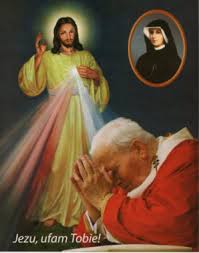
Canonizing Sister Faustina and Divine Mercy
HOMILY OF THE HOLY FATHER MASS IN ST PETER’S SQUARE FOR THE CANONIZATION OF SR MARY FAUSTINA KOWALSKA Sunday, 30 April 2000 1. “Confitemini Domino quoniam bonus, quoniam in saeculum misericordia eius”; “Give thanks to the Lord for he is good; his steadfast love endures for ever” (Ps 118: 1). So the Church sings on the Octave of[…]Continue reading→

Divine Mercy Sunday – An Echo of Every Mass
Reach out your hand and put it in my side. Do not doubt but believe’… ‘My Lord and my God!’ (Jn. 20:18)). Today is Divine Mercy Sunday, and as we celebrate the end of the Easter Octave, we contemplate the wounded side of our Saviour, the Church’s source of life. On Good Friday in the[…]Continue reading→

Saint Stanislaus of Szczepanów
We celebrate Saint Stanislaus today (+ April 11, 1079), in light of this Easter Octave, a bishop and martyr who accepted the episcopacy only at the direct order of Pope Alexander II. He proved a wise and courageous leader of his flock, put to death by his own king, Boleslaus, for rebuking the monarch’s ‘immoral[…]Continue reading→
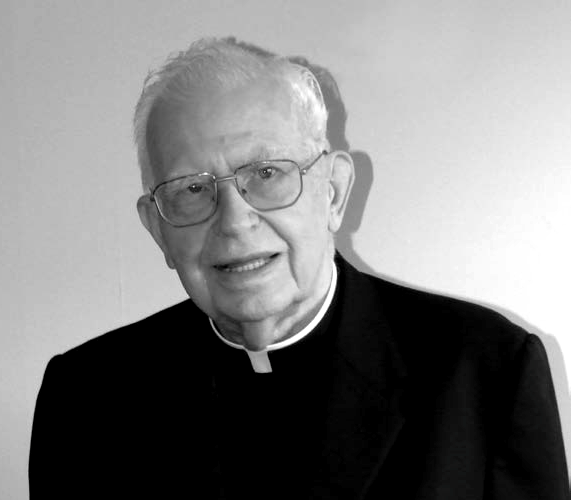
First Holy Communion: Sermon from May 16, 1943
Here is a sermon from the good old days by +Rev. Msgr. Vincent Nicholas Foy (August 14, 1915 – March 13, 2017), from 1943. Readers may recall that Pope Saint Pius X, by the decree Quam Singulari in 1910, lowered the customary age of reception of Holy Communion – after the rigours of the plague[…]Continue reading→
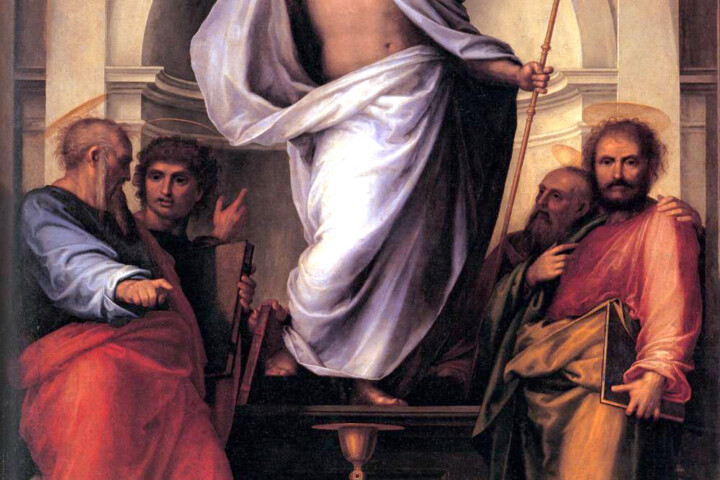
In the Glorious Light of Easter, Alleluia!
Set your minds on things that are above, not on things that are on earth, for you have died, and your life is hidden with Christ in God. When Christ who is your life is revealed, then you also will be revealed with him in glory (Col. 3:3-4). The Resurrection of Our Lord and Saviour[…]Continue reading→
An Ancient Homily for Holy Saturday
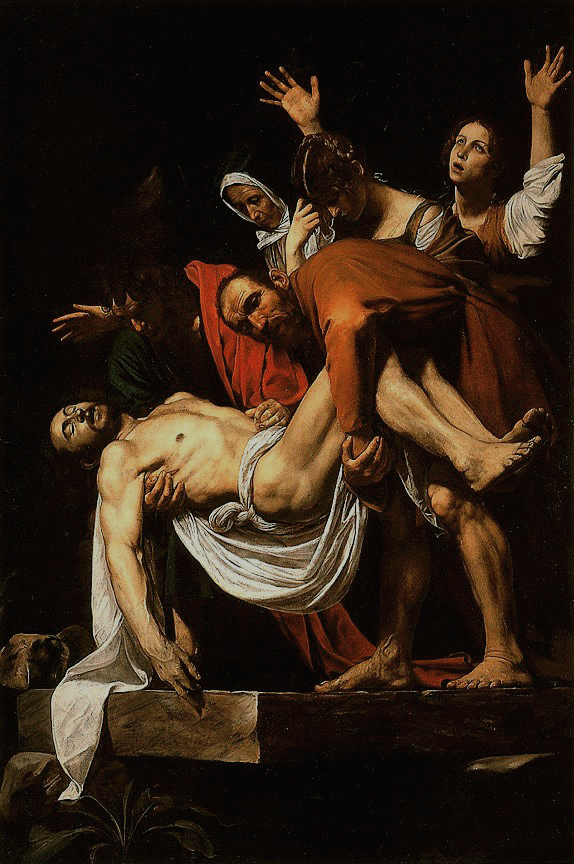
The time between Good Friday and Easter Sunday is one of waiting, in silence, as the world wonders – anticipates – what will happen, after the death of Christ. We re-live this time each year in the anamnesis of our liturgy, and in turn look forward to the glorious re-creation of all things at the[…]Continue reading→
Europe’s Long Descent
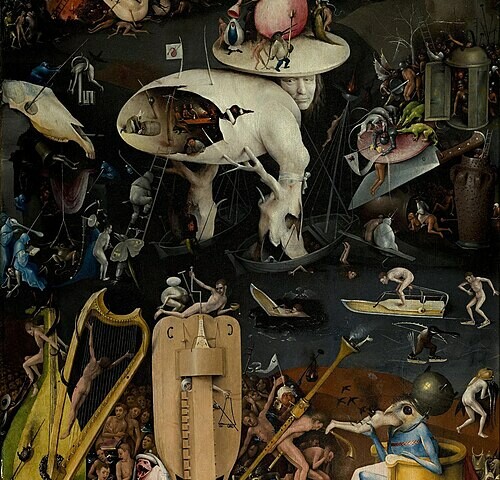
(As we meditate on this day on Christ’s burial, and His descent into hell, it is fitting to ponder here with contributor Peter Marcus how the world seems to be heading there as well. The difference is that, although God cannot ‘redeem’ hell, nor those therein, He can and did redeem the world. There is[…]Continue reading→