
Charlie Kirk, Apologist for the Truth
I must confess that I knew almost nothing about Charlie Kirk before his death. When one of my former students – now a young father – mentioned his assassination as he walked by my house, I dimly thought Charlie might be Russel Kirk’s son. But he is no relation, except in being both Christian and conservative.
I’ve learned a bit in the meantime, and am intrigued and inspired. Charlie was a fervent Christian, who lived his faith, married to a faithful Catholic, Erika, with whom of late he began attending Mass occasionally.
He was courageous, going into the belly of the beast, or perhaps the lair of the dragon – the modern university – to debate anyone who was willing. Charlie himself did not complete a university degree. Perhaps he was disillusioned – as I was years ago in my own stint in those unhallowed halls – which likely saved him from being brainwashed into the servile obtuseness of the modern graduate. Yet he was something of a savant, a gifted speaker, well read, with a sharp mind, agile with his words and rebuttals. There were no ‘ums’ and ‘ahs’, as we hear from so many of our political leaders (Mr. Trudeau, here’s looking at you). Part of that hesitancy in speech, and in writing, likely derives from the fact that they themselves, deep down, hesitate, for they don’t really believe what they’re saying. But Charlie did. He displayed what Saint Paul called parrhesia – boldness in the Faith, and many even of our spiritual leaders could learn a thing or two from him.
From what I’ve gleaned, Mr. Kirk embodied the exhortation of Saint Peter (3:15), to always be prepared to make a defense of the faith that is in you. Such a ‘reasoned defense’ of the Faith – apologia in the original Greek – is much needed in our world, following in the long line of apologists from Saint Justin Martyr, through the panoply of saints and doctors to our own day.
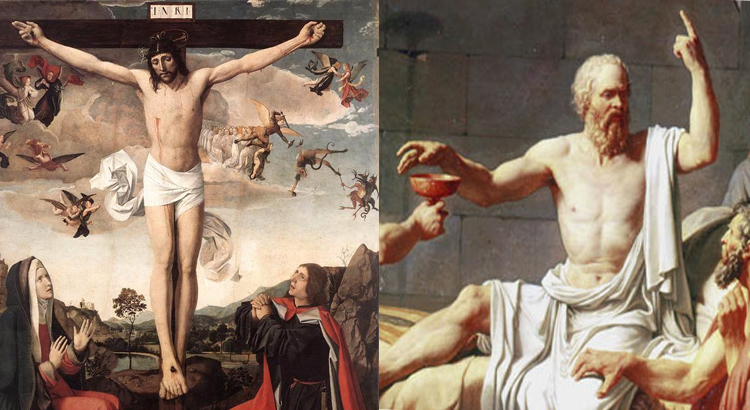
A recent article in First Things made the comparison which came to my own mind, that Charlie was, perhaps unwittingly, a disciple of Socrates and Saint Thomas, who loved debate. The Dominican friar confessed that never was anyone so wrong that he could not learn from him. The whole Summa, along with his Quodlibetal questions, are a dialogue, which is how they would conduct their classes, in question and answer format. Opponents often admitted that Saint Thomas, in his famous ‘objections’ would frame their arguments better than they could, and the same may be said of Socrates and, yes, Charlie Kirk. From what videos I’ve watched, he always seemed pleasant and welcoming. Even if he could give as good as he got, and would correct people, he did so in a winning way.
Hearty and healthy debate is a balm for the mind and the soul, as we strive to lead each other to the fullness of truth. This was the message of Pope Benedict XVI in his 2006 Regensburg Address, that without rational dialogue, the only recourse to solving disputes is violence. The Pope criticizes Islam for its own historical intransigence in refusing to apply reason to God, seeing the Almighty – Allah – as simply one who decrees, even if those commands are manifestly irrational, if not explicitly immoral. Quoting the Byzantine emperor Manuel II Paleologus, Benedict writes:
“God”, he says, “is not pleased by blood – and not acting reasonably (σὺν λόγω) is contrary to God’s nature. Faith is born of the soul, not the body. Whoever would lead someone to faith needs the ability to speak well and to reason properly, without violence and threats… To convince a reasonable soul, one does not need a strong arm, or weapons of any kind, or any other means of threatening a person with death.
But this does not apply only to certain aspects of Islam, for our world is now filled with ideologies that refuse to see reason, and will repulse anyone who exhorts them to do so. The more evil the ideology, the less open to reason they are, for sin not only warps our will, but darkens our intellect. As Christ warned:
And this is the judgment, that the light has come into the world, and men loved darkness rather than light, because their deeds were evil. For every one who does evil hates the light, and does not come to the light, lest his deeds should be exposed.
Those on the side of good, however, fear not the light.
But he who does what is true comes to the light, that it may be clearly seen that his deeds have been wrought in God.
Charlie always welcomed his interlocutors, even if they did not always respond in kind, many gloating in his murder. It is providential, perhaps, that Charlie was shot in broad daylight, speaking to the truth. Some could not bear that truth, lest their ‘deeds be exposed’, at least to their own seared consciences. So they stopped his voice forever with a bullet to the neck.
Aristotle has a list of logical fallacies, all with some specious sophistical reasoning, amphiboly, ad hominem, red herring, and so on. The one that is devoid of reason is the argument ad baculum – literally ‘to the stick’. If you cannot convince your opponent, you beat him into submission or, like Charlie and a host of others, kill him.
But that never really works, for the truth is far more powerful than violence, and will win out in the end; indeed, all the more quickly and abundantly the more we try to suppress it. To paraphrase Tertullian, the blood of such martyrs is a potent seed, from which much fruit will grow, and we already see such from Kirk’s sacrificial death, as thousands return to church and abandon their false ideologies.
We cannot canonize Charlie Kirk (pace, JD Vance). He had his faults and biases, and wasn’t always right. But he strove to remain open to the fullness of the splendor veritatis, and we can entrust him with our own prayers and supplications to the mercy of God whom he loved and served. May his example of being open to that truth, and bringing that truth to others, inspire many.
Carney’s Amoral Majority
After five defections – euphemistically described as ‘crossing the floor’ – and three by-elections, Mark Carney and his Liberals how have their coveted majority. One wonders what bowls of pottage were offered in back-room deals. In the archaic monarchical system that is the Dominion of Canada, this majority allows the newly-minted Prime Minister to rule[…]Continue reading→

Saint Kateri , Canada’s Protectress
This was the title given to Saint Kateri Tekakwitha, by Pope Benedict XVI, when he canonized her on October 28th, 2012, along with six others, in Saint Peter’ Square (she had been beatified by Pope John Paul II back in 1980). With Saint Joseph as our protector, along with the Canadian martyrs, we seem to[…]Continue reading→

Remembering Father Alphonse de Valk
(Today marks the sixth anniversary of the death of Father Alphonse de Valk, C.S.B., a faithful, courageous and indefatigable Basilian priest, pro-life-and-family apostle, and the founder of Catholic Insight magazine. Here is what we wrote those on his entering into eternity five years ago, as we continue to remember him in our prayers and thoughts)[…]Continue reading→
A Tale of Two Benedicts
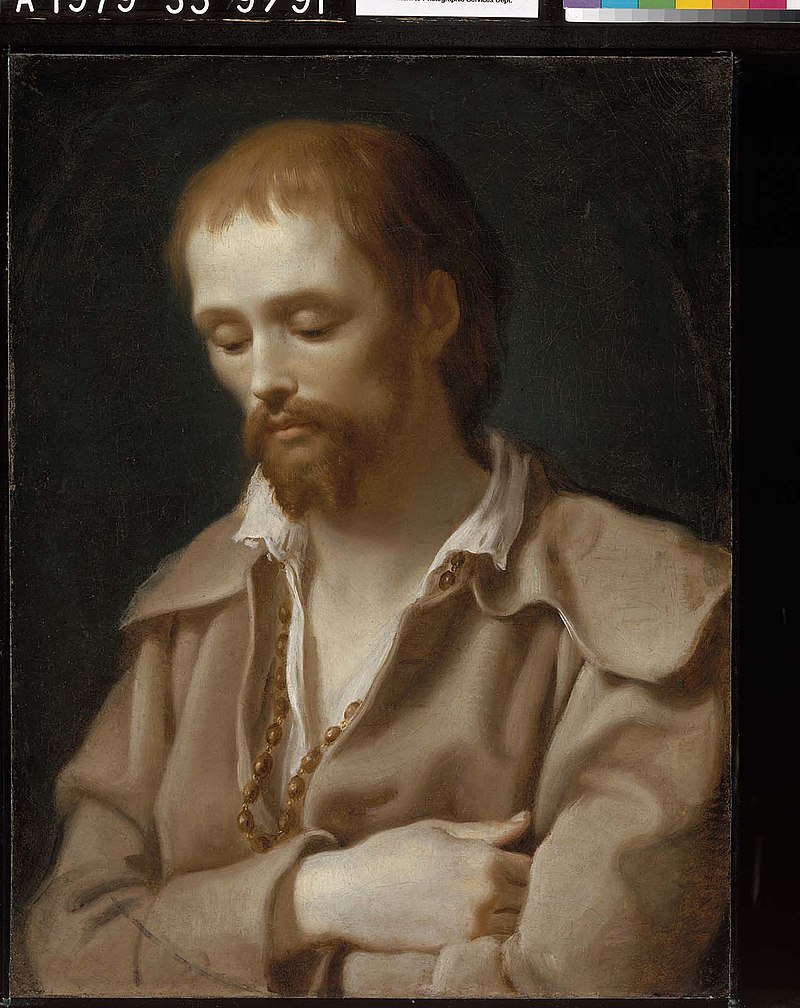
A grace-filled Holy Week to all our readers! As we await and prepare for the Resurrection about to dawn upon us, we might keep in mind two Benedicts: Pope Emeritus Benedict XVI, requiescat in pace, elected on this day in 2005; and today’s commemoration of the mystic pilgrim, Benedict Joseph Labre, who died on this[…]Continue reading→

My Name is Bernadette
April 16th is a propitious day, for besides the anniversary of Father de Valk’s death, who founded Catholic Insight in its print form decades ago, and the commemoration of the ‘two Benedicts’, mentioned in accompanying posts, today we also recall Saint Bernadette Soubirous, the young visionary to whom the Virgin Mary appeared numerous times at[…]Continue reading→
Saint Lydwina of Schiedam and Suffering Joyfully
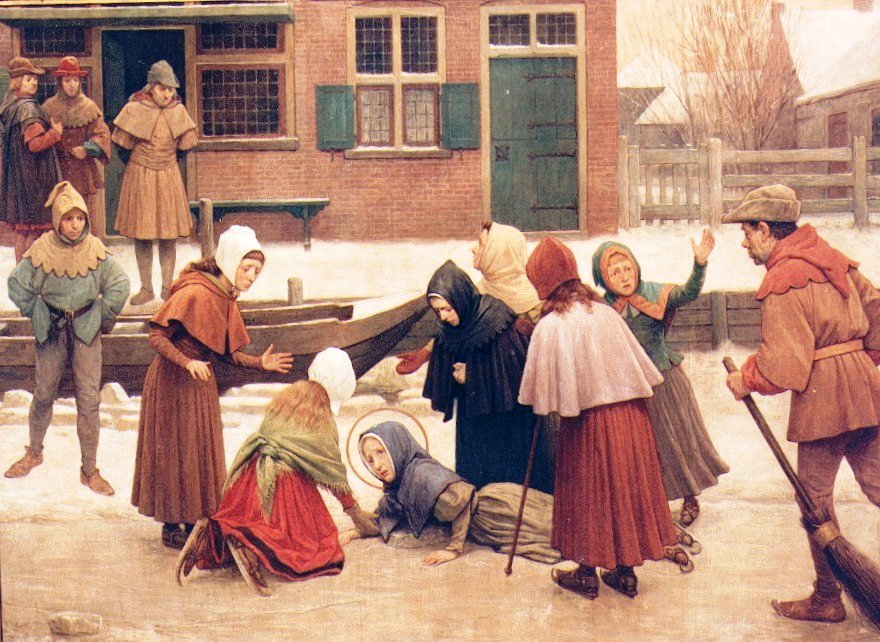
Saint Lydwina of Schiedam (1380 – 1433) was one of the countless and glorious ‘victim souls’ in the history of the Church, those whose lives are filled with suffering, often of an unimaginable intensity, but who suffer joyfully. She was a fifteen-year old Dutch girl, out skating one day, when she fell and broke one[…]Continue reading→
The Glorious Martyrdoms of Martin and Maximus
As we enter into Eastertide, we recall on this 13th of April Pope Saint Martin I (+655), one of the noblest, if most tragic, of the successors of Saint Peter. Born in Umbria, Italy, he was of noble lineage, with great intelligence combined with charity and love of the poor and the Church. While still[…]Continue reading→
Canonizing Sister Faustina and Divine Mercy
HOMILY OF THE HOLY FATHER MASS IN ST PETER’S SQUARE FOR THE CANONIZATION OF SR MARY FAUSTINA KOWALSKA Sunday, 30 April 2000 1. “Confitemini Domino quoniam bonus, quoniam in saeculum misericordia eius”; “Give thanks to the Lord for he is good; his steadfast love endures for ever” (Ps 118: 1). So the Church sings on the Octave of[…]Continue reading→

Divine Mercy Sunday – An Echo of Every Mass
Reach out your hand and put it in my side. Do not doubt but believe’… ‘My Lord and my God!’ (Jn. 20:18)). Today is Divine Mercy Sunday, and as we celebrate the end of the Easter Octave, we contemplate the wounded side of our Saviour, the Church’s source of life. On Good Friday in the[…]Continue reading→

Saint Stanislaus of Szczepanów
We celebrate Saint Stanislaus today (+ April 11, 1079), in light of this Easter Octave, a bishop and martyr who accepted the episcopacy only at the direct order of Pope Alexander II. He proved a wise and courageous leader of his flock, put to death by his own king, Boleslaus, for rebuking the monarch’s ‘immoral[…]Continue reading→