
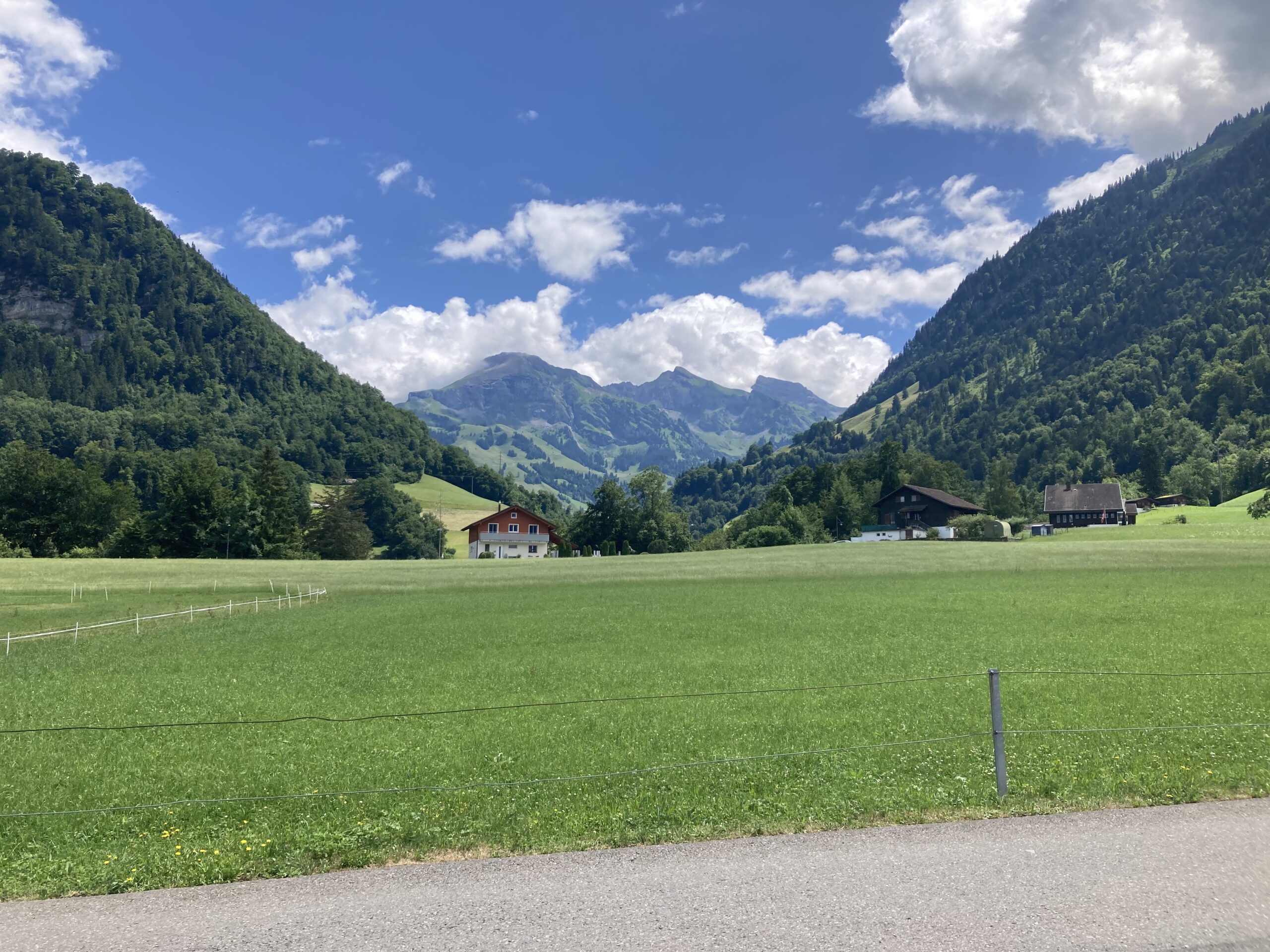
Swtizerland and Frauenthal
Upon arriving in Zurich from Vienna, I had an hour or so before I caught a connecting train down to Knonau and the convent. So thought I would take a stroll through the ‘old town’, divided by the River Limpett, whose cerulean waters flow into the wide expanse of Lake Zurich. Also overlooking the lake was a larger-than-life statue of Ulrich Zwingli, whose efforts undermined, and mostly obliterated, Catholicism in Switzerland, and why the formerly Catholic cathedral is no longer so. We can but hope that he knew not what he did. I took off my sandals to soothe my feet in the cold river. If there weren’t so many tourists, I might have dove right in. I can’t imagine the Swiss would have polluted rivers, would they?
Such was my introduction to Switzerland, a nation of contradictions. Rather, it is a conglomeration of semi-independent cantons, isolated from the rest of Europe by the impenetrable fortress of the towering Alps. There is a striking beauty and there is order, in the land and its people. Outside Knonau, in the canton of Zug, the quaint houses in the region I have stayed with looking like something out of a storybook, dotting the bucolic hills, windows bedecked with bright flowers, the firewood stacked with precision, and I don’t think I have seen a place so clean, devoid of discarded rubbish. There are also no billboards on the roads and highways, which the Sister who hosted me said makes quite a difference. Nothing seems out of place.
Yet at the same time Switzerland is dying, with one of the lowest fertility rates in the world (1.39 children per woman). And it’s not just not replacing themselves: The Swiss were and are in the forefront of euthanasia, legalizing assisted suicide way back in 1942, when it was still highly unfashionable; they now have death hotels where one can off oneself with a glass of poison. Abortion is legal until 12 weeks, which is a bit of a fiction, for they can be done for ‘psychological or physical damage’ to the woman – which doesn’t say much for the child. The Swiss are liberal and socialist, with an anything goes mentality, which works for a while, until it doesn’t.
Such is the effect of unhinging from the Catholic Church.
But pockets of faith and sanity exist. There are convents and monasteries dotting the land. The one where I stayed, Frauenthal – Our Lady’s Valley -has a core group of female Cistercians chanting the Office in Latin and German, nestled in a beautiful valley, surrounded by farms and the distant mountains. Rarely have I seen such joy, and they are attracting vocations, young women seeking to offer themselves to God in a life of prayer and community. The abbey dates back to 1245, founded by Ulrich von Schnabelburg for noble ladies. It was abandoned for a few decades during Zwingli’s iconoclasm (1530-52), but revived. The church dates back to 1776, with an ornate rococo style, and what seems a splendid organ (which I sadly did not hear). The worn stone walls and pavements and doors of solid wood. The food is pure and good, much of it grown on the grounds, served up joyfully by the aptly named Sister Laetitia, who has been there for over fifty years.
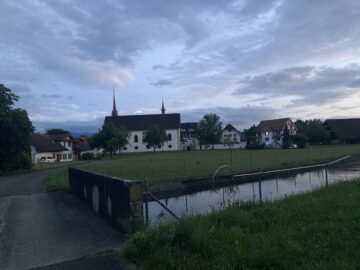
On the second day of my visit, the chaplain, a British Cistercian who speaks flawless German, took me and Sister Magdalena to the shrine of Saint Nicholas of Flue (+1487), a soldier and statesmen, husband and father of ten children who, in middle age, decided to become a hermit on his own property, in a narrow valley (ranft) not far from where his wife and children continued to live.
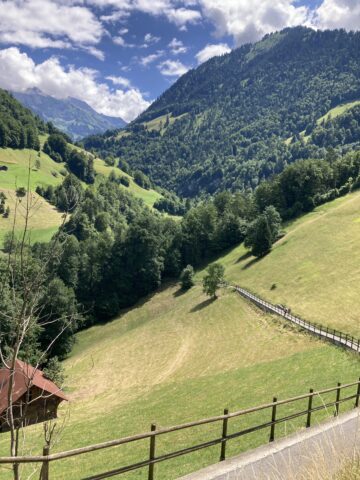
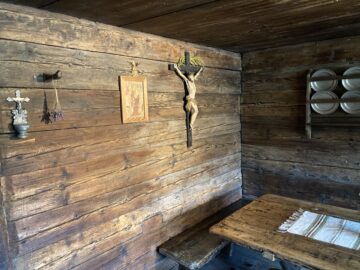
An odd vocation, perhaps, but a holy one. Bruder Klaus, as he is locally known, lived on the Eucharist alone for twenty years (attested by his own bishop, who had guards posted at one point to ensure no food was being snuck in). Miracles abounded, and Saint Nicholas was sought by the high and low for his wise advice. The Swiss have preserved his family home and hermitage as a sanctuary, nestled in that gorge between two mountains. There is a peace and serenity there, echoing through those six centuries. Here’s hoping Switzerland will listen and respond to his prayers from heaven.
There is hope, on this feast of Saint Benedict, in what one, or a few, good men and women can do. I took my leave of Frauenthal with a heavy heart, not wanting to go from such a small, hidden window into heaven. But I had to set my face for Rome. In a fit of pilgrimagesque zeal, I decided to walk most of the way to Zurich, on a beautiful sunny day. Of course, I got lost, as the path takes one through winding forests with multiple forks, up and down hills. I lost count of how many miles I traversed. The good chaplain warned me of the mountain as one approaches the city, which left me at least somewhat prepared.
I arrived in Zurich well in time for my overnight bus to Florence. I partook of a simple meal of Swiss ham and cheese by the river and, just as upon my arrival, soothed my feet in the river. I also managed a visit up the hill to the Catholic Church, Liebfrauenkirche – the large cathedrals are all now Protestant. The visit was some comfort, for I will say that if you want to get some good chunk off your Dantean Purgatorio, being smushed into a packed bus with the odours of a hundred humans all night long is one way to go. And I exempt not my unwashed self.
I am now in Florence – well, about 10 miles outside the city – and more on that anon. For now, know that I am praying for you all, whether known or unknown, as this pilgrimage continues.

Carney’s Amoral Majority
After five defections – euphemistically described as ‘crossing the floor’ – and three by-elections, Mark Carney and his Liberals how have their coveted majority. One wonders what bowls of pottage were offered in back-room deals. In the archaic monarchical system that is the Dominion of Canada, this majority allows the newly-minted Prime Minister to rule[…]Continue reading→

Saint Kateri , Canada’s Protectress
This was the title given to Saint Kateri Tekakwitha, by Pope Benedict XVI, when he canonized her on October 28th, 2012, along with six others, in Saint Peter’ Square (she had been beatified by Pope John Paul II back in 1980). With Saint Joseph as our protector, along with the Canadian martyrs, we seem to[…]Continue reading→

A Tale of Two Benedicts
A grace-filled Holy Week to all our readers! As we await and prepare for the Resurrection about to dawn upon us, we might keep in mind two Benedicts: Pope Emeritus Benedict XVI, requiescat in pace, elected on this day in 2005; and today’s commemoration of the mystic pilgrim, Benedict Joseph Labre, who died on this[…]Continue reading→

My Name is Bernadette
April 16th is a propitious day, for besides the anniversary of Father de Valk’s death, who founded Catholic Insight in its print form decades ago, and the commemoration of the ‘two Benedicts’, mentioned in accompanying posts, today we also recall Saint Bernadette Soubirous, the young visionary to whom the Virgin Mary appeared numerous times at[…]Continue reading→

Saint Lydwina of Schiedam and Suffering Joyfully
Saint Lydwina of Schiedam (1380 – 1433) was one of the countless and glorious ‘victim souls’ in the history of the Church, those whose lives are filled with suffering, often of an unimaginable intensity, but who suffer joyfully. She was a fifteen-year old Dutch girl, out skating one day, when she fell and broke one[…]Continue reading→

The Glorious Martyrdoms of Martin and Maximus
As we enter into Eastertide, we recall on this 13th of April Pope Saint Martin I (+655), one of the noblest, if most tragic, of the successors of Saint Peter. Born in Umbria, Italy, he was of noble lineage, with great intelligence combined with charity and love of the poor and the Church. While still[…]Continue reading→

Saint Stanislaus of Szczepanów
We celebrate Saint Stanislaus today (+ April 11, 1079), in light of this Easter Octave, a bishop and martyr who accepted the episcopacy only at the direct order of Pope Alexander II. He proved a wise and courageous leader of his flock, put to death by his own king, Boleslaus, for rebuking the monarch’s ‘immoral[…]Continue reading→

Saint Gemma Galgani
On this April 11th, in 1903 – the same year that the Italian Guiseppe Sarto was elected Pope later that summer as Pius X – a lovely, young Italian woman died, by the name of Gemma Galgani. She lived a brief life of 24 years, as did a number of other young saints, including Pier[…]Continue reading→
An Ideological and Improper Translation
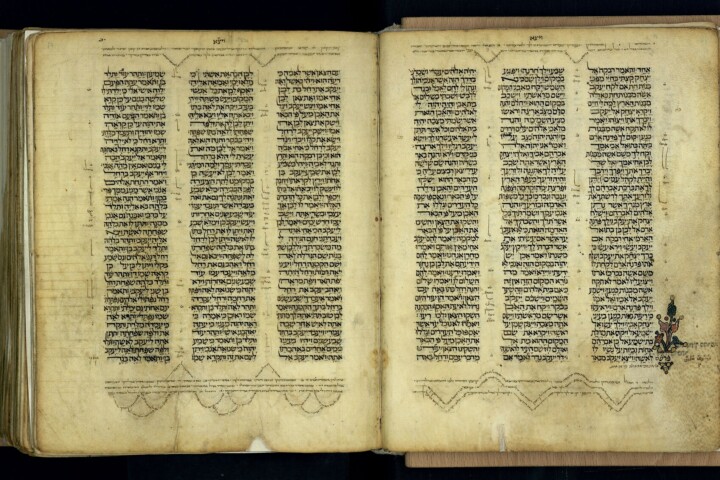
I noticed something odd with the psalm reading at Mass the other day. Our bishops’ conference here in Canada has decreed that the Mass in English – Novus Ordo – use the ‘NRSV’, the ‘New Revised Standard Version’, an ‘updated’ translation of the original RSV, first published in 1952. This ‘new translation’ has the tendency[…]Continue reading→
Saint Jean-Baptiste de la Salle: A Teacher for Teachers
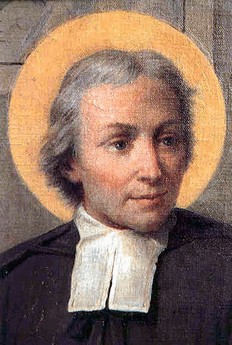
Jean-Baptiste de la Salle (1651 – 1719), a French nobleman, ordained a priest, founded the first order in the Church’s history entirely without priests, and this came about almost by accident. I say ‘almost’, for, of course, there are no accidents with God. Destined for ordination from an early age, Jean-Baptiste never looked back, even[…]Continue reading→