
A Reply to Bishop Strickland
I am humbled that Bishop Strickland not only took the time to read my few thoughts on two articles recently published on LifeSiteNews, but to respond at some length.
Allow me to say a few words of clarification:
I never accused Bishop Strickland of schism. Rather, I did claim that McCusker’s article, which Bishop Strickland approved, is propaedeutic to schism. I support the good bishop’s desire and zeal to reform the Church and exhort his fellow bishops, as befits any prelate. My intent was primarily to reply to the two laymen who wrote the articles.
But since he took the time to write, here are some clarifications of my own, which I offer in charity and deference to Bishop Strickland’s office. I can only hope they settle some difficulties in my own mind, and those of many other Catholics.
Bishop Strickland writes: Silence in the face of grave error is a sin.
I in no way advocate ‘silence’, especially any silence presuming consent to many of the more controversial of Pope Francis’ actions. My own article leads off with canon 251, advocating even laypeople to speak up and criticize, when such is warranted, in charity and truth. That bishops should do so is presumed. And I agree with Bishop Strickland that our hierarchy may well have been too silent for far too long.
But silence does not always imply consent. Far less does it signify heresy, whether of the public or private sort.
When we do speak, or write, we should ensure that our words mean not only what we think they mean, but what others will take them to mean. We must be measured and prudent, not with a false, cowardly prudence, but speak with parrhesia, simple as doves, wise as serpents. Sometimes, however, even the truth may do more harm than good in particular circumstances.
Bishop Strickland claims that his statements do not have a direct canonical consequence. Perhaps not, but they do have moral consequence, which is more significant.
I have no issues at all with Bishop Strickland defending the Faith, and exhorting others to do so, including those cardinals in a future conclave to choose a fitting candidate.
My main concern is with the ‘necessary’ criteria listed by McCusker for the papal candidate chosen in the next election, a veritable Christmas list of Papa perfectus. I would agree that a ‘public and manifest heretic’ would present a grave crisis to the Church. But, as I said in my own initial reply, McCusker’s article, and presumably Bishop Strickland, go far beyond that. After much legalese and quoting of canons and canonists, the key paragraph is towards the end:
If a candidate refuses to make a full profession of the Catholic faith, if they remain silent over heresies and errors, if they leave evil disciplines in place, if they continue to suppress the rites of the Church, these will be clear and indisputable signs that we are dealing with the Successor of Francis, and not with the Successor of St. Peter.
Does this last statement imply that McCusker is a sedevacantist? After criticizing the ambiguity of Pope Francis – with which I agree – do not these criteria, and that final statement, leave a wide enough window of subjective interpretation to drive a truck through? How is this not priming Catholics to reject what some may judge to be a less-than-perfect Pope-elect, and, ipso facto, cause a schism? Do the laity now get to decide who is Pope, and who is not, based on what he does, or, more to the point, does not do?
Allow me to clarify with some questions:
What is meant by a ‘full profession of faith’, and what will satisfy this? Recitation of the Apostles’ or Athanasian creed? The Oath against Modernism? Would not a Machiavellian modernist with a malleable conscience recite these with his own subjective interpretation? Would this truly safeguard the Church?
What does it mean to ‘remain silent over heresies and errors’? Is the future Pope-elect permitted to bide his time before clarifying, condemning or retracting some of Pope Francis’ more controversial actions? Or is he invalidated after, say, three days, or weeks or months? At what point will he be deemed a ‘follower of Francis’ and not ‘of Peter’?
And what of ‘evil disciplines’? Does McCusker have a list? Fiduca Supplicans raises any number of problems, but what else counts? The vernacular in Liturgy? Altar girls? Female lectors? Limiting the TLM? Communion in the hand, or standing? Might the new Pope, again, bide his time, and proceed prudently and measuredly?
Does Bishop Strickland agree completely with every word of McCusker’s? If so, why did he not just write the article himself, which would have given it more heft, and likely more clarity? If not, might he himself now clarify where he disagrees or demurs?
The wise words of Father Noonan are worth pondering, that these thoughts and dubia should be discussed amongst bishops, and not aired out for all the faithful, leading to grave doubts and incipient schism. The attempted a priori cure would be far worse than preventing the disease. Although the hierarchical church may go awry for a time, ironically, that very same hierarchical structure will be bring the barque of Peter back to a true course. There is a time and way to speak, and a time to accept whomever is chosen by a future conclave, whether in God’s perfect, or permissive, will.
Carney’s Amoral Majority
After five defections – euphemistically described as ‘crossing the floor’ – and three by-elections, Mark Carney and his Liberals how have their coveted majority. One wonders what bowls of pottage were offered in back-room deals. In the archaic monarchical system that is the Dominion of Canada, this majority allows the newly-minted Prime Minister to rule[…]Continue reading→

Saint Kateri , Canada’s Protectress
This was the title given to Saint Kateri Tekakwitha, by Pope Benedict XVI, when he canonized her on October 28th, 2012, along with six others, in Saint Peter’ Square (she had been beatified by Pope John Paul II back in 1980). With Saint Joseph as our protector, along with the Canadian martyrs, we seem to[…]Continue reading→

Remembering Father Alphonse de Valk
(Today marks the sixth anniversary of the death of Father Alphonse de Valk, C.S.B., a faithful, courageous and indefatigable Basilian priest, pro-life-and-family apostle, and the founder of Catholic Insight magazine. Here is what we wrote those on his entering into eternity five years ago, as we continue to remember him in our prayers and thoughts)[…]Continue reading→
A Tale of Two Benedicts
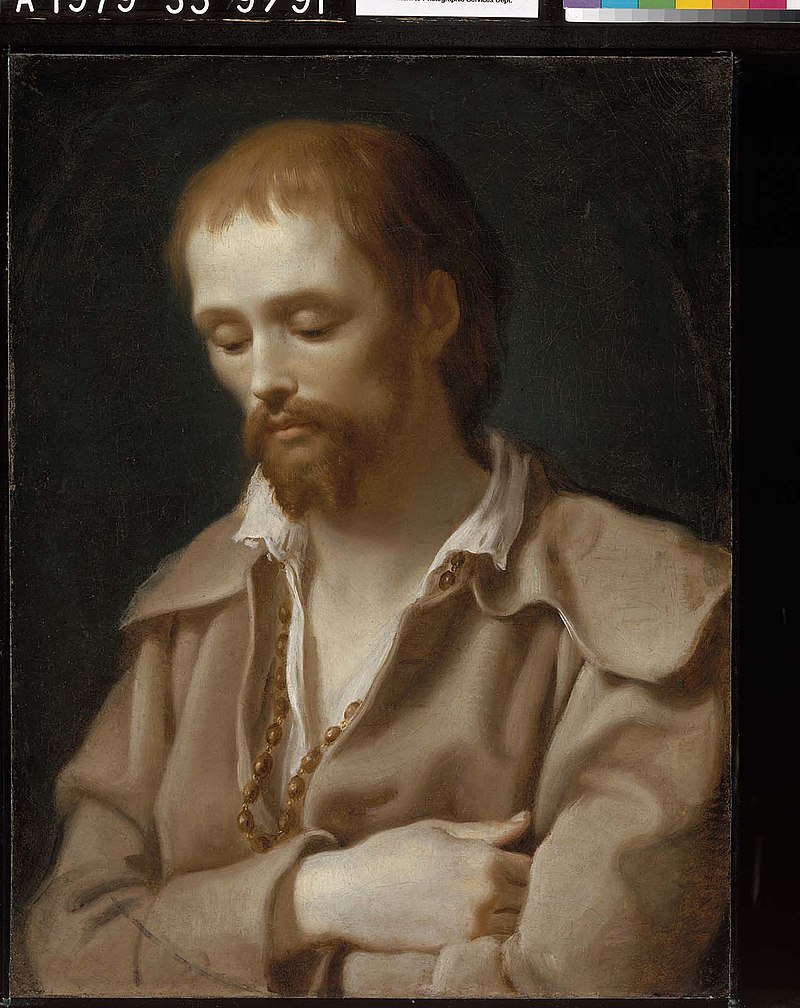
A grace-filled Holy Week to all our readers! As we await and prepare for the Resurrection about to dawn upon us, we might keep in mind two Benedicts: Pope Emeritus Benedict XVI, requiescat in pace, elected on this day in 2005; and today’s commemoration of the mystic pilgrim, Benedict Joseph Labre, who died on this[…]Continue reading→

My Name is Bernadette
April 16th is a propitious day, for besides the anniversary of Father de Valk’s death, who founded Catholic Insight in its print form decades ago, and the commemoration of the ‘two Benedicts’, mentioned in accompanying posts, today we also recall Saint Bernadette Soubirous, the young visionary to whom the Virgin Mary appeared numerous times at[…]Continue reading→
Saint Lydwina of Schiedam and Suffering Joyfully
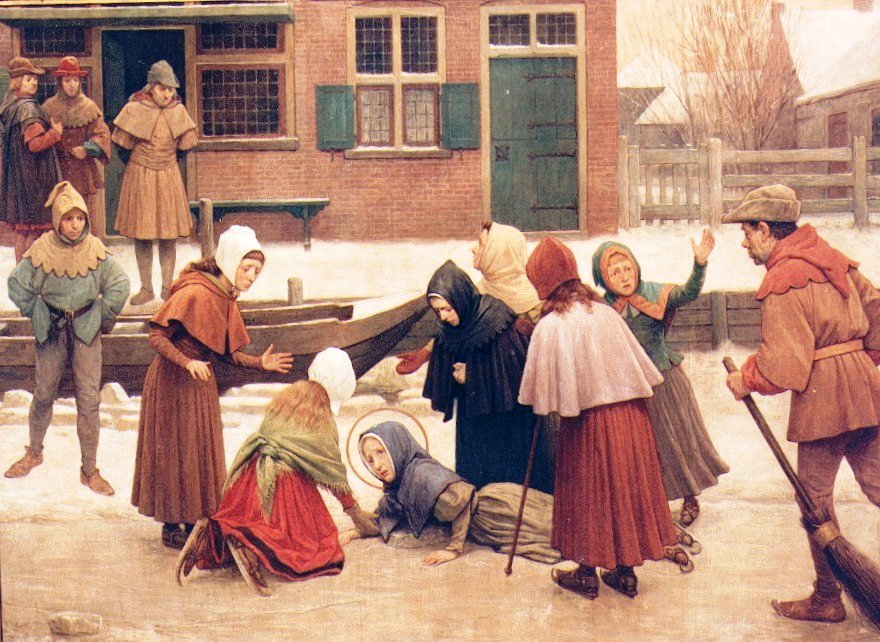
Saint Lydwina of Schiedam (1380 – 1433) was one of the countless and glorious ‘victim souls’ in the history of the Church, those whose lives are filled with suffering, often of an unimaginable intensity, but who suffer joyfully. She was a fifteen-year old Dutch girl, out skating one day, when she fell and broke one[…]Continue reading→
The Glorious Martyrdoms of Martin and Maximus
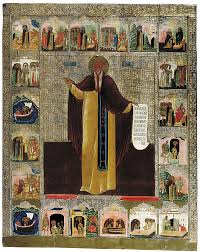
As we enter into Eastertide, we recall on this 13th of April Pope Saint Martin I (+655), one of the noblest, if most tragic, of the successors of Saint Peter. Born in Umbria, Italy, he was of noble lineage, with great intelligence combined with charity and love of the poor and the Church. While still[…]Continue reading→

Divine Mercy Sunday – An Echo of Every Mass
Reach out your hand and put it in my side. Do not doubt but believe’… ‘My Lord and my God!’ (Jn. 20:18)). Today is Divine Mercy Sunday, and as we celebrate the end of the Easter Octave, we contemplate the wounded side of our Saviour, the Church’s source of life. On Good Friday in the[…]Continue reading→
Saint Gemma Galgani
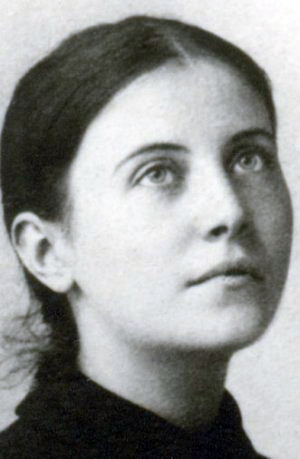
On this April 11th, in 1903 – the same year that the Italian Guiseppe Sarto was elected Pope later that summer as Pius X – a lovely, young Italian woman died, by the name of Gemma Galgani. She lived a brief life of 24 years, as did a number of other young saints, including Pier[…]Continue reading→
An Ideological and Improper Translation
I noticed something odd with the psalm reading at Mass the other day. Our bishops’ conference here in Canada has decreed that the Mass in English – Novus Ordo – use the ‘NRSV’, the ‘New Revised Standard Version’, an ‘updated’ translation of the original RSV, first published in 1952. This ‘new translation’ has the tendency[…]Continue reading→