
A Take on the Tragic Fruits of Fiducia Supplicans
So the DDF – the Dicastery for the Doctrine of the Faith, formerly the CDF, and before that, the SCDF, the ‘S’ standing for ‘Sacred’ and, boy, do I long for those bygone days – under the tutelage of Cardinal Victor ‘Tucho’ Fernandez, has just done what many feared they might, approving the blessing of same-sex couples and others in ‘irregular unions’, with the declaration Fiducia Supplicans. Others have parsed the document, couched in theological terminology, and readers may peruse the Pillar, Crisis and OnePeterFive, along with LifeSite, each with their own take in various articles, so we won’t repeat all that here. (Canadian readers may also peruse the terse reply of our own bishops in the CCCB).
I was listening to a podcast on Hobbit virtues the other day (to which we have linked in the Nota), and was struck by a phrase of Tolkien’s, that he would not dabble in theology (unlike his Protestant friend C.S. Lewis), for Catholics should leave that to the priests and bishops.
Oh, how I wish. Tolkien lived in the era of Benedict XV, and Piuses XI and XII, all of them stalwart bastions of orthodoxy, presented in clear, precise theological prose. But we’re not in Kansas anymore.
So here we go, to clarify what we might: The document upholds the traditional teaching that marriage is between a man and a woman, and that this is no intent to contradict or undermine that, no approval of same-sex unions, and so on. The purpose of Fiducia, or so it says, is simply an invitation to ‘broaden and enrich the meaning of blessings’. So far, so good, and many are praising the declaration for being so forthright in its orthodox preamble.
Let us then cut the Gordian knot and to the proverbial chase, and simply see what a blessing means to the run-of-the-mill Catholic, and the likely practical effects of this declaration – its fruits, in Biblical terms, already unfolding before us.
To make a broad distinction, we bless people, and we bless things – objects, events, actions, relationships – and it is these latter that are more complex and controversial. After all, any person, qua person, can receive a blessing, even if they’re not fully repentant or persist in grave sin – hardened criminals, say, and pro-abortion politicians, which amount to the same thing (so long as it’s not their sin, or sinful state, that they want blessed). Such blessings of persons, as the document says, provide gratia agens – the transient yet powerful grace of God that helps move us into a state of grace, or helps us grow in grace, to which the recipient may respond, sooner, or later. The Pope blesses everyone in the world in his Urbi et Orbi addresses, bishops all in their diocese, priests their parishioners. Again, so far, so good.
It’s when we turn to things that blessings must be discerned more carefully, for we cannot bless evil, which would be a sacrilege. Imagine blessing a euthanasia procedure – may you go peacefully into that sweet good night! – or a pilgrimage to a brothel, or the weapons to be used in a murder, or a Planned Parenthood clinic, even if ‘some good’ is done there. Might a priest bless a picture of John Knox, or Luther, a Koran, or statue of Vishnu or Buddha; or, even more to the point, images of Hitler or Stalin? There are limits.
In Latin, ‘blessing’ is bene-dictio, and, in Greek, eu-logia, where we get the term eulogy, singing the praises of the dead. A young man seeks the blessing of his future father-in-law, before he asks for his daughter’s hand in marriage (he does not need his permission, but the blessing helps). When we bless something, it is implied that we approve, we give it our good word, we support it with our own wills and intentions, we offer formal cooperation, and wish that thing to bear much good fruit.
What, then, are we to say of blessing homosexuals, who present themselves for a blessing qua couple?
Fiducia engages in some refined – some might say stretched – language to distinguish blessing what is good in said couple from what is not good. That might hold if the couple were blessed as part of a larger group, or individually. When the question of ‘blessing unions of persons of the same sex’ was raised back in 2021 – yes, how time flies, in a Church that used to think in terms of centuries, but now in terms of months – this was what was required, to avoid scandal. And to the blessings of unions, the reply was a firm negative. This was approved and promulgated also by Pope Francis, who, now in Fiducia seems to be contradicting his own Magisterium of just two years ago. We are asked by Cardinal Fernandez to ‘receive the Holy Father’s teaching’.
But, we may ask, which teaching?
Speaking of receiving, the problem in blessing the couple as a couple is that what will be understood and received – and, as the scholastic dictum has it, everything received is received according to the mode of the receiver – is that their union is being blessed. The couple/union is a distinction without a practical difference – or at least will be received as such.
After all, is not said union/couple predicated on the intrinsically evil and corrupting vice of sodomy (along with other sexual sins, as in lesbianism, all of them best left undiscussed and unimagined). For if the union be not sexual, then the two men, or women, are just, well, friends of the same sex – and that you can bless.
The mode of this current Magisterium seems to maintain some of level of ortho-doxy, while condoning some level of hetero-praxy, tacitly and indirectly tolerating, gravely immoral behaviour, without ever explicitly saying so. Does anyone actually think that blessing such ‘irregular unions’ will lead consciences to a moral awakening and conversion? Will it not rather placate and enervate their conscience – for deep down, by innate natural law, they know what they’re doing is wrong – so that the couple descend more comfortably numb into their sin? How is that pastoral accompaniment, still less an act of charity, as those ‘couples’ move towards eternity and judgment, for which the Church is duty bound to prepare them?
Hence, the doctrine remains sound – as it will unto the end of time, for no Magisterium can change that – but the practice becomes ever-more unhinged. As Dan Hitchens evocatively puts it, we seem to be falling into a kind of black hole of unstable irrationality, a train wreck in slow motion. Or, to use a poker analogy, the Pope, who just turned 87 a few days ago, may be playing on tilt, realizing he’s running out chips – and with Francis gone, so goes the current head of the DDF. Cardinal Tucho’s job is also touch and go.
In the meantime, what should faithful Catholics do?
Well, first and foremost, we should cling to true teaching and live by it, taking what is good in these documents, while resisting and refuting, as much as we might, any heterodox interpretations, or hetero-prax implications. People will do what they want to do, and hear what they want to hear. Itching ears and all that, as Saint Paul warned.
Is there an agenda to all of this, the veneer of orthodoxy covering the real intent? Some may laugh that the question is even posed. As I was speaking with a holy man about this earlier today – most definitely not myself, who am still striving for that noble state – we discussed trying to see some good in all of this, whether Pope Francis is striving to open the gates and spread the evangelical net as wide as possible to all and sundry before Christ’s imminent return. Bless everyone and everything! Spread the seeds of grace – gratia agens! – far and wide before the divine Reaper appears with winnowing fork in hand…
The author(s) of this declaration may or may not have intended that – as they profess – but the devil can do his work through the best of intentions. The essential point is what sort of fruit – bitter or good – Fiducia will produce, and a large part of this is what it signifies to the Church and the world, especially those immersed in objectively grave sin. There are dark forces within the Church, and the smoke of Satan which Paul VI lamented was seeping into the Vatican has grown thick.
But God, far more perfectly, can also work through intentions, good or bad, and we may leave it to Him to bring about His will through whomever and whatever is motivating all this. As Pope John XXIII would say in prayer before sleep, ‘It’s Your Church, and you take care of it’. The gates of hell will not prevail. Already, some bishops’ conferences have refused to implement Fiducia, in a Paul versus Peter type confrontation – thus far, and no farther. We might need more such parrhesia soon.
Then again, as a friend mentioned the other day, since there are no set texts to these proposed ‘non-liturgical’ blessings (if that itself is not an oxymoron), priests are left free to say what they like. So they can turn their ‘blessing’ into a quasi-sermon on the tragic consequences of sin, that the scales fall from their eyes and that they be led by God to deep and abiding repentance, and so on.
As for we regular Catholics, who don’t get to bless anyone except ourselves: Hold on to the Faith, the Sacraments, to Scripture and Tradition and all that Christ has revealed for our salvation; cling to the Church, the true ark that will save us in these storm-tossed waters. Read your Bible and Catechism, the Fathers and Saints and other good books; care for your family and loved ones; do the duty of the moment, tend your garden, real or metaphorical – pray, trust and have no anxiety.
Be still, and know that I am God. (Ps 46:10)

Carney’s Amoral Majority
After five defections – euphemistically described as ‘crossing the floor’ – and three by-elections, Mark Carney and his Liberals how have their coveted majority. One wonders what bowls of pottage were offered in back-room deals. In the archaic monarchical system that is the Dominion of Canada, this majority allows the newly-minted Prime Minister to rule[…]Continue reading→

Saint Kateri , Canada’s Protectress
This was the title given to Saint Kateri Tekakwitha, by Pope Benedict XVI, when he canonized her on October 28th, 2012, along with six others, in Saint Peter’ Square (she had been beatified by Pope John Paul II back in 1980). With Saint Joseph as our protector, along with the Canadian martyrs, we seem to[…]Continue reading→
A Tale of Two Benedicts
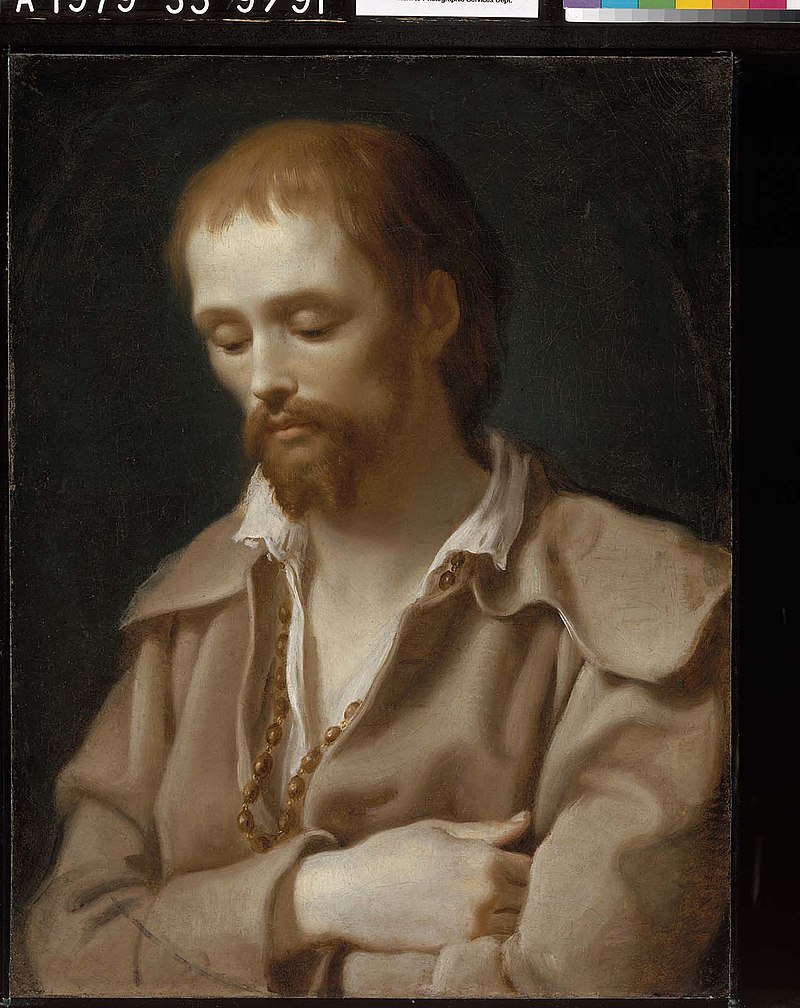
A grace-filled Holy Week to all our readers! As we await and prepare for the Resurrection about to dawn upon us, we might keep in mind two Benedicts: Pope Emeritus Benedict XVI, requiescat in pace, elected on this day in 2005; and today’s commemoration of the mystic pilgrim, Benedict Joseph Labre, who died on this[…]Continue reading→

My Name is Bernadette
April 16th is a propitious day, for besides the anniversary of Father de Valk’s death, who founded Catholic Insight in its print form decades ago, and the commemoration of the ‘two Benedicts’, mentioned in accompanying posts, today we also recall Saint Bernadette Soubirous, the young visionary to whom the Virgin Mary appeared numerous times at[…]Continue reading→
Saint Lydwina of Schiedam and Suffering Joyfully
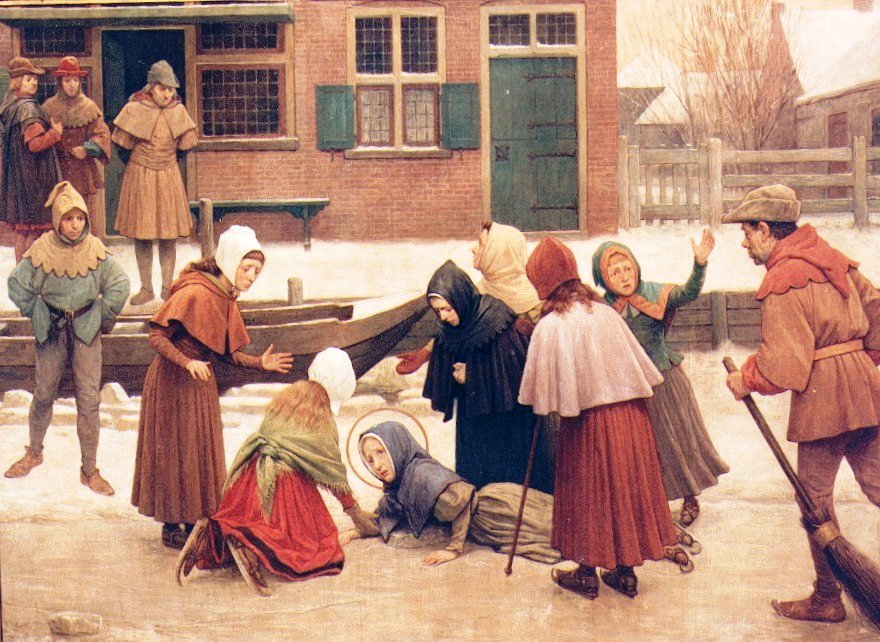
Saint Lydwina of Schiedam (1380 – 1433) was one of the countless and glorious ‘victim souls’ in the history of the Church, those whose lives are filled with suffering, often of an unimaginable intensity, but who suffer joyfully. She was a fifteen-year old Dutch girl, out skating one day, when she fell and broke one[…]Continue reading→
The Glorious Martyrdoms of Martin and Maximus
As we enter into Eastertide, we recall on this 13th of April Pope Saint Martin I (+655), one of the noblest, if most tragic, of the successors of Saint Peter. Born in Umbria, Italy, he was of noble lineage, with great intelligence combined with charity and love of the poor and the Church. While still[…]Continue reading→

Saint Stanislaus of Szczepanów
We celebrate Saint Stanislaus today (+ April 11, 1079), in light of this Easter Octave, a bishop and martyr who accepted the episcopacy only at the direct order of Pope Alexander II. He proved a wise and courageous leader of his flock, put to death by his own king, Boleslaus, for rebuking the monarch’s ‘immoral[…]Continue reading→
Saint Gemma Galgani
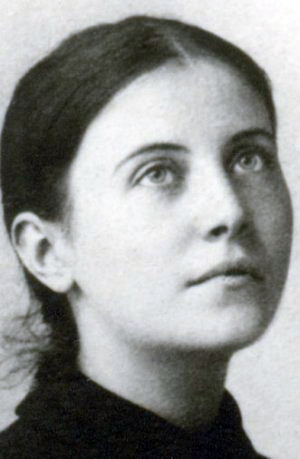
On this April 11th, in 1903 – the same year that the Italian Guiseppe Sarto was elected Pope later that summer as Pius X – a lovely, young Italian woman died, by the name of Gemma Galgani. She lived a brief life of 24 years, as did a number of other young saints, including Pier[…]Continue reading→
An Ideological and Improper Translation
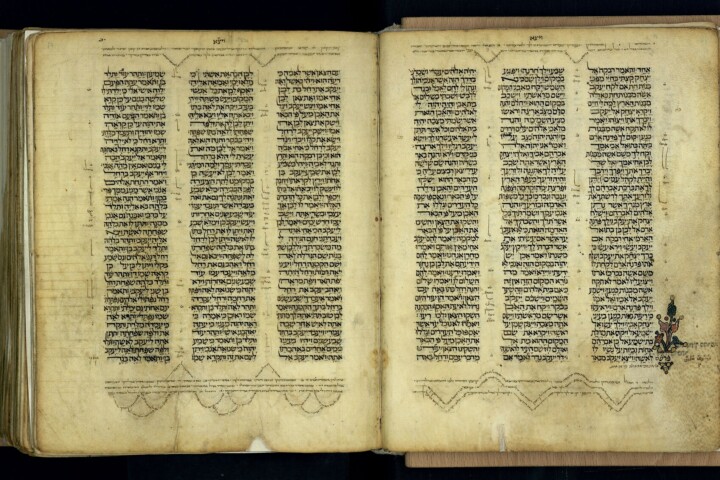
I noticed something odd with the psalm reading at Mass the other day. Our bishops’ conference here in Canada has decreed that the Mass in English – Novus Ordo – use the ‘NRSV’, the ‘New Revised Standard Version’, an ‘updated’ translation of the original RSV, first published in 1952. This ‘new translation’ has the tendency[…]Continue reading→
Saint Jean-Baptiste de la Salle: A Teacher for Teachers
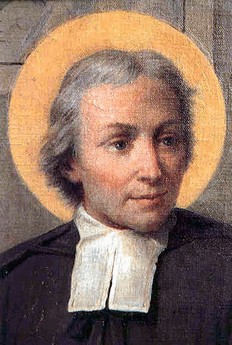
Jean-Baptiste de la Salle (1651 – 1719), a French nobleman, ordained a priest, founded the first order in the Church’s history entirely without priests, and this came about almost by accident. I say ‘almost’, for, of course, there are no accidents with God. Destined for ordination from an early age, Jean-Baptiste never looked back, even[…]Continue reading→