
Science, Pseudoscience…and Miracles
One of the key differences between science and pseudoscience, according to Karl Popper, was falsifiability. Science, properly speaking, presents hypotheses that can be tested, while pseudoscience always tries to find a ‘way out’, explaining any failures with extra hypotheses. We wrote of this a while back in distinguishing the method of the astronomer from that of the physicist. The former builds models to explain phenomena, while the latter focuses on the actual nature of things behind the phenomena. We may perceive the planets move a certain way from our vantage point, but how do they really move? That, dear reader, the nature of reality itself, is the perennial question.
Making the distinction between science – what is true, or close to the truth – from pseudoscience – what we take, as the name implies, to be false, is not often as easy as it seems.
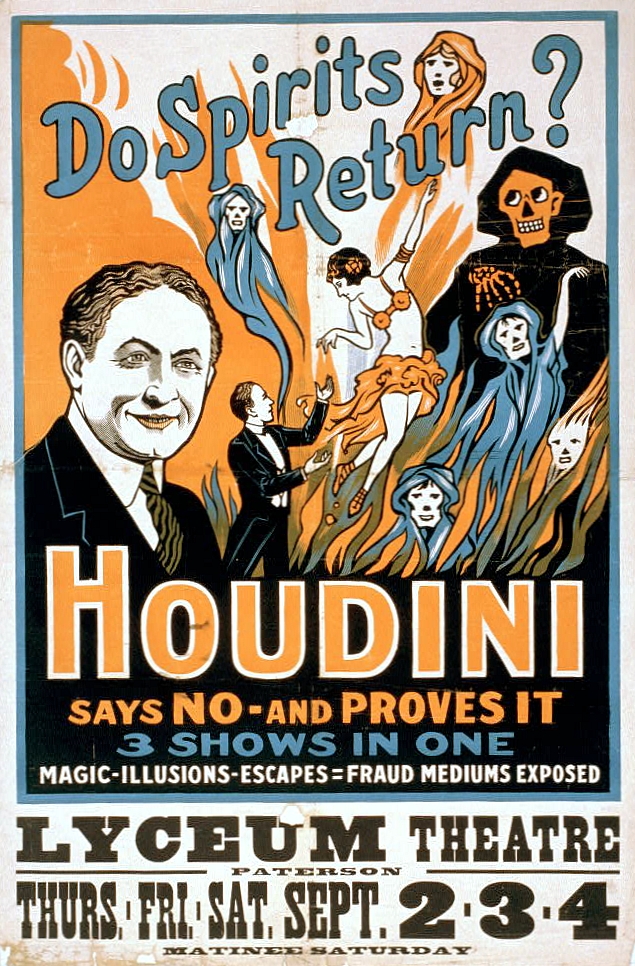
Here is a review by Ed Simon of the word of Charles Fort, a compiler of what are termed ‘paranormal’ events: ESP, telekinesis, séances, disappearing crews, spontaneous combustion, odd footprints of strange creatures, and all the rest of the weird and wonderful. Most scientists, and most of us, would declare all of this bunk and hogwash, old wives’ tales fit only to scare children and titillate adults. Houdini was not only a master magician, but also a master de-bunker of other ‘magicians’, for he knew the tricks of the trade.
Yet, should we be so hasty? What of the saints, like today’s Saint Charbel, who could perform miracles, even after death, acts that seem to go beyond, or even defy, the regular laws of physics, and so produce ‘wonder’ on those who see them? And God’s providence allows demonic forces to mimic the saints, but in ways that are not to the good. Most modern scientists, mired in a materialist worldview, would retort that these are all the same shtick that Houdini unmasked, believed only by gullible superstitious Catholics.
We may take cum grano salis some of the stories told in early hagiographies. But we as Catholics hold that certain saints were given the gift of reading hearts and minds; of healing beyond any medical explanation; of altered physical states (‘bilocation’); of defying the laws of gravity (levitation); of telling the future; of speaking with the dead (the appearance of Our Lady and the saints, who are not really ‘dead’, but far more alive than we are). In fact, there are billions upon billions of souls inhabiting regions beyond our ken, whether they be in heaven, hell or purgatory (we know not how many in each one), and billions upon billions of angels, at least as many as humans, as their guardians through life, but perhaps many times more than that. On rare occasions they interact with us, but most of the time, their effects are more oblique and hidden.
We would admit that such realities and phenomena – insofar as they are present to our senses – do not really fall under the domain of ‘science’, for they are not only are they difficult to falsify (see my take on global warming on these grounds); but they are also not measurable, and far less are they predictable, two of the hallmarks of ‘science’. Sure enough, every bona fide miracle of a saint in the process of canonization goes through many hurdles, including a panel of medical experts who are Houdini-like in their zeal to expose any fraud, auto-suggestion or a simple natural explanation for the healing.
For some that is still not enough. The atheist Emile Zola, when shown all the crutches at Lourdes, purportedly replied, ‘I’ll believe when I see prosthetic limbs up there’. There is much truth in Pascal’s dictum that for those with faith, no proof is required, and for those without, no proofs will suffice.
God does not allow Himself, nor His gifts to be placed into a laboratory, or under a microscope, or far less bought for money and wielded for one’s own glory. For the full manifestation of His power we will have to wait upon the eschaton and the end of time. In this state of journeying towards that revelation, we know not the effects of our prayers, nor even the prayers of the saints, which work in the mystery of God’s providence. How certain was Brother André that Saint Joseph would heal someone? As far as the water of Lourdes go, many are bathed, but few are chosen. Even Christ required some level of faith in those He healed, and such healings were and are primarily for the spiritual benefit of the recipients. And what are we to say of the Holy Eucharist – the greatest gift God has given – which has all the appearance, even the molecular properties, of bread and wine? Except, of course, when its true nature as His Body and Blood is revealed in a miraculous manner.
As far as the ‘laws of science’ go, G.K. Chesterton in his Logic of Elfland that if we took a step back – he says, back to our nursery days – they would seem miraculous, and are to children, who are still full of wonder. Why is water so refreshing, apples delicious, the sky a cerulean Marian blue, and grass green and soft? Even the connection between chickens and eggs, acorns and oak trees, remains obscure. Why is the cosmos so consistent? No one really knows. As Einstein himself put it, the most incomprehensible thing about the universe is the fact that it is comprehensible.
But not all things fit within the comprehension of our brains and senses. The narrow, constrained view of the materialist, limited to what can be measured, contains some truth, but also leaves out most of what is really real. There is more to this world than meets the eye. In fact, there is more to this world than this world, as we will discover for ourselves, in God’s good time.
For now we see in a mirror dimly, but then face to face. Now I know in part; then I shall understand fully, even as I have been fully understood. (1 Cor 13:12)
Carney’s Amoral Majority
After five defections – euphemistically described as ‘crossing the floor’ – and three by-elections, Mark Carney and his Liberals how have their coveted majority. One wonders what bowls of pottage were offered in back-room deals. In the archaic monarchical system that is the Dominion of Canada, this majority allows the newly-minted Prime Minister to rule[…]Continue reading→

Saint Kateri , Canada’s Protectress
This was the title given to Saint Kateri Tekakwitha, by Pope Benedict XVI, when he canonized her on October 28th, 2012, along with six others, in Saint Peter’ Square (she had been beatified by Pope John Paul II back in 1980). With Saint Joseph as our protector, along with the Canadian martyrs, we seem to[…]Continue reading→

A Tale of Two Benedicts
A grace-filled Holy Week to all our readers! As we await and prepare for the Resurrection about to dawn upon us, we might keep in mind two Benedicts: Pope Emeritus Benedict XVI, requiescat in pace, elected on this day in 2005; and today’s commemoration of the mystic pilgrim, Benedict Joseph Labre, who died on this[…]Continue reading→

My Name is Bernadette
April 16th is a propitious day, for besides the anniversary of Father de Valk’s death, who founded Catholic Insight in its print form decades ago, and the commemoration of the ‘two Benedicts’, mentioned in accompanying posts, today we also recall Saint Bernadette Soubirous, the young visionary to whom the Virgin Mary appeared numerous times at[…]Continue reading→

Saint Lydwina of Schiedam and Suffering Joyfully
Saint Lydwina of Schiedam (1380 – 1433) was one of the countless and glorious ‘victim souls’ in the history of the Church, those whose lives are filled with suffering, often of an unimaginable intensity, but who suffer joyfully. She was a fifteen-year old Dutch girl, out skating one day, when she fell and broke one[…]Continue reading→

The Glorious Martyrdoms of Martin and Maximus
As we enter into Eastertide, we recall on this 13th of April Pope Saint Martin I (+655), one of the noblest, if most tragic, of the successors of Saint Peter. Born in Umbria, Italy, he was of noble lineage, with great intelligence combined with charity and love of the poor and the Church. While still[…]Continue reading→

Saint Stanislaus of Szczepanów
We celebrate Saint Stanislaus today (+ April 11, 1079), in light of this Easter Octave, a bishop and martyr who accepted the episcopacy only at the direct order of Pope Alexander II. He proved a wise and courageous leader of his flock, put to death by his own king, Boleslaus, for rebuking the monarch’s ‘immoral[…]Continue reading→
Saint Gemma Galgani
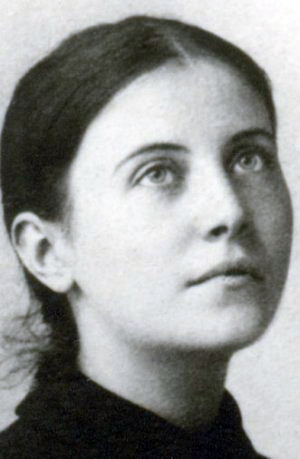
On this April 11th, in 1903 – the same year that the Italian Guiseppe Sarto was elected Pope later that summer as Pius X – a lovely, young Italian woman died, by the name of Gemma Galgani. She lived a brief life of 24 years, as did a number of other young saints, including Pier[…]Continue reading→
An Ideological and Improper Translation
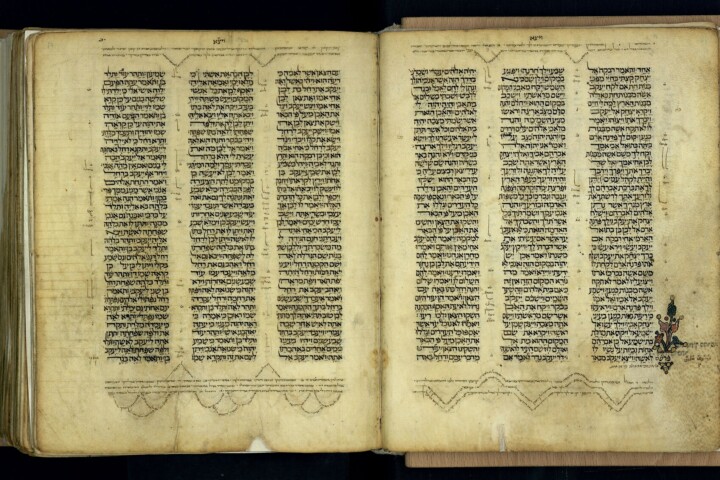
I noticed something odd with the psalm reading at Mass the other day. Our bishops’ conference here in Canada has decreed that the Mass in English – Novus Ordo – use the ‘NRSV’, the ‘New Revised Standard Version’, an ‘updated’ translation of the original RSV, first published in 1952. This ‘new translation’ has the tendency[…]Continue reading→
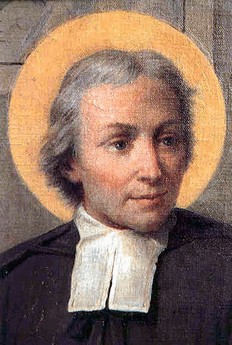
Saint Jean-Baptiste de la Salle: A Teacher for Teachers
Jean-Baptiste de la Salle (1651 – 1719), a French nobleman, ordained a priest, founded the first order in the Church’s history entirely without priests, and this came about almost by accident. I say ‘almost’, for, of course, there are no accidents with God. Destined for ordination from an early age, Jean-Baptiste never looked back, even[…]Continue reading→