
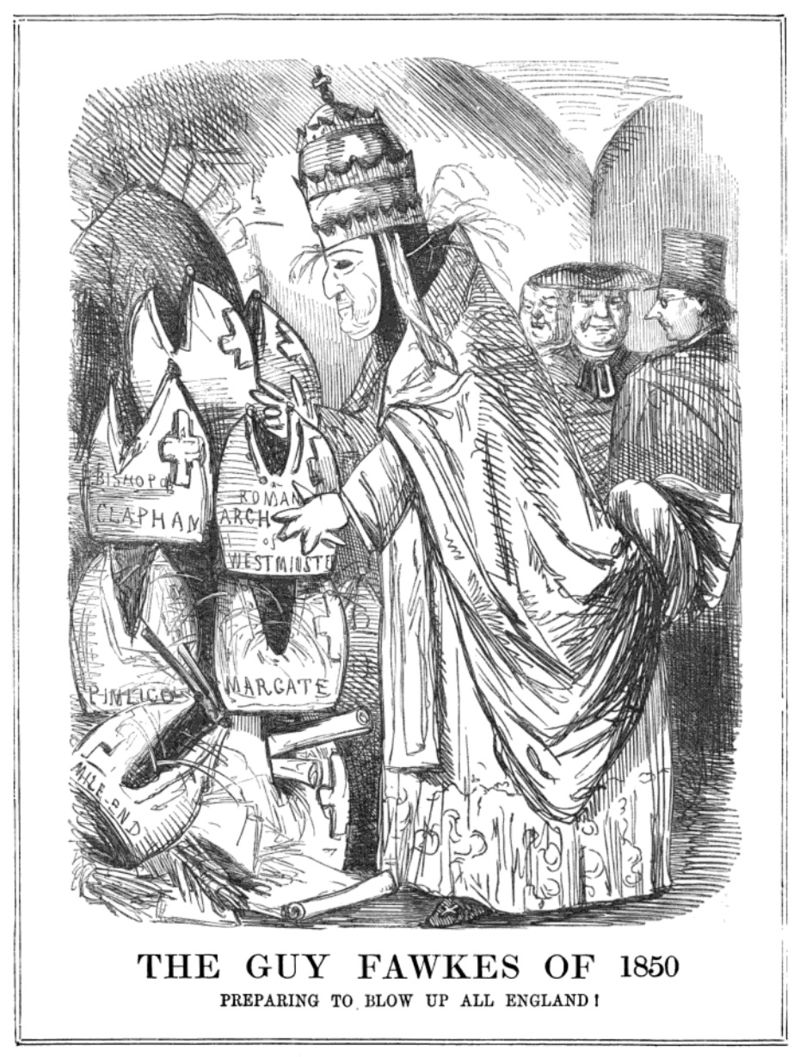
The Foiling of Fawkes and the Gunpowder Plot
Remember, remember! the fifth of November.
The Gunpowder treason and plot;
I know of no reason
Why the Gunpowder treason
Should ever be forgot!
Guy Fawkes and his companions
Did the scheme contrive,
To blow the King and Parliament
All up alive.
So begins the poem commemorating Guy Fawkes Day, when the common folk of England celebrate – or used to anyway when history and religion were more to the fore in people’s minds – the foiling of the ‘Gunpowder Plot’ of 1605, when a group of Catholic conspirators planned to blow up the entire Parliament building along with all the lords and legislators inside.
The short poem ends as follows:
A rope, a rope, to hang the Pope,
A penn’orth of cheese to choke him,
A pint of beer to wash it down,
And a jolly good fire to burn him.
Holloa, boys! holloa, boys! make the bells ring!
Holloa, boys! holloa boys! God save the King!
Hip, hip, hooor-r-r-ray!
The king in question was James I of England (and the VI of Scotland), the staunchly Protestant son of the lovely and Catholic Mary Queen of Scots, taken from his mother as an infant and raised in the ‘Reformed’ religion. Mary, after her travails – many of them caused by her own tragic decisions – had sought refuge with her cousin Queen Elizabeth in England, after her own overthrow, but ‘Good Queen Bess’ had had her beheaded, after a controversial conspiracy was discovered. James did nothing to help his dear old Mum – he had no memories of her growing up, and what now was the point, when the throne hung in the balance? The injustice Mary’s beheading – on trumped-up charges – was still fresh in minds of those who held to the ‘old religion’, and many Britons were still strongly devoted to the one, holy, Roman, Catholic, Apostolic Faith, which was being crushed mercilessly. So, there were those who sympathized with the attempt to blow the whole lot of the usurpers to kingdom come.
Some of the conspirators developed qualms of conscience – since a few of said legislators about to be blown to British bits were, after all, Catholic – and one of them sent a letter of warning. The King’s Men searched under the building, and discovered 36 barrels of gunpowder in an unused, subterranean room, guarded by a certain Guy Fawkes, a staunchly Catholic soldier-at-arms who had helped mastermind the whole fiasco, ready to light the fuse and escape by swimming across the Thames.
All rather daring, and it would make a grand film; but, as much as I love a good adventure story, likely immoral. Guy, a robust man of red hair and commanding mien, who in all probability looked little like the ‘masks’ seen in such Hollywood swill as ‘V for Vendetta’, was duly tortured, eventually confessed, and, as the story goes, implicated others. He was of course sentenced to death, but, as witnesses account, avoided the horror of being ‘hung and drawn’ by falling (or some say, jumping) off the scaffold and breaking his neck. Requiescat in pace.
To this day, effigies of ‘Guy Fawkes’ are burned across what used to be the British empire, calling to mind the triumph and glories of Protestant England, and the downfall of obscurantist and seditionist ‘Papism’. Or something like that.
The truth of the whole Guy Fawkes affair, as is usually the case with historical events presented from one side’s perspective, is far more complex. Religion in those days, as in all days really, was tied up so closely with politics, allegiances, culture, wars, with the fate of peoples and whole nations hanging in the balance. The ‘Reformation’ more or less destroyed what we know as mediaeval and merrie Catholic England, by practices often too gruesome to describe, their age was in some ways more brutal, or, I should qualify, more externally brutal, than ours; the stakes were high.
By one of those quirky coincidences of history, November 5th also marks the day in 1688 when the Dutchman William III of Orange stepped ashore on the southern port of Brixham, to usurp the throne of England from the rightful and Catholic king, James II, thus beginning the inaptly-named ‘Glorious Revolution’. There is a life-size statue of him, on the very spot on the quay he disembarked. (I prayed at the spot when I visited there in 2018, for the conversion of England back to the Faith). William would reign with Mary, James’ daughter who, like James I, had also been raised a staunch Anglican. Alas. Kidnapping and warping the proper religious sentiments of children really should be against the law.
And as evidence of deep duplicity, fraud and outright totalitarian methods in our own government come to the fore, we too might be questioning our own allegiance to the ‘state’, and how far resistance is required, hopefully passive and peaceful, but much depends on how far they push the populum. We see such in Brazil at the moment, with millions resisting what may have been a fraudulent election of a socialist. There is more and more resistance to the WEF crowd, pushing the hoi polloi back to stone-age slavery, while they jet around in Lear jets to their secure compounds. All carbon footprints must be equal, but some are more equal than others.
We should also think, and think deeply, as did Saint John Henry Newman, about what religion we adopt, for that which is, as Saint Thomas says, the ‘master of our affections’ will colour and motivate everything else we do, and will determine our ultimate eternal destiny. Newman saw that ‘Protestantism’ leads inevitably to secularism and religious indifference, and finally to strife and chaos.
And, while we’re on our own way there, we should also ponder how religion shapes our society, for it will, for good or ill. As we have seen in the decay of Britain from a once proudly Catholic and Christian nation to the sad secular socialist nightmare it is becoming, or has become. Only the ‘one, true religion’ can fully instantiate the common good, and lead not only to a fulfilled life, but to a prosperous and cohesive people.
All holy saints of England, orate pro nobis! +

Carney’s Amoral Majority
After five defections – euphemistically described as ‘crossing the floor’ – and three by-elections, Mark Carney and his Liberals how have their coveted majority. One wonders what bowls of pottage were offered in back-room deals. In the archaic monarchical system that is the Dominion of Canada, this majority allows the newly-minted Prime Minister to rule[…]Continue reading→

Saint Kateri , Canada’s Protectress
This was the title given to Saint Kateri Tekakwitha, by Pope Benedict XVI, when he canonized her on October 28th, 2012, along with six others, in Saint Peter’ Square (she had been beatified by Pope John Paul II back in 1980). With Saint Joseph as our protector, along with the Canadian martyrs, we seem to[…]Continue reading→

A Tale of Two Benedicts
A grace-filled Holy Week to all our readers! As we await and prepare for the Resurrection about to dawn upon us, we might keep in mind two Benedicts: Pope Emeritus Benedict XVI, requiescat in pace, elected on this day in 2005; and today’s commemoration of the mystic pilgrim, Benedict Joseph Labre, who died on this[…]Continue reading→

My Name is Bernadette
April 16th is a propitious day, for besides the anniversary of Father de Valk’s death, who founded Catholic Insight in its print form decades ago, and the commemoration of the ‘two Benedicts’, mentioned in accompanying posts, today we also recall Saint Bernadette Soubirous, the young visionary to whom the Virgin Mary appeared numerous times at[…]Continue reading→

Saint Lydwina of Schiedam and Suffering Joyfully
Saint Lydwina of Schiedam (1380 – 1433) was one of the countless and glorious ‘victim souls’ in the history of the Church, those whose lives are filled with suffering, often of an unimaginable intensity, but who suffer joyfully. She was a fifteen-year old Dutch girl, out skating one day, when she fell and broke one[…]Continue reading→

The Glorious Martyrdoms of Martin and Maximus
As we enter into Eastertide, we recall on this 13th of April Pope Saint Martin I (+655), one of the noblest, if most tragic, of the successors of Saint Peter. Born in Umbria, Italy, he was of noble lineage, with great intelligence combined with charity and love of the poor and the Church. While still[…]Continue reading→

Saint Stanislaus of Szczepanów
We celebrate Saint Stanislaus today (+ April 11, 1079), in light of this Easter Octave, a bishop and martyr who accepted the episcopacy only at the direct order of Pope Alexander II. He proved a wise and courageous leader of his flock, put to death by his own king, Boleslaus, for rebuking the monarch’s ‘immoral[…]Continue reading→
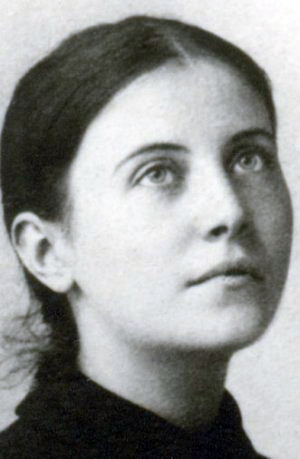
Saint Gemma Galgani
On this April 11th, in 1903 – the same year that the Italian Guiseppe Sarto was elected Pope later that summer as Pius X – a lovely, young Italian woman died, by the name of Gemma Galgani. She lived a brief life of 24 years, as did a number of other young saints, including Pier[…]Continue reading→
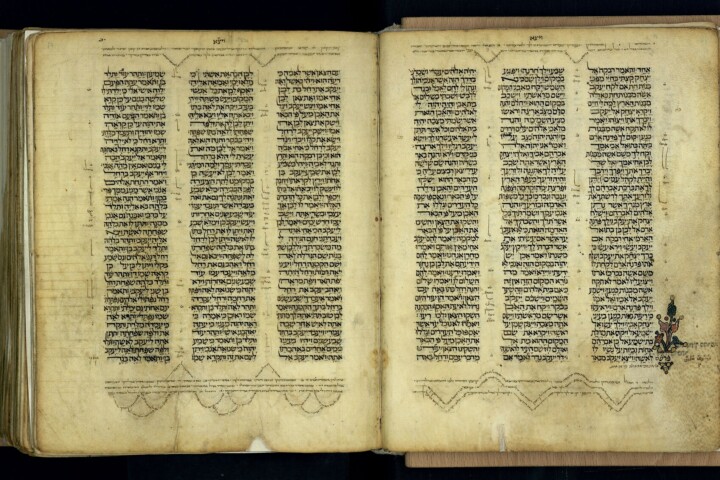
An Ideological and Improper Translation
I noticed something odd with the psalm reading at Mass the other day. Our bishops’ conference here in Canada has decreed that the Mass in English – Novus Ordo – use the ‘NRSV’, the ‘New Revised Standard Version’, an ‘updated’ translation of the original RSV, first published in 1952. This ‘new translation’ has the tendency[…]Continue reading→
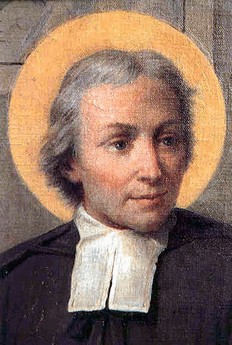
Saint Jean-Baptiste de la Salle: A Teacher for Teachers
Jean-Baptiste de la Salle (1651 – 1719), a French nobleman, ordained a priest, founded the first order in the Church’s history entirely without priests, and this came about almost by accident. I say ‘almost’, for, of course, there are no accidents with God. Destined for ordination from an early age, Jean-Baptiste never looked back, even[…]Continue reading→