
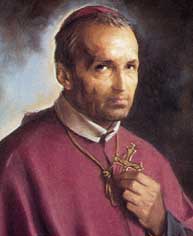
Pope Benedict and Saint Alphonsus Ligouri
BENEDICT XVI
GENERAL AUDIENCE
St. Peter’s Square
Wednesday, 30 March 2011
[Video]
Saint Alphonsus Liguori
Dear Brothers and Sisters,
Today I would like to present to you the figure of a holy Doctor of the Church to whom we are deeply indebted because he was an outstanding moral theologian and a teacher of spiritual life for all, especially simple people. He is the author of the words and music of one of the most popular Christmas carols in Italy and not only Italy: Tu scendi dalle stelle [You come down from the stars].
Belonging to a rich noble family of Naples, Alfonso Maria de’ Liguori [known in English as Alphonsus Liguori] was born in 1696. Endowed with outstanding intellectual qualities, when he was only 16 years old he obtained a degree in civil and canon law. He was the most brilliant lawyer in the tribunal of Naples: for eight years he won all the cases he defended. However, in his soul thirsting for God and desirous of perfection, the Lord led Alphonsus to understand that he was calling him to a different vocation. In fact, in 1723, indignant at the corruption and injustice that was ruining the legal milieu, he abandoned his profession — and with it riches and success — and decided to become a priest despite the opposition of his father.
He had excellent teachers who introduced him to the study of Sacred Scripture, of the Church history and of mysticism. He acquired a vast theological culture which he put to good use when, after a few years, he embarked on his work as a writer.
He was ordained a priest in 1726 and, for the exercise of his ministry entered the diocesan Congregation of Apostolic Missions. Alphonsus began an activity of evangelization and catechesis among the humblest classes of Neapolitan society, to whom he liked preaching, and whom he instructed in the basic truths of the faith. Many of these people, poor and modest, to whom he addressed himself, were very often prone to vice and involved in crime. He patiently taught them to pray, encouraging them to improve their way of life.
Alphonsus obtained excellent results: in the most wretched districts of the city there were an increasing number of groups that would meet in the evenings in private houses and workshops to pray and meditate on the word of God, under the guidance of several catechists trained by Alphonsus and by other priests, who regularly visited these groups of the faithful. When at the wish of the Archbishop of Naples, these meetings were held in the chapels of the city, they came to be known as “evening chapels”. They were a true and proper source of moral education, of social improvement and of reciprocal help among the poor: thefts, duels, prostitution ended by almost disappearing.
Even though the social and religious context of the time of St Alphonsus was very different from our own, the “evening chapels” appear as a model of missionary action from which we may draw inspiration today too, for a “new evangelization”, particularly of the poorest people, and for building a more just, fraternal and supportive coexistence. Priests were entrusted with a task of spiritual ministry, while well-trained lay people could be effective Christian animators, an authentic Gospel leaven in the midst of society.
After having considered leaving to evangelize the pagan peoples, when Alphonsus was 35 years old, he came into contact with the peasants and shepherds of the hinterland of the Kingdom of Naples. Struck by their ignorance of religion and the state of neglect in which they were living, he decided to leave the capital and to dedicate himself to these people, poor both spiritually and materially. In 1732 he founded the religious Congregation of the Most Holy Redeemer, which he put under the protection of Bishop Tommaso Falcoia, and of which he subsequently became the superior.
These religious, guided by Alphonsus, were authentic itinerant missionaries, who also reached the most remote villages, exhorting people to convert and to persevere in the Christian life, especially through prayer. Still today the Redemptorists, scattered in so many of the world’s countries, with new forms of apostolate continue this mission of evangelization. I think of them with gratitude, urging them to be ever faithful to the example of their holy Founder.
Esteemed for his goodness and for his pastoral zeal, in 1762 Alphonsus was appointed Bishop of Sant’Agata dei Goti, a ministry which he left, following the illness which debilitated him, in 1775, through a concession of Pope Pius VI. On learning of his death in 1787, which occurred after great suffering, the Pontiff exclaimed: “he was a saint!”. And he was not mistaken: Alphonsus was canonized in 1839 and in 1871 he was declared a Doctor of the Church. This title suited him for many reason. First of all, because he offered a rich teaching of moral theology, which expressed adequately the Catholic doctrine, to the point that Pope Pius XII proclaimed him “Patron of all confessors and moral theologians”.
(To continue reading, please see here).

Saint Kateri , Canada’s Protectress
This was the title given to Saint Kateri Tekakwitha, by Pope Benedict XVI, when he canonized her on October 28th, 2012, along with six others, in Saint Peter’ Square (she had been beatified by Pope John Paul II back in 1980). With Saint Joseph as our protector, along with the Canadian martyrs, we seem to[…]Continue reading→

Remembering Father Alphonse de Valk
(Today marks the sixth anniversary of the death of Father Alphonse de Valk, C.S.B., a faithful, courageous and indefatigable Basilian priest, pro-life-and-family apostle, and the founder of Catholic Insight magazine. Here is what we wrote those on his entering into eternity five years ago, as we continue to remember him in our prayers and thoughts)[…]Continue reading→
A Tale of Two Benedicts
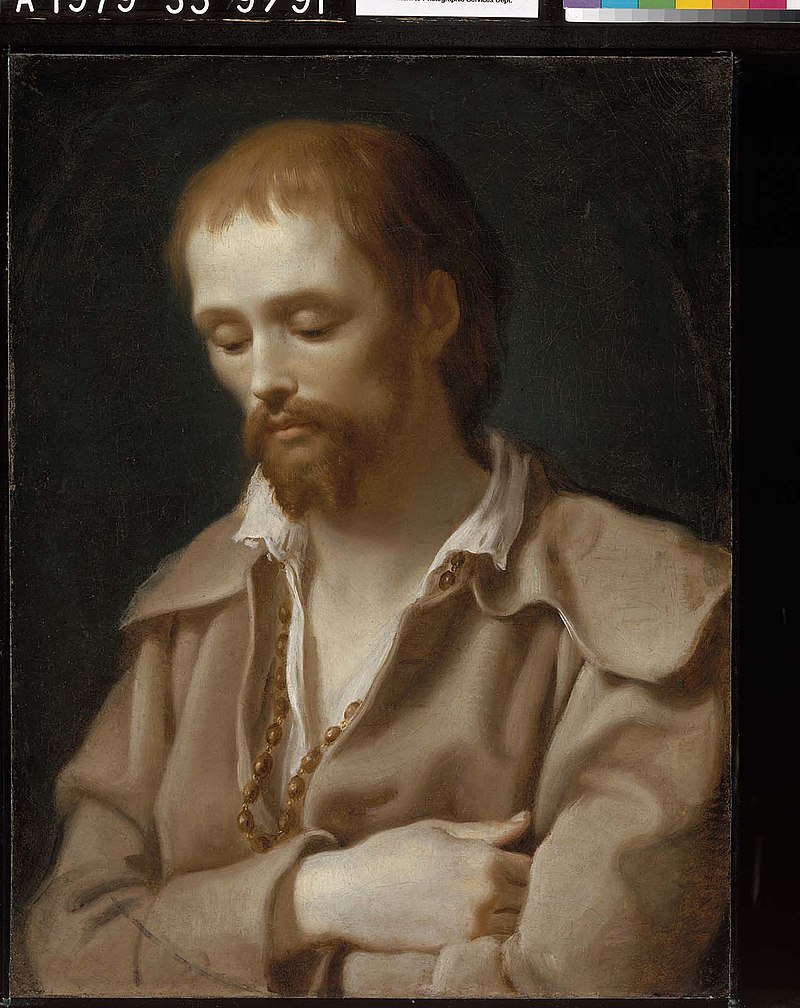
A grace-filled Holy Week to all our readers! As we await and prepare for the Resurrection about to dawn upon us, we might keep in mind two Benedicts: Pope Emeritus Benedict XVI, requiescat in pace, elected on this day in 2005; and today’s commemoration of the mystic pilgrim, Benedict Joseph Labre, who died on this[…]Continue reading→

My Name is Bernadette
April 16th is a propitious day, for besides the anniversary of Father de Valk’s death, who founded Catholic Insight in its print form decades ago, and the commemoration of the ‘two Benedicts’, mentioned in accompanying posts, today we also recall Saint Bernadette Soubirous, the young visionary to whom the Virgin Mary appeared numerous times at[…]Continue reading→
Saint Lydwina of Schiedam and Suffering Joyfully
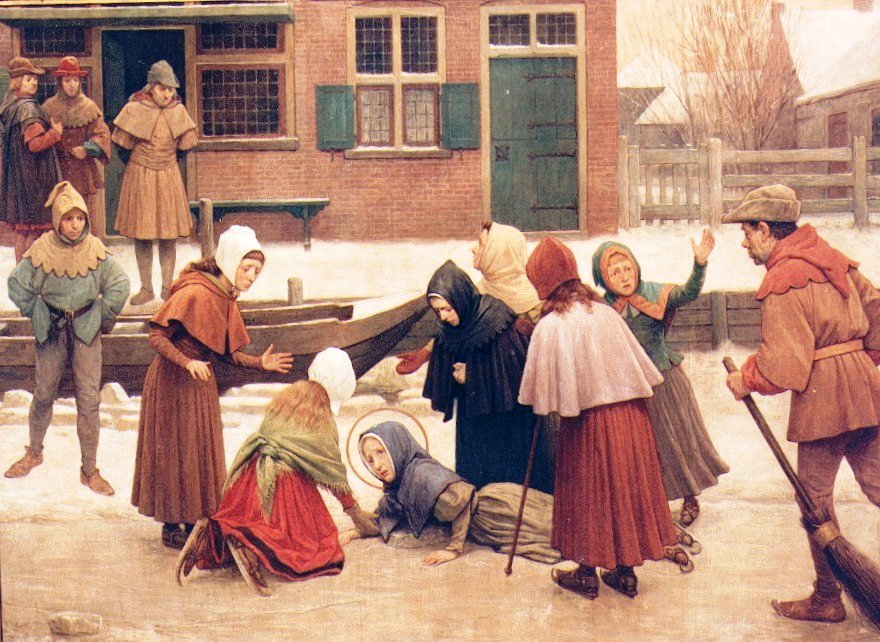
Saint Lydwina of Schiedam (1380 – 1433) was one of the countless and glorious ‘victim souls’ in the history of the Church, those whose lives are filled with suffering, often of an unimaginable intensity, but who suffer joyfully. She was a fifteen-year old Dutch girl, out skating one day, when she fell and broke one[…]Continue reading→
The Glorious Martyrdoms of Martin and Maximus
As we enter into Eastertide, we recall on this 13th of April Pope Saint Martin I (+655), one of the noblest, if most tragic, of the successors of Saint Peter. Born in Umbria, Italy, he was of noble lineage, with great intelligence combined with charity and love of the poor and the Church. While still[…]Continue reading→
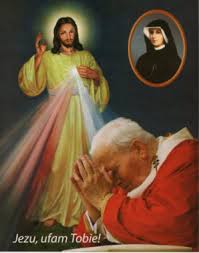
Canonizing Sister Faustina and Divine Mercy
HOMILY OF THE HOLY FATHER MASS IN ST PETER’S SQUARE FOR THE CANONIZATION OF SR MARY FAUSTINA KOWALSKA Sunday, 30 April 2000 1. “Confitemini Domino quoniam bonus, quoniam in saeculum misericordia eius”; “Give thanks to the Lord for he is good; his steadfast love endures for ever” (Ps 118: 1). So the Church sings on the Octave of[…]Continue reading→

Divine Mercy Sunday – An Echo of Every Mass
Reach out your hand and put it in my side. Do not doubt but believe’… ‘My Lord and my God!’ (Jn. 20:18)). Today is Divine Mercy Sunday, and as we celebrate the end of the Easter Octave, we contemplate the wounded side of our Saviour, the Church’s source of life. On Good Friday in the[…]Continue reading→
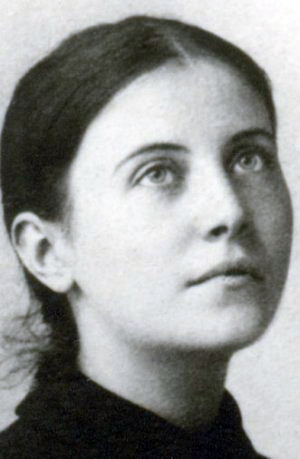
Saint Gemma Galgani
On this April 11th, in 1903 – the same year that the Italian Guiseppe Sarto was elected Pope later that summer as Pius X – a lovely, young Italian woman died, by the name of Gemma Galgani. She lived a brief life of 24 years, as did a number of other young saints, including Pier[…]Continue reading→
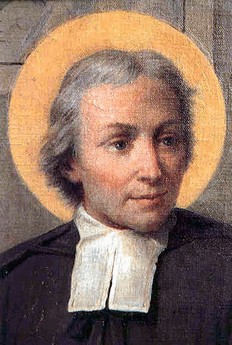
Saint Jean-Baptiste de la Salle: A Teacher for Teachers
Jean-Baptiste de la Salle (1651 – 1719), a French nobleman, ordained a priest, founded the first order in the Church’s history entirely without priests, and this came about almost by accident. I say ‘almost’, for, of course, there are no accidents with God. Destined for ordination from an early age, Jean-Baptiste never looked back, even[…]Continue reading→