
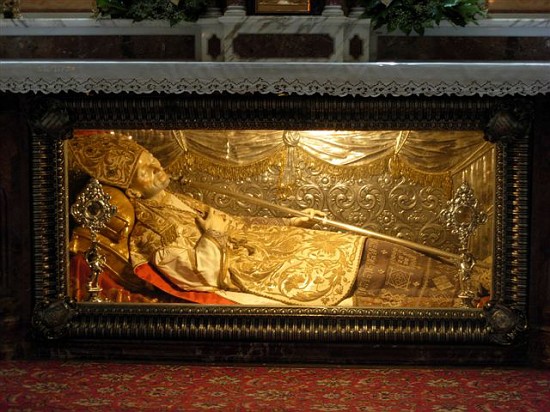
Alphonsus of Ligouri, A Moral Teacher for All Ages
Saint Alphonsus Ligouri (1696 – 1787) was a renaissance man, whose kind was a rarity in his post-renaissance era, and even more so now in our age of specialization, often in esoteric subjects that would have puzzled anyone before, say, 1960. Alphonsus received a double doctorate in civil and canon law at the tender age of 16, and the gowns so drowned his small body that people laughed at his graduation ceremony. He went on to live a long and fruitful life, as a priest, bishop, poet, musician, artist, lawyer, moral theologian, author of innumerable treatises – all before going to his eternal reward after a final bout of suffering, including being cast out of the very Order he founded, on this first day of August in 1787.
Born of noble lineage, Alphonsus was at first destined for a military career, learning to ride and fence, but poor eyesight and asthma prompted him to switch to the more sedate career of law. However, at the age of 27, already at the top of his career, with riches and luxury at his lawyerly fingertips, he admitted to a confidante, with words that bear reflection on all those legal specialists who all-too-often clean out the bank accounts of those desperate in the pursuit of what should be simple and easily obtainable earthly justice:
My friend, our profession is too full of difficulties and dangers; we lead an unhappy life and run risk of dying an unhappy death.
Indeed. Thankfully for history, Alphonsus chose the path to the priesthood instead, confirmed by an interior voice which said, Leave the world, and give yourself to me.
He at first joined the Oratory of Saint Philip Neri, but, at his father’s objection, began studying for the diocesan priesthood at home, and was ordained on December 21, 1726. At once, he began working with the poor and homeless youth, offering simple and direct homilies that everyone could understand – the custom at the time was to explain God’s word in high-flowing rhetoric – and the young Father Alphonsus became immensely popular as a preacher and confessor.
On November 9th, 1732, he founded the Congregation of the Most Holy Redeemer – the Redemptorists – with the task primarily of giving popular missions, especially to the underprivileged, fighting the heresy of Jansenism, with its strict moral code and depressing, harsh view of a punishing, vengeful God, offering instead His infinite mercy, if we but give our sins to, and give up our sins for, Him.
The penitents should be treated as souls to be saved than as criminals to be punished he told his priests.
Yet, at the same time, he urged these same penitents to pray, as though their eternal salvation depended upon it, for it does:
Whoever prays is certainly saved. He who does not is certainly damned. All the blessed have been saved by prayer. All the damned have been lost through not praying. If they had prayed they would not have been lost. And this is, and will be their greatest torment in hell: to think how easily they might have been saved, just by asking God for His grace, but that now it is too late – their time of prayer is gone.
But such prayer need not be long nor laborious, just habitual and steadfast, especially communing with God as though to a confidante:
Acquire the habit of speaking to God as if you were alone with Him, familiarly and with confidence and love, as to the dearest and most loving of friends.
And this especially to God in His Real Presence in the tabernacle, if one can find an unlocked church somewhere nearby. And, if not, well pray outside the locked doors:
Know also that you will probably gain more by praying fifteen minutes before the Blessed Sacrament than by all the other spiritual exercises of the day. True, Our Lord hears our prayers anywhere, for He has made the promise, ‘Ask, and you shall receive,’ but He has revealed to His servants that those who visit Him in the Blessed Sacrament will obtain a more abundant measure of grace.
Saint Alphonsus is the author of numerous works of spirituality and devotional works, on Our Lady and the Saviour (Practica di amare Gesù Cristo) – his Stations of the Cross are used in many parishes in Lent – with his magnum opus being his Moral Theology, published in 1748, in ten or five volumes (depending on edition) and still in print, an English version just having been issued 2017.
In 1762, Alphonsus, against his own objections, was appointed bishop of Sant’Agata dei Goti, promoting the Faith throughout his diocese, especially devotion to the Eucharist and to the Blessed Virgin Mary – he issued a decree suspending priests who rushed through Mass in less than 15 minutes (!).
In the midst of all his responsibilities, Alphonsus’ life verified the paradox that people with what seems no time make the best use of their time – he found that time to write hymns and poems for the people to the glory of God, including perhaps his most famous Tu scendi dalle stele, a very popular – and now traditional – Italian Christmas carol.
Even though there are many days yet ’til Christmas, here is a rendition by Andrea Bocelli:
https://www.youtube.com/watch?v=ZSW4tUk5uBw
And, if you’d like a more formal version, with Luciano Pavarotti, full orchestra and children’s choir:
https://www.youtube.com/watch?v=HzU9vVK51-Y
Saint Alphonsus was on the right track, that moral truth is best presented not just with simplicity, but with beauty, for the moral life is and should be immensely attractive, which is why Pope Saint John Paul II titled his landmark and prophetic encyclical on the principles of the moral life, Veritatis Splendor, the splendour – the beauty – of truth – which I cannot recommend highly enough, and largely ignored by this current Magisterium. It was published in 1993 a few days after the memorial of our saint, on the feast of the Transfiguration.
Alphonsus Ligouri was canonized by Gregory XVI on May 26th, 1839 (fittingly, the feast of Saint Philip Neri, to whose Oratory the saint always remained devoted), and declared a Doctor of the Church by Blessed Pius IX on July 7th 1871. He was also declared the patron saint of moral theologians by Venerable Pius XII on April 26th, 1956.
A much-needed saint, whose moral clarity allows us to see through the fog of our current confusion. A true renaissance saint, in the sense of rediscovering not only who we are, and who we are meant to be.
Saint Alphonsus Ligouri, ora pro nobis!

Carney’s Amoral Majority
After five defections – euphemistically described as ‘crossing the floor’ – and three by-elections, Mark Carney and his Liberals how have their coveted majority. One wonders what bowls of pottage were offered in back-room deals. In the archaic monarchical system that is the Dominion of Canada, this majority allows the newly-minted Prime Minister to rule[…]Continue reading→

Saint Kateri , Canada’s Protectress
This was the title given to Saint Kateri Tekakwitha, by Pope Benedict XVI, when he canonized her on October 28th, 2012, along with six others, in Saint Peter’ Square (she had been beatified by Pope John Paul II back in 1980). With Saint Joseph as our protector, along with the Canadian martyrs, we seem to[…]Continue reading→

A Tale of Two Benedicts
A grace-filled Holy Week to all our readers! As we await and prepare for the Resurrection about to dawn upon us, we might keep in mind two Benedicts: Pope Emeritus Benedict XVI, requiescat in pace, elected on this day in 2005; and today’s commemoration of the mystic pilgrim, Benedict Joseph Labre, who died on this[…]Continue reading→

My Name is Bernadette
April 16th is a propitious day, for besides the anniversary of Father de Valk’s death, who founded Catholic Insight in its print form decades ago, and the commemoration of the ‘two Benedicts’, mentioned in accompanying posts, today we also recall Saint Bernadette Soubirous, the young visionary to whom the Virgin Mary appeared numerous times at[…]Continue reading→

Saint Lydwina of Schiedam and Suffering Joyfully
Saint Lydwina of Schiedam (1380 – 1433) was one of the countless and glorious ‘victim souls’ in the history of the Church, those whose lives are filled with suffering, often of an unimaginable intensity, but who suffer joyfully. She was a fifteen-year old Dutch girl, out skating one day, when she fell and broke one[…]Continue reading→

The Glorious Martyrdoms of Martin and Maximus
As we enter into Eastertide, we recall on this 13th of April Pope Saint Martin I (+655), one of the noblest, if most tragic, of the successors of Saint Peter. Born in Umbria, Italy, he was of noble lineage, with great intelligence combined with charity and love of the poor and the Church. While still[…]Continue reading→

Canonizing Sister Faustina and Divine Mercy
HOMILY OF THE HOLY FATHER MASS IN ST PETER’S SQUARE FOR THE CANONIZATION OF SR MARY FAUSTINA KOWALSKA Sunday, 30 April 2000 1. “Confitemini Domino quoniam bonus, quoniam in saeculum misericordia eius”; “Give thanks to the Lord for he is good; his steadfast love endures for ever” (Ps 118: 1). So the Church sings on the Octave of[…]Continue reading→

Saint Stanislaus of Szczepanów
We celebrate Saint Stanislaus today (+ April 11, 1079), in light of this Easter Octave, a bishop and martyr who accepted the episcopacy only at the direct order of Pope Alexander II. He proved a wise and courageous leader of his flock, put to death by his own king, Boleslaus, for rebuking the monarch’s ‘immoral[…]Continue reading→
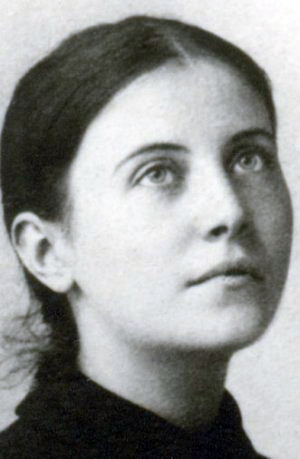
Saint Gemma Galgani
On this April 11th, in 1903 – the same year that the Italian Guiseppe Sarto was elected Pope later that summer as Pius X – a lovely, young Italian woman died, by the name of Gemma Galgani. She lived a brief life of 24 years, as did a number of other young saints, including Pier[…]Continue reading→
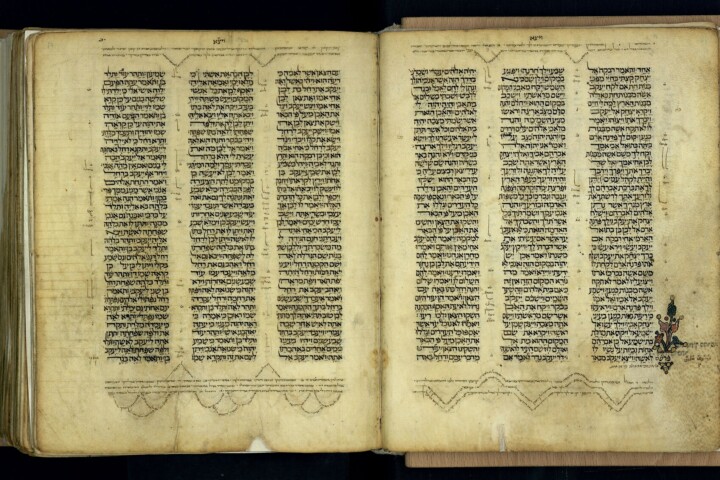
An Ideological and Improper Translation
I noticed something odd with the psalm reading at Mass the other day. Our bishops’ conference here in Canada has decreed that the Mass in English – Novus Ordo – use the ‘NRSV’, the ‘New Revised Standard Version’, an ‘updated’ translation of the original RSV, first published in 1952. This ‘new translation’ has the tendency[…]Continue reading→