
The Line in the BC Sand
As we wrote recently, British Columbia currently has a total prohibition on public religious services; what is of most concern to Catholics is the lack of public Masses and other sacraments. Toronto recently won a limited victory, of sorts (see the Oliver Twist and Mr. Bumble analogy in a recent post), which in this case is like the Church getting a second helping of watery porridge – going from a limited capacity of ten people per church, to ten percent capacity. It’s something, and may keep things going for a while.
Religious leaders and their lawyers in BC also fought back through the legal process, going to the Supreme Court of the province; but the recent decision by Chief Justice Hinkson went against them. As one communique from ARPA Canada put it:
The churches at the centre of this case argued that these restrictions unreasonably infringed the freedom of religion, freedom of expression, freedom of assembly and freedom of association – all four of the Charter’s fundamental freedoms. Attorney General lawyers conceded that three of these freedoms were in fact infringed, and Chief Justice Hinkson agreed with the petitioners with respect to all four. However, he decided that these infringements were reasonable given the circumstances.
The rationale for this ‘reasonable’ conclusion was that, according to the Public Health Office – the aforementioned secularly-haloed Dr. Bonnie Henry – religious services are ‘higher risk’ than other social outlets, such as restaurants, gyms, stores and the like.
In one unwitting sense she is sort of right. For the Church does have an autonomy over the State, and the latter has no right to enter into or interfere with the sanctuary of God. That was what the whole Thomas a Becket and Thomas More affairs were about; the Church has had to defend her rightful autonomy through the ages, and this time is no different.
What will Archbishop Miller now do, or advise his fellow Catholics to do? If religion means anything, it requires that we offer to God that which we owe Him, and foremost amongst those duties is the requirement for ‘full, public worship by the Mystical Body of Jesus Christ in His head and members’, the very definition of Liturgy.
The relation between Church and State is a complex one – we hope to post something soon as way of a primer on the topic – but for now, check out Dr. Douglas Farrow’s fine take. Each is autonomous in its own domain, the spiritual and the temporal, but there are many areas of overlap. Hence, the ideal cooperation between Church and State, which should be distinct, but not separate. The State has grave obligations to the ‘one, true Church of Christ’, and each society has an obligation to be ‘Catholic’ in some deep and real way. This, of course, would ideally avoid many areas of conflict.
Hence, we could hold that certain restrictions on our religious rights and duties may be decreed in extreme circumstances – ideally by the Church herself, and not imposed by the State – but they should be proportionate, limited, fair and balanced.
To simply forbid public worship indefinitely, while everything else in the province is open, is quite most definitely not ‘proportionate, limited, fair and balanced’, but rather egregious anti-religious discrimination, whose roots seem to be either indifference, insouciance, or outright disdain.
Our task, however, is not to infer motives – we will leave that to God – but simply demand justice, which implies freedom of conscience, movement and assembly, not least for those things that are most necessary.
If lifting weights, sipping wine, and enjoying meals are deemed ‘necessary’ – and I am all for people choosing their proclivities in freedom – what are to say of the very Bread of Eternal Life, the offering of the Holy Sacrifice, the confession of our sins, and the worship given to God Himself? Of course, to the secular mind, these mean nothing, but to the Catholic mind, they are everything.
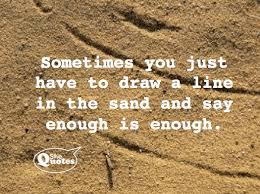
If the State draws an unjust line in the sand, we as a Church must draw our own, for in the end, when push comes to shove, we must obey God rather than men. Or, at least, so someone once named Simon said. And shouldn’t we always do what Simon says?
Carney’s Amoral Majority
After five defections – euphemistically described as ‘crossing the floor’ – and three by-elections, Mark Carney and his Liberals how have their coveted majority. One wonders what bowls of pottage were offered in back-room deals. In the archaic monarchical system that is the Dominion of Canada, this majority allows the newly-minted Prime Minister to rule[…]Continue reading→

Saint Kateri , Canada’s Protectress
This was the title given to Saint Kateri Tekakwitha, by Pope Benedict XVI, when he canonized her on October 28th, 2012, along with six others, in Saint Peter’ Square (she had been beatified by Pope John Paul II back in 1980). With Saint Joseph as our protector, along with the Canadian martyrs, we seem to[…]Continue reading→
A Tale of Two Benedicts
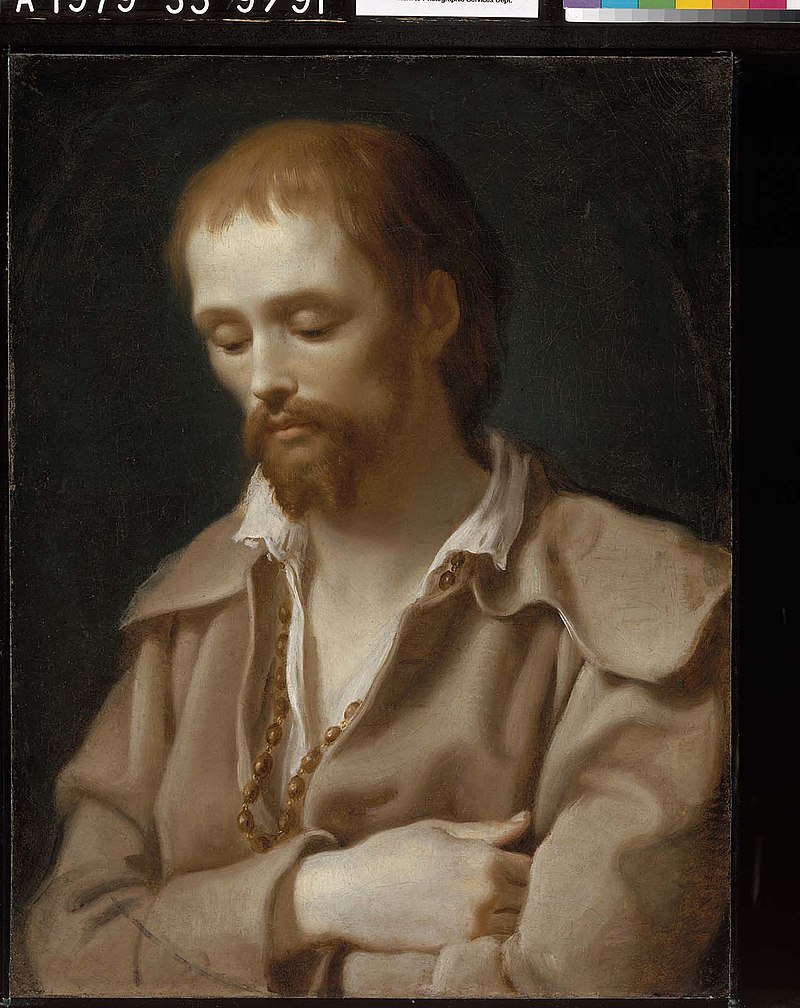
A grace-filled Holy Week to all our readers! As we await and prepare for the Resurrection about to dawn upon us, we might keep in mind two Benedicts: Pope Emeritus Benedict XVI, requiescat in pace, elected on this day in 2005; and today’s commemoration of the mystic pilgrim, Benedict Joseph Labre, who died on this[…]Continue reading→

My Name is Bernadette
April 16th is a propitious day, for besides the anniversary of Father de Valk’s death, who founded Catholic Insight in its print form decades ago, and the commemoration of the ‘two Benedicts’, mentioned in accompanying posts, today we also recall Saint Bernadette Soubirous, the young visionary to whom the Virgin Mary appeared numerous times at[…]Continue reading→
Saint Lydwina of Schiedam and Suffering Joyfully
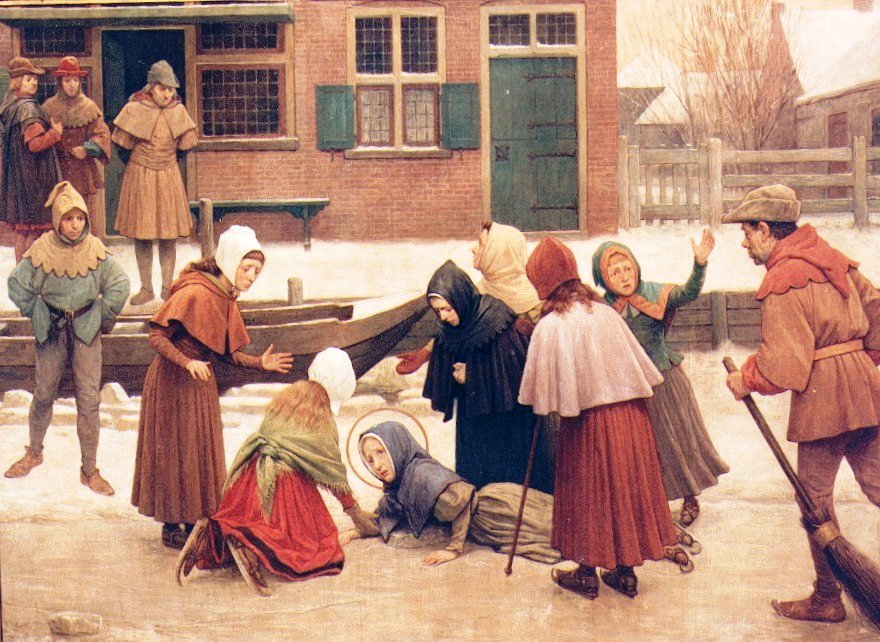
Saint Lydwina of Schiedam (1380 – 1433) was one of the countless and glorious ‘victim souls’ in the history of the Church, those whose lives are filled with suffering, often of an unimaginable intensity, but who suffer joyfully. She was a fifteen-year old Dutch girl, out skating one day, when she fell and broke one[…]Continue reading→
The Glorious Martyrdoms of Martin and Maximus
As we enter into Eastertide, we recall on this 13th of April Pope Saint Martin I (+655), one of the noblest, if most tragic, of the successors of Saint Peter. Born in Umbria, Italy, he was of noble lineage, with great intelligence combined with charity and love of the poor and the Church. While still[…]Continue reading→

Saint Stanislaus of Szczepanów
We celebrate Saint Stanislaus today (+ April 11, 1079), in light of this Easter Octave, a bishop and martyr who accepted the episcopacy only at the direct order of Pope Alexander II. He proved a wise and courageous leader of his flock, put to death by his own king, Boleslaus, for rebuking the monarch’s ‘immoral[…]Continue reading→
Saint Gemma Galgani
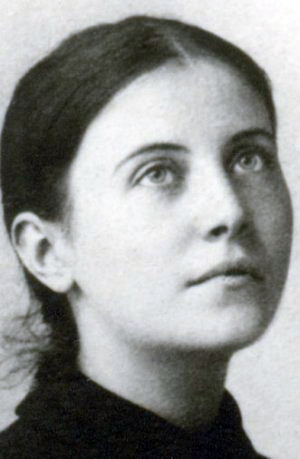
On this April 11th, in 1903 – the same year that the Italian Guiseppe Sarto was elected Pope later that summer as Pius X – a lovely, young Italian woman died, by the name of Gemma Galgani. She lived a brief life of 24 years, as did a number of other young saints, including Pier[…]Continue reading→
An Ideological and Improper Translation
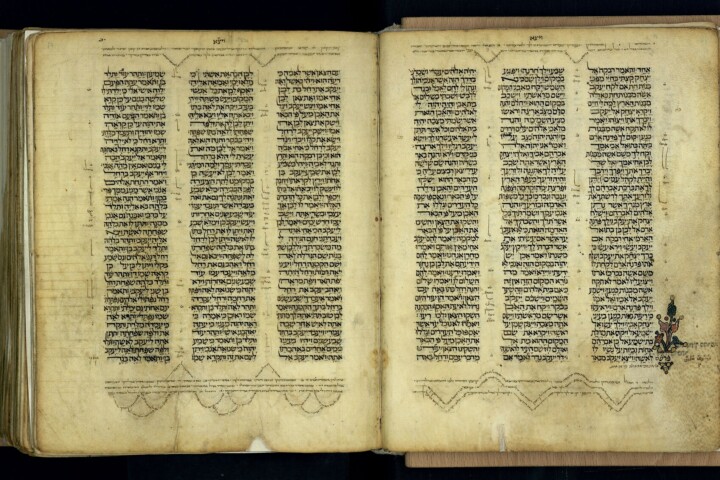
I noticed something odd with the psalm reading at Mass the other day. Our bishops’ conference here in Canada has decreed that the Mass in English – Novus Ordo – use the ‘NRSV’, the ‘New Revised Standard Version’, an ‘updated’ translation of the original RSV, first published in 1952. This ‘new translation’ has the tendency[…]Continue reading→
Saint Jean-Baptiste de la Salle: A Teacher for Teachers
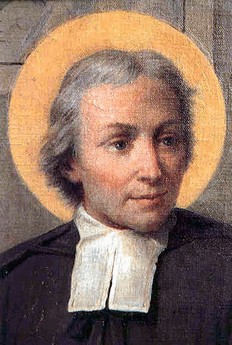
Jean-Baptiste de la Salle (1651 – 1719), a French nobleman, ordained a priest, founded the first order in the Church’s history entirely without priests, and this came about almost by accident. I say ‘almost’, for, of course, there are no accidents with God. Destined for ordination from an early age, Jean-Baptiste never looked back, even[…]Continue reading→