
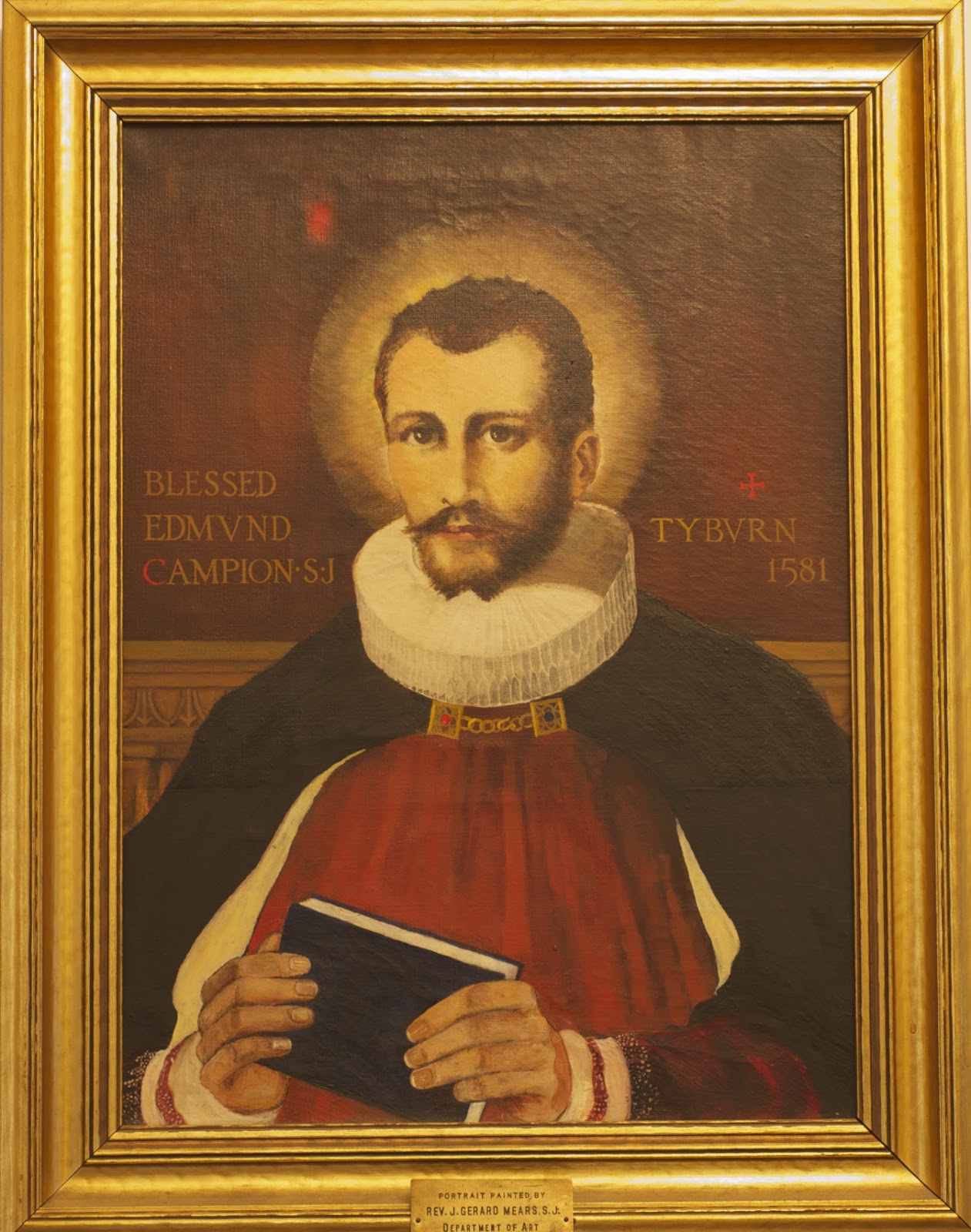
Edmund Campion’s English Optimism
Today, on this first day of December, we call to mind Saint Edmund Campion – see Avellina Ballestri’s fine recounting of his glorious life from the archives – one of the most charming in the pageantry of the English martyrs. His sense of optimism and good cheer, in the face of the most arduous conditions, even torture, are a testament not only to his virtue, but to his trust in the goodness of God, in all things, great and small, good and bad.
Edmund, a witty and brilliant scholar, writer and debater – called the ‘jewel of Oxford’ – was a favourite of Queen Elizabeth’s, who enjoyed the company of handsome, intelligent young men. That said, she never married, and was dubbed with the dubious epithet of the ‘virgin queen’. Campion was held in the queen’s good graces until his conversion to Catholicism in 1571 and, what was worse, in the eyes of the increasingly anti-Catholic Elizabeth, his ordination as a Jesuit priest in 1578. Pope Saint Pius V had excommunicated the queen in 1570, with his decree Regnans in Excelsis, absolving her subjects of allegiance to her, after her own attempt, following her father Henry VIII, at seizing supreme, universal headship over the Church in England. We may debate the prudence of the Pope’s sentence, but perhaps, after the demonic defiance of Henry’s reign, the saintly and austere Pius had had it up to his papal mitre with kings and queens usurping papal – which is to say Christ’s – own power and authority. At some point, the spirit of antichrist must be confronted (a message for our own times). And it certainly brought the deep spiritual divisions in England, and in the hearts of individuals, out into the open. Hell hath no fury than a queen scorned…
After his ordination, Father Edmund travelled to England, illegally and secretly, saying Mass, hearing confessions, preaching the Faith – his ‘Brag’ is one of the classic texts of apologetics – and reconciling the lost, until his betrayal in July of 1581. After her excommunication, the queen – or, more properly, her ministers such as Cecil – decreed Catholicism illegal in England, and the saying of Mass, even harbouring a priest, or having any Catholic sacramental on one’s person punishable by death.
Edmund knew the risks, and had had a good run of it, but now faced his own end with equanimity. He was taken to the Tower and imprisoned for four months in a cramped cell ironically called ‘Little-Ease’, being ‘racked’ three times, leaving his body a living wreck. Yet he handled himself more than admirably against the Anglican ‘divines’ who tried to best him in public debate, but could not. Edmund’s triumph was of no avail, for judges and juries, urged on by the Crown and her ministers, found guilty any Catholic, especially any priest, who came before them.
After the unjust sentence of death was read out, Edmund proclaimed in a clear voice:
In condemning us, you condemn all your own ancestors, all our ancient bishops and kings, all that was once the glory of England — the island of saints, and the most devoted child of the See of Peter.
The good and noble Edmund – one of the last of the glories of merrie Catholic England – was hung, drawn and quartered on this day of December, 1581, four years after the first of the English missionary priests, Cuthbert Mayne, was put to death in the same horrific manner on November 29th, 1577, and four decades after the deaths of the proto-English martyrs, Thomas More and John Fisher in 1535. England has been in something of a decline ever since. If the Faith is Europe, as Belloc wrote, so too the Faith is – or was – England.
We may soon be facing a new age of martyrdom, of one sort or another, if things continue to way they are. But like Edmund, be of good cheer. As the Gospel exhorts, we should hold our heads high, even as the sky is falling or the oceans swelling, for comeuppance is on the horizon for all who contumaciously continue in their rejection of Christ and His Church. The reader may peruse accounts of the tragic, lonely and despairing death of Elizabeth, even if we may hope against hope that she may have sought forgiveness).
As today’s Gospel promises, redemption is nigh for those who have accepted His reign – so, like Campion, hold your heads high and your souls open, to our Saviour, Who stands at the very gates.
Saint Edmund Campion and all the martyrs of England, orate pro nobis! +
Carney’s Amoral Majority
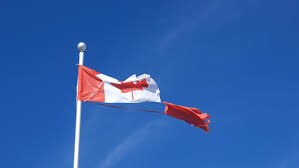
After five defections – euphemistically described as ‘crossing the floor’ – and three by-elections, Mark Carney and his Liberals how have their coveted majority. One wonders what bowls of pottage were offered in back-room deals. In the archaic monarchical system that is the Dominion of Canada, this majority allows the newly-minted Prime Minister to rule[…]Continue reading→

Saint Kateri , Canada’s Protectress
This was the title given to Saint Kateri Tekakwitha, by Pope Benedict XVI, when he canonized her on October 28th, 2012, along with six others, in Saint Peter’ Square (she had been beatified by Pope John Paul II back in 1980). With Saint Joseph as our protector, along with the Canadian martyrs, we seem to[…]Continue reading→
A Closed, Unsustainable, Descending Loop
As a follow-up to my thoughts on Payette’s payout, here be a stark image of where are here in Canada. As the graph shows in, well, graphic terms, since 2025, the public sector has contributed to 95.5% of economic growth. The private sector – which funds the public sector, or is supposed to – has[…]Continue reading→
A Tale of Two Benedicts
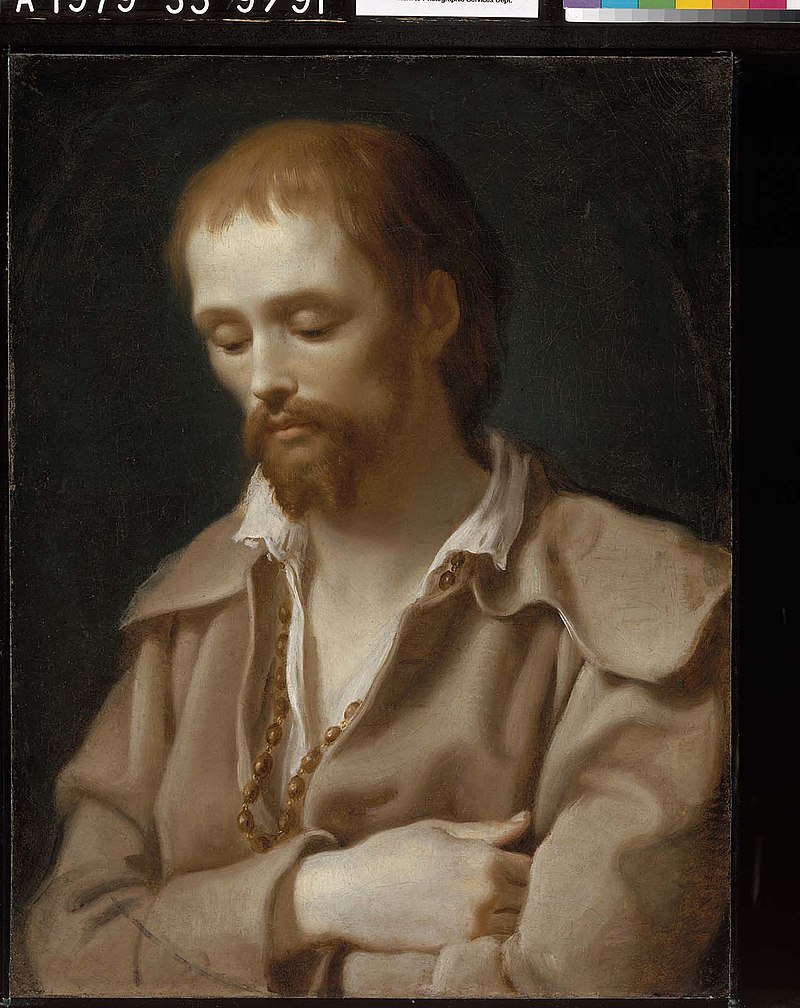
A grace-filled Holy Week to all our readers! As we await and prepare for the Resurrection about to dawn upon us, we might keep in mind two Benedicts: Pope Emeritus Benedict XVI, requiescat in pace, elected on this day in 2005; and today’s commemoration of the mystic pilgrim, Benedict Joseph Labre, who died on this[…]Continue reading→

My Name is Bernadette
April 16th is a propitious day, for besides the anniversary of Father de Valk’s death, who founded Catholic Insight in its print form decades ago, and the commemoration of the ‘two Benedicts’, mentioned in accompanying posts, today we also recall Saint Bernadette Soubirous, the young visionary to whom the Virgin Mary appeared numerous times at[…]Continue reading→
Presidential Pardon of Weronika Krawczyk
As a good news, follow-up to our story from Poland, of the persecution of Weronika Krawczyk for her pro-life views, we heard that she has been granted a presidential pardon. One might still wonder why one needs a presidential pardon for simply holding the long-held belief that the child within the womb is a child,[…]Continue reading→
Saint Lydwina of Schiedam and Suffering Joyfully
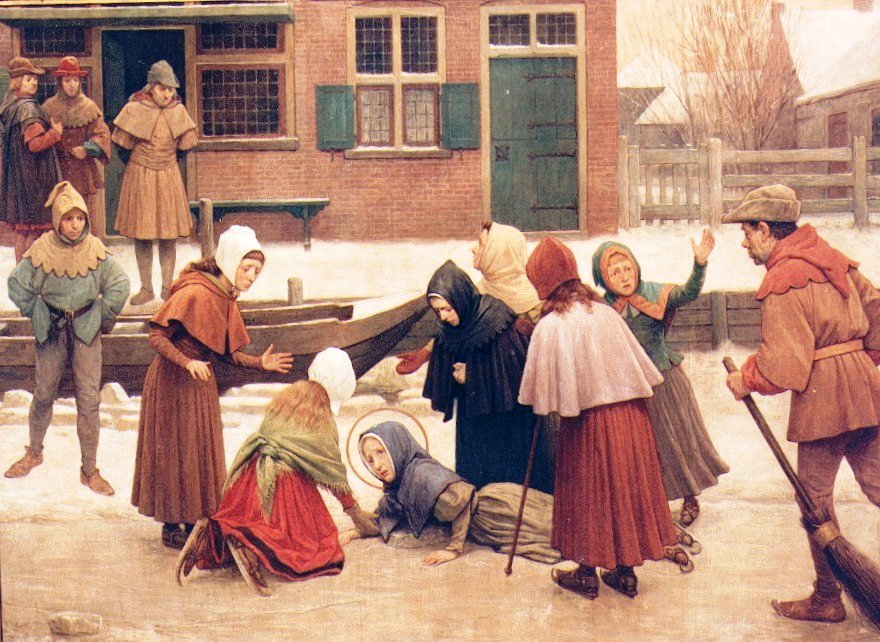
Saint Lydwina of Schiedam (1380 – 1433) was one of the countless and glorious ‘victim souls’ in the history of the Church, those whose lives are filled with suffering, often of an unimaginable intensity, but who suffer joyfully. She was a fifteen-year old Dutch girl, out skating one day, when she fell and broke one[…]Continue reading→
The Glorious Martyrdoms of Martin and Maximus
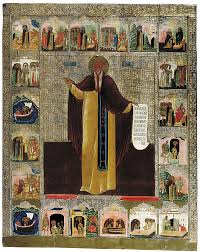
As we enter into Eastertide, we recall on this 13th of April Pope Saint Martin I (+655), one of the noblest, if most tragic, of the successors of Saint Peter. Born in Umbria, Italy, he was of noble lineage, with great intelligence combined with charity and love of the poor and the Church. While still[…]Continue reading→
Canonizing Sister Faustina and Divine Mercy
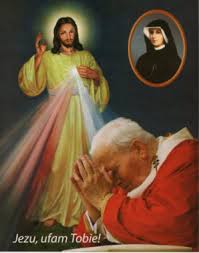
HOMILY OF THE HOLY FATHER MASS IN ST PETER’S SQUARE FOR THE CANONIZATION OF SR MARY FAUSTINA KOWALSKA Sunday, 30 April 2000 1. “Confitemini Domino quoniam bonus, quoniam in saeculum misericordia eius”; “Give thanks to the Lord for he is good; his steadfast love endures for ever” (Ps 118: 1). So the Church sings on the Octave of[…]Continue reading→
Pope Leo and a Rosary for Peace
Pope Leo XIV has asked Catholics across the world to join him in a Rosary for peace today, at 18:00 Rome time (6 pm), which would be noon from where I write (EST). If you are able, whether at that time or another, and in whatever way you pray, to join in intercession with the[…]Continue reading→