
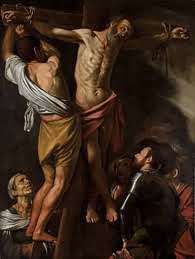
Saint Andrew the Protoclete
BENEDICT XVI
GENERAL AUDIENCE
Wednesday, 14 June 2006
Andrew, the Protoclete
Dear Brothers and Sisters,
In the last two catecheses we spoke about the figure of St Peter. Now, in the measure that sources allow us, we want to know the other 11 Apostles a bit better. Therefore, today we shall speak of Simon Peter’s brother, St Andrew, who was also one of the Twelve.
The first striking characteristic of Andrew is his name: it is not Hebrew, as might have been expected, but Greek, indicative of a certain cultural openness in his family that cannot be ignored. We are in Galilee, where the Greek language and culture are quite present. Andrew comes second in the list of the Twelve, as in Matthew (10: 1-4) and in Luke (6: 13-16); or fourth, as in Mark (3: 13-18) and in the Acts (1: 13-14). In any case, he certainly enjoyed great prestige within the early Christian communities.
The kinship between Peter and Andrew, as well as the joint call that Jesus addressed to them, are explicitly mentioned in the Gospels. We read: “As he walked by the Sea of Galilee, he saw two brothers, Simon who is called Peter and Andrew his brother, casting a net into the sea; for they were fishermen. And he said to them, “Follow me, and I will make you fishers of men'” (Mt 4: 18-19; Mk 1: 16-17).
From the Fourth Gospel we know another important detail: Andrew had previously been a disciple of John the Baptist: and this shows us that he was a man who was searching, who shared in Israel’s hope, who wanted to know better the word of the Lord, the presence of the Lord.
He was truly a man of faith and hope; and one day he heard John the Baptist proclaiming Jesus as: “the Lamb of God” (Jn 1: 36); so he was stirred, and with another unnamed disciple followed Jesus, the one whom John had called “the Lamb of God”. The Evangelist says that “they saw where he was staying; and they stayed with him that day…” (Jn 1: 37-39).
Thus, Andrew enjoyed precious moments of intimacy with Jesus. The account continues with one important annotation: “One of the two who heard John speak, and followed him, was Andrew, Simon Peter’s brother. He first found his brother Simon, and said to him, “We have found the Messiah’ (which means Christ). He brought him to Jesus” (Jn 1: 40-43), straightaway showing an unusual apostolic spirit.
Andrew, then, was the first of the Apostles to be called to follow Jesus. Exactly for this reason the liturgy of the Byzantine Church honours him with the nickname: “Protokletos”, [protoclete] which means, precisely, “the first called”.
And it is certain that it is partly because of the family tie between Peter and Andrew that the Church of Rome and the Church of Constantinople feel one another in a special way to be Sister Churches. To emphasize this relationship, my Predecessor Pope Paul VI, in 1964, returned the important relic of St Andrew, which until then had been kept in the Vatican Basilica, to the Orthodox Metropolitan Bishop of the city of Patras in Greece, where tradition has it that the Apostle was crucified.
The Gospel traditions mention Andrew’s name in particular on another three occasions that tell us something more about this man. The first is that of the multiplication of the loaves in Galilee. On that occasion, it was Andrew who pointed out to Jesus the presence of a young boy who had with him five barley loaves and two fish: not much, he remarked, for the multitudes who had gathered in that place (cf. Jn 6: 8-9).
In this case, it is worth highlighting Andrew’s realism. He noticed the boy, that is, he had already asked the question: “but what good is that for so many?” (ibid.), and recognized the insufficiency of his minimal resources. Jesus, however, knew how to make them sufficient for the multitude of people who had come to hear him.
The second occasion was at Jerusalem. As he left the city, a disciple drew Jesus’ attention to the sight of the massive walls that supported the Temple. The Teacher’s response was surprising: he said that of those walls not one stone would be left upon another. Then Andrew, together with Peter, James and John, questioned him: “Tell us, when will this be, and what will be the sign when these things are all to be accomplished?” (Mk 13: 1-4).
In answer to this question Jesus gave an important discourse on the destruction of Jerusalem and on the end of the world, in which he asked his disciples to be wise in interpreting the signs of the times and to be constantly on their guard.
From this event we can deduce that we should not be afraid to ask Jesus questions but at the same time that we must be ready to accept even the surprising and difficult teachings that he offers us.
(To continue reading, please see here).

Saint Kateri , Canada’s Protectress
This was the title given to Saint Kateri Tekakwitha, by Pope Benedict XVI, when he canonized her on October 28th, 2012, along with six others, in Saint Peter’ Square (she had been beatified by Pope John Paul II back in 1980). With Saint Joseph as our protector, along with the Canadian martyrs, we seem to[…]Continue reading→
A Closed, Unsustainable, Descending Loop
As a follow-up to my thoughts on Payette’s payout, here be a stark image of where are here in Canada. As the graph shows in, well, graphic terms, since 2025, the public sector has contributed to 95.5% of economic growth. The private sector – which funds the public sector, or is supposed to – has[…]Continue reading→
A Tale of Two Benedicts
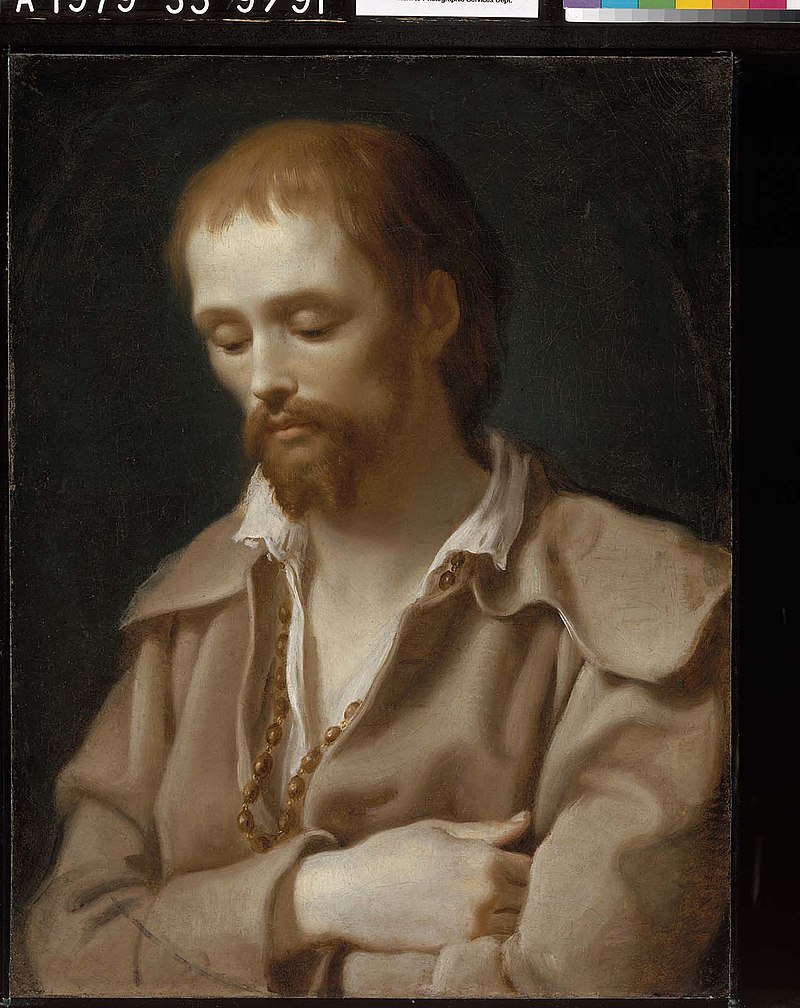
A grace-filled Holy Week to all our readers! As we await and prepare for the Resurrection about to dawn upon us, we might keep in mind two Benedicts: Pope Emeritus Benedict XVI, requiescat in pace, elected on this day in 2005; and today’s commemoration of the mystic pilgrim, Benedict Joseph Labre, who died on this[…]Continue reading→

My Name is Bernadette
April 16th is a propitious day, for besides the anniversary of Father de Valk’s death, who founded Catholic Insight in its print form decades ago, and the commemoration of the ‘two Benedicts’, mentioned in accompanying posts, today we also recall Saint Bernadette Soubirous, the young visionary to whom the Virgin Mary appeared numerous times at[…]Continue reading→
Presidential Pardon of Weronika Krawczyk
As a good news, follow-up to our story from Poland, of the persecution of Weronika Krawczyk for her pro-life views, we heard that she has been granted a presidential pardon. One might still wonder why one needs a presidential pardon for simply holding the long-held belief that the child within the womb is a child,[…]Continue reading→
Saint Lydwina of Schiedam and Suffering Joyfully
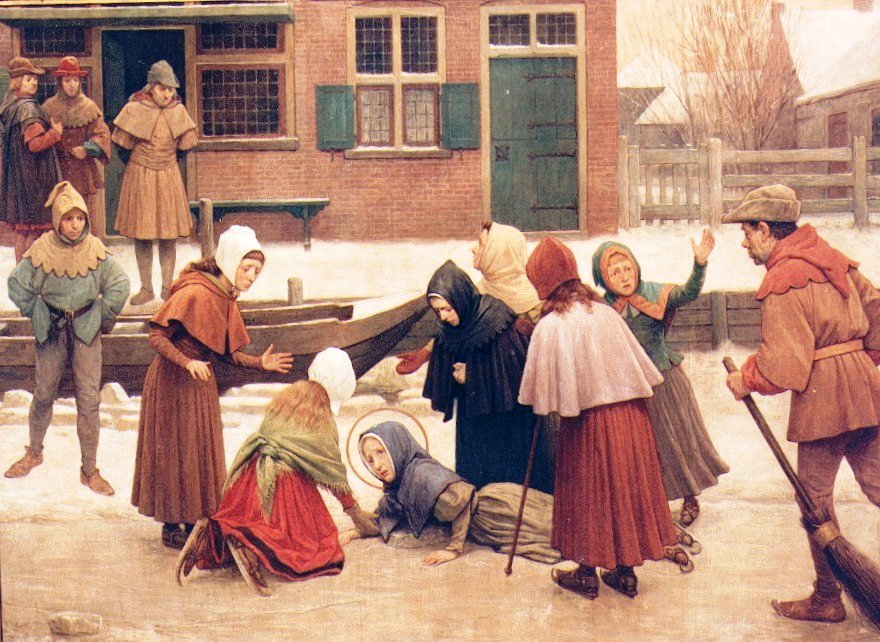
Saint Lydwina of Schiedam (1380 – 1433) was one of the countless and glorious ‘victim souls’ in the history of the Church, those whose lives are filled with suffering, often of an unimaginable intensity, but who suffer joyfully. She was a fifteen-year old Dutch girl, out skating one day, when she fell and broke one[…]Continue reading→
The Glorious Martyrdoms of Martin and Maximus
As we enter into Eastertide, we recall on this 13th of April Pope Saint Martin I (+655), one of the noblest, if most tragic, of the successors of Saint Peter. Born in Umbria, Italy, he was of noble lineage, with great intelligence combined with charity and love of the poor and the Church. While still[…]Continue reading→
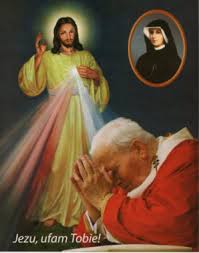
Canonizing Sister Faustina and Divine Mercy
HOMILY OF THE HOLY FATHER MASS IN ST PETER’S SQUARE FOR THE CANONIZATION OF SR MARY FAUSTINA KOWALSKA Sunday, 30 April 2000 1. “Confitemini Domino quoniam bonus, quoniam in saeculum misericordia eius”; “Give thanks to the Lord for he is good; his steadfast love endures for ever” (Ps 118: 1). So the Church sings on the Octave of[…]Continue reading→
Pope Leo and a Rosary for Peace
Pope Leo XIV has asked Catholics across the world to join him in a Rosary for peace today, at 18:00 Rome time (6 pm), which would be noon from where I write (EST). If you are able, whether at that time or another, and in whatever way you pray, to join in intercession with the[…]Continue reading→
Payette’s Payout
I was glancing through some headlines, and noticed a mention of Julie Payette – engineer and astronaut and sometime the Queen’s representative in Canada – which brought back vague memories. She was appointed Governor-General by Justin Trudeau in 2017. Ms. Payette resigned in 2021, amidst claims that she created a ‘toxic work environment’, with allegations[…]Continue reading→