
The O Antiphons and the Last Seven Days of Advent
On December 17th we begin the seven days of proximate preparation for Christmas, analogous to the more familiar twelve days of Christmas, which follow after the great feast. In the Western tradition of the Catholic Church, one of the liturgical means to elevate and focus our minds and hearts for the great feast are the ‘O Antiphons’, seven titles from the Old Testament which point to, or typify, the coming Messiah. The origin of their compilation goes back to the very dawn of the Middle Ages, with reference to them in the writings of the Roman counsel and philosopher Boethius (480-524 a.d.). These seven antiphons, which begin on December 17th, and end on December 23rd, Christmas Eve’s Eve – a sort of novena, or rather septena, of seven days, if you will – are as follows, in their Latin original:
O Sapientia, O Adonai, O Radix Iesse, O Clavis David, O Oriens, O Rex Gentium, and O Emmanuel.
They are, in their somewhat variable English translations, O Wisdom, O Lord God, O Root (or Rod) of Jesse, O Key of David, O Rising Sun (or Morning Star), O King of the Nations (or Gentiles) and O Emmanuel. They are the basis for the verses in the traditional chant hymn, O Come, O Come, Emmanuel.
Each day, these are the response for the Alleluias at Mass, as well as the antiphons for Vespers, the universal Evening Prayer of the Church. Readings also go along with each of them, taken from the Old Testament, making clear how each of these titles allegorically referred to the long-awaited Messiah.
The acrostic formed by the first letter in each of the antiphons, when spelled backwards, makes ero cras, which is Latin for “I will be (there) tomorrow“. The mediaeval theologians loved puns and plays upon words, so we may surmise they deliberately framed the antiphons to help us even further in our ‘waiting upon’ the Christ, Who would free His people from their sins, and offer the world redemption.
The Major-General from the Pirates of Penzance sings: I answer hard acrostics, I’ve a pretty taste for paradox –
This is not a hard acrostic, but it does spell out a pretty paradox, God become Man, so that Man might become God, or, more precisely, God-like. The infinite entering the finite, the eternal into time, He Who is pure Spirit, the very Word, become flesh.
We should try, in the midst of a consumerist culture, to resist the celebration of Christmas before Christmas. I know this is a weathered lament, but one that merits restating: We prepare for Christ in the season of Advent, and we celebrate his arrival with Christmas. The zeitgeist of the age, outside and, to some extent, even within, the Church, is difficult to resist, with everything from social events to advertisements in shops to songs, but resist we must. Some application to bodily and spiritual preparation is requisite so that Christmas remains Christmas, and that the celebration does not end the day after Christmas, just when it is supposed to begin. (Which day, incidentally, is not Boxing Day, but the feast of (Saint) Stephen, the first martyr, as the opening line of the traditional hymn on Good King Wencelsaus makes clear).
So a very blessed last days of Advent to one and all, as we prepare for the arrival of our Saviour and our King…
Carney’s Amoral Majority
After five defections – euphemistically described as ‘crossing the floor’ – and three by-elections, Mark Carney and his Liberals how have their coveted majority. One wonders what bowls of pottage were offered in back-room deals. In the archaic monarchical system that is the Dominion of Canada, this majority allows the newly-minted Prime Minister to rule[…]Continue reading→

Saint Kateri , Canada’s Protectress
This was the title given to Saint Kateri Tekakwitha, by Pope Benedict XVI, when he canonized her on October 28th, 2012, along with six others, in Saint Peter’ Square (she had been beatified by Pope John Paul II back in 1980). With Saint Joseph as our protector, along with the Canadian martyrs, we seem to[…]Continue reading→

Remembering Father Alphonse de Valk
(Today marks the sixth anniversary of the death of Father Alphonse de Valk, C.S.B., a faithful, courageous and indefatigable Basilian priest, pro-life-and-family apostle, and the founder of Catholic Insight magazine. Here is what we wrote those on his entering into eternity five years ago, as we continue to remember him in our prayers and thoughts)[…]Continue reading→
A Tale of Two Benedicts
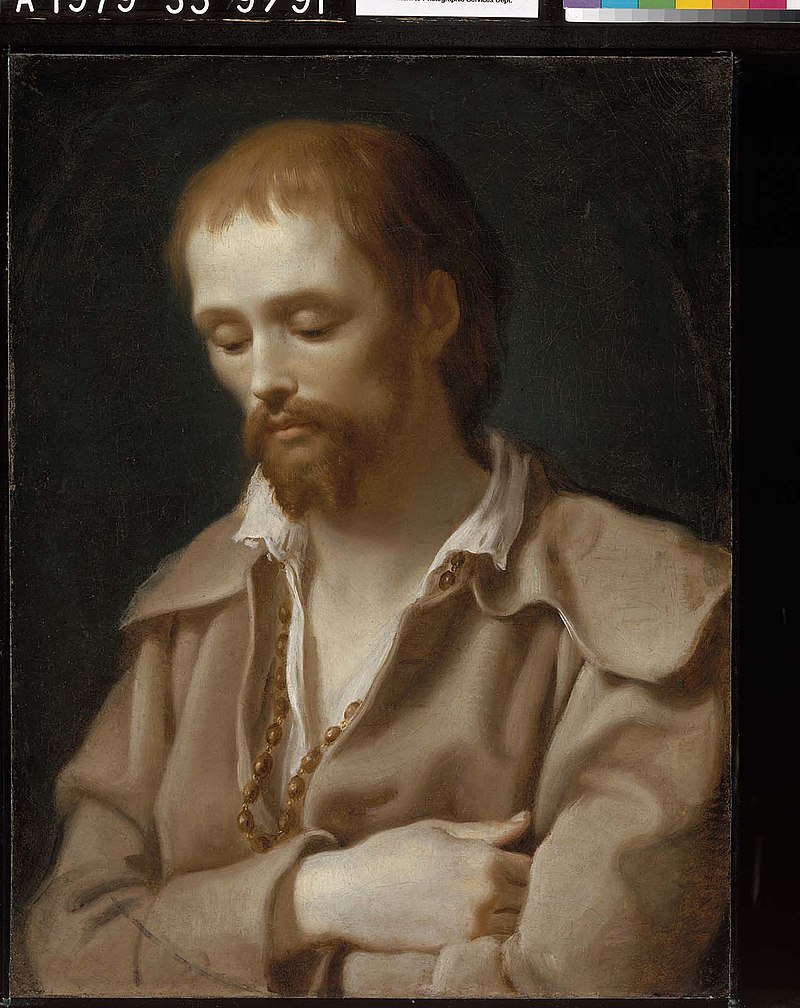
A grace-filled Holy Week to all our readers! As we await and prepare for the Resurrection about to dawn upon us, we might keep in mind two Benedicts: Pope Emeritus Benedict XVI, requiescat in pace, elected on this day in 2005; and today’s commemoration of the mystic pilgrim, Benedict Joseph Labre, who died on this[…]Continue reading→

My Name is Bernadette
April 16th is a propitious day, for besides the anniversary of Father de Valk’s death, who founded Catholic Insight in its print form decades ago, and the commemoration of the ‘two Benedicts’, mentioned in accompanying posts, today we also recall Saint Bernadette Soubirous, the young visionary to whom the Virgin Mary appeared numerous times at[…]Continue reading→
Saint Lydwina of Schiedam and Suffering Joyfully
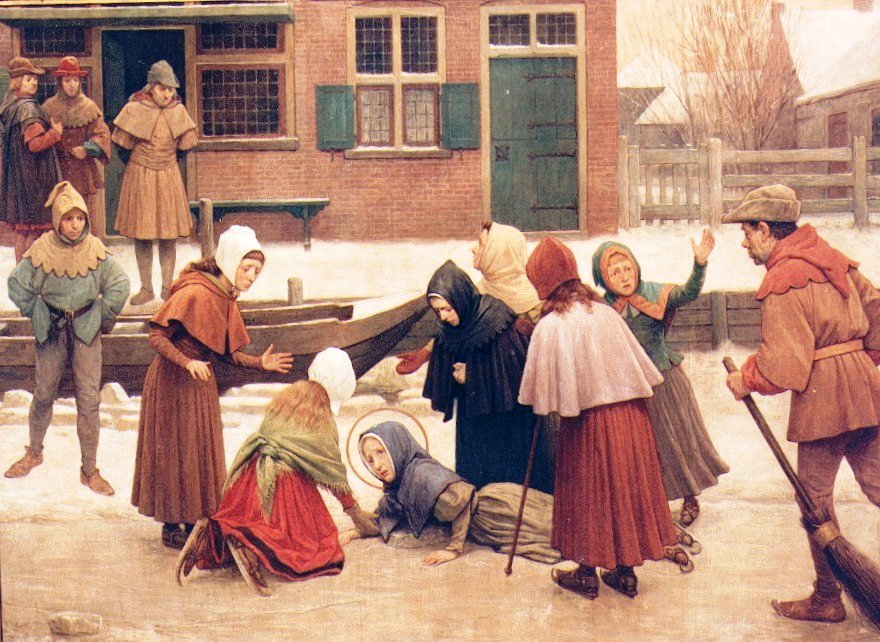
Saint Lydwina of Schiedam (1380 – 1433) was one of the countless and glorious ‘victim souls’ in the history of the Church, those whose lives are filled with suffering, often of an unimaginable intensity, but who suffer joyfully. She was a fifteen-year old Dutch girl, out skating one day, when she fell and broke one[…]Continue reading→
The Glorious Martyrdoms of Martin and Maximus
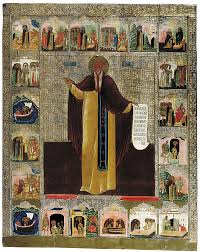
As we enter into Eastertide, we recall on this 13th of April Pope Saint Martin I (+655), one of the noblest, if most tragic, of the successors of Saint Peter. Born in Umbria, Italy, he was of noble lineage, with great intelligence combined with charity and love of the poor and the Church. While still[…]Continue reading→

Divine Mercy Sunday – An Echo of Every Mass
Reach out your hand and put it in my side. Do not doubt but believe’… ‘My Lord and my God!’ (Jn. 20:18)). Today is Divine Mercy Sunday, and as we celebrate the end of the Easter Octave, we contemplate the wounded side of our Saviour, the Church’s source of life. On Good Friday in the[…]Continue reading→

Saint Stanislaus of Szczepanów
We celebrate Saint Stanislaus today (+ April 11, 1079), in light of this Easter Octave, a bishop and martyr who accepted the episcopacy only at the direct order of Pope Alexander II. He proved a wise and courageous leader of his flock, put to death by his own king, Boleslaus, for rebuking the monarch’s ‘immoral[…]Continue reading→
Saint Gemma Galgani
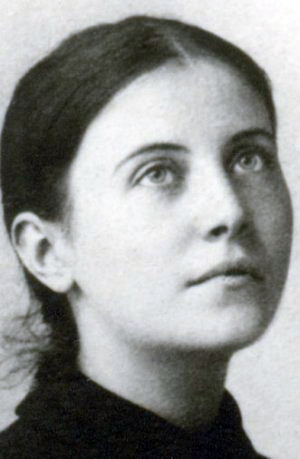
On this April 11th, in 1903 – the same year that the Italian Guiseppe Sarto was elected Pope later that summer as Pius X – a lovely, young Italian woman died, by the name of Gemma Galgani. She lived a brief life of 24 years, as did a number of other young saints, including Pier[…]Continue reading→