
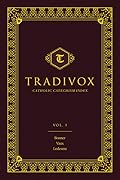
Truth and the Tradivox Catechical Compendium
There is no such things a ‘perfect’ Catechism, a catechism to end all catechisms, such as it were. That’s why there’s no end to them. And the truth, thought ‘definable’ – we are replete in our Church with defined doctrine – it is also ‘indefinite’, in the sense that there’s no end to its pursuit. The truth will always be bigger than we are, certainly than our brains are. As Saint Thomas put it, we can never know the full nature of a housefly. And if that applies to pesky flies, how much more to God and His revelation? This is what drives the development of doctrine, which does not change, but grows and is adapted and applied to the eras of the Church’s pilgrimage until the end of time, when all will be revealed in that revelation to end all revelations.
A Catechism may be described as a summary of Christian doctrine, of those most necessary truths that God has revealed for our salvation. There are two ‘universal’ Catechisms in the Church, officially approved by the Magisterium: The one following upon the Council of Trent, called the Roman Catechism, promulgated in 1566 by the authority of Pope Saint Pius V. And then there’s the more recent Catechism of the Catholic Church, its first edition promulgated by the authority of Pope Saint John Paul II in 1992, with the official Latin editio typica following in 1997.
Yet, there are innumerable other catechisms in the Church’s history, which complement these two great works. (Well, most of them – some of the more recent tragedies include the Dutch catechism of 1967, about which the less said, the better).
The recent Tradivox series is noble project to publish a compendium, or index, of the innumerable Catechisms in the Catholic Church’s history, from the Middle Ages – 1200’s – to the 20th century, many of them written by saints. There is an on-line portal – and you can ‘ask it anything’ (I may try this and get back to you).
But to the point at hand, there is also the printed compendium of catechisms through this timespan, compiled under the editorship of Aaron Seng, twenty volumes, all attractively bound, with attractive illustrations, often woodcuts, accompanying the text. As their website puts it:
Our mission is to bring reliably Catholic catechesis to every person on the planet: not teaching on our own authority, but simply by lending a platform to the Church’s greatest teachers of the past: saints, scholars, and catechists of renown. Therefore, our motto is: “Giving Voice to Tradition.“
Like the traditional catechism itself, the aim of Tradivox is simple: to echo the perennial Catholic and Apostolic doctrine; “the Faith delivered once for all to the saints.” (Jude 1:3)
The one I was given to review, volume II, has three catechisms, by Saint Robert Bellarmine, by Henry Tuberville and then a short children’s version by Thomas Vincent Sadler. They are all in question-and-answer format, evoking an era wherein the memorization of the most central salvific truths was seen as essential to life well-lived here and in eternity.
The overarching theme of the series is that the Church’s teaching must be seen in a perennial way – literally, through the years – in the proper sense of the development of doctrine. Some aspects of prior catechisms come and go – such as, from the volume I was given, that it is not permitted to marry between the First Sunday of Advent and the Twelfth Day of Christmas. There is also an answer to the question for why the canon of the Mass ‘is read in a low voice’, to which the answer is ‘to signify the sadness in our Savior’s passion’. Perhaps, but there are other reasons, as well as reasons for saying it in an audible voice. Of course, I need not belabour other issues, such as the problematical change in the teaching on capital punishment in the most recent Catechism.
Anon, we know that beneath these vagaries, the truth is timeless and transcendent. What was true a thousand years ago is also true today. To see that truth concretely realized and manifested in these series of catechisms is a welcome endeavour, and may this work bear much fruit for souls and for eternity.
Carney’s Amoral Majority
After five defections – euphemistically described as ‘crossing the floor’ – and three by-elections, Mark Carney and his Liberals how have their coveted majority. One wonders what bowls of pottage were offered in back-room deals. In the archaic monarchical system that is the Dominion of Canada, this majority allows the newly-minted Prime Minister to rule[…]Continue reading→

Saint Kateri , Canada’s Protectress
This was the title given to Saint Kateri Tekakwitha, by Pope Benedict XVI, when he canonized her on October 28th, 2012, along with six others, in Saint Peter’ Square (she had been beatified by Pope John Paul II back in 1980). With Saint Joseph as our protector, along with the Canadian martyrs, we seem to[…]Continue reading→

Remembering Father Alphonse de Valk
(Today marks the sixth anniversary of the death of Father Alphonse de Valk, C.S.B., a faithful, courageous and indefatigable Basilian priest, pro-life-and-family apostle, and the founder of Catholic Insight magazine. Here is what we wrote those on his entering into eternity five years ago, as we continue to remember him in our prayers and thoughts)[…]Continue reading→
A Tale of Two Benedicts
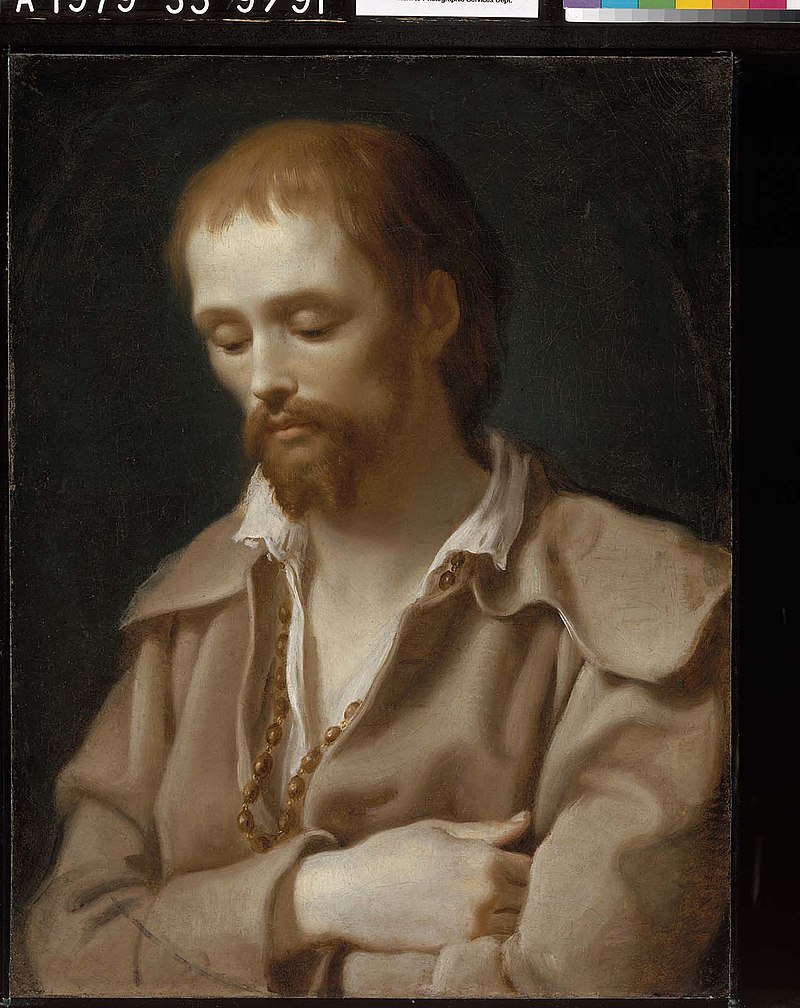
A grace-filled Holy Week to all our readers! As we await and prepare for the Resurrection about to dawn upon us, we might keep in mind two Benedicts: Pope Emeritus Benedict XVI, requiescat in pace, elected on this day in 2005; and today’s commemoration of the mystic pilgrim, Benedict Joseph Labre, who died on this[…]Continue reading→

My Name is Bernadette
April 16th is a propitious day, for besides the anniversary of Father de Valk’s death, who founded Catholic Insight in its print form decades ago, and the commemoration of the ‘two Benedicts’, mentioned in accompanying posts, today we also recall Saint Bernadette Soubirous, the young visionary to whom the Virgin Mary appeared numerous times at[…]Continue reading→
Saint Lydwina of Schiedam and Suffering Joyfully
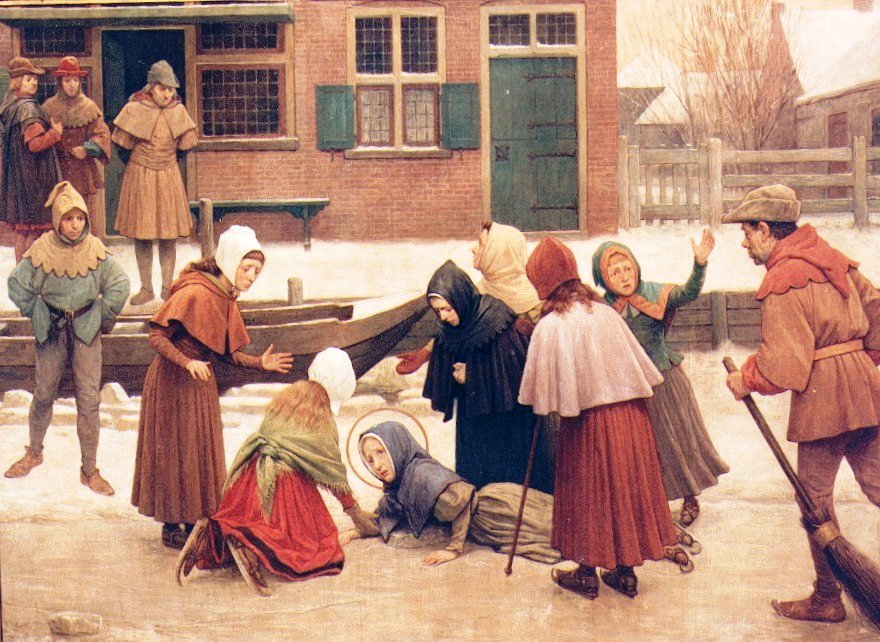
Saint Lydwina of Schiedam (1380 – 1433) was one of the countless and glorious ‘victim souls’ in the history of the Church, those whose lives are filled with suffering, often of an unimaginable intensity, but who suffer joyfully. She was a fifteen-year old Dutch girl, out skating one day, when she fell and broke one[…]Continue reading→
The Glorious Martyrdoms of Martin and Maximus
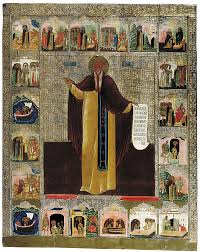
As we enter into Eastertide, we recall on this 13th of April Pope Saint Martin I (+655), one of the noblest, if most tragic, of the successors of Saint Peter. Born in Umbria, Italy, he was of noble lineage, with great intelligence combined with charity and love of the poor and the Church. While still[…]Continue reading→

Canonizing Sister Faustina and Divine Mercy
HOMILY OF THE HOLY FATHER MASS IN ST PETER’S SQUARE FOR THE CANONIZATION OF SR MARY FAUSTINA KOWALSKA Sunday, 30 April 2000 1. “Confitemini Domino quoniam bonus, quoniam in saeculum misericordia eius”; “Give thanks to the Lord for he is good; his steadfast love endures for ever” (Ps 118: 1). So the Church sings on the Octave of[…]Continue reading→

Divine Mercy Sunday – An Echo of Every Mass
Reach out your hand and put it in my side. Do not doubt but believe’… ‘My Lord and my God!’ (Jn. 20:18)). Today is Divine Mercy Sunday, and as we celebrate the end of the Easter Octave, we contemplate the wounded side of our Saviour, the Church’s source of life. On Good Friday in the[…]Continue reading→
Saint Gemma Galgani
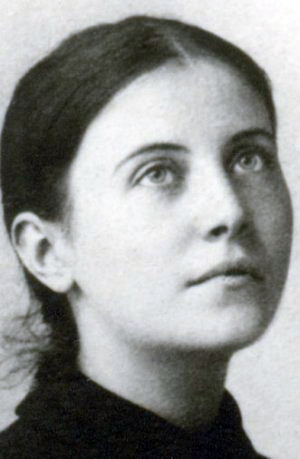
On this April 11th, in 1903 – the same year that the Italian Guiseppe Sarto was elected Pope later that summer as Pius X – a lovely, young Italian woman died, by the name of Gemma Galgani. She lived a brief life of 24 years, as did a number of other young saints, including Pier[…]Continue reading→