
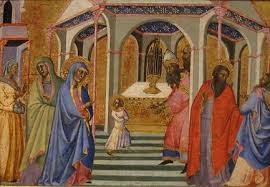
Our Lady’s Presentation, and the Perfect Gift of Self
The Presentation of Mary – commemorating Our Lady’s dedication and consecration to God as a young girl of about three years old in the Temple – is found in none of the four traditional Gospels, but rather related in the apocryphal ‘Gospel of James’, which dates from the beginning of the third century. However, as Paul VI puts it in his 1967 Apostolic Exhortation Marialis Cultus, these works “apart from their apocryphal content present lofty and exemplary values and carry on venerable traditions having their origin especially in the East”. That is, they can teach us much, even if not everything therein has the hallmark of truth.
As such tradition goes, Mary’s parents, Joachim and Anna – whose names are also apocryphal, but traditional – were elderly and childless, but, faithful and devout. They trusted in God that someday He would fulfil His promises and send them progeny, a recurrent theme in Scripture. Sure enough, He did, far more than they expected, for the child they conceived was immaculate, ‘without original sin’ – literally, ‘without stain’. And Mary, the child, was to remain not just sinless her whole life long, but ‘full of grace’, the greatest creature in all of God’s creation, fitting for the one who would later also conceive immaculately the Redeemer Himself. One does have to marvel.
The public celebration of the feast dates back to 543, with the building of the basilica of ‘Saint Mary the New’, in the reign of Justinian I, near the site of the Temple of Jerusalem where the soon-to-be Mother of God was raised. Perhaps they had in mind that this is also the Jewish feast of Hanukah, commemorating the re-dedication of that same Temple by Judas Maccabeus in 164 B.C. Our Lady is, after all, the new Temple, and the re-dedicatio ultima, if we may put it so.
Our present feast went through various permutations, at first suppressed after the Council of Trent by Saint Pius V in 1568 – who may have had some misgivings about its origin in the apocrypha – but soon reintroduced by Clement VIII in 1597, who elevated the Presentation to a greater-double feast. It was kept in the revisions of 1969 as a memorial, but still has that echo of a feast, looking forward to the great celebration of her Son’s birthday.
This day has a special significance for those in religious and consecrated life, those who have given ‘all’ to serve Christ and His salvific work. For giving up some of the most significant natural pleasures of this life – those of marriage and family life, and one’s own property – leaves one more free to practice charity in a more perfect manner, at least in an objective, apostolic sense. Karol Wojtyla would not have been ‘John Paul II’ if he had married and settled down as a virtuous professor at Jagiellonian. We are all grateful he chose the higher path, as we are for Our Lady as well. They were given much, and they gave much.
There is a tradition that Our Lady made a vow of virginity as a young girl, which would have been quite out of the ordinary, as every Jewish maiden hoped to be chosen as the mother of the Messiah. In one of those many paradoxes in the Christian dispensation, the one God chose is the very one who gave all, even to the point of giving up any natural hope of being ‘the one’. How can this be, since I do not know man? But the angel replied that, with God, all things are possible.
In a unique and singular way, Our Lady fulfilled those promises her Son later offered: He who loses his life for my sake will find it, the first shall be last, and the last first, that God has indeed looked upon His lowly handmaid, and that all generations will indeed call her blessed, right up to the end of time, for He Who is holy has done great things.
By that gift of her very self, not only holy is His name, but the name of His mother as well.
Holy Mary, ora pro nobis.
Carney’s Amoral Majority
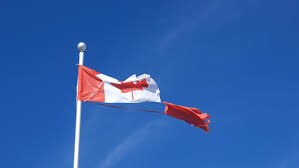
After five defections – euphemistically described as ‘crossing the floor’ – and three by-elections, Mark Carney and his Liberals how have their coveted majority. One wonders what bowls of pottage were offered in back-room deals. In the archaic monarchical system that is the Dominion of Canada, this majority allows the newly-minted Prime Minister to rule[…]Continue reading→

Saint Kateri , Canada’s Protectress
This was the title given to Saint Kateri Tekakwitha, by Pope Benedict XVI, when he canonized her on October 28th, 2012, along with six others, in Saint Peter’ Square (she had been beatified by Pope John Paul II back in 1980). With Saint Joseph as our protector, along with the Canadian martyrs, we seem to[…]Continue reading→

Remembering Father Alphonse de Valk
(Today marks the sixth anniversary of the death of Father Alphonse de Valk, C.S.B., a faithful, courageous and indefatigable Basilian priest, pro-life-and-family apostle, and the founder of Catholic Insight magazine. Here is what we wrote those on his entering into eternity five years ago, as we continue to remember him in our prayers and thoughts)[…]Continue reading→

A Tale of Two Benedicts
A grace-filled Holy Week to all our readers! As we await and prepare for the Resurrection about to dawn upon us, we might keep in mind two Benedicts: Pope Emeritus Benedict XVI, requiescat in pace, elected on this day in 2005; and today’s commemoration of the mystic pilgrim, Benedict Joseph Labre, who died on this[…]Continue reading→

My Name is Bernadette
April 16th is a propitious day, for besides the anniversary of Father de Valk’s death, who founded Catholic Insight in its print form decades ago, and the commemoration of the ‘two Benedicts’, mentioned in accompanying posts, today we also recall Saint Bernadette Soubirous, the young visionary to whom the Virgin Mary appeared numerous times at[…]Continue reading→

Saint Lydwina of Schiedam and Suffering Joyfully
Saint Lydwina of Schiedam (1380 – 1433) was one of the countless and glorious ‘victim souls’ in the history of the Church, those whose lives are filled with suffering, often of an unimaginable intensity, but who suffer joyfully. She was a fifteen-year old Dutch girl, out skating one day, when she fell and broke one[…]Continue reading→

The Glorious Martyrdoms of Martin and Maximus
As we enter into Eastertide, we recall on this 13th of April Pope Saint Martin I (+655), one of the noblest, if most tragic, of the successors of Saint Peter. Born in Umbria, Italy, he was of noble lineage, with great intelligence combined with charity and love of the poor and the Church. While still[…]Continue reading→

Canonizing Sister Faustina and Divine Mercy
HOMILY OF THE HOLY FATHER MASS IN ST PETER’S SQUARE FOR THE CANONIZATION OF SR MARY FAUSTINA KOWALSKA Sunday, 30 April 2000 1. “Confitemini Domino quoniam bonus, quoniam in saeculum misericordia eius”; “Give thanks to the Lord for he is good; his steadfast love endures for ever” (Ps 118: 1). So the Church sings on the Octave of[…]Continue reading→

Divine Mercy Sunday – An Echo of Every Mass
Reach out your hand and put it in my side. Do not doubt but believe’… ‘My Lord and my God!’ (Jn. 20:18)). Today is Divine Mercy Sunday, and as we celebrate the end of the Easter Octave, we contemplate the wounded side of our Saviour, the Church’s source of life. On Good Friday in the[…]Continue reading→
Saint Gemma Galgani
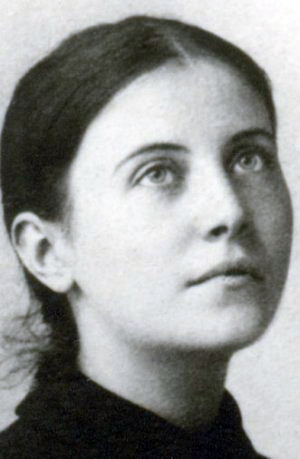
On this April 11th, in 1903 – the same year that the Italian Guiseppe Sarto was elected Pope later that summer as Pius X – a lovely, young Italian woman died, by the name of Gemma Galgani. She lived a brief life of 24 years, as did a number of other young saints, including Pier[…]Continue reading→