

Francis, Leo and ‘Climate Change’
We’ve written before of the story that Pope Pius XII wanted to use the theory of the ‘Big Bang’ – first proposed by the priest Father Georges Lemaitre in 1929 – in an encyclical to ‘prove’ the doctrine of creation ex nihilo. Father Lemaitre demurred, advising the Pontiff that his theory – which he had called the ‘Hypothesis of the Primeval Atom’ – may turn out to be not true.
There is much evidence for theory that the universe expanded from a point of quasi-infinite density about 13.5 billion years ago. But there’s also more recent evidence that it may not be entirely true – early galaxies seem to be much more formed and developed than Lemaitre’s hypothesis would predict.
The point is that the Faith – whether in doctrine or in morals – cannot be built upon science, nor upon reason. The Faith is always consistent with science and reason, but it’s true because it’s founded upon the very word of God, Who can neither err nor deceive.
Pope Paul VI did not condemn contraception because it’s unhealthy (which it is) but because it violates the moral integrity of the marital act and is intrinsically immoral.
Why, then, would Pope Francis, and now his successor, predicate the Church’s ecological teaching on the crumbly foundation of climate change?
Here is Pope Francis expounding in the opening paragraphs of Laudate Deum, his 2023 Apostolic Exhortation on the Climate Crisis:
Nonetheless, it is verifiable that specific climate changes provoked by humanity are notably heightening the probability of extreme phenomena that are increasingly frequent and intense. For this reason, we know that every time the global temperature increases by 0.5° C, the intensity and frequency of great rains and floods increase in some areas and severe droughts in others, extreme heat waves in some places and heavy snowfall in others. [4] If up to now we could have heat waves several times a year, what will happen if the global temperature increases by 1.5° C, which we are approaching? Those heat waves will be much more frequent and with greater intensity. If it should rise above 2 degrees, the icecaps of Greenland and a large part of Antarctica will melt completely, with immensely grave consequences for everyone.
This is apocalyptic stuff, but none of it is revelation, or theology, nor, therefore, the proper subject matter for Magisterial pronouncements. It’s highly dubious even in the realm of science. Large parts of Antarctica melting completely?
The Pope then goes on to criticize – one might almost say condemn – those who doubt, or even demur from, the global warming hypothesis.
Despite all attempts to deny, conceal, gloss over or relativize the issue, the signs of climate change are here and increasingly evident. No one can ignore the fact that in recent years we have witnessed extreme weather phenomena, frequent periods of unusual heat, drought and other cries of protest on the part of the earth that are only a few palpable expressions of a silent disease that affects everyone.
And a bit further on:
It is no longer possible to doubt the human – “anthropic” – origin of climate change.
The Pope goes on to list a series of measurements follow, which he apparently accepts as given from ‘climatologists’, all of which have been disputed.
I was taught in my years of studying science that if there’s one thing always present in empirical research it is doubt. And this especially applies to complex systems such as climactic eras of weather patterns. Any hypothesis must be open to criticism. That’s how science proceeds.
I, along with many others, have pointed out the problems – even the practical impossibility – of measuring ‘global temperature’. It’s not as though the Earth has an orifice into which one may insert a thermometer. Average temperature is fraught, over space and time. And what is the baseline from which one would measure any rise? Is there an ideal homeostatic temperature of the planet, and how would we know? Even if there is a rise in temperature, is this anthropogenic or, more likely heliogenic? And will a bit of warming produce the catastrophes predicted? Or might it have some beneficial effects?
These are all open questions, which cannot be decided by Magisterial fiat. For all we know, we could be heading towards another ice age, which was the widespread fear just a few decades ago. Fads change about as much as the climate, it seems.
Now, just last week, we have Pope Leo following Francis’ footsteps, addressing COP30, the gathering of elites in Brazil to lecture the rest of us. Like his predecessor, Leo not only believes in ‘climate change’, but wants the rest us to believe it also, and act vigorously to combat this supposed threat, which he seems to think is one of the most significant crises facing humanity. His claim that ‘one in three people live in great vulnerability’ due to climate change’ is both vague and bold, missing any number of premises, all of them highly dubious. What does ‘vulnerability’ mean in this context?
He continues, that the creation is crying out in floods, droughts, storms, and relentless heat.
Why the anthropomorphism of creation? For dramatic effect? And is it the Pope’s task to determine the anthropogenic nature and cause of meteorological phenomena? Have there not been floods, droughts and storms, often of great violence, well before the industrial era? Does not God’s omnipotence over all of nature, to say nothing of other natural causes, have some say in this?
Whatever the case, all this is disconcerting, given that we’re facing widespread infidelity, apostasy, scandal, liturgical disintegration and demographic collapse in the Church – to name but a few – one would think such problems should be the primary focus of the papal office.
The Pope goes on to say that ‘hope and determination must be renewed not only in words and aspirations, but also in concrete actions’.
What might he mean by ‘concrete actions’?
This is all the more ominous by the ideology lurking behind COP30: societal control and limitation of human travel and migration; decreasing energy use and food consumption; no meat, and little dairy; and, yes, many of them do want to control family size and radically reduce the world’s population. Paul Ehrlich, author of the disastrous – and false – 1968 screed, The Population Bomb, claims that the ideal number of humans is 1.5 to 2 billion, about one-quarter its current size. He’s advocated abortion and forced sterilization to get there. And, yes, he was invited to speak at the Vatican back in 2017.
The climate change paradigm implies that the best future has fewer people doing fewer things, which does not seem consistent with God’s command to go forth and multiply and subdue the Earth. Their contrary agenda is out there in the open for all to see, or at least enough to cause consternation.
What, pray tell, does Pope Leo think of all this?
As a Catholic, I want to be nourished by papal teaching, and am striving to take what good from the Magisterium. But it’s getting more difficult. With all due respect to the Holy Father and the office he holds, this is thin fare indeed, causing some level of intellectual and spiritual indigestion.
Was not the world created for Man, and not man for the world?
Carney’s Amoral Majority
After five defections – euphemistically described as ‘crossing the floor’ – and three by-elections, Mark Carney and his Liberals how have their coveted majority. One wonders what bowls of pottage were offered in back-room deals. In the archaic monarchical system that is the Dominion of Canada, this majority allows the newly-minted Prime Minister to rule[…]Continue reading→

Saint Kateri , Canada’s Protectress
This was the title given to Saint Kateri Tekakwitha, by Pope Benedict XVI, when he canonized her on October 28th, 2012, along with six others, in Saint Peter’ Square (she had been beatified by Pope John Paul II back in 1980). With Saint Joseph as our protector, along with the Canadian martyrs, we seem to[…]Continue reading→
A Tale of Two Benedicts
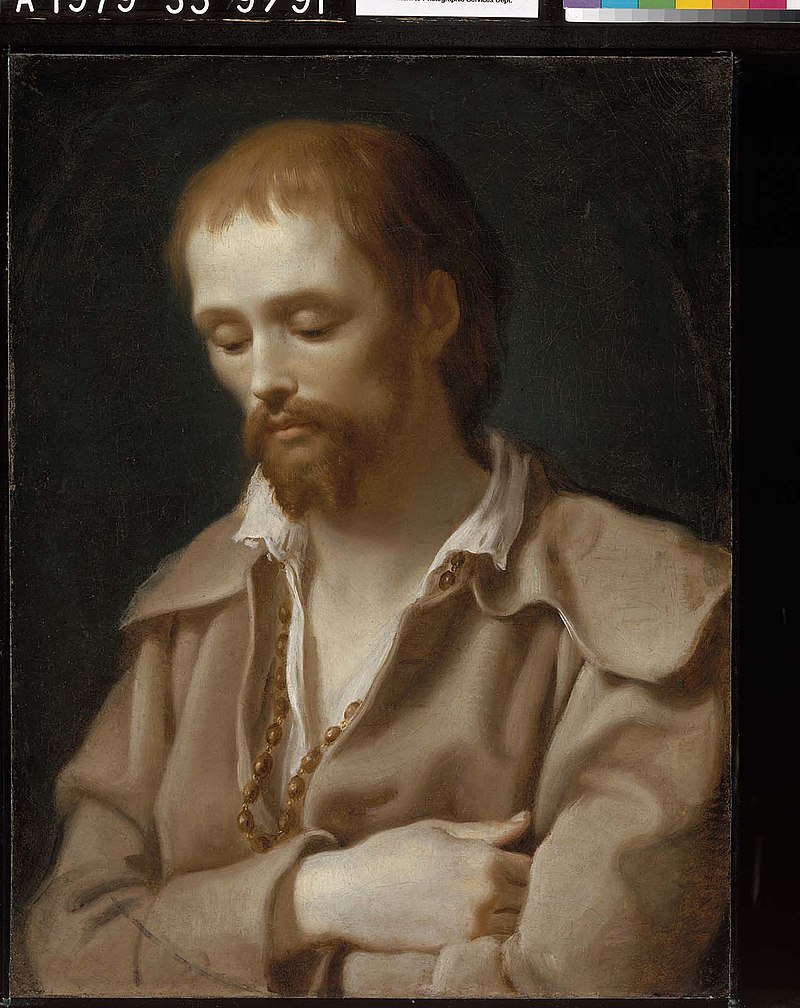
A grace-filled Holy Week to all our readers! As we await and prepare for the Resurrection about to dawn upon us, we might keep in mind two Benedicts: Pope Emeritus Benedict XVI, requiescat in pace, elected on this day in 2005; and today’s commemoration of the mystic pilgrim, Benedict Joseph Labre, who died on this[…]Continue reading→

My Name is Bernadette
April 16th is a propitious day, for besides the anniversary of Father de Valk’s death, who founded Catholic Insight in its print form decades ago, and the commemoration of the ‘two Benedicts’, mentioned in accompanying posts, today we also recall Saint Bernadette Soubirous, the young visionary to whom the Virgin Mary appeared numerous times at[…]Continue reading→
Saint Lydwina of Schiedam and Suffering Joyfully
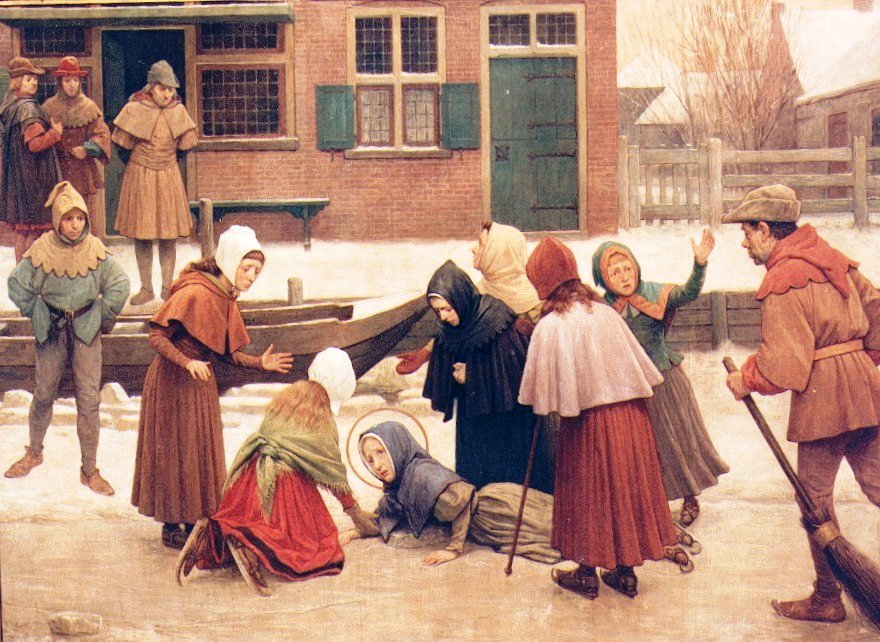
Saint Lydwina of Schiedam (1380 – 1433) was one of the countless and glorious ‘victim souls’ in the history of the Church, those whose lives are filled with suffering, often of an unimaginable intensity, but who suffer joyfully. She was a fifteen-year old Dutch girl, out skating one day, when she fell and broke one[…]Continue reading→
The Glorious Martyrdoms of Martin and Maximus
As we enter into Eastertide, we recall on this 13th of April Pope Saint Martin I (+655), one of the noblest, if most tragic, of the successors of Saint Peter. Born in Umbria, Italy, he was of noble lineage, with great intelligence combined with charity and love of the poor and the Church. While still[…]Continue reading→

Saint Stanislaus of Szczepanów
We celebrate Saint Stanislaus today (+ April 11, 1079), in light of this Easter Octave, a bishop and martyr who accepted the episcopacy only at the direct order of Pope Alexander II. He proved a wise and courageous leader of his flock, put to death by his own king, Boleslaus, for rebuking the monarch’s ‘immoral[…]Continue reading→
Saint Gemma Galgani
On this April 11th, in 1903 – the same year that the Italian Guiseppe Sarto was elected Pope later that summer as Pius X – a lovely, young Italian woman died, by the name of Gemma Galgani. She lived a brief life of 24 years, as did a number of other young saints, including Pier[…]Continue reading→
An Ideological and Improper Translation
I noticed something odd with the psalm reading at Mass the other day. Our bishops’ conference here in Canada has decreed that the Mass in English – Novus Ordo – use the ‘NRSV’, the ‘New Revised Standard Version’, an ‘updated’ translation of the original RSV, first published in 1952. This ‘new translation’ has the tendency[…]Continue reading→
Saint Jean-Baptiste de la Salle: A Teacher for Teachers
Jean-Baptiste de la Salle (1651 – 1719), a French nobleman, ordained a priest, founded the first order in the Church’s history entirely without priests, and this came about almost by accident. I say ‘almost’, for, of course, there are no accidents with God. Destined for ordination from an early age, Jean-Baptiste never looked back, even[…]Continue reading→