
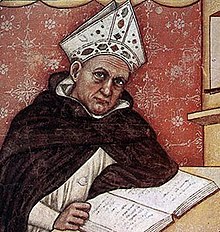
Albert, the Great, Theologian and Scientist
Saint Albert of Cologne (1200-1280), whose life spans what William Walsh called the ‘greatest of centuries’ was given the title ‘the Great’, even before his death. Scholar, Dominican, bishop, scientist, and Doctor of the Church, he was considered the most learned man of his age, with an encyclopedic knowledge of just about everything under the Sun, in an era when one could truly be a renaissance man before the inaccurately-named era of the same name. His writings, which fill 38 volumes (!) include such varied topics as love, music, theology, botany, geography, astronomy, astrology, mineralogy, alchemy (the precursor to chemistry), zoology, physiology, phrenology (for all its future problems, it was the precursor to neuroscience), justice, law (human, natural, eternal, divine), friendship and love. He even wrote a very accurate and helpful treatise on falconry. No wonder he is called ‘Doctor Universalis’, the ‘teaching of everything’, or just ‘Expertus‘ – the Expert.
Albert was the first to comment on the newly-rediscovered and translated works of Aristotle, which would shape the course of philosophy for centuries, right into our own era (say what one likes of some of Aristotle’s conclusions, his principles still form the basis of all human reasoning). Albert also wrote much on what is now known as ‘science’, the empirical investigation of the world, and may be considered as one of its founders, centuries before Bacon and Galileo, with all of their own hubris. Contrary to the myth that the scholastics uncritically accepted the opinions of authorities, here is Albert with a caution to all scientists, including modern ones, so given to an unbending ‘consensus’ on issues from climate change to evolution:
The aim of natural philosophy (science) is not simply to accept the statements of others, but to investigate the causes that are at work in nature
Ah, yes, the seeking and contemplation of knowledge and truth, the true and essential purpose of Man. Would that more than a few of our own scientists, so enamored of the ‘consensus’, took these words to heart.
in 1254 Albert was appointed Provincial of the Dominican Order, and in 1260 bishop of Regensburg, both posts fulfilled prudently and dutifully. Refusing to own a horse, in accord with his Dominican vow of poverty, he walked hundreds of miles across his vast diocese (he was called ‘boots the Bishop’) praying and thinking all the way, writing many of his volumes, we may presume, in his head.
Besides all of his own invaluable work, Albert is perhaps best known as the teacher and promoter of his more famous disciple, Saint Thomas, who in some ways would end up surpassing the master. Thomas, a young Dominican from the noble Aquinas family in Italy, was large, quiet, and reflective, nicknamed the ‘dumb ox’ by his fellow students, who considered him slow. When Albert asked one of them to help poor Thomas on a difficult question, Thomas gently offered a solution to his stumbling would-be helper that was as good, if not better, than the teacher himself could have. It is reported Albert declared that they would all one day hear this ‘dumb ox’ braying throughout the world, and so it has been. The two became life-long friends and collaborators, and Albert wept at the sudden and unexpected death of Thomas, as the latter journeyed to the Council of Lyons in 1274. Albert would go on to live into his 80’s, passing to his eternal reward six years after his friend and former student, and after a full and active life.
Both Albert and Thomas are the patron saints of ‘learning’ in the broad sense, of teachers, students, scientists, all those who pursue the truth. But being open to the truth requires a rightly-ordered will, that one desires the good that is at the basis of all truth. For even ‘truth’ can be distorted and warped by, and to, our own whims and desires. Clarity of mind requires the same concomitant quality in one’s body and soul, or as the Catechism puts it:
There is a connection between purity of heart, of body and of faith (#2518).
This is followed by a quotation from Saint Augustine, upon whom both Thomas and Albert based much of their own thought:
The faithful must believe the articles of the Creed “so that by believing they may obey God, by obeying they may live well, by living well may purify their hearts, and with pure hearts may understand what they believe”
As recent Church history has demonstrated, orthodoxy and orthopraxy, right thinking and right living, stand or fall together. That is why the great John Paul II declared that clarity in the realms both of faith and of reason are required for the formation of the human mind and soul. In fact, ortho-doxa literally means right ‘praise’ or ‘glory’, which is what the truth really is: a manifestation of the glory of God Himself.
Without faith, reason – prey to darkness and ignorance since the Fall of Adam – goes off the rails, devolving into rationalism, a over-dependence upon Man’s vacillating and weak intellect. The bizarre dogmatic claims now made, that go far beyond any evidence, are themselves signs of this, as we have seen in ‘climate science’ and other various comic cosmic and evolutionary theories.
More tragically, on the moral plane, are the evil fruits of various ‘rational’ atheistic totalitarian regimes, from the French revolution and Marxist-inspired utopias, built without God and without charity, ending in bloodshed and violence.
And what of all of our technologies – contraception, in-vitro fertilization, genetic modification, artificial intelligence – applied without a solid moral framework, again with tragic results we have yet to fully foresee? As Donum Vitae declares, science and know-how themselves do not offer moral solutions: Just because we can, does not mean we should.
On the other hand, without reason, faith either becomes an emotionalist, empty morass , as we see in certain syrupy strains of Christianity, which wither away like the grass of the field, and the ethereal feelings on which such ‘faith’ is based.
Or one’s faith becomes hardened, unhinged from common sense, in a word, fideism, descending into something erratic, justifying much evil in the name of ‘God’. Pope Benedict warned of this in his 2006 Address at Regensburg – where Albert had been bishop eight centuries prior. We all now know, if we did not already from history, that the Pope spoke truly. Radical Islam, to this day still enslaving, torturing, beheading and crucifying ‘infidels’; but we may also see its type in the early strains of radical Puritanism embodied by such figures as Oliver Cromwell, destroying artistic treasures across England, and, more woefully, massacring Irish Catholics on a genocidal scale.
This is all a result of the refusal to see that reason – logic, common sense, following one’s natural synderesis – is itself a gift from God, a participation in the very mind of the Omniscient, which must itself guide the application and unpacking of the ‘mysteries’ of our faith. Fides quaerens intellectum: Faith seeking understanding, as Anselm wrote. This is not just an intellectual and theoretical debate, for, as the saying goes, ideas really do have consequences, and dire ones at that.
The only answer is what John Paul II called for in his 1998 Fides et Ratio: To allow the certainty of faith to expand the horizons of our reason, while keeping faith on the right path; in sum, to draw a harmonic synthesis between these two ‘wings of the human intellect’ – found most perfectly in the principles offered by the Church’s tradition and her great doctors, Albert, Thomas and others, who integrated in their own lives the harmony between the virtues of the soul and mind, holiness and intelligence.
Here are the words of Pope John Paul from that same encyclical, describing the ‘Dumb Ox’, whose own singular and unique mind and writings were perhaps the greatest testament to work of his teacher and formator, Saint Albert:
Saint Thomas is an authentic model for all who seek the truth. In his thinking, the demands of reason and the power of faith found the most elevated synthesis ever attained by human thought, for he could defend the radical newness introduced by Revelation without ever demeaning the venture proper to reason. (FR, 78).
Albert had to wait some time for his canonization, which took place on December 16th, 1931, by Pope Pius XI, during which ceremony he was also declared a Doctor of the Church. But his feast is kept on the day he died, November 15th.
We should pray to Saint Albert, not least for scientists and a world so enraptured to their opinions, that all may seek the truth, and not strive to affirm their own biases and agendas, so that we may all live more fully here in the world, and the path to heaven cleared for as many as will accept God’s grace and truth, which is the only thing that will set us free.

Carney’s Amoral Majority
After five defections – euphemistically described as ‘crossing the floor’ – and three by-elections, Mark Carney and his Liberals how have their coveted majority. One wonders what bowls of pottage were offered in back-room deals. In the archaic monarchical system that is the Dominion of Canada, this majority allows the newly-minted Prime Minister to rule[…]Continue reading→

Saint Kateri , Canada’s Protectress
This was the title given to Saint Kateri Tekakwitha, by Pope Benedict XVI, when he canonized her on October 28th, 2012, along with six others, in Saint Peter’ Square (she had been beatified by Pope John Paul II back in 1980). With Saint Joseph as our protector, along with the Canadian martyrs, we seem to[…]Continue reading→

A Tale of Two Benedicts
A grace-filled Holy Week to all our readers! As we await and prepare for the Resurrection about to dawn upon us, we might keep in mind two Benedicts: Pope Emeritus Benedict XVI, requiescat in pace, elected on this day in 2005; and today’s commemoration of the mystic pilgrim, Benedict Joseph Labre, who died on this[…]Continue reading→

My Name is Bernadette
April 16th is a propitious day, for besides the anniversary of Father de Valk’s death, who founded Catholic Insight in its print form decades ago, and the commemoration of the ‘two Benedicts’, mentioned in accompanying posts, today we also recall Saint Bernadette Soubirous, the young visionary to whom the Virgin Mary appeared numerous times at[…]Continue reading→

Saint Lydwina of Schiedam and Suffering Joyfully
Saint Lydwina of Schiedam (1380 – 1433) was one of the countless and glorious ‘victim souls’ in the history of the Church, those whose lives are filled with suffering, often of an unimaginable intensity, but who suffer joyfully. She was a fifteen-year old Dutch girl, out skating one day, when she fell and broke one[…]Continue reading→

The Glorious Martyrdoms of Martin and Maximus
As we enter into Eastertide, we recall on this 13th of April Pope Saint Martin I (+655), one of the noblest, if most tragic, of the successors of Saint Peter. Born in Umbria, Italy, he was of noble lineage, with great intelligence combined with charity and love of the poor and the Church. While still[…]Continue reading→
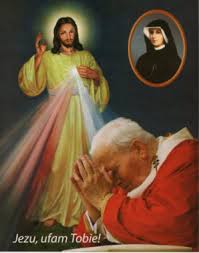
Canonizing Sister Faustina and Divine Mercy
HOMILY OF THE HOLY FATHER MASS IN ST PETER’S SQUARE FOR THE CANONIZATION OF SR MARY FAUSTINA KOWALSKA Sunday, 30 April 2000 1. “Confitemini Domino quoniam bonus, quoniam in saeculum misericordia eius”; “Give thanks to the Lord for he is good; his steadfast love endures for ever” (Ps 118: 1). So the Church sings on the Octave of[…]Continue reading→

Saint Stanislaus of Szczepanów
We celebrate Saint Stanislaus today (+ April 11, 1079), in light of this Easter Octave, a bishop and martyr who accepted the episcopacy only at the direct order of Pope Alexander II. He proved a wise and courageous leader of his flock, put to death by his own king, Boleslaus, for rebuking the monarch’s ‘immoral[…]Continue reading→
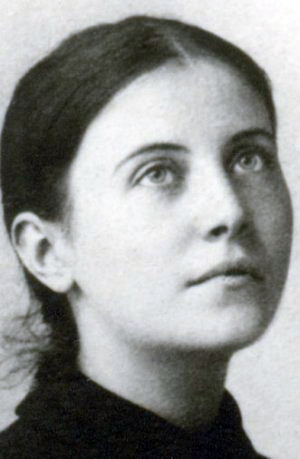
Saint Gemma Galgani
On this April 11th, in 1903 – the same year that the Italian Guiseppe Sarto was elected Pope later that summer as Pius X – a lovely, young Italian woman died, by the name of Gemma Galgani. She lived a brief life of 24 years, as did a number of other young saints, including Pier[…]Continue reading→
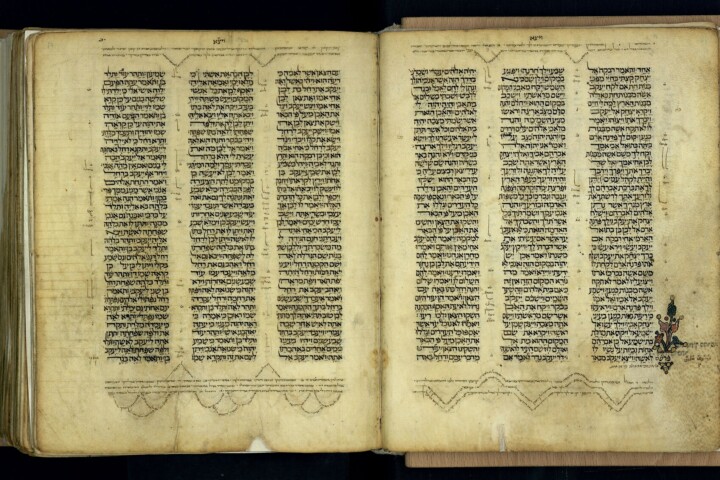
An Ideological and Improper Translation
I noticed something odd with the psalm reading at Mass the other day. Our bishops’ conference here in Canada has decreed that the Mass in English – Novus Ordo – use the ‘NRSV’, the ‘New Revised Standard Version’, an ‘updated’ translation of the original RSV, first published in 1952. This ‘new translation’ has the tendency[…]Continue reading→