
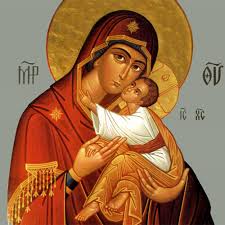
Theotokos: The Bearer of God
A joyful New year, and very blessed solemnity of Mary, Mother of God to all our readers. In the usus antiquior, this used to be called the feast of the Circumcision, still mentioned in today’s Gospel. Of course, by celebrating Our Lady’s maternity, we are also celebrating Christ, and this feast is both Mariological and Christological.
The notion of Mary being ‘Theotokos’, the very ‘bearer of God’ is a rather startling one, when one thinks about it. I will often ask students in class whether Christ was a human person. The answer may seem straightforward: Of course He was (or is that is)?
But the correct response is that He was not. This may at first glance seem counter-intuitive, but, in fact, is a central truth of our faith, without which there would be no real Incarnation. To put this into a Christmas perspective, which was in fact was how the question was first raised in the early 5th century: Who was born of the Virgin Mary on that glorious day in Bethlehem two millennia ago?
The Patriarch of Constantinople at the time, Nestorius, claimed that Mary did not in fact give birth to God (for how could the eternal, infinite and immutable God undergo birth?). Rather, she gave birth to the human person of Christ, who was somehow united to the ‘divine’ person of Christ, still in heaven. Therefore, the Virgin did not deserve the traditional title of ‘Theotokos‘, or God-bearer, but rather the more lowly title, if you will, of ‘Christotokos‘, or bearer of Christ.
Oportet esse haereses. It is necessary that there be heresies, wrote Saint Paul in his first letter to the Corinthians (11:19). Nestorius’ hypothesis forced the Church to think more deeply on the fundamental question of Who is Christ? Who was born, walked the earth, preached, healed, counselled, forgave sins, suffered and died for us? Who indeed was the Messiah?
The question boiled down to whether God truly became Man. If so, He (Christ) had to unite Himself in some way with our humanity, and that union had to occur somewhere within our human nature. This question troubled the Church for centuries, always in the background. The truth was there, implicit within the revelation given to us by Christ Himself, but it was the task of the Church, and her Magisterium, to put this truth into philosophical language that we could, at least to some degree, understand.
The Church knew that the Incarnation had to be ‘real’, and not just an illusion, some kind of theophany of God just appearing as a man, or in some other guise (as we see in the Old Testament, in the burning bush, the visit to Abraham and Sarah, the mysterious figure wrestling with Jacob, and so on).
If real, then how? The Church Fathers also knew that Christ had to be both truly human, yet also truly God. He had a real human body, a real human mind, and, yes, even a human soul, for what was not assumed, was not healed and saved.
Yet, as the Fathers reasoned on how to respond to Nestorius, they concluded that Christ was not and could not be a human person.
Ponder: If Christ were a human person, then how did God become Man? That would mean there were two beings, two persons: one in heaven, and another on earth. How were they united? Nestorius had no sufficient answer to this question. He mentioned vaguely that there was a ‘moral’ or ‘habitual’ union between the Second Person of the Trinity and the human Christ who was born and walked the earth.
But how is that different from any of our own ‘unions’ with God? Are not all human persons who are in a state of grace united with God? The Church realized that tolerating the Nestorian heresy would dissolve the truth of the Incarnation. Mary had to be truly the Mother of God, if Christ were truly God.
Yet where did the union between God and Man occur? The Church resplied at the Ecumenical Council of Ephesus in 431, in her condemnation of Nestorius, that the union occurred in the divine hypostasis, or, in other words, the divine Person. That is, Christ assumed into His divine Personhood all that it meant to be human, except being a human person.
Twenty years after Ephesus, at the Council of Chalcedon in 451 under the tutelage of Pope Saint Leo I, the Church concluded that Christ is one divine Person in two complete natures, divine and human, but that the ‘human nature’ He assumed is not a human person.
Cardinal Joseph Ratzinger put it this way in a 1991 essay in Communio:
Person is the true apex of human existence. It is missing in Jesus. Therefore the entirety of human reality is not present in him…The assumption that some defect was present here was the point of departure of various distortions and aberrations.
As Ratzinger continues, the fact that Christ is not a ‘human person’ is not a defect nor privation, and does not diminish His humanity, but rather elevates it:
What is disclosed in Christ, whom faith certainly presents as unique, is not only a speculative exception; what is disclosed in truth is what the riddle of the human person really intends. Scripture emphasizes this point by calling Christ the last Adam, or the “second Adam”. It therefore characterizes him as the true fulfillment of the idea of the human person…the fulfillment of the entire human being.
And a little later, concludes:
In Christ, in the man who is completely with God, human existence is not canceled, but comes to its highest possibility, which consists in transcending itself into the absolute and in the integration of its own relativity into the absoluteness of divine love.
Or, in other words:
Christ is the directional arrow, as it were, that indicates what being human tends toward.
This ‘arrow’ is the true purpose and end of our own life, revealed in a visible, tangible way on Christmas morning, when the Christ-child, fully God and fully Man, was born of the Virgin Mary in a miraculous manner, having been conceived in her womb, also as God, on the day of the Annunciation nine months before. As the great Pope John Paul II declared in 1979 in his very first encyclical, Redemptor Hominis, in a passage that bears quoting in full:
Christ, the Redeemer of the world, is the one who penetrated in a unique unrepeatable way into the mystery of man and entered his “heart”. Rightly therefore does the Second Vatican Council teach: “The truth is that only in the mystery of the Incarnate Word does the mystery of man take on light. For Adam, the first man, was a type of him who was to come (Rom 5:14), Christ the Lord. Christ the new Adam, in the very revelation of the mystery of the Father and of his love, fully reveals man to himself and brings to light his most high calling”. And the Council continues: “He who is the ‘image of the invisible God’ (Col 1:15), is himself the perfect man who has restored in the children of Adam that likeness to God which had been disfigured ever since the first sin. Human nature, by the very fact that it was assumed, not absorbed, in him, has been raised in us also to a dignity beyond compare. For, by his Incarnation, he, the son of God, in a certain way united himself with each man. He worked with human hands, he thought with a human mind. He acted with a human will, and with a human heart he loved. Born of the Virgin Mary, he has truly been made one of us, like to us in all things except sin”, he, the Redeemer of man.
Every human being is now united to God, by the elevation of our common, shared human nature into the ‘being’ of the Second Person of the Blessed Trinity. In truth, we too are no longer just ‘human’ persons: Our perfection now consists in our also becoming ‘sons of God’, and living eternally with the Trinity in the beatific vision.
This is the gift revealed at Christmas, and all we have to do, with Mary, is offer our own fiat to God’s will. The real tragedy of sin is to reject this gift God has offered us through His Incarnation and redemption.
In her decree, the Church at the Council at Ephesus proclaimed:
If anyone will not confess that the Emmanuel is very God, and that therefore the Holy Virgin is the Mother of God (Θεοτόκος), inasmuch as in the flesh she bore the Word of God made flesh [as it is written, The Word was made flesh] let him be anathema.
There was great rejoicing in the streets of Constantinople and throughout the Empire, now that Mary was forever proclaimed Theotokos, the Mother of God as well as our mother, and that we, truly, are all God’s children, in a way more real than we could ever have imagined.
So as we partake of the in-carnational festivities at Christmas of shared food and drink, let us also take in this deep and mysterious truth of the Incarnation, welcoming and adoring the God-become-Man in that lowly manger bed so many years ago, who made all creation new and holy and good again.
Christus natus est! And we say also, Deus natus est, Alleluia!
Carney’s Amoral Majority
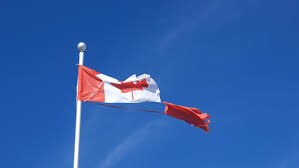
After five defections – euphemistically described as ‘crossing the floor’ – and three by-elections, Mark Carney and his Liberals how have their coveted majority. One wonders what bowls of pottage were offered in back-room deals. In the archaic monarchical system that is the Dominion of Canada, this majority allows the newly-minted Prime Minister to rule[…]Continue reading→

Saint Kateri , Canada’s Protectress
This was the title given to Saint Kateri Tekakwitha, by Pope Benedict XVI, when he canonized her on October 28th, 2012, along with six others, in Saint Peter’ Square (she had been beatified by Pope John Paul II back in 1980). With Saint Joseph as our protector, along with the Canadian martyrs, we seem to[…]Continue reading→
A Tale of Two Benedicts
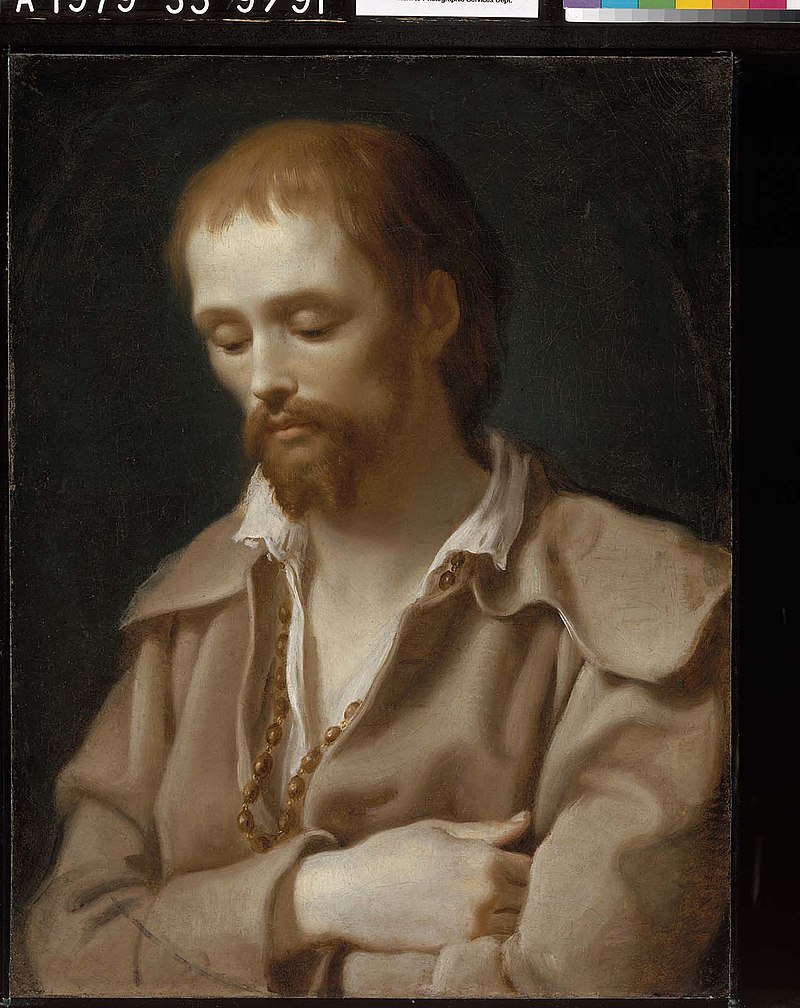
A grace-filled Holy Week to all our readers! As we await and prepare for the Resurrection about to dawn upon us, we might keep in mind two Benedicts: Pope Emeritus Benedict XVI, requiescat in pace, elected on this day in 2005; and today’s commemoration of the mystic pilgrim, Benedict Joseph Labre, who died on this[…]Continue reading→

My Name is Bernadette
April 16th is a propitious day, for besides the anniversary of Father de Valk’s death, who founded Catholic Insight in its print form decades ago, and the commemoration of the ‘two Benedicts’, mentioned in accompanying posts, today we also recall Saint Bernadette Soubirous, the young visionary to whom the Virgin Mary appeared numerous times at[…]Continue reading→
Saint Lydwina of Schiedam and Suffering Joyfully
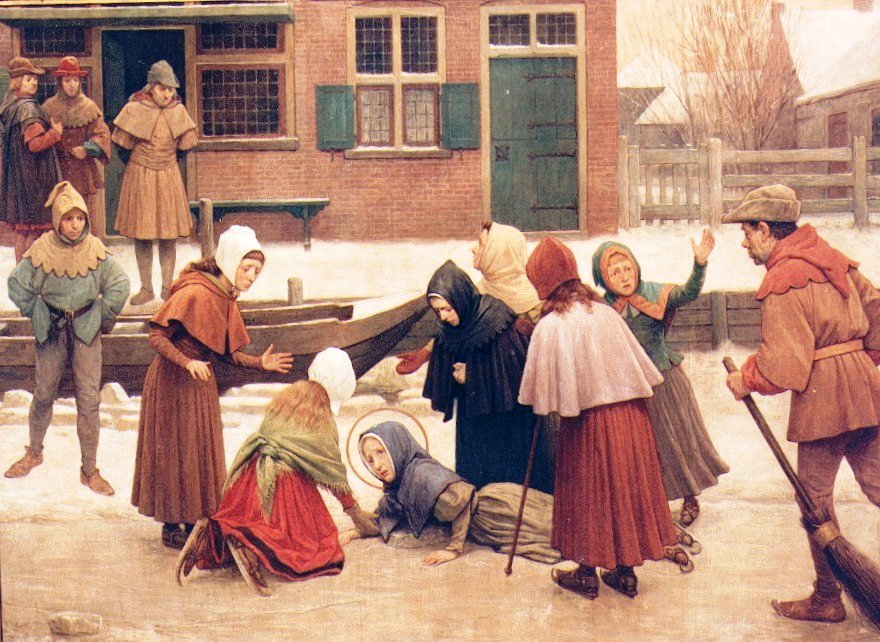
Saint Lydwina of Schiedam (1380 – 1433) was one of the countless and glorious ‘victim souls’ in the history of the Church, those whose lives are filled with suffering, often of an unimaginable intensity, but who suffer joyfully. She was a fifteen-year old Dutch girl, out skating one day, when she fell and broke one[…]Continue reading→
The Glorious Martyrdoms of Martin and Maximus
As we enter into Eastertide, we recall on this 13th of April Pope Saint Martin I (+655), one of the noblest, if most tragic, of the successors of Saint Peter. Born in Umbria, Italy, he was of noble lineage, with great intelligence combined with charity and love of the poor and the Church. While still[…]Continue reading→

Saint Stanislaus of Szczepanów
We celebrate Saint Stanislaus today (+ April 11, 1079), in light of this Easter Octave, a bishop and martyr who accepted the episcopacy only at the direct order of Pope Alexander II. He proved a wise and courageous leader of his flock, put to death by his own king, Boleslaus, for rebuking the monarch’s ‘immoral[…]Continue reading→
Saint Gemma Galgani
On this April 11th, in 1903 – the same year that the Italian Guiseppe Sarto was elected Pope later that summer as Pius X – a lovely, young Italian woman died, by the name of Gemma Galgani. She lived a brief life of 24 years, as did a number of other young saints, including Pier[…]Continue reading→
An Ideological and Improper Translation
I noticed something odd with the psalm reading at Mass the other day. Our bishops’ conference here in Canada has decreed that the Mass in English – Novus Ordo – use the ‘NRSV’, the ‘New Revised Standard Version’, an ‘updated’ translation of the original RSV, first published in 1952. This ‘new translation’ has the tendency[…]Continue reading→
Saint Jean-Baptiste de la Salle: A Teacher for Teachers
Jean-Baptiste de la Salle (1651 – 1719), a French nobleman, ordained a priest, founded the first order in the Church’s history entirely without priests, and this came about almost by accident. I say ‘almost’, for, of course, there are no accidents with God. Destined for ordination from an early age, Jean-Baptiste never looked back, even[…]Continue reading→