
Nature and Poetry
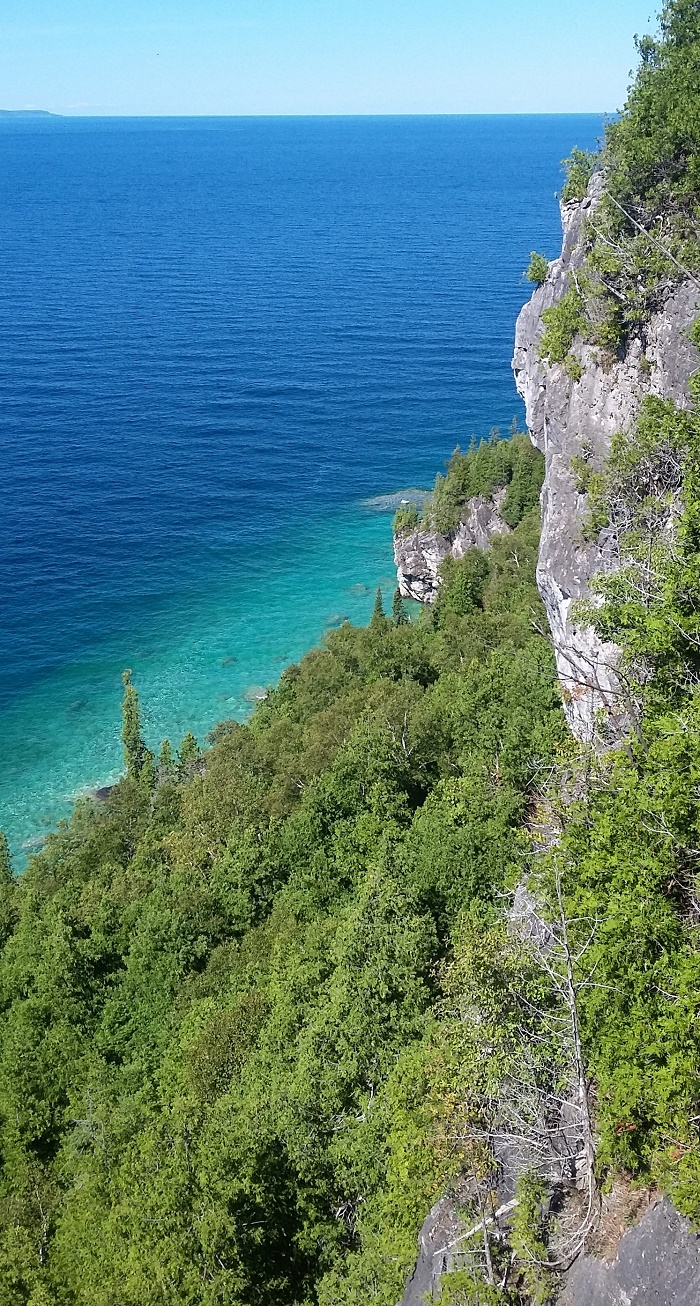
I apologize to my merry band of faithful readers for not posting for a bit. I have been away, with limited time to write, and limited access to the internet (not a bad thing). I took this last week, without much aforethought before students descend upon our humble campus and classes begin, , to help my brother and his father-in-law build a shed (which was more like a small, one room house, and will in the end be quite splendid) for a couple of days. Then I spent two days exploring a bit of the Bruce Peninsula, hiking some of the most scenic sections of the Bruce Trail, and swimming in the glorious, cerulean and pristine waters of Georgian Bay, with azure sky above. As I floated off one rocky beach, I was thinking, one could scarcely get closer to paradise, on a natural level.
Two thoughts come to mind as I return back to ‘reality’: Building something from scratch, like a humble shed, instead of buying a resin-type
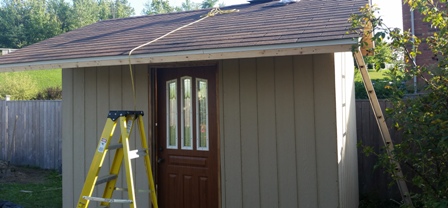
made-in-China from a hardware store and plonking it down, is an immensely satisfying experience. Aristotle was well aware of this, as he made clear in his Poetics, a title derived from the Greek verb ‘poieo‘, to ‘create’ or to ‘make’. Aristotle saw ‘poetry’, in the broad sense of any intellectual, creative activity, as one of the highest activities of Man (besides contemplation). There is more to ‘poetry’, therefore, than what we now would consider ‘poetry’ (rhyming, or at least metrical, verse). We find poetry in any creative endeavour: writing, drawing, drama, music, fashion, film or, yes, even building sheds. The more we pour ourselves into any creative work, by definition, the more poetic it is. After all the work I have seen on the building with which I began this paragraph, what a poetic shed it shall be.
Of course, the greatest ‘poet’ is the Creator Himself. This struck home to me, as I pondered the vistas over Georgian Bay, the limestone cliffs plunging into the clear water, with the waves lapping the shore, the limitless forests, the crisp, clean air. G.K. Chesterton once wrote that the least explored area is one’s own backyard. There is nothing wrong, and much that is right, with travelling occasionally far afield, to broaden one’s horizons, but there is also much to be said for experiencing the beauty of one’s own area. And I would highly recommend to readers to explore some of the natural wonders of Ontario, not least the Bruce Peninsula, but also our innumerable lakes, rivers, trails, views found within a few hours of where you are reading this, many of them only lightly touched by human civilization (and this applies to those of you, wherever you may live, for all of Canada has its own particular scenery).
Poetry and nature are two very profound and effective ways of approaching God, especially if accompanied by the most direct way, prayer. For, if
all creation shows forth the glory of God, and the firmament declares His handiwork
so too, all of our creations, including all of our moral decisions which, as John Paul II taught, create who we ourselves are and will become, should also declared God’s glory, in the end in which all of us are called to share.
Carney’s Amoral Majority
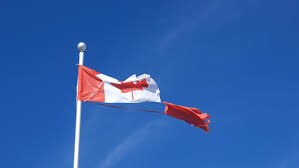
After five defections – euphemistically described as ‘crossing the floor’ – and three by-elections, Mark Carney and his Liberals how have their coveted majority. One wonders what bowls of pottage were offered in back-room deals. In the archaic monarchical system that is the Dominion of Canada, this majority allows the newly-minted Prime Minister to rule[…]Continue reading→

Saint Kateri , Canada’s Protectress
This was the title given to Saint Kateri Tekakwitha, by Pope Benedict XVI, when he canonized her on October 28th, 2012, along with six others, in Saint Peter’ Square (she had been beatified by Pope John Paul II back in 1980). With Saint Joseph as our protector, along with the Canadian martyrs, we seem to[…]Continue reading→

A Tale of Two Benedicts
A grace-filled Holy Week to all our readers! As we await and prepare for the Resurrection about to dawn upon us, we might keep in mind two Benedicts: Pope Emeritus Benedict XVI, requiescat in pace, elected on this day in 2005; and today’s commemoration of the mystic pilgrim, Benedict Joseph Labre, who died on this[…]Continue reading→

My Name is Bernadette
April 16th is a propitious day, for besides the anniversary of Father de Valk’s death, who founded Catholic Insight in its print form decades ago, and the commemoration of the ‘two Benedicts’, mentioned in accompanying posts, today we also recall Saint Bernadette Soubirous, the young visionary to whom the Virgin Mary appeared numerous times at[…]Continue reading→

Saint Lydwina of Schiedam and Suffering Joyfully
Saint Lydwina of Schiedam (1380 – 1433) was one of the countless and glorious ‘victim souls’ in the history of the Church, those whose lives are filled with suffering, often of an unimaginable intensity, but who suffer joyfully. She was a fifteen-year old Dutch girl, out skating one day, when she fell and broke one[…]Continue reading→

The Glorious Martyrdoms of Martin and Maximus
As we enter into Eastertide, we recall on this 13th of April Pope Saint Martin I (+655), one of the noblest, if most tragic, of the successors of Saint Peter. Born in Umbria, Italy, he was of noble lineage, with great intelligence combined with charity and love of the poor and the Church. While still[…]Continue reading→

Saint Stanislaus of Szczepanów
We celebrate Saint Stanislaus today (+ April 11, 1079), in light of this Easter Octave, a bishop and martyr who accepted the episcopacy only at the direct order of Pope Alexander II. He proved a wise and courageous leader of his flock, put to death by his own king, Boleslaus, for rebuking the monarch’s ‘immoral[…]Continue reading→
Saint Gemma Galgani
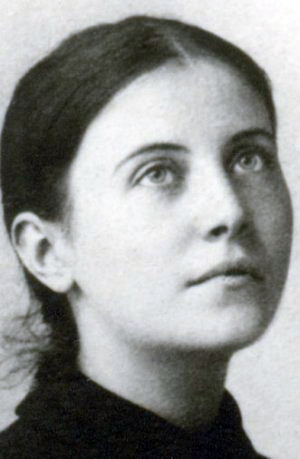
On this April 11th, in 1903 – the same year that the Italian Guiseppe Sarto was elected Pope later that summer as Pius X – a lovely, young Italian woman died, by the name of Gemma Galgani. She lived a brief life of 24 years, as did a number of other young saints, including Pier[…]Continue reading→
An Ideological and Improper Translation
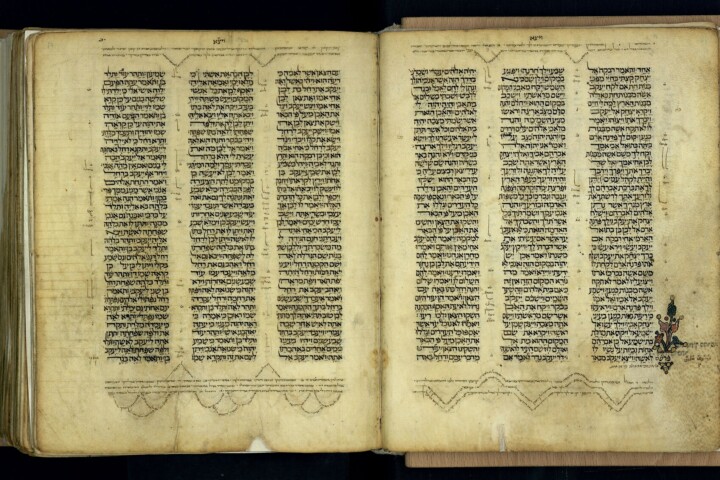
I noticed something odd with the psalm reading at Mass the other day. Our bishops’ conference here in Canada has decreed that the Mass in English – Novus Ordo – use the ‘NRSV’, the ‘New Revised Standard Version’, an ‘updated’ translation of the original RSV, first published in 1952. This ‘new translation’ has the tendency[…]Continue reading→
Saint Jean-Baptiste de la Salle: A Teacher for Teachers
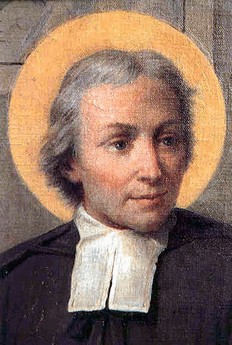
Jean-Baptiste de la Salle (1651 – 1719), a French nobleman, ordained a priest, founded the first order in the Church’s history entirely without priests, and this came about almost by accident. I say ‘almost’, for, of course, there are no accidents with God. Destined for ordination from an early age, Jean-Baptiste never looked back, even[…]Continue reading→