
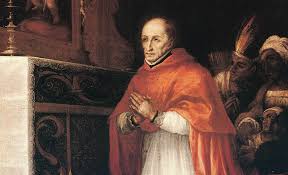
The Indefatigable Saint Turibius
Saint Turibius of Mogrovejo (+1606), a missionary bishop of Lima, Peru from 1579 until his death in 1606, who never seemed to stop, a heroic model for bishops for all ages, as well as an example for all of us. But as Turibius would see things, he was simply doing his duty as a successor of the Apostles.
Born in 1538 in the Valladolid province of Spain, named after an early martyr, Turibius, matured to become a virtuous and well-educated layman, immersed in the Catholic liberal arts. His talents were soon recognized by the King of Spain, who appointed him Grand Inquisitor – before that title was usurped in a memorable but rather unfortunate description by Dostoyevsky. After that, Turibius was chosen bishop of the new and vast diocese of Lima in the New World. Do what he could to resist and remain in a more hidden life, he finally consented to being rushed through the minor orders, then ordained a priest and bishop in 1578, before his departure across the stormy South Atlantic to the shores of the new world, in Peru.
The tenor of his episcopacy was evident as soon as he set foot in the village of Patita, on May 12, 1581, as he commenced to walk the 600 miles to the capital city of Lima – yes, by foot, over a wild and uncultivated land without much semblance of a system of roads or paths. Just thinking of that makes one’s legs ache. I once walked 26 miles through the Rockies – on paved roads, mind you – and could scarcely move afterwards, once I sat down at the campsite – I eventually got used to the distance over the two-week endeavour across B.C., but it was never easy.
Over the years of his energetic apostolate, Father Turibius likely walked far further, and would repeat this feat – with his feet – many times, visiting the parishes and outposts of his vast diocese, covering thousands of miles the same way – no limos, jets, chancery offices, endless meetings, hotel rooms, plush carpets or fine restaurants for this humble spiritual foot soldier, who seemed an implacable force of divine energy. His favourite saying, which we all should ponder in our era saturated in media-and-easy-entertainment, was ‘time is not our own, and we must give a strict account of it’. Hmm. After 1590, he had the assistance of the great Franciscan missionary, Saint Francis Solanus (+1610), allowing him to make even better use of his time.
Turibius truly cared for his flock, correcting his priests, ensuring the recently promulgated Missal of Pius V – the Council of Trent had just wrapped up two decades earlier, in 1563 -was in use in each parish, the vessels and vestments clean and in good order, and that his priests were living truly ortho-dox and ortho-prax lives, for the state of the clergy was not what it should have been. He would not tolerate heresy, schism, distortion of the truth, nor moral depravity in his priests. It is probable that he confirmed Saint Rose of Lima and Saint Martin de Porres.
As one brief biography of the great saint (well worth a read) described his apostolate, on which we would benefit from reflecting in our own time of fear and anxiety and vigilance about ‘safety’:
Nothing gave the saint so much pleasure as the greatest labours and dangers, to procure the least spiritual advantage to one soul. Burning with the most vehement desire of laying down his life for his flock, and of suffering all things for him who died for us, he feared no dangers. When he heard that poor Indians wandered in the mountains and deserts, he sought them out; and to comfort, instruct, or gain one of them he often suffered incredible fatigues and dangers in the wildernesses, and boldly travelled through the haunts of lions and tigers. He spent seven years in performing his first visitation; his second employed him four years, but the third was shorter. He converted innumerable infidels, and left everywhere monuments of his charity. In travelling, he either prayed or discoursed on heavenly things.. On his arrival at a place, it was his custom to repair first to the church to pray before the altar. To catechise the poor, he would sometimes stay two or three days in places where he had neither bed nor any kind of food. He visited every part of his vast diocese, and when others suggested to him the dangers that threatened him from rocks, precipices, marshes, rivers, robbers, and savages, his answer was that Christ came from heaven to save man, we ought not therefore to fear dangers for the sake of immortal glory.
After a quarter of a century of indefatigable work, he predicted the day of his death, dragging himself to receive the last rites, and offering his soul to God on this day, March 23rd, which was Holy Thursday, in 1606. His reputation for sanctity was immediate, and has never been forgotten. Canonized in 1726 by Pope Benedict XIII, he was declared the patron of the Latin American episcopate in 1983 by Pope Saint John Paul II – who served as Pope about the same length of time our saint was a bishop.
So a propitious day to intercede for our bishops and ecclesial leaders, and not least our current Holy Father, the second Pope from the ‘new world’ of the Americas, that the zeal, discipline and clear doctrine which Turibius helped hand on and maintain may shine once again not just in South America, but throughout the universal Church.
Saint Turibius, ora pro nobis!
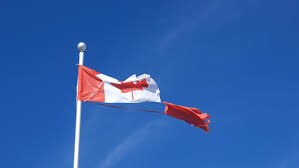
Carney’s Amoral Majority
After five defections – euphemistically described as ‘crossing the floor’ – and three by-elections, Mark Carney and his Liberals how have their coveted majority. One wonders what bowls of pottage were offered in back-room deals. In the archaic monarchical system that is the Dominion of Canada, this majority allows the newly-minted Prime Minister to rule[…]Continue reading→

Saint Kateri , Canada’s Protectress
This was the title given to Saint Kateri Tekakwitha, by Pope Benedict XVI, when he canonized her on October 28th, 2012, along with six others, in Saint Peter’ Square (she had been beatified by Pope John Paul II back in 1980). With Saint Joseph as our protector, along with the Canadian martyrs, we seem to[…]Continue reading→
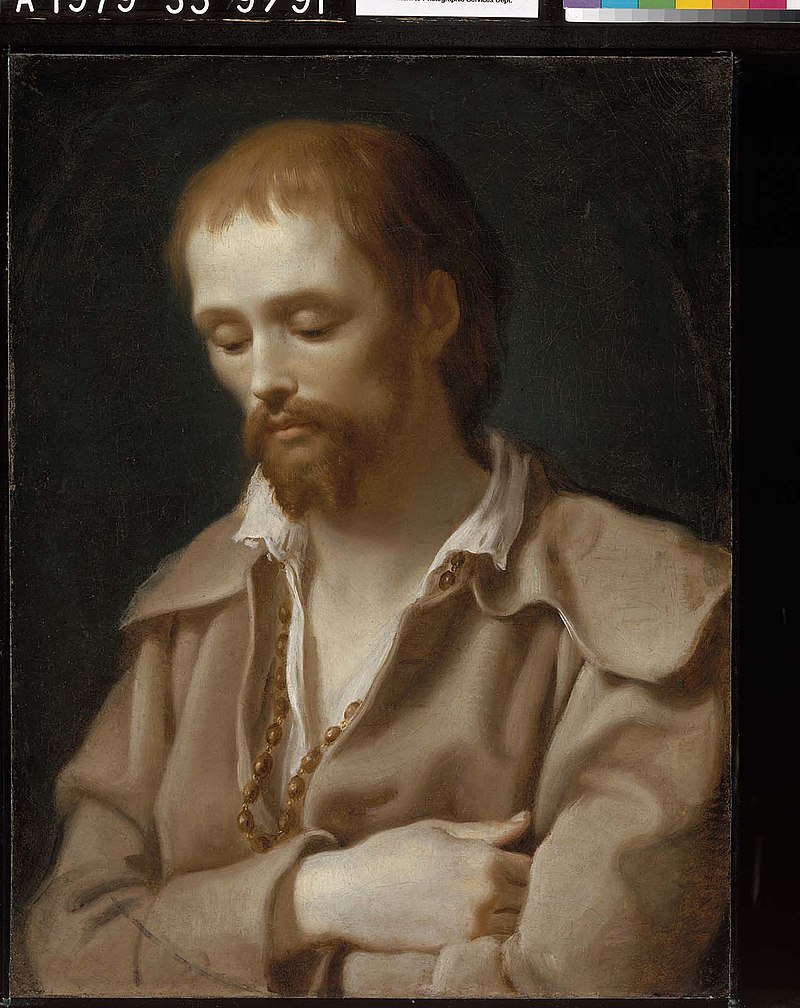
A Tale of Two Benedicts
A grace-filled Holy Week to all our readers! As we await and prepare for the Resurrection about to dawn upon us, we might keep in mind two Benedicts: Pope Emeritus Benedict XVI, requiescat in pace, elected on this day in 2005; and today’s commemoration of the mystic pilgrim, Benedict Joseph Labre, who died on this[…]Continue reading→

My Name is Bernadette
April 16th is a propitious day, for besides the anniversary of Father de Valk’s death, who founded Catholic Insight in its print form decades ago, and the commemoration of the ‘two Benedicts’, mentioned in accompanying posts, today we also recall Saint Bernadette Soubirous, the young visionary to whom the Virgin Mary appeared numerous times at[…]Continue reading→
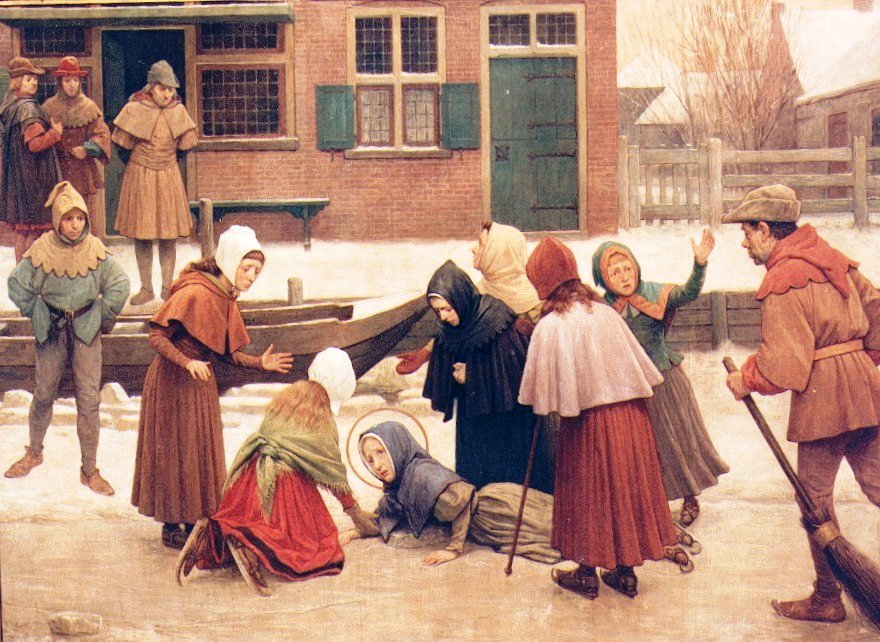
Saint Lydwina of Schiedam and Suffering Joyfully
Saint Lydwina of Schiedam (1380 – 1433) was one of the countless and glorious ‘victim souls’ in the history of the Church, those whose lives are filled with suffering, often of an unimaginable intensity, but who suffer joyfully. She was a fifteen-year old Dutch girl, out skating one day, when she fell and broke one[…]Continue reading→
The Glorious Martyrdoms of Martin and Maximus
As we enter into Eastertide, we recall on this 13th of April Pope Saint Martin I (+655), one of the noblest, if most tragic, of the successors of Saint Peter. Born in Umbria, Italy, he was of noble lineage, with great intelligence combined with charity and love of the poor and the Church. While still[…]Continue reading→
Canonizing Sister Faustina and Divine Mercy
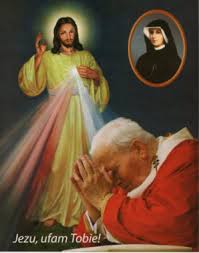
HOMILY OF THE HOLY FATHER MASS IN ST PETER’S SQUARE FOR THE CANONIZATION OF SR MARY FAUSTINA KOWALSKA Sunday, 30 April 2000 1. “Confitemini Domino quoniam bonus, quoniam in saeculum misericordia eius”; “Give thanks to the Lord for he is good; his steadfast love endures for ever” (Ps 118: 1). So the Church sings on the Octave of[…]Continue reading→

Saint Stanislaus of Szczepanów
We celebrate Saint Stanislaus today (+ April 11, 1079), in light of this Easter Octave, a bishop and martyr who accepted the episcopacy only at the direct order of Pope Alexander II. He proved a wise and courageous leader of his flock, put to death by his own king, Boleslaus, for rebuking the monarch’s ‘immoral[…]Continue reading→
Saint Gemma Galgani
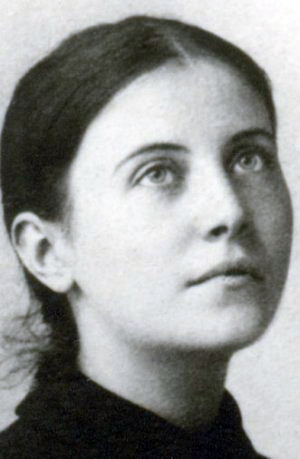
On this April 11th, in 1903 – the same year that the Italian Guiseppe Sarto was elected Pope later that summer as Pius X – a lovely, young Italian woman died, by the name of Gemma Galgani. She lived a brief life of 24 years, as did a number of other young saints, including Pier[…]Continue reading→
An Ideological and Improper Translation
I noticed something odd with the psalm reading at Mass the other day. Our bishops’ conference here in Canada has decreed that the Mass in English – Novus Ordo – use the ‘NRSV’, the ‘New Revised Standard Version’, an ‘updated’ translation of the original RSV, first published in 1952. This ‘new translation’ has the tendency[…]Continue reading→