
SSPX Plans to Cross the Rubicon…but the Wrong Way: Alea Iacta Est?
Well, perhaps it was inevitable, given the intractability: The SSPX has decided to go ahead with the ordination of bishops on July 1st, 2026, which is just about 38 years to the day after the first illicit consecrations on June 30th, 1988. When we say ‘illicit’, it means ‘against the law’, or at least not in accord with the law, for the ordination of a bishop requires a papal mandate, according to Canon Law. Those 1988 ordinations not only lacked such a mandate, but Lefebvre disobeyed the direct order of Pope John Paul II not to ordain those bishops. This, of course, was after the Pope had agreed to ordain one of their men a bishop, to which Lefebvre initially agreed, before reneging. One wonders what might have happened if that initial, licit ordination had gone ahead – would we have more universal access to the TLM? Would the example of the SSPX have diffused throughout the world, putting a brake on liturgical insanity? Would we have a personal prelature dedicated to the Traditional Mass, akin to the Anglican ordinariate? After all, God loves obedience, and would likely have rewarded such.
Instead, we had Lefebvre’s disobedience, and his act of ‘resistance’ against what he perceived as an ecclesia moderna gone modernist – including John Paul II and Josef Ratzinger. The SSPX invoked ’emergency’ powers and a state of necessity. Saint Thomas does say that not all law binds in conscience – one may disobey a given law, citing a higher law (cf., I-II.96.4). Yet, when it comes to the Pope and Canon Law, the only ‘higher law’ is God’s, speaking directly to one’s soul, which is a difficult and dangerous thing to discern.
Lefebvre has gone before his maker with the choice he made. Yes, I get it, the SSPX has the Latin Mass, chant, prayers at the foot of the altar, and all the rest of it. Many of us want what they want, but not the way they want it. They live as though time – and the Church – froze around 1962.
One may gather their thoughts from the Ash Wednesday communique released by the Society, in response to the recent meeting between their superior, Father, Davide Pagliarani, and the current head of the DDF, Cardinal Fernandez. There does not seem to be much room for dialogue there which, in the SSPX’s view, has been tried and found wanting. Now, they say that discussion is not possible, for ‘Tradition’ is clear, with which the post-Vatican II Church is no longer in alignment.
This is all disconcerting, for if one accepts the SSPX narrative, followed to its logical conclusion, it seems that God, and in particular the Holy Spirit, has abandoned His Church for the past six decades. The SSPX’s rejection not only includes the Council, but just about every post-conciliar document, and every interpretation of the post-conciliar documents, along with doubts cast upon canonizations and decrees galore – even Humanae Vitae, apparently, is up for grabs, since Paul VI developed the teaching on the ‘two ends’ of the conjugal act (one may see their consternation in the appendix).
God may have abandoned the Church, but, apparently not the SSPX, which holds true to what they determine is ‘Tradition’. But who, exactly, is ‘they’, one might ask, and whence do they derive their authority? They may seem pious and solid and orthodox – and I doubt not their sincerity and zeal – but will be they so tomorrow, or a year or ten hence? Witness poor bishop Williamson, who went his own way. There will likely be many such ‘Williamson’ in the near future, for who or what is guiding the Society? Their bishops are under the authority of a priest, who is their superior. What or who is their Magisterium, for they do not seem to recognize authority of the Magisterium of the Catholic Church, which has – from their perspective – gone completely off the rails.
The thing is, at least the Church has rails, and, as we wrote the other day, the divine means of correcting deviations. The SSPX does not. It’s really as simple as that. They govern themselves, by their own conscience, a rather fragile and fallible thing. It seems inevitable that they will devolve into a cult – or, rather, various cults – of personalities who will dominate, if they have not already done so. Families and communities have already been divided, even torn apart, now the schism in the Church, insofar as God permits such.
None other than Cardinal Sarah has written an appeal, urging the SSPX not to go through with the episcopal ordinations which, as he puts it, would tear the Mystical Body of Christ in an irreversible manner, adding the warning, how many souls risk being lost because of this new rupture?
And rightly concludes: How can we claim to lead souls to salvation by means other than those He Himself has indicated to us?”
The sign-off on the SSPX response is indicative, invoking Our Lady ‘mediatrix of all graces’, with a proviso to Cardinal Fernandes ‘not to take this as a provocation’. But in what other way could he take it? We may all have some thoughts on the prudence of the Magisterium minimizing this title of Our Lady (not condemning it), but there are dozens of such titles that might have been invoked. Signing off this way seems be a declaration that Cardinal Fernandes’ – and by extension the hierarchical Church’s – authority has just been revoked. If the document on Marian titles, Mater Populis Fidelis, means nothing, then what do the other decrees of the DDF mean? One may have one’s opinion of the current holder of Ratzinger’s former job, but what has happened to respect for the office(s) of the Church? What do they think of the Pope, and the bishops of the dioceses in which they exercise their ministry? As Cardinal Sarah rightly puts it, they are in grave danger of cutting themselves off from the very source of truth and salvation. They’re crossing the Tiber, but the wrong way. I want traditional Catholicism – if that is not redundant – to thrive and prosper, but this path of the SSPX seems destined for ruin.
Quo vadis, SSPX?
One must make up one’s mind which scenario is the true one: Are we guided by the providence of a merciful and loving God, Who brings about His will by the Church He founded, through the vagaries, imperfections, sins and errors of human beings, even of those who govern the Church? Or is it rather by a small group of (ironically) charismatic – or is that tradismatic? – individuals, who claim their own personal divine authority, and an unchanging perfection the Church has never had, and never will, until all things are made perfect by God? To attain that glorious end, as Christ warned, we must persevere, in patience, faith, hope and trust. He will guide the Church He loves, and will not leave us orphaned.

Carney’s Amoral Majority
After five defections – euphemistically described as ‘crossing the floor’ – and three by-elections, Mark Carney and his Liberals how have their coveted majority. One wonders what bowls of pottage were offered in back-room deals. In the archaic monarchical system that is the Dominion of Canada, this majority allows the newly-minted Prime Minister to rule[…]Continue reading→

Saint Kateri , Canada’s Protectress
This was the title given to Saint Kateri Tekakwitha, by Pope Benedict XVI, when he canonized her on October 28th, 2012, along with six others, in Saint Peter’ Square (she had been beatified by Pope John Paul II back in 1980). With Saint Joseph as our protector, along with the Canadian martyrs, we seem to[…]Continue reading→

A Tale of Two Benedicts
A grace-filled Holy Week to all our readers! As we await and prepare for the Resurrection about to dawn upon us, we might keep in mind two Benedicts: Pope Emeritus Benedict XVI, requiescat in pace, elected on this day in 2005; and today’s commemoration of the mystic pilgrim, Benedict Joseph Labre, who died on this[…]Continue reading→

My Name is Bernadette
April 16th is a propitious day, for besides the anniversary of Father de Valk’s death, who founded Catholic Insight in its print form decades ago, and the commemoration of the ‘two Benedicts’, mentioned in accompanying posts, today we also recall Saint Bernadette Soubirous, the young visionary to whom the Virgin Mary appeared numerous times at[…]Continue reading→

Saint Lydwina of Schiedam and Suffering Joyfully
Saint Lydwina of Schiedam (1380 – 1433) was one of the countless and glorious ‘victim souls’ in the history of the Church, those whose lives are filled with suffering, often of an unimaginable intensity, but who suffer joyfully. She was a fifteen-year old Dutch girl, out skating one day, when she fell and broke one[…]Continue reading→

The Glorious Martyrdoms of Martin and Maximus
As we enter into Eastertide, we recall on this 13th of April Pope Saint Martin I (+655), one of the noblest, if most tragic, of the successors of Saint Peter. Born in Umbria, Italy, he was of noble lineage, with great intelligence combined with charity and love of the poor and the Church. While still[…]Continue reading→

Saint Stanislaus of Szczepanów
We celebrate Saint Stanislaus today (+ April 11, 1079), in light of this Easter Octave, a bishop and martyr who accepted the episcopacy only at the direct order of Pope Alexander II. He proved a wise and courageous leader of his flock, put to death by his own king, Boleslaus, for rebuking the monarch’s ‘immoral[…]Continue reading→
Saint Gemma Galgani
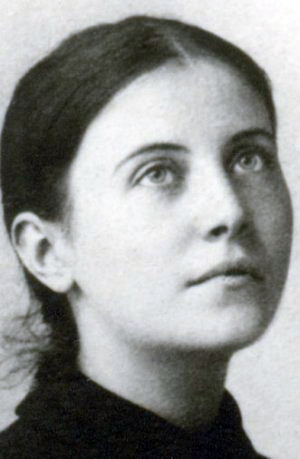
On this April 11th, in 1903 – the same year that the Italian Guiseppe Sarto was elected Pope later that summer as Pius X – a lovely, young Italian woman died, by the name of Gemma Galgani. She lived a brief life of 24 years, as did a number of other young saints, including Pier[…]Continue reading→
An Ideological and Improper Translation
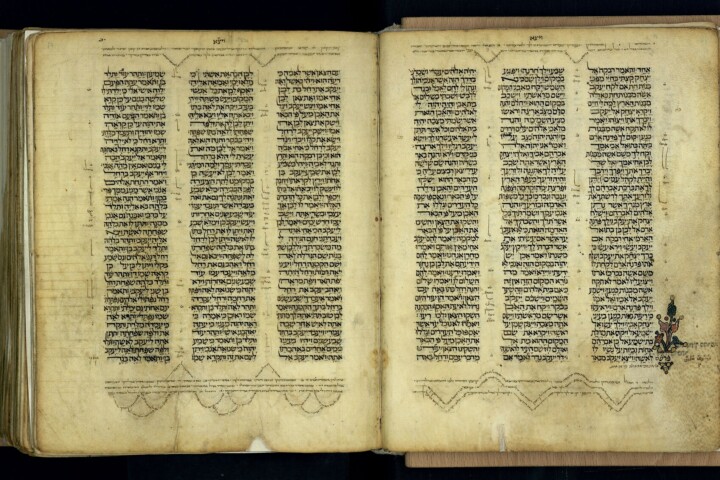
I noticed something odd with the psalm reading at Mass the other day. Our bishops’ conference here in Canada has decreed that the Mass in English – Novus Ordo – use the ‘NRSV’, the ‘New Revised Standard Version’, an ‘updated’ translation of the original RSV, first published in 1952. This ‘new translation’ has the tendency[…]Continue reading→
Saint Jean-Baptiste de la Salle: A Teacher for Teachers
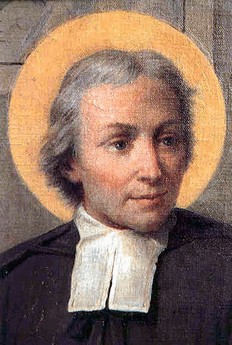
Jean-Baptiste de la Salle (1651 – 1719), a French nobleman, ordained a priest, founded the first order in the Church’s history entirely without priests, and this came about almost by accident. I say ‘almost’, for, of course, there are no accidents with God. Destined for ordination from an early age, Jean-Baptiste never looked back, even[…]Continue reading→