
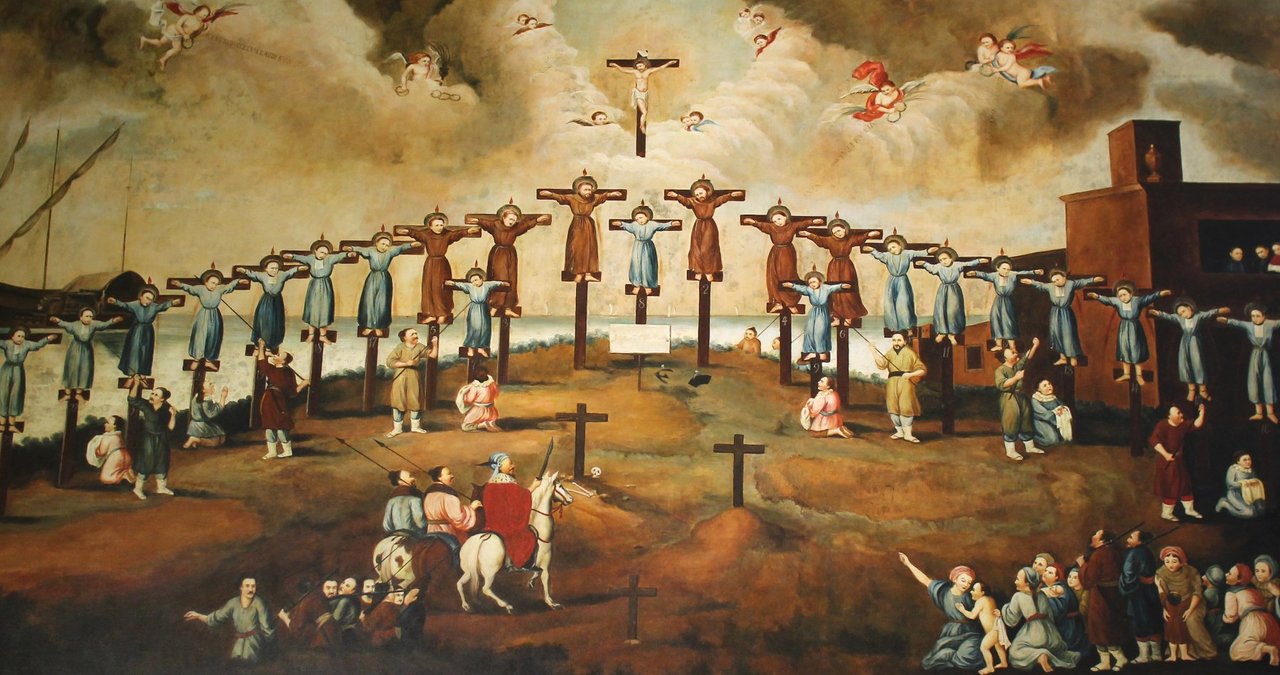
Paul Miki and Companion Martyrs of Japan
Today, 6 February, is the feast of Saint Paul Miki and his (twenty-five) companions who were tortured and executed in Nagasaki, Japan, in 1597. “After Christ’s example, I forgive my persecutors. I do not hate them. I ask God to have pity on all, and I hope my blood will fall on my fellow men as a fruitful rain.”
How is it that we find Christians in sixteenth-century Japan? (There were some 300,000 of them in 1597!) The answer to that question is to be found in missionary work of Saint Francis Xavier (1502-52); he heard and responded to today’s readings. The Gospel provides the first part of his response; the second reading completes it. Christ’s commission to his disciples was to become “fishers of men.”[1] And what was to be their bait? Saint Paul tells us in that second reading: “For I delivered to you as of first importance what I also received, that Christ died for our sins in accordance with the Scriptures, that he was buried, that he was raised on the third day in accordance with the Scriptures.”[2] This statement embodies the power of religion, in that it responds to man’s deepest cravings.
When Francis Xavier arrived in Japan on the Solemnity of the Assumption August 15th, 1549, the common religion was a form of ancestor worship, the essence of which is based on the conviction that there is something wonderful about being a human being. If I am extraordinary, it must have come to me by the same means as my physical existence, namely, by my having been generated by my parents, and their parents, and so on. Saint Francis could accept the insight and then deepen and extend it by the Christian teaching that we may indeed worship our ancestor—Christ—who gives us a new and wonderful birth in the waters of baptism by which we may join him in speaking of God as “Abba, Father.”[3]
After a period of openness to the West, Japan began a ferocious persecution of the Church in 1597. Christians died, apostatized or went underground. The country remained closed to all foreigners until the mid-nineteenth century. A treaty between France and Japan was ratified in 1859, and Catholic priests were free to open churches for the service of foreigners. In the new church at Nagasaki and 17 March 1865, occurred a memorable event when fifteen Christians made themselves known to Père Petitjean, assuring him that there were a great many others, about 50,000!
How were they to assure themselves that Père Petitjean represented the Catholic faith that they had guarded in secret for almost three hundred years? Would it be by his allegiance to the life-giving death and resurrection of Jesus? or by a trinitarian creed? But these are found in all forms of Christianity worthy of the name. According to the Catholic Encyclopedia, the there were three marks by which these Japanese Christians recognized the newcomers as Catholic:
- the authority of the Pope, that is, the role of the Magisterium in safeguarding the deposit of faith.
- veneration of the Blessed Virgin, which points to the importance of the devotional life of the Church
- the celibacy of the clergy which represents a radical commitment to the service of the Gospel.
How pleasing it is that any remaining Christians in hiding could, even today, distinguish Catholicism by these same three marks.
[1] Lk 5.11.
[2] 1 Cor 15.3-4
[3] Mk 14.16. Cf. Gal 4.6 and Rom 8.15,

Saint Kateri , Canada’s Protectress
This was the title given to Saint Kateri Tekakwitha, by Pope Benedict XVI, when he canonized her on October 28th, 2012, along with six others, in Saint Peter’ Square (she had been beatified by Pope John Paul II back in 1980). With Saint Joseph as our protector, along with the Canadian martyrs, we seem to[…]Continue reading→

Remembering Father Alphonse de Valk
(Today marks the sixth anniversary of the death of Father Alphonse de Valk, C.S.B., a faithful, courageous and indefatigable Basilian priest, pro-life-and-family apostle, and the founder of Catholic Insight magazine. Here is what we wrote those on his entering into eternity five years ago, as we continue to remember him in our prayers and thoughts)[…]Continue reading→
A Tale of Two Benedicts
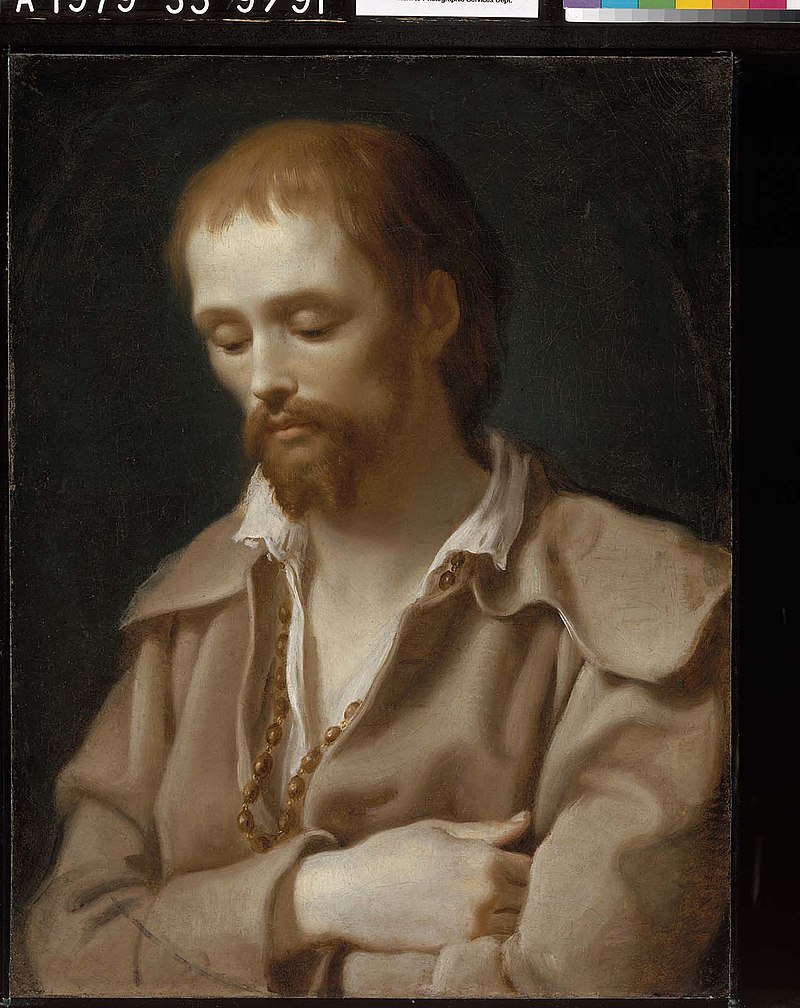
A grace-filled Holy Week to all our readers! As we await and prepare for the Resurrection about to dawn upon us, we might keep in mind two Benedicts: Pope Emeritus Benedict XVI, requiescat in pace, elected on this day in 2005; and today’s commemoration of the mystic pilgrim, Benedict Joseph Labre, who died on this[…]Continue reading→

My Name is Bernadette
April 16th is a propitious day, for besides the anniversary of Father de Valk’s death, who founded Catholic Insight in its print form decades ago, and the commemoration of the ‘two Benedicts’, mentioned in accompanying posts, today we also recall Saint Bernadette Soubirous, the young visionary to whom the Virgin Mary appeared numerous times at[…]Continue reading→
Saint Lydwina of Schiedam and Suffering Joyfully
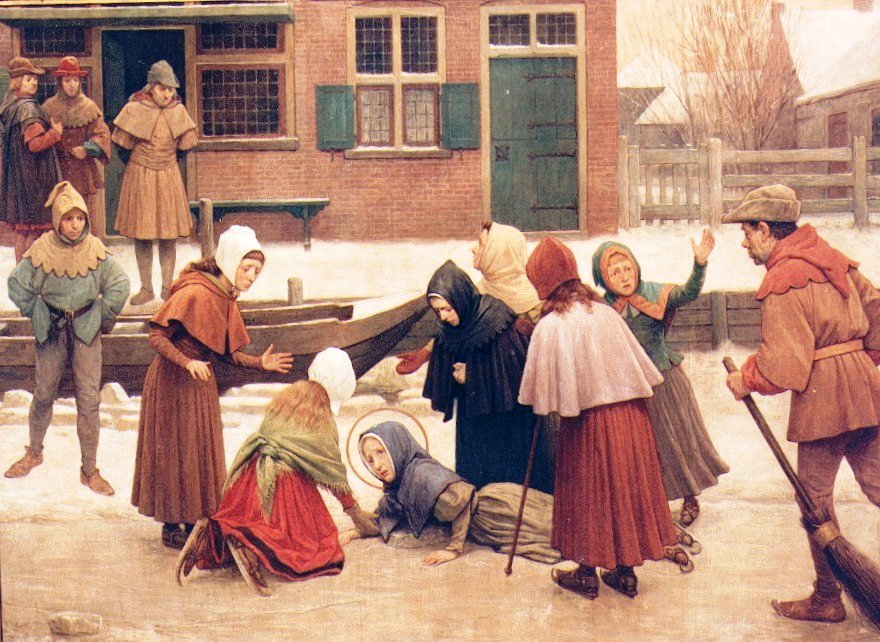
Saint Lydwina of Schiedam (1380 – 1433) was one of the countless and glorious ‘victim souls’ in the history of the Church, those whose lives are filled with suffering, often of an unimaginable intensity, but who suffer joyfully. She was a fifteen-year old Dutch girl, out skating one day, when she fell and broke one[…]Continue reading→
The Glorious Martyrdoms of Martin and Maximus
As we enter into Eastertide, we recall on this 13th of April Pope Saint Martin I (+655), one of the noblest, if most tragic, of the successors of Saint Peter. Born in Umbria, Italy, he was of noble lineage, with great intelligence combined with charity and love of the poor and the Church. While still[…]Continue reading→
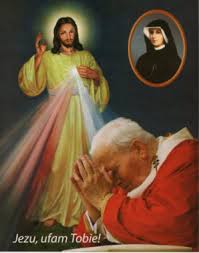
Canonizing Sister Faustina and Divine Mercy
HOMILY OF THE HOLY FATHER MASS IN ST PETER’S SQUARE FOR THE CANONIZATION OF SR MARY FAUSTINA KOWALSKA Sunday, 30 April 2000 1. “Confitemini Domino quoniam bonus, quoniam in saeculum misericordia eius”; “Give thanks to the Lord for he is good; his steadfast love endures for ever” (Ps 118: 1). So the Church sings on the Octave of[…]Continue reading→

Divine Mercy Sunday – An Echo of Every Mass
Reach out your hand and put it in my side. Do not doubt but believe’… ‘My Lord and my God!’ (Jn. 20:18)). Today is Divine Mercy Sunday, and as we celebrate the end of the Easter Octave, we contemplate the wounded side of our Saviour, the Church’s source of life. On Good Friday in the[…]Continue reading→
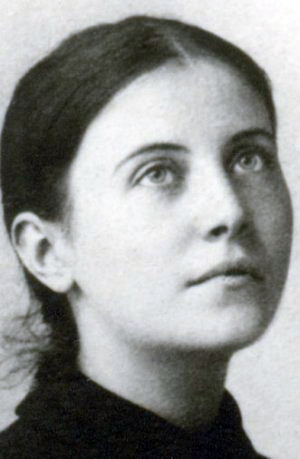
Saint Gemma Galgani
On this April 11th, in 1903 – the same year that the Italian Guiseppe Sarto was elected Pope later that summer as Pius X – a lovely, young Italian woman died, by the name of Gemma Galgani. She lived a brief life of 24 years, as did a number of other young saints, including Pier[…]Continue reading→
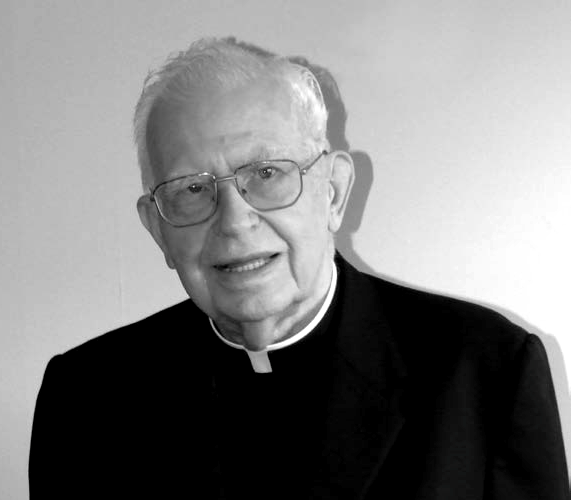
First Holy Communion: Sermon from May 16, 1943
Here is a sermon from the good old days by +Rev. Msgr. Vincent Nicholas Foy (August 14, 1915 – March 13, 2017), from 1943. Readers may recall that Pope Saint Pius X, by the decree Quam Singulari in 1910, lowered the customary age of reception of Holy Communion – after the rigours of the plague[…]Continue reading→