
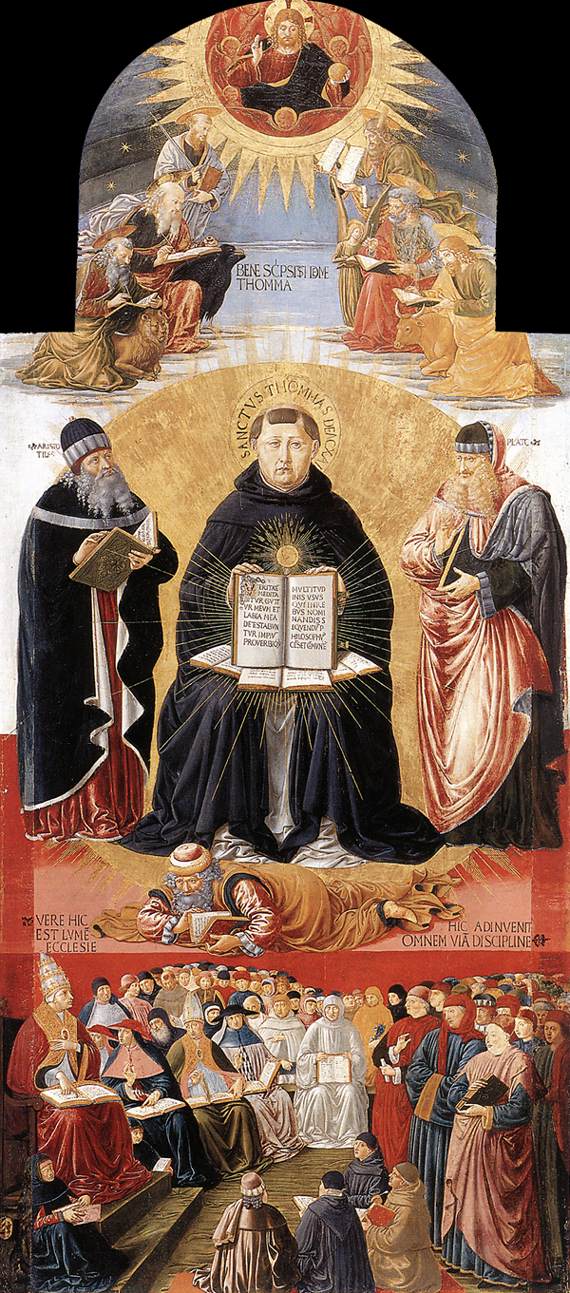
Anglicanism, Catholicism, Thomism and Ecumenism…
The greatest kindness one can render to any man consists in leading him from error to truth (Saint Thomas Aquinas, +1274)
If there is a patron saint of ecumenism, Saint Francis de Sales fits the bill, with his gentle yet firm – suaviter et fortiter – evangelization of the hardened Calvinists of Geneva. As the saint put it, one attracts more bees with an ounce of honey than a jar of vinegar.
All good, and we should be patient, charitable and kind in our dealings with our ‘separated brethren’ in Christ, cooperating in whatever good works present themselves, fellowship, even prayer in common, when fitting opportunity arises.
Yet, like Saint Francis, we should be under no illusion that the ultimate goal of the ecumenical movement is to convert them to Catholicism, which means doing what we can to bring them into the Catholic Church, with all the three bonds of unity, profession of faith, participation in the sacraments, and submission to the Magisterium in the apostolic succession. (cf., CCC, #815)
The Church does not quite put it that way, for, well, ecumenical reasons. The Vatican II decree, Unitatis Redintegratio, defines the ecumenical movement as “the initiatives and activities planned and undertaken, according to the various needs of the Church and as opportunities offer, to promote Christian unity. But we should be clear that the Catholic Church already has this unity, and, indeed, lacks none of the means of salvation, even if we may be reminded of what we have, and inspired to live by it more fully, by other religions (Protestants’ devotion to Scripture), or, more to the point, by Christians in those religions.
But the end point, may we say it again, is to make them Catholic. One cannot be saved, strictly speaking, by Anglicanism, Presbyterianism or any other Protestantism. If members of such are saved, they are saved as Catholics, in some way. Extra ecclesiam nulla salus, is a still a doctrine, even if Father Feeney’s rigorous interpretation of this was condemned. It means one must be joined to Chris by grace and charity, as flowing through His Church and sacraments. The best way – indeed, the only way revealed to us by Christ – is to belong fully to the Catholic Church. Anything else is, if we might put it so, taking your chances, barring invincible ignorance – which is to say, ignorance that one cannot overcome.
As Lumen Gentium puts it:
Whosoever, therefore, knowing (non ignorantes) that the Catholic Church was made necessary by Christ, would refuse to enter or to remain in it, could not be saved (14)
Hence, it was with some irony that I perused the article by the visiting Anglican scholar, Matthew Barrett, to the Dominican House in Washington, D.C. He seems a good and open soul, and it is heartening that he is there to delve into Saint Thomas’ doctrine with his disciples. Also, that he wants to found an Anglican house of Thomistic studies. Hmm.
But one must also wonder, for Anglicanism was not a ‘reformation’, nor is it a ‘denomination’ of Christianity, but, rather, a deformation and distortion. The Angelic doctor would have had seen right through the façade of Henry VIII’s usurpation of ‘full, supreme, universal’ spiritual power in his realm, to say nothing of the same in the temporal sphere. This Erastian error which runs right through Anglicanism, and is its spiritual principle. Its disastrous effects, from the tyrant Henry, through his daughter Elizabeth and their successors, are there for all to see. The English people wanted their old Faith, and fought for it with tooth and nail – the ‘new religion’ had to be foisted on them, by brutal force, as Eamonn Duffy proved beyond reasonable doubt. Thomas would have no time for female ‘priests’, and a female bishop would have made him blanche – and this before we get to active homosexuals. Thomas would also have predicted the heresies that have crept in – moral and doctrinal – from permission of contraception to the acceptance of any number of other fallacies.
Saint John Henry Newman also perceived all of this on the horizon, back in the 1840’s, as he was striving to find a way to stay within the religion of his family, his childhood and his beloved country. But he could not. As he put it, ‘to be deep in history is to cease to be a Protestant’. And Protestantism inherently leads to secularism, unless they return to the bosom of the One, True, holy, Catholic and Apostolic Church.
We can only hope that in this ecumenical endeavour, and his study of the Church’s theological foundations, Dr. Barrett and many others come to such a realization in the depths of their own conscience, and the scales fall from their eyes, by the grace of the good God and the intercession of Saint Paul, Saint Francis, Saint Thomas and Saint Newman and the host of heavenly witnesses. Who can resist such a cohort?
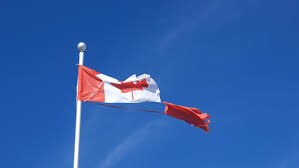
Carney’s Amoral Majority
After five defections – euphemistically described as ‘crossing the floor’ – and three by-elections, Mark Carney and his Liberals how have their coveted majority. One wonders what bowls of pottage were offered in back-room deals. In the archaic monarchical system that is the Dominion of Canada, this majority allows the newly-minted Prime Minister to rule[…]Continue reading→

Saint Kateri , Canada’s Protectress
This was the title given to Saint Kateri Tekakwitha, by Pope Benedict XVI, when he canonized her on October 28th, 2012, along with six others, in Saint Peter’ Square (she had been beatified by Pope John Paul II back in 1980). With Saint Joseph as our protector, along with the Canadian martyrs, we seem to[…]Continue reading→
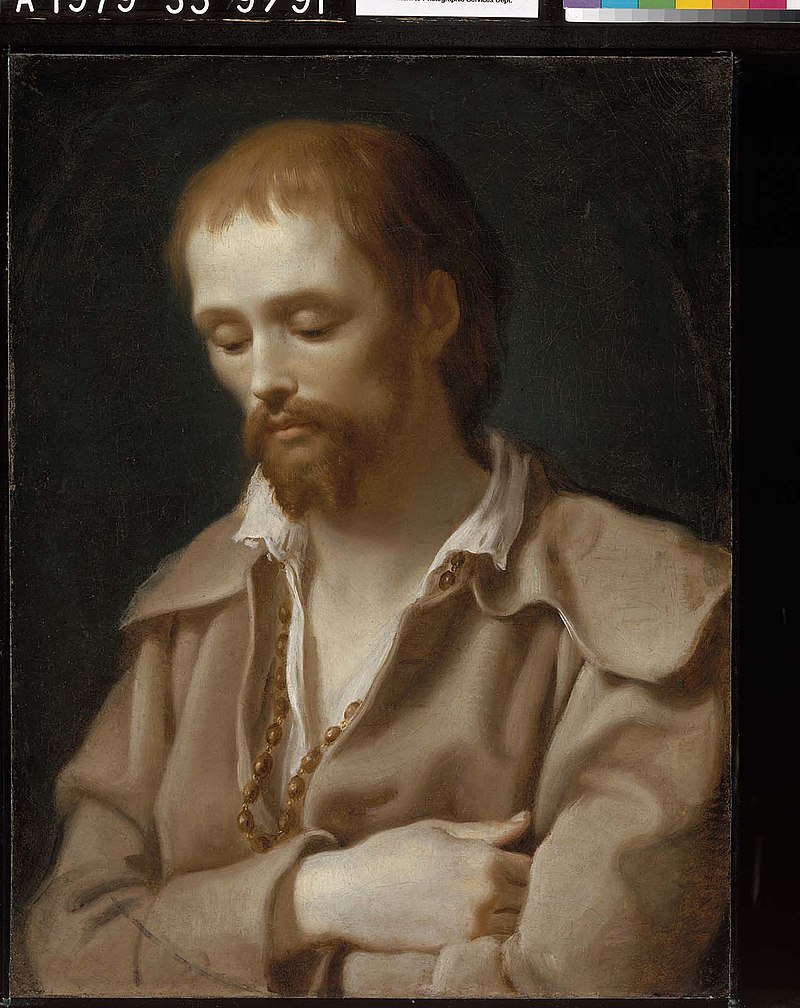
A Tale of Two Benedicts
A grace-filled Holy Week to all our readers! As we await and prepare for the Resurrection about to dawn upon us, we might keep in mind two Benedicts: Pope Emeritus Benedict XVI, requiescat in pace, elected on this day in 2005; and today’s commemoration of the mystic pilgrim, Benedict Joseph Labre, who died on this[…]Continue reading→

My Name is Bernadette
April 16th is a propitious day, for besides the anniversary of Father de Valk’s death, who founded Catholic Insight in its print form decades ago, and the commemoration of the ‘two Benedicts’, mentioned in accompanying posts, today we also recall Saint Bernadette Soubirous, the young visionary to whom the Virgin Mary appeared numerous times at[…]Continue reading→
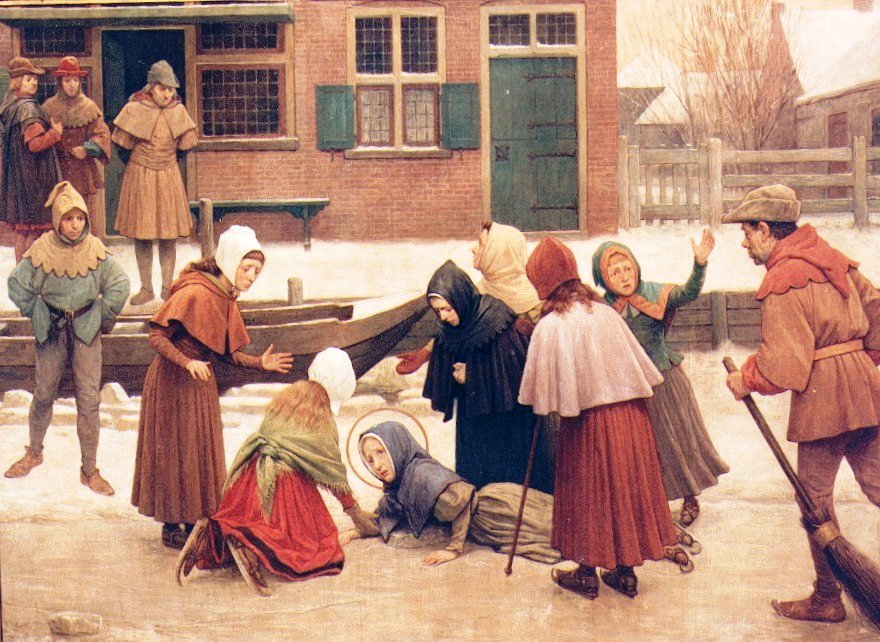
Saint Lydwina of Schiedam and Suffering Joyfully
Saint Lydwina of Schiedam (1380 – 1433) was one of the countless and glorious ‘victim souls’ in the history of the Church, those whose lives are filled with suffering, often of an unimaginable intensity, but who suffer joyfully. She was a fifteen-year old Dutch girl, out skating one day, when she fell and broke one[…]Continue reading→
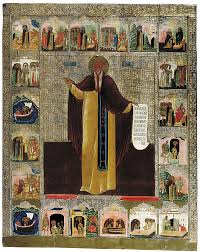
The Glorious Martyrdoms of Martin and Maximus
As we enter into Eastertide, we recall on this 13th of April Pope Saint Martin I (+655), one of the noblest, if most tragic, of the successors of Saint Peter. Born in Umbria, Italy, he was of noble lineage, with great intelligence combined with charity and love of the poor and the Church. While still[…]Continue reading→

Saint Stanislaus of Szczepanów
We celebrate Saint Stanislaus today (+ April 11, 1079), in light of this Easter Octave, a bishop and martyr who accepted the episcopacy only at the direct order of Pope Alexander II. He proved a wise and courageous leader of his flock, put to death by his own king, Boleslaus, for rebuking the monarch’s ‘immoral[…]Continue reading→
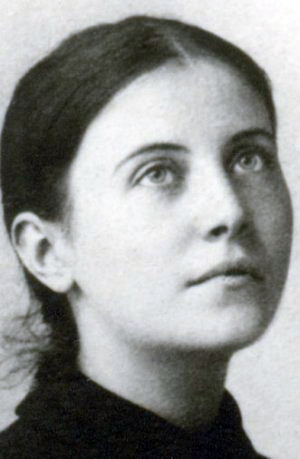
Saint Gemma Galgani
On this April 11th, in 1903 – the same year that the Italian Guiseppe Sarto was elected Pope later that summer as Pius X – a lovely, young Italian woman died, by the name of Gemma Galgani. She lived a brief life of 24 years, as did a number of other young saints, including Pier[…]Continue reading→
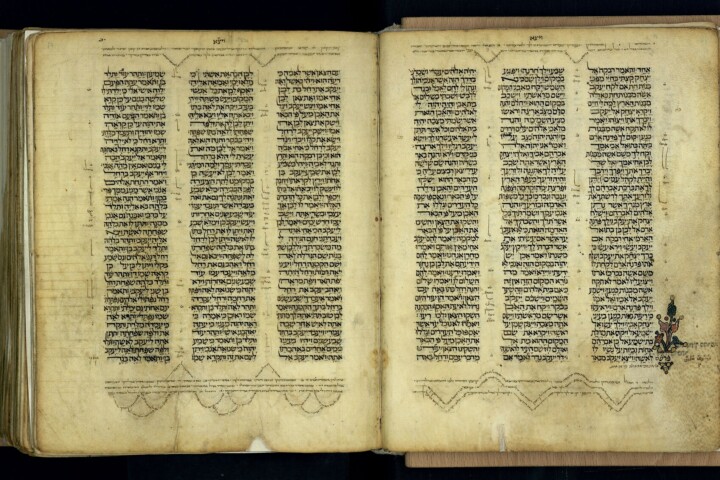
An Ideological and Improper Translation
I noticed something odd with the psalm reading at Mass the other day. Our bishops’ conference here in Canada has decreed that the Mass in English – Novus Ordo – use the ‘NRSV’, the ‘New Revised Standard Version’, an ‘updated’ translation of the original RSV, first published in 1952. This ‘new translation’ has the tendency[…]Continue reading→
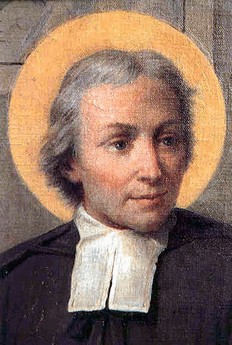
Saint Jean-Baptiste de la Salle: A Teacher for Teachers
Jean-Baptiste de la Salle (1651 – 1719), a French nobleman, ordained a priest, founded the first order in the Church’s history entirely without priests, and this came about almost by accident. I say ‘almost’, for, of course, there are no accidents with God. Destined for ordination from an early age, Jean-Baptiste never looked back, even[…]Continue reading→