
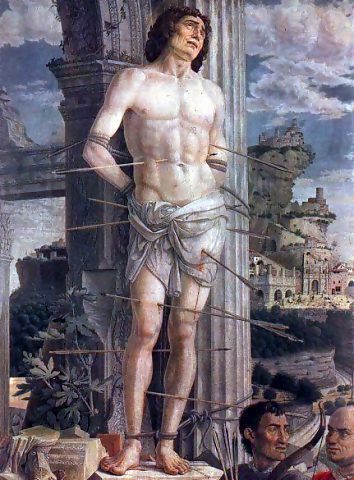
Saints Fabian and Sebastian: Doing the Holy and Perfect Will of God
I appeal to you therefore, brethren, by the mercies of God, to present your bodies as a living sacrifice, holy and acceptable to God, which is your spiritual worship. Do not be conformed to this world but be transformed by the renewal of your mind, that you may prove what is the will of God, what is good and acceptable and perfect. (Romans 12:1-2)
Pope Saint Fabian (+250) was put to death on this day in the persecution of Emperor Decius, for refusing to offer idolatrous sacrifice, and this after a rather long reign of 14 years characterized by his rather amicable relations with Caesar, which allowed the good Pontiff to set up the hierarchical structure of the Church in Rome. He also brought back the relics of Saints Pontian and Hippolytus from the mines of Sardinia, sent missionaries to Gaul, including Paris’ future patron, Saint Dionysius; and perhaps even instituted the four minor orders of porter, lector, acolyte and exorcist.
Besides all of this, Fabian is known for the manner of his being chosen as the successor of Peter. A simple layman, he went to Rome after the death of Pope Anterus, to see the man whom the nobility and clergy would choose as the next Vicar of Christ, as still happens with the crowds outside conclaves. Well, poor Fabian, for the ‘Holy Spirit’ quite literally descended upon him, a dove alighting on his head. Upon witnessing this propitious sign, the crowds began enthusiastically chanting “Fabian for Pope! Fabian for Pope!” Choosing a Pope back then had not quite been fully regulated; it was Nicholas II who restricted the vote to the cardinals in conclave in 1059, and being elected by ‘acclamation’ was still permitted until quite recently, abrogated by Pope Saint John Paul II in his revision of the laws of conclave.
However, as Pope Emeritus Benedict, Cardinal Ratzinger, once quipped, the choice of a Pope – like that of a President – is not always the one the Holy Spirit may have had in mind, which is why we offer up prayers and sacrifices during conclaves and elections, that our choice aligns with God’s choice, as we do with the rest of life.
This time, it seems that Fabian was God’s ‘holy and perfect will’, to which, we may be thankful, Fabian acquiesced, with that mysterious gift of freedom which makes us like Him. We must discern the spirits, to follow those which are of God, and our way through those that are not, always freely choosing the better part.
We also celebrate Saint Sebastian (+288) on this day, a brave and courageous Roman soldier, leader of the elite Praetorian Guard. His Christianity had remained undetected until 286, when the anti-Christian Emperor, Diocletian, enraged at his apparent betrayal, ordered Sebastian tied to a tree, and shot full of arrows until dead.
Sebastian thus suffered, looking, as one account has it, like a ‘sea urchin full of pricks’, but when a pious woman, Irene, went to bury him, found the soldier was still alive. She nursed him back to health, whereupon the emboldened Sebastian, perhaps realizing he would soon be caught again and killed – where was one to run to in the third century Roman empire? – returned to his emperor, catching him unguarded on a staircase. Instead of killing him, Sebastian boldly berated the earthly prince for his unbelief and cruelty; Diocletian had a moment, perhaps one in which he might have chosen a different and better path; but he recovered his pagan imperial senses, and ordered Sebastian clubbed to death and thrown into a sewer. The martyr’s body was recovered, and his relics now dot the Christian landscape. As readers may know, I made a long and very hot walking pilgrimage to his basilica outside Rome this past summer, visiting the catacombs underneath that go by his name, where Saint Philp Neri would often spend his nights, praying, and where he received the Holy Spirit like a ball of fire, enlarging his heart, and his charity.
Saint Sebastian is patron of soldiers, and invoked also against the plague, which would be caused, so thought the Greeks, by the god Apollo shooting ‘plague-tipped’ arrows from heaven; or perhaps because the ‘buboe’ lesions of the bubonic plague resembled arrow wounds. With the rise of superbugs, and strange viruses out of Asia and secret labs across the globe, we could use a bit of Sebastian’s help and intercession.
Deliver us from evil, indeed.
Saints Fabian and Sebastian, orate pro nobis! +
Carney’s Amoral Majority
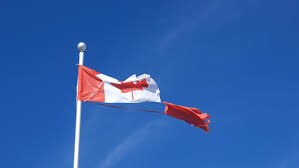
After five defections – euphemistically described as ‘crossing the floor’ – and three by-elections, Mark Carney and his Liberals how have their coveted majority. One wonders what bowls of pottage were offered in back-room deals. In the archaic monarchical system that is the Dominion of Canada, this majority allows the newly-minted Prime Minister to rule[…]Continue reading→

Saint Kateri , Canada’s Protectress
This was the title given to Saint Kateri Tekakwitha, by Pope Benedict XVI, when he canonized her on October 28th, 2012, along with six others, in Saint Peter’ Square (she had been beatified by Pope John Paul II back in 1980). With Saint Joseph as our protector, along with the Canadian martyrs, we seem to[…]Continue reading→
A Tale of Two Benedicts
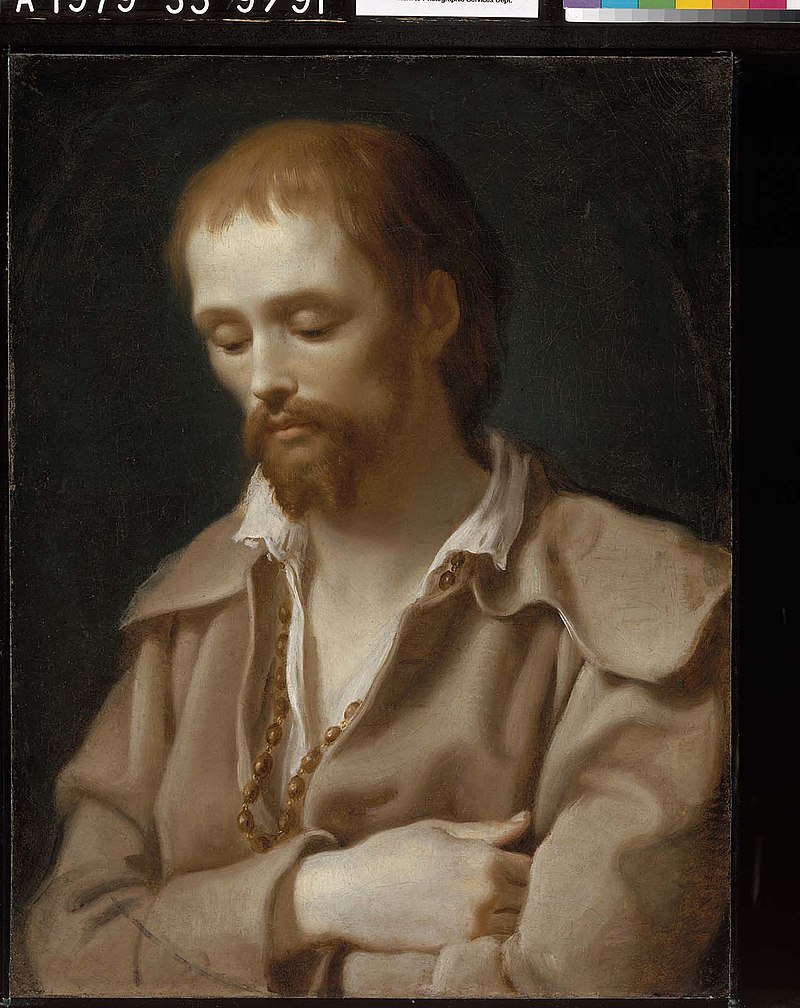
A grace-filled Holy Week to all our readers! As we await and prepare for the Resurrection about to dawn upon us, we might keep in mind two Benedicts: Pope Emeritus Benedict XVI, requiescat in pace, elected on this day in 2005; and today’s commemoration of the mystic pilgrim, Benedict Joseph Labre, who died on this[…]Continue reading→

My Name is Bernadette
April 16th is a propitious day, for besides the anniversary of Father de Valk’s death, who founded Catholic Insight in its print form decades ago, and the commemoration of the ‘two Benedicts’, mentioned in accompanying posts, today we also recall Saint Bernadette Soubirous, the young visionary to whom the Virgin Mary appeared numerous times at[…]Continue reading→
Saint Lydwina of Schiedam and Suffering Joyfully
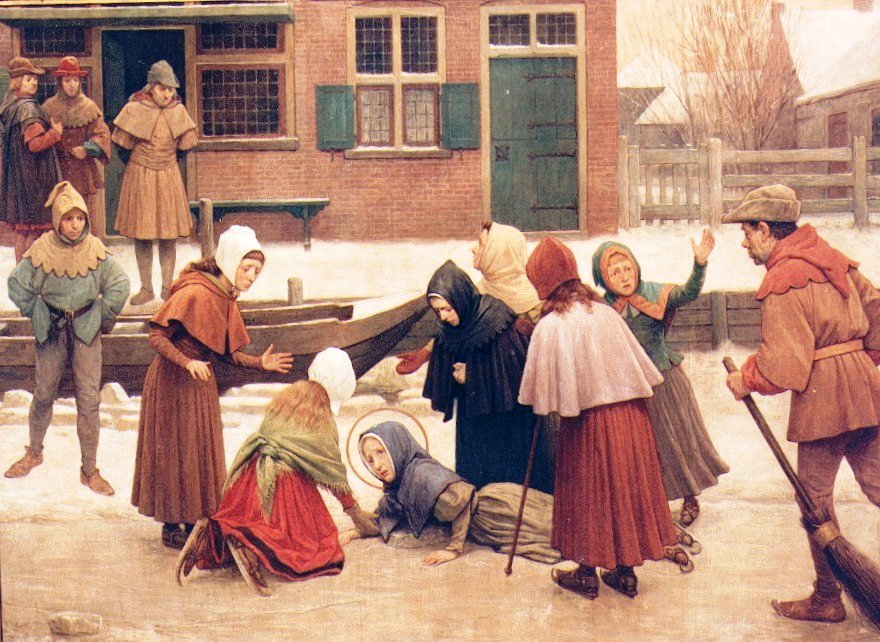
Saint Lydwina of Schiedam (1380 – 1433) was one of the countless and glorious ‘victim souls’ in the history of the Church, those whose lives are filled with suffering, often of an unimaginable intensity, but who suffer joyfully. She was a fifteen-year old Dutch girl, out skating one day, when she fell and broke one[…]Continue reading→
The Glorious Martyrdoms of Martin and Maximus
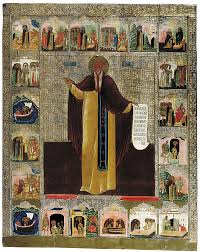
As we enter into Eastertide, we recall on this 13th of April Pope Saint Martin I (+655), one of the noblest, if most tragic, of the successors of Saint Peter. Born in Umbria, Italy, he was of noble lineage, with great intelligence combined with charity and love of the poor and the Church. While still[…]Continue reading→

Canonizing Sister Faustina and Divine Mercy
HOMILY OF THE HOLY FATHER MASS IN ST PETER’S SQUARE FOR THE CANONIZATION OF SR MARY FAUSTINA KOWALSKA Sunday, 30 April 2000 1. “Confitemini Domino quoniam bonus, quoniam in saeculum misericordia eius”; “Give thanks to the Lord for he is good; his steadfast love endures for ever” (Ps 118: 1). So the Church sings on the Octave of[…]Continue reading→

Saint Stanislaus of Szczepanów
We celebrate Saint Stanislaus today (+ April 11, 1079), in light of this Easter Octave, a bishop and martyr who accepted the episcopacy only at the direct order of Pope Alexander II. He proved a wise and courageous leader of his flock, put to death by his own king, Boleslaus, for rebuking the monarch’s ‘immoral[…]Continue reading→
Saint Gemma Galgani
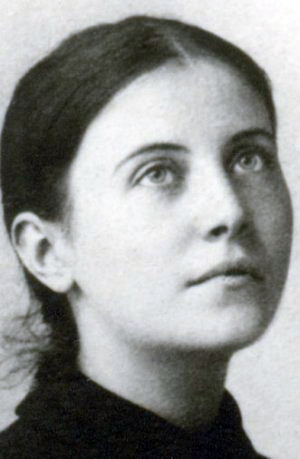
On this April 11th, in 1903 – the same year that the Italian Guiseppe Sarto was elected Pope later that summer as Pius X – a lovely, young Italian woman died, by the name of Gemma Galgani. She lived a brief life of 24 years, as did a number of other young saints, including Pier[…]Continue reading→
An Ideological and Improper Translation
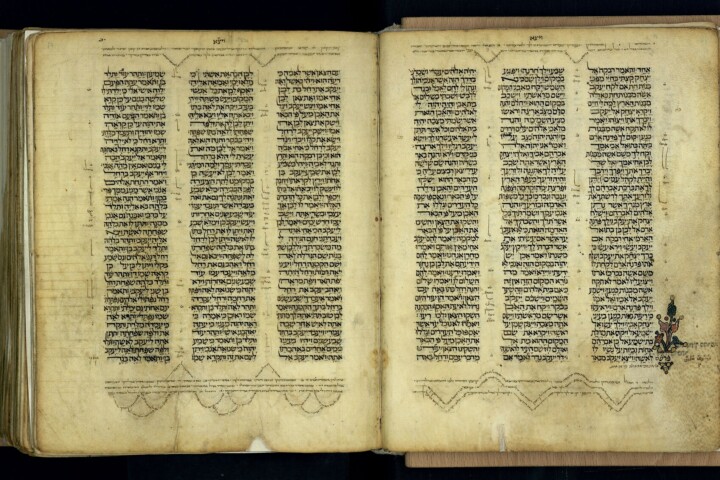
I noticed something odd with the psalm reading at Mass the other day. Our bishops’ conference here in Canada has decreed that the Mass in English – Novus Ordo – use the ‘NRSV’, the ‘New Revised Standard Version’, an ‘updated’ translation of the original RSV, first published in 1952. This ‘new translation’ has the tendency[…]Continue reading→