
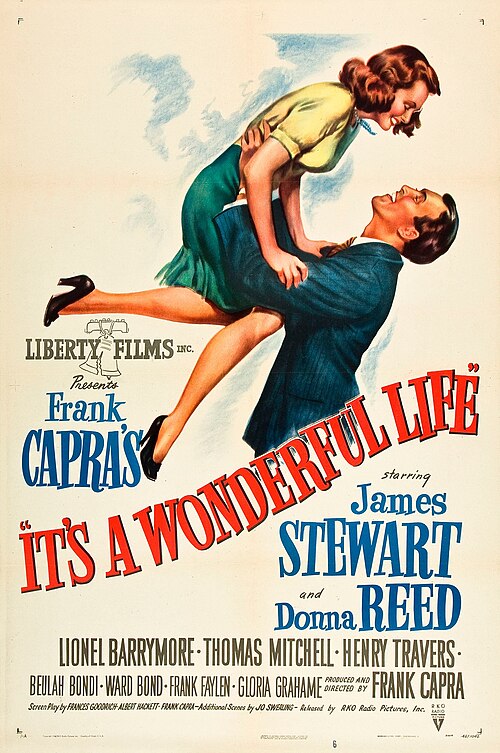
It’s Still a Wonderful Life
The quiet authority of the 1946 Christmas move It’s a Wonderful Life upon the cultural imagination cannot be overstated, and few films manage such influence while refusing every modern instinct toward superficial consolation. Consequently, its endurance across generations reveals something stubbornly human about the way meaning is discovered rather than manufactured, uncovered rather than engineered, received rather than optimized. Therefore, when Amazon Prime chose during Christmas of 2025 to excise roughly twenty-two minutes from the film, including the entire Pottersville sequence, the decision registered as more than a technical misjudgment. It functioned as a cultural tell. Something essential had been misunderstood, either through breathtaking incompetence or through a deliberate narrowing of vision shaped by legal calculation and material logic.
The justification, as subsequent legal explanations made clear, arises from the famously tangled copyright history of the film, particularly the protected status of Philip Van Doren Stern’s short story The Greatest Gift and Dimitri Tiomkin’s musical score. Consequently, by removing the Pottersville sequence most directly adapted from Stern’s narrative, distributors appear to have believed they could offer a legally safer product. From a corporate perspective, this may register as clever compliance. From a human perspective, it resembles removing a heart from a living body while continuing to insist that the person stay alive.
Without Pottersville, the narrative collapses into incoherence. George Bailey stands on the bridge at the edge of despair, prays in anguish, asks Clarence for eight thousand dollars, and then suddenly erupts into joy once money appears. The transformation reads as transactional. Despair exits, cash enters, happiness resumes. That message aligns neatly with a materialist utopia where value is measured by solvency and relief arrives through financial reversal. Amazon’s editors either failed to grasp this implication or considered it acceptable collateral damage. Either way, the result exposes a profound inability to understand why George Bailey’s life is wonderful.
Frank Capra understood something far older and far deeper. His film operates the way the great Russian novelists operate. Fyodor Dostoevsky and Aleksandr Solzhenitsyn take their readers by the hand and lead them uncomfortably deep into moral night, refusing premature consolation and sentimental shortcuts. They allow despair to speak in its own voice. They permit the abyss to feel real. Only then does light arrive, carrying weight precisely because darkness had been endured rather than bypassed.
It’s a Wonderful Life accomplishes the same task through cinematic language. The film grows steadily darker as it unfolds. Dreams collapse quietly. Responsibilities accumulate relentlessly. Sacrifice becomes routine. George’s interior life contracts under the pressure of obligation, resentment, and fear. By the time he stands on the bridge, the audience understands him intuitively. His prayer in Martini’s bar, filmed with raw vulnerability and unguarded tears from James Stewart, marks the true center of the story. Capra recognized this, which explains his insistence on capturing that moment without theatrical polish. Stewart recognized it as well, carrying unresolved trauma from World War II into a scene that feels frighteningly sincere.
Then comes Pottersville. Clarence shows George a world without his existence, and what emerges remains chilling even decades later. This alternate town functions as an inverted eschatology. Bars replace homes. Violence replaces community. Loneliness replaces friendship. Vice replaces virtue. George receives information about consequences, yet the deeper revelation concerns presence. His life mattered before any conscious success. His goodness rippled outward through acts so ordinary they rarely register as heroic.
Here the film brushes directly against Scripture. The people who sit in darkness have seen a great light; on those dwelling in a land overshadowed by death, light has arisen (Matt 4:16). That verse describes exactly what occurs within George’s soul. Light arrives through revelation rather than rescue. Salvation takes the form of sight rather than currency. The miracle occurs long before the money ever enters the scene.
This distinction explains why Amazon’s edited version feels spiritually illiterate. Secular man struggles to comprehend existence as gift. Value must be proven through outcomes. Worth must be earned through visible success. Therefore, George’s life becomes meaningful only once external validation arrives in the form of communal fundraising. The deeper truth escapes this framework entirely. George’s life carried goodness simply because he existed. His choices to act with integrity, sacrifice, and love mattered even when unseen. Divine providence operated through his very presence.
Pottersville accomplishes something far more unsettling than moral instruction. It reveals that every life participates in a web of meaning far beyond self-awareness. George receives a glimpse of what ordinarily remains hidden until the general judgment. God works constantly through ordinary acts, unnoticed decisions, and quiet fidelity. Even missed dreams become instruments within a providential design that no single life can fully comprehend from within time.
Capra, shaped by a Catholic imagination despite an unconventional relationship with the Church, understood this sacramental logic instinctively. Grace operates invisibly. Sacrifice bears fruit beyond calculation. Suffering acquires meaning through love rather than explanation. These themes pulse beneath the surface of the film from its opening prayers to its final bells. The story never promises escape from pain. It promises transfiguration of pain through faith, relationship, responsibility, and grace.
This structure explains why early audiences found the film unsettling. Released a decade after the Great Depression, the movie refused escapism. Darkness spiraled and lingered too long. Modern viewers, conditioned to rush toward resolution, often remember only the final moments. Amazon’s truncated version codifies this cultural amnesia into corporate policy.
Yet the endurance of It’s a Wonderful Life resists such reduction. Each viewing invites the same slow descent and the same hard won ascent. The light feels real because darkness had felt real first. Joy carries indescribable weight because despair and the abyss carry corresponding gravity. This structure mirrors the Christian narrative itself, where resurrection follows crucifixion and glory follows surrender.
Therefore, the title remains accurate without qualification. It truly is a wonderful life. Wonderful because existence itself participates in divine intention. Wonderful because goodness matters even when hidden. Wonderful because God works through the faithful presence of ordinary people who never escape Bedford Falls. Amazon Prime’s editors missed this point entirely, whether through negligence or calculation. The audience continues to grasp it instinctively.
It’s a Wonderful Life endures because it speaks to regions of the human soul that modern culture rarely visits with patience or honesty. Consequently, the film grants permission to feel sorrow without embarrassment and hope without naïveté, allowing viewers to inhabit both without rushing toward distraction. The emotional weight accumulates slowly, pressing upon memory, regret, deferred dreams, and quiet fidelity until the viewer recognizes himself within George Bailey’s struggle. Therefore, the experience becomes participatory rather than observational.
The film performs a gentle catechesis without slogans or didacticism. Prayer appears as last recourse rather than decorative ritual. Providence unfolds without spectacle. Grace operates through interruption rather than explanation. Accordingly, the viewer learns that faith often arrives when self-sufficiency collapses. Endurance receives dignity as a form of love rather than resignation. Consolation emerges for those whose lives feel small by external standards, since significance grows through presence, responsibility, and sacrificial continuity.
Modern man remains obsessed with metrics, immediacy, and visible success. It’s a Wonderful Life stands as a quiet rebuke. Meaning appears after patience. Despair tells lies. Light had been present all along. Those willing to endure the darkness discover and encounter this truth with the full weight of the soul.

Saint Kateri , Canada’s Protectress
This was the title given to Saint Kateri Tekakwitha, by Pope Benedict XVI, when he canonized her on October 28th, 2012, along with six others, in Saint Peter’ Square (she had been beatified by Pope John Paul II back in 1980). With Saint Joseph as our protector, along with the Canadian martyrs, we seem to[…]Continue reading→

Remembering Father Alphonse de Valk
(Today marks the sixth anniversary of the death of Father Alphonse de Valk, C.S.B., a faithful, courageous and indefatigable Basilian priest, pro-life-and-family apostle, and the founder of Catholic Insight magazine. Here is what we wrote those on his entering into eternity five years ago, as we continue to remember him in our prayers and thoughts)[…]Continue reading→

My Name is Bernadette
April 16th is a propitious day, for besides the anniversary of Father de Valk’s death, who founded Catholic Insight in its print form decades ago, and the commemoration of the ‘two Benedicts’, mentioned in accompanying posts, today we also recall Saint Bernadette Soubirous, the young visionary to whom the Virgin Mary appeared numerous times at[…]Continue reading→

Canonizing Sister Faustina and Divine Mercy
HOMILY OF THE HOLY FATHER MASS IN ST PETER’S SQUARE FOR THE CANONIZATION OF SR MARY FAUSTINA KOWALSKA Sunday, 30 April 2000 1. “Confitemini Domino quoniam bonus, quoniam in saeculum misericordia eius”; “Give thanks to the Lord for he is good; his steadfast love endures for ever” (Ps 118: 1). So the Church sings on the Octave of[…]Continue reading→

Divine Mercy Sunday – An Echo of Every Mass
Reach out your hand and put it in my side. Do not doubt but believe’… ‘My Lord and my God!’ (Jn. 20:18)). Today is Divine Mercy Sunday, and as we celebrate the end of the Easter Octave, we contemplate the wounded side of our Saviour, the Church’s source of life. On Good Friday in the[…]Continue reading→

Saint Stanislaus of Szczepanów
We celebrate Saint Stanislaus today (+ April 11, 1079), in light of this Easter Octave, a bishop and martyr who accepted the episcopacy only at the direct order of Pope Alexander II. He proved a wise and courageous leader of his flock, put to death by his own king, Boleslaus, for rebuking the monarch’s ‘immoral[…]Continue reading→

First Holy Communion: Sermon from May 16, 1943
Here is a sermon from the good old days by +Rev. Msgr. Vincent Nicholas Foy (August 14, 1915 – March 13, 2017), from 1943. Readers may recall that Pope Saint Pius X, by the decree Quam Singulari in 1910, lowered the customary age of reception of Holy Communion – after the rigours of the plague[…]Continue reading→

In the Glorious Light of Easter, Alleluia!
Set your minds on things that are above, not on things that are on earth, for you have died, and your life is hidden with Christ in God. When Christ who is your life is revealed, then you also will be revealed with him in glory (Col. 3:3-4). The Resurrection of Our Lord and Saviour[…]Continue reading→

An Ancient Homily for Holy Saturday
The time between Good Friday and Easter Sunday is one of waiting, in silence, as the world wonders – anticipates – what will happen, after the death of Christ. We re-live this time each year in the anamnesis of our liturgy, and in turn look forward to the glorious re-creation of all things at the[…]Continue reading→

Europe’s Long Descent
(As we meditate on this day on Christ’s burial, and His descent into hell, it is fitting to ponder here with contributor Peter Marcus how the world seems to be heading there as well. The difference is that, although God cannot ‘redeem’ hell, nor those therein, He can and did redeem the world. There is[…]Continue reading→