

Saint John the Beloved, Seer of Patmos
BENEDICT XVI
GENERAL AUDIENCE
Paul VI Audience Hall
Wednesday, 23 August 2006
John, the Seer of Patmos
Dear Brothers and Sisters,
In the last Catechesis we had reached the meditation on the figure of the Apostle John. We had first sought to look at all that can be known of his life. Then, in a second Catechesis, we meditated on the central content of his Gospel and his Letters: charity, love. And today we are still concerned with the figure of John, this time to examine the Seer of the Book of Revelation. And let us immediately note that while neither the Fourth Gospel nor the Letters attributed to the Apostle ever bear his name, the Book of Revelation makes at least four references to it (cf. 1: 1, 4, 9; 22: 8).
It is obvious, on the one hand, that the author had no reason not to mention his own name, and on the other, that he knew his first readers would be able to precisely identify him. We know, moreover, that in the third century, scholars were already disputing the true factual identity of John of the “Apocalypse”.
For the sake of convenience we could also call him “the Seer of Patmos” because he is linked to the name of this island in the Aegean See where, according to his own autobiographical account, he was, as it were, deported “on account of the word of God and the testimony of Jesus” (Rv 1: 9).
It was on Patmos itself, “on the Lord’s Day… caught up in ecstasy” (Rv 1: 10), that John had a grandiose vision and heard extraordinary messages that were to have a strong influence on the history of the Church and of entire Western culture.
For example, from the title of his book – Apocalypse, Revelation – the words “apocalypse, apocalyptic” were introduced into our language and, although inaccurately, they call to mind the idea of an incumbent catastrophe.
The Book should be understood against the backdrop of the dramatic experiences of the seven Churches of Asia (Ephesus, Smyrna, Pergamum, Thyatira, Sardis, Philadelphia, Laodicea) which had to face serious difficulties at the end of the first century – persecutions and also inner tensions – in their witness to Christ.
John addresses them, showing acute pastoral sensitivity to the persecuted Christians, whom he exhorts to be steadfast in the faith and not to identify with the pagan world. His purpose is constituted once and for all by the revelation, starting with the death and Resurrection of Christ, of the meaning of human history.
The first and fundamental vision of John, in fact, concerns the figure of the Lamb who is slain yet standing (cf. Rv 5: 6), and is placed before the throne on which God himself is already seated.
By saying this, John wants first of all to tell us two things: the first is that although Jesus was killed with an act of violence, instead of falling heavily to the ground, he paradoxically stands very firmly on his own feet because, with the Resurrection, he overcame death once and for all.
The other thing is that Jesus himself, precisely because he died and was raised, henceforth fully shares in the kingship and saving power of the Father. This is the fundamental vision.
On this earth, Jesus, the Son of God, is a defenceless, wounded and dead Lamb. Yet he stands up straight, on his feet, before God’s throne and shares in the divine power. He has the history of the world in his hands.
Thus, the Seer wants to tell us: trust in Jesus, do not be afraid of the opposing powers, of persecution! The wounded and dead Lamb is victorious! Follow the Lamb Jesus, entrust yourselves to Jesus, take his path! Even if in this world he is only a Lamb who appears weak, it is he who triumphs!
(To continue reading, please see here)

Saint Kateri , Canada’s Protectress
This was the title given to Saint Kateri Tekakwitha, by Pope Benedict XVI, when he canonized her on October 28th, 2012, along with six others, in Saint Peter’ Square (she had been beatified by Pope John Paul II back in 1980). With Saint Joseph as our protector, along with the Canadian martyrs, we seem to[…]Continue reading→
A Closed, Unsustainable, Descending Loop
As a follow-up to my thoughts on Payette’s payout, here be a stark image of where are here in Canada. As the graph shows in, well, graphic terms, since 2025, the public sector has contributed to 95.5% of economic growth. The private sector – which funds the public sector, or is supposed to – has[…]Continue reading→
A Tale of Two Benedicts
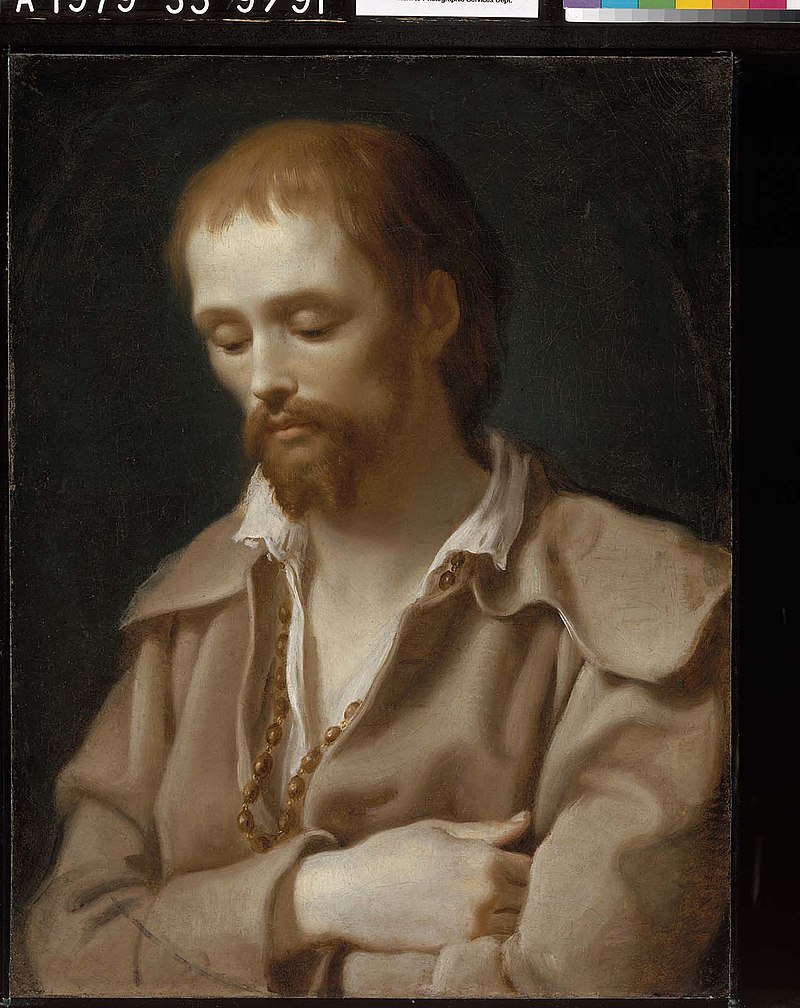
A grace-filled Holy Week to all our readers! As we await and prepare for the Resurrection about to dawn upon us, we might keep in mind two Benedicts: Pope Emeritus Benedict XVI, requiescat in pace, elected on this day in 2005; and today’s commemoration of the mystic pilgrim, Benedict Joseph Labre, who died on this[…]Continue reading→

My Name is Bernadette
April 16th is a propitious day, for besides the anniversary of Father de Valk’s death, who founded Catholic Insight in its print form decades ago, and the commemoration of the ‘two Benedicts’, mentioned in accompanying posts, today we also recall Saint Bernadette Soubirous, the young visionary to whom the Virgin Mary appeared numerous times at[…]Continue reading→
Presidential Pardon of Weronika Krawczyk
As a good news, follow-up to our story from Poland, of the persecution of Weronika Krawczyk for her pro-life views, we heard that she has been granted a presidential pardon. One might still wonder why one needs a presidential pardon for simply holding the long-held belief that the child within the womb is a child,[…]Continue reading→
Saint Lydwina of Schiedam and Suffering Joyfully
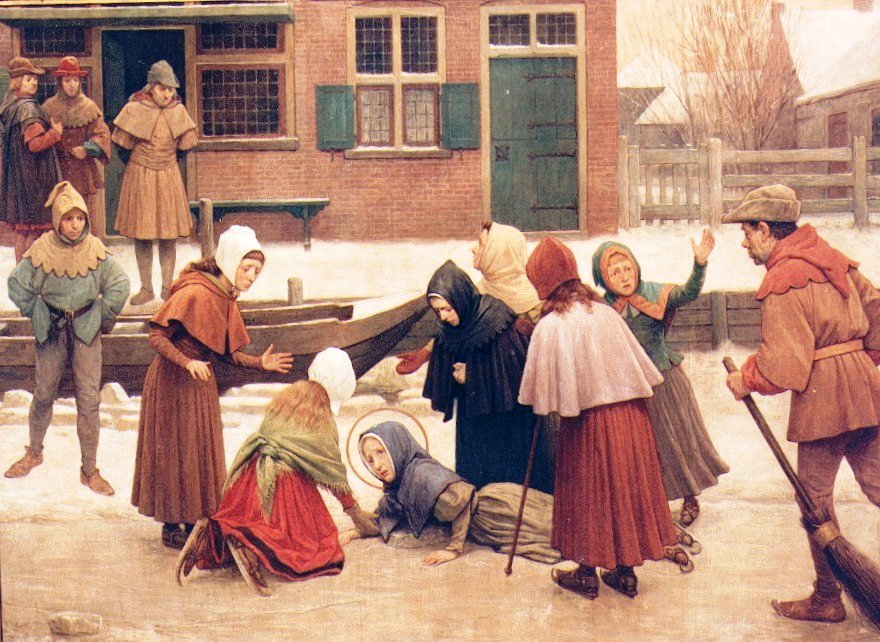
Saint Lydwina of Schiedam (1380 – 1433) was one of the countless and glorious ‘victim souls’ in the history of the Church, those whose lives are filled with suffering, often of an unimaginable intensity, but who suffer joyfully. She was a fifteen-year old Dutch girl, out skating one day, when she fell and broke one[…]Continue reading→
The Glorious Martyrdoms of Martin and Maximus
As we enter into Eastertide, we recall on this 13th of April Pope Saint Martin I (+655), one of the noblest, if most tragic, of the successors of Saint Peter. Born in Umbria, Italy, he was of noble lineage, with great intelligence combined with charity and love of the poor and the Church. While still[…]Continue reading→

Canonizing Sister Faustina and Divine Mercy
HOMILY OF THE HOLY FATHER MASS IN ST PETER’S SQUARE FOR THE CANONIZATION OF SR MARY FAUSTINA KOWALSKA Sunday, 30 April 2000 1. “Confitemini Domino quoniam bonus, quoniam in saeculum misericordia eius”; “Give thanks to the Lord for he is good; his steadfast love endures for ever” (Ps 118: 1). So the Church sings on the Octave of[…]Continue reading→
Pope Leo and a Rosary for Peace
Pope Leo XIV has asked Catholics across the world to join him in a Rosary for peace today, at 18:00 Rome time (6 pm), which would be noon from where I write (EST). If you are able, whether at that time or another, and in whatever way you pray, to join in intercession with the[…]Continue reading→
Payette’s Payout
I was glancing through some headlines, and noticed a mention of Julie Payette – engineer and astronaut and sometime the Queen’s representative in Canada – which brought back vague memories. She was appointed Governor-General by Justin Trudeau in 2017. Ms. Payette resigned in 2021, amidst claims that she created a ‘toxic work environment’, with allegations[…]Continue reading→