
Silent Night, of Joy and Peace Amidst the Tumult
The beloved hymn Silent Night was first performed on Christmas Eve, 1818, fittingly at Saint Nicholas parish in Oberndorf in what was then the Austrian empire. The music was composed by the organist and schoolmaster Franz Xaver Gruber, and the words by Father Joseph Mohr, the parish priest, who had penned the six stanzas, in the German original, as a poem.
There is a providential story to this endearing and enduring song. After a flood, the parish organ as unusable, so Gruber quickly composed a melody that could be played on guitar, fitting the notes to Father Mohr’s poem. The German words that seemed inspired, more explicitly Catholic and sacramental than the three verses we have in English – which Mark Steyn recounts in his inimitable way, and well worth a listen while you’re cleaning up or wrapping up in preparation for the great feast.
The song brought joy and peace to many hearts in that brutal and cold year 1818, which finally saw the end to the seemingly endless and ruthless Napoleonic Wars, which had followed hot upon the heels of the demonic fury of the French Revolution. Stille Nacht quickly became a Christmas classic, translated into dozens of languages, and performed by all sorts of artists in all sorts of styles, including the classic by Bing Crosby:
But, as with most things, the simplest versions are the most true to its essence and its origin:
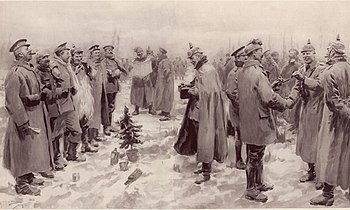
There is the poignant story that a century later, in the midst of the carnage of the trenches in World War I, on Christmas Eve of 1914 a few months after the hostilities began, – with already tens of thousands killed and maimed – the soldiers stopped, and began singing this hymn, and others joined in. They cautiously clambered out of their trenches, into the middle of the desolation of No Man’s Land, exchanging chocolate, cigarettes and what conversation they could muster. As the British soldiers commented, ‘If we had been left to ourselves, I don’t think another shot would have been fired’.
The officers would have none of it, and one of the German soldiers who most agreed with the warmongers, and most opposed to the brief truce, was a young corporal named Adolf Hitler. ‘Have you no German sense of honour?’ he was reported to have growled. All those soldiers who had shared that brief moment of peace had to be taken away from the front, for, regardless of threats, they to a man refused to fight each other.
I wonder how this applies to our modern hostilities across this turbulent earth. So many make caricatures of the ‘enemy’, propaganda looms large, metastasized by the internet’s amplification; motives are imputed or imagined, money and minerals at the root of so much of it, the moral basis of past wars lost in the moral morass in which we find ourselves. Who really is the ‘enemy’? What really are we fighting for?
Homo lupus homini, ‘man is a wolf to Man’, as poet Terence had it, but it need not be so. Love – not mushy feel-good subjective emotionalism, which often ends up in wolf-like behaviour – but rather a strong, calm and virile willing the good of the other – is the message of Christmas, even at the cost of great sacrifice.
So sing the silent and holy hymn together this evening with your loved ones, on what instruments you can find, or a capella, and render glory to God on high. There is great joy and unity in music, the universal language, even, as Shakespeare would have it, the very food of love.
And we here at Catholic Insight wish a very holy, joyous and merry Christmas to one and all.
Carney’s Amoral Majority
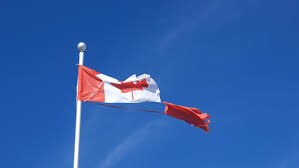
After five defections – euphemistically described as ‘crossing the floor’ – and three by-elections, Mark Carney and his Liberals how have their coveted majority. One wonders what bowls of pottage were offered in back-room deals. In the archaic monarchical system that is the Dominion of Canada, this majority allows the newly-minted Prime Minister to rule[…]Continue reading→

Saint Kateri , Canada’s Protectress
This was the title given to Saint Kateri Tekakwitha, by Pope Benedict XVI, when he canonized her on October 28th, 2012, along with six others, in Saint Peter’ Square (she had been beatified by Pope John Paul II back in 1980). With Saint Joseph as our protector, along with the Canadian martyrs, we seem to[…]Continue reading→
A Tale of Two Benedicts
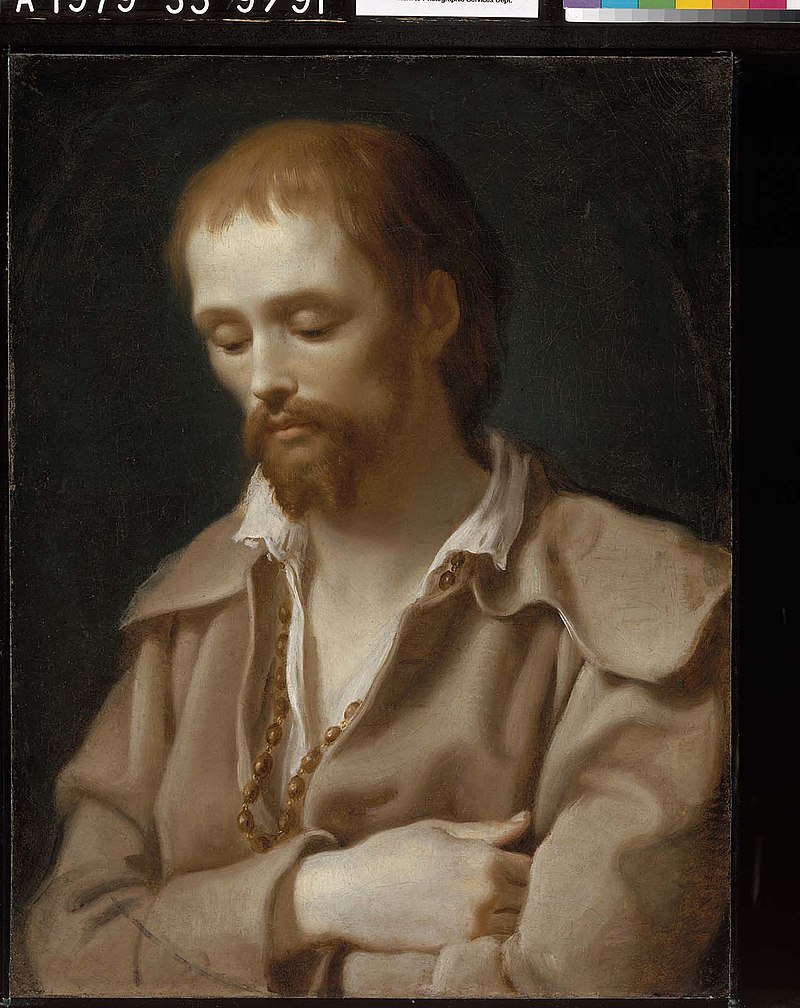
A grace-filled Holy Week to all our readers! As we await and prepare for the Resurrection about to dawn upon us, we might keep in mind two Benedicts: Pope Emeritus Benedict XVI, requiescat in pace, elected on this day in 2005; and today’s commemoration of the mystic pilgrim, Benedict Joseph Labre, who died on this[…]Continue reading→

My Name is Bernadette
April 16th is a propitious day, for besides the anniversary of Father de Valk’s death, who founded Catholic Insight in its print form decades ago, and the commemoration of the ‘two Benedicts’, mentioned in accompanying posts, today we also recall Saint Bernadette Soubirous, the young visionary to whom the Virgin Mary appeared numerous times at[…]Continue reading→
Saint Lydwina of Schiedam and Suffering Joyfully
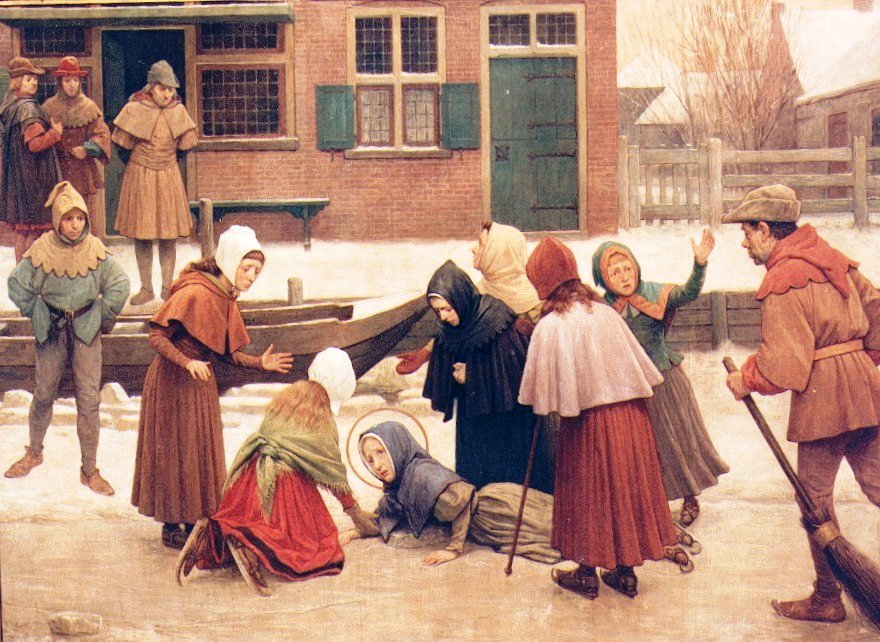
Saint Lydwina of Schiedam (1380 – 1433) was one of the countless and glorious ‘victim souls’ in the history of the Church, those whose lives are filled with suffering, often of an unimaginable intensity, but who suffer joyfully. She was a fifteen-year old Dutch girl, out skating one day, when she fell and broke one[…]Continue reading→
The Glorious Martyrdoms of Martin and Maximus
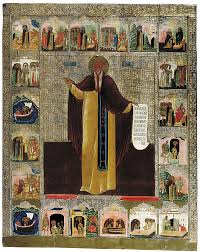
As we enter into Eastertide, we recall on this 13th of April Pope Saint Martin I (+655), one of the noblest, if most tragic, of the successors of Saint Peter. Born in Umbria, Italy, he was of noble lineage, with great intelligence combined with charity and love of the poor and the Church. While still[…]Continue reading→

Saint Stanislaus of Szczepanów
We celebrate Saint Stanislaus today (+ April 11, 1079), in light of this Easter Octave, a bishop and martyr who accepted the episcopacy only at the direct order of Pope Alexander II. He proved a wise and courageous leader of his flock, put to death by his own king, Boleslaus, for rebuking the monarch’s ‘immoral[…]Continue reading→
Saint Gemma Galgani
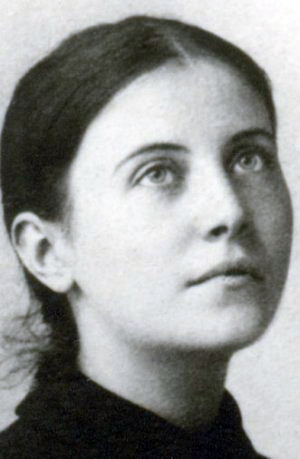
On this April 11th, in 1903 – the same year that the Italian Guiseppe Sarto was elected Pope later that summer as Pius X – a lovely, young Italian woman died, by the name of Gemma Galgani. She lived a brief life of 24 years, as did a number of other young saints, including Pier[…]Continue reading→
An Ideological and Improper Translation
I noticed something odd with the psalm reading at Mass the other day. Our bishops’ conference here in Canada has decreed that the Mass in English – Novus Ordo – use the ‘NRSV’, the ‘New Revised Standard Version’, an ‘updated’ translation of the original RSV, first published in 1952. This ‘new translation’ has the tendency[…]Continue reading→
Saint Jean-Baptiste de la Salle: A Teacher for Teachers
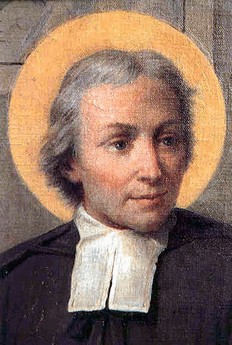
Jean-Baptiste de la Salle (1651 – 1719), a French nobleman, ordained a priest, founded the first order in the Church’s history entirely without priests, and this came about almost by accident. I say ‘almost’, for, of course, there are no accidents with God. Destined for ordination from an early age, Jean-Baptiste never looked back, even[…]Continue reading→