
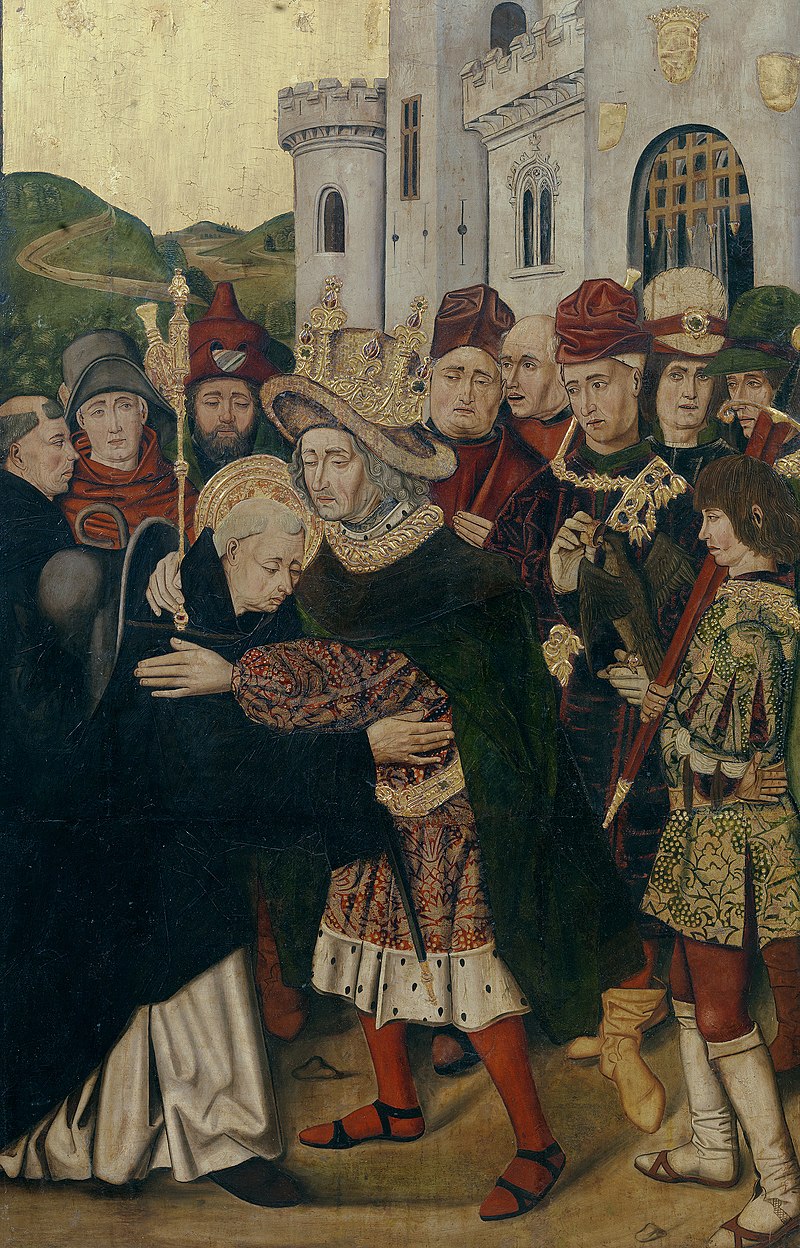
Saint Dominic of Silos and His Chanting Monks
While we’re on the topic of chant with the Alma Redemptoris, this December 20th also marks the commemoration of Saint Dominic of Silos who died on this day in 1073, at the monastery he had founded in the southern part of northern Spain. His early life was spent as a shepherd, which seems a theme for saints throughout the ages. Witness the seers of Fatima tending their flock when Our Lady appeared quite literally out of the blue. Tending sheep is by its nature a contemplative life, leaving much room in the soul for God, Who speaks in the silence of our hearts.
Dominic had some natural gifts, or gifts of grace, for soon after he entered the Benedictine abbey of San Milan, he was ordained a priest, chosen master of novices and then prior. The monks went into exile, however, after the king, Garcia Sanchez III of Navarre, tried to seize some of their property. Dominic led a hardy band of six monks to the monastery of San Sebastian at Silos, which was in a sorry state, but they had the protection of King Ferdinand I of Leon.
As a testimony to his willpower and charisma, elevated by the grace of God, Dominic led his brethren in transforming the monastery and community into a thriving centre – spiritually and economically – of Mozarabic liturgy, chanting and praying the Divine Office, and supporting themselves and the surrounding poor by their work and craftsmanship, in copying manuscripts in beautiful Visigothic script.
They also fashioned objects in gold and silver, using the funds to ransom captives from the Moors – hence, Dominic’s patronage of those imprisoned and held in bondage.
Abbot Dominic was also known as a healer, and people flocked to him from all around for their spiritual and physical maladies. A century after his death, Dominic of Silos – as he came to be known – appeared in a vision to Blessed Joan of Aza, as she prayed at his shrine that she might conceive a child. Her request was granted, and she named her boy after the saint. This second and more famous Dominic – Guzman – would go on to found the Dominican Order – officially, the Ordo Praedicatorum – which led to the panoply of their own saints, including Albert the Great and Thomas Aquinas, and the Summa – and so it goes in the glorious interconnectedness of God’s marvelous providence.
There was a custom that the staff of Dominic of Silos would be brought to the queens of Spain during labour, to intercede for a safe and healthy birth. This was, sadly, discontinued in 1931 when the God-less communists came to power, leading to the bloody civil war, and the murder and violation of monks, nuns and priests, and the pillage and destruction of churches, convents and monasteries across the land.
The monastery at Silos survived, and still flourishes a millennium on, and the monks have garnered some fame for their recordings of Gregorian Chant, which they have sung for these past thousand years. One can only wonder at the graces flowing therefrom, which is likely part of the reason the world is still standing. Here is a sample, in honour of Saint Dominic of Silos, and may he pray for us all in these latter days of Advent, as we prepare for the birth of our Saviour:

Carney’s Amoral Majority
After five defections – euphemistically described as ‘crossing the floor’ – and three by-elections, Mark Carney and his Liberals how have their coveted majority. One wonders what bowls of pottage were offered in back-room deals. In the archaic monarchical system that is the Dominion of Canada, this majority allows the newly-minted Prime Minister to rule[…]Continue reading→

Saint Kateri , Canada’s Protectress
This was the title given to Saint Kateri Tekakwitha, by Pope Benedict XVI, when he canonized her on October 28th, 2012, along with six others, in Saint Peter’ Square (she had been beatified by Pope John Paul II back in 1980). With Saint Joseph as our protector, along with the Canadian martyrs, we seem to[…]Continue reading→
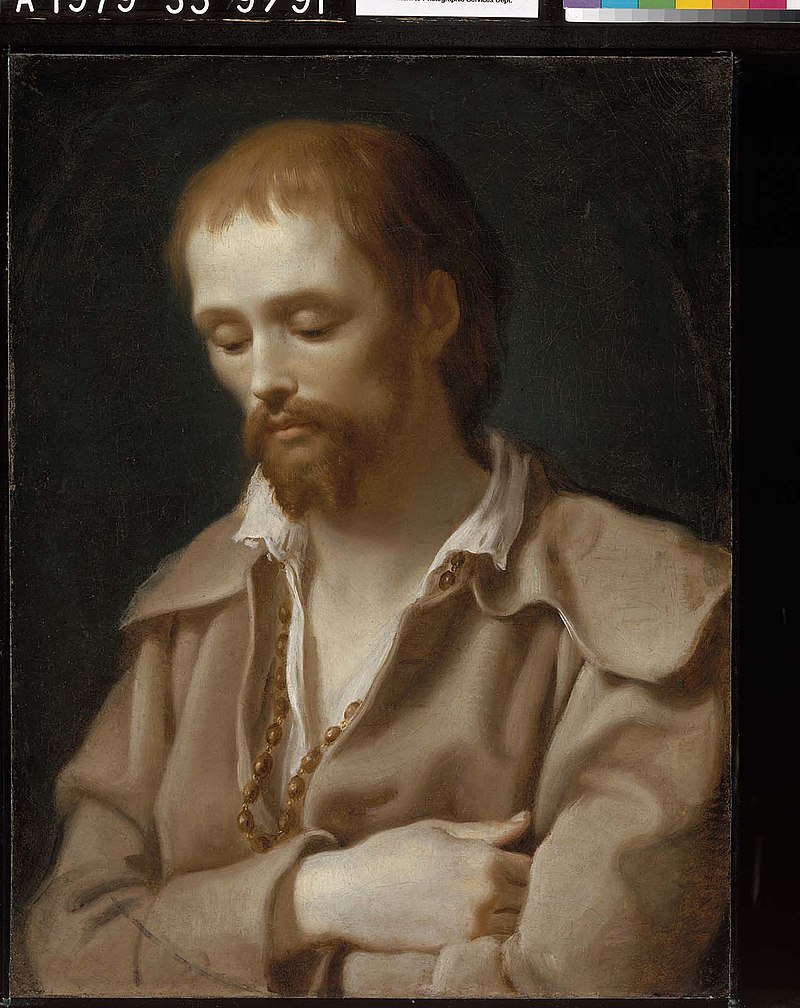
A Tale of Two Benedicts
A grace-filled Holy Week to all our readers! As we await and prepare for the Resurrection about to dawn upon us, we might keep in mind two Benedicts: Pope Emeritus Benedict XVI, requiescat in pace, elected on this day in 2005; and today’s commemoration of the mystic pilgrim, Benedict Joseph Labre, who died on this[…]Continue reading→

My Name is Bernadette
April 16th is a propitious day, for besides the anniversary of Father de Valk’s death, who founded Catholic Insight in its print form decades ago, and the commemoration of the ‘two Benedicts’, mentioned in accompanying posts, today we also recall Saint Bernadette Soubirous, the young visionary to whom the Virgin Mary appeared numerous times at[…]Continue reading→
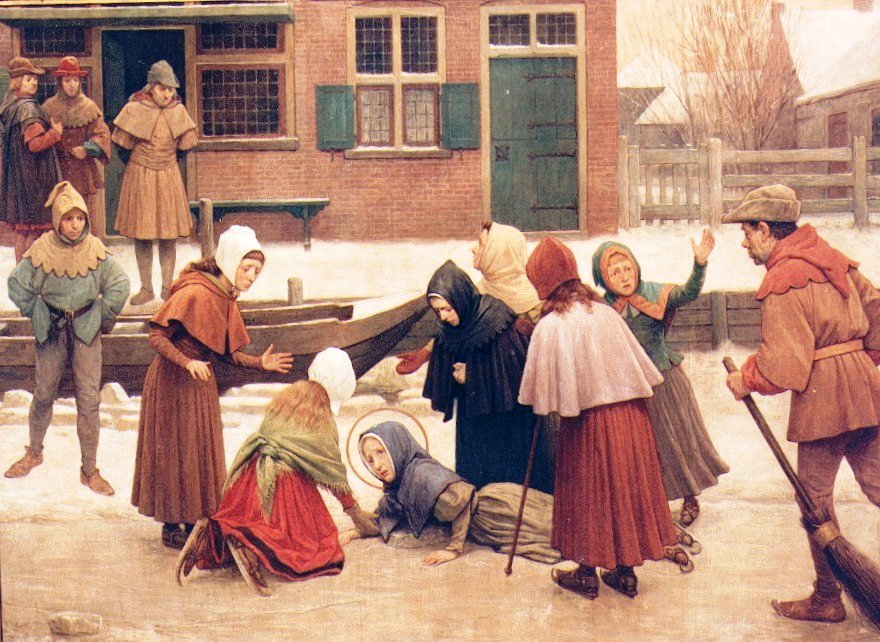
Saint Lydwina of Schiedam and Suffering Joyfully
Saint Lydwina of Schiedam (1380 – 1433) was one of the countless and glorious ‘victim souls’ in the history of the Church, those whose lives are filled with suffering, often of an unimaginable intensity, but who suffer joyfully. She was a fifteen-year old Dutch girl, out skating one day, when she fell and broke one[…]Continue reading→
The Glorious Martyrdoms of Martin and Maximus
As we enter into Eastertide, we recall on this 13th of April Pope Saint Martin I (+655), one of the noblest, if most tragic, of the successors of Saint Peter. Born in Umbria, Italy, he was of noble lineage, with great intelligence combined with charity and love of the poor and the Church. While still[…]Continue reading→

Canonizing Sister Faustina and Divine Mercy
HOMILY OF THE HOLY FATHER MASS IN ST PETER’S SQUARE FOR THE CANONIZATION OF SR MARY FAUSTINA KOWALSKA Sunday, 30 April 2000 1. “Confitemini Domino quoniam bonus, quoniam in saeculum misericordia eius”; “Give thanks to the Lord for he is good; his steadfast love endures for ever” (Ps 118: 1). So the Church sings on the Octave of[…]Continue reading→

Saint Stanislaus of Szczepanów
We celebrate Saint Stanislaus today (+ April 11, 1079), in light of this Easter Octave, a bishop and martyr who accepted the episcopacy only at the direct order of Pope Alexander II. He proved a wise and courageous leader of his flock, put to death by his own king, Boleslaus, for rebuking the monarch’s ‘immoral[…]Continue reading→
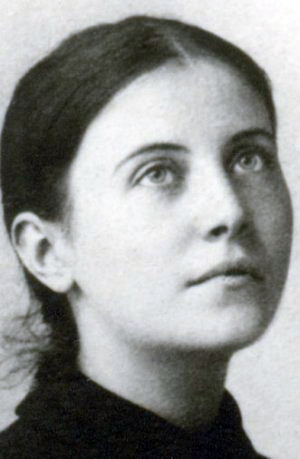
Saint Gemma Galgani
On this April 11th, in 1903 – the same year that the Italian Guiseppe Sarto was elected Pope later that summer as Pius X – a lovely, young Italian woman died, by the name of Gemma Galgani. She lived a brief life of 24 years, as did a number of other young saints, including Pier[…]Continue reading→
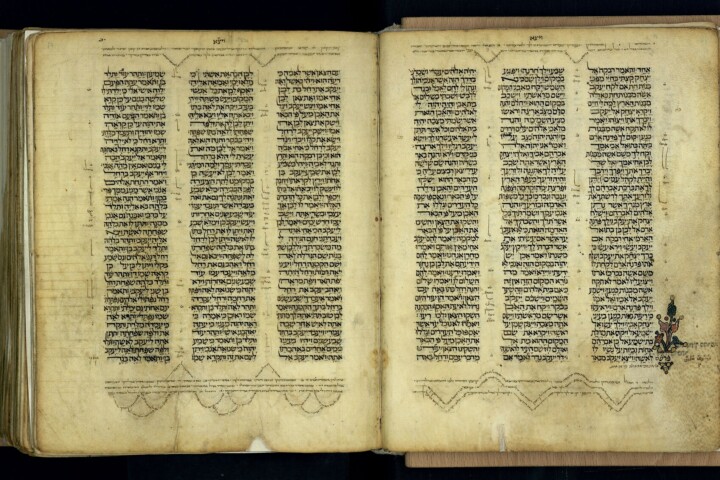
An Ideological and Improper Translation
I noticed something odd with the psalm reading at Mass the other day. Our bishops’ conference here in Canada has decreed that the Mass in English – Novus Ordo – use the ‘NRSV’, the ‘New Revised Standard Version’, an ‘updated’ translation of the original RSV, first published in 1952. This ‘new translation’ has the tendency[…]Continue reading→