
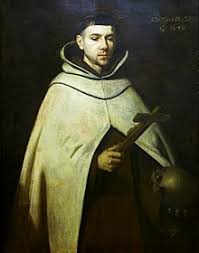
Pope Benedict Reflects on Saint John of the Cross
BENEDICT XVI
GENERAL AUDIENCE
Paul VI Audience Hall
Wednesday, 16 February 2011
[Video]
Saint John of the Cross
Dear Brothers and Sisters,
Two weeks ago I presented the figure of the great Spanish mystic, Teresa of Jesus. Today I would like talk about another important saint of that country, a spiritual friend of St Teresa, the reformer, with her, of the Carmelite religious family: St John of the Cross. He was proclaimed a Doctor of the Church by Pope Pius XI in 1926 and is traditionally known as Doctor mysticus, “Mystical Doctor”.
John of the Cross was born in 1542 in the small village of Fontiveros, near Avila in Old Castille, to Gonzalo de Yepes and Catalina Alvarez. The family was very poor because his father, Gonzalo, from a noble family of Toledo, had been thrown out of his home and disowned for marrying Catalina, a humble silk weaver.
Having lost his father at a tender age, when John was nine he moved with his mother and his brother Francisco to Medina del Campo, not far from Valladolid, a commercial and cultural centre. Here he attended the Colegio de los Doctrinos, carrying out in addition several humble tasks for the sisters of the Church-Convent of the Maddalena. Later, given his human qualities and his academic results, he was admitted first as a male nurse to the Hospital of the Conception, then to the recently founded Jesuit College at Medina del Campo.
He entered the College at the age of 18 and studied the humanities, rhetoric and classical languages for three years. At the end of his formation he had a clear perception of his vocation: the religious life, and, among the many orders present in Medina, he felt called to Carmel.
In the summer of 1563 he began his novitiate with the Carmelites in the town, taking the religious name of Juan de Santo Matía. The following year he went to the prestigious University of Salamanca, where he studied the humanities and philosophy for three years.
He was ordained a priest in 1567 and returned to Medina del Campo to celebrate his first Mass surrounded by his family’s love. It was precisely here that John and Teresa of Jesus first met. The meeting was crucial for them both. Teresa explained to him her plan for reforming Carmel, including the male branch of the Order, and suggested to John that he support it “for the greater glory of God”. The young priest was so fascinated by Teresa’s ideas that he became a great champion of her project.
For several months they worked together, sharing ideals and proposals aiming to inaugurate the first house of Discalced Carmelites as soon as possible. It was opened on 28 December 1568 at Duruelo in a remote part of the Province of Avila.
This first reformed male community consisted of John and three companions. In renewing their religious profession in accordance with the primitive Rule, each of the four took a new name: it was from this time that John called himself “of the Cross”, as he came to be known subsequently throughout the world.
At the end of 1572, at St Teresa’s request, he became confessor and vicar of the Monastery of the Incarnation in Avila where Teresa of Jesus was prioress. These were years of close collaboration and spiritual friendship which enriched both. The most important Teresian works and John’s first writings date back to this period.
Promoting adherence to the Carmelite reform was far from easy and cost John acute suffering. The most traumatic episode occurred in 1577, when he was seized and imprisoned in the Carmelite Convent of the Ancient Observance in Toledo, following an unjust accusation. The Saint, imprisoned for months, was subjected to physical and moral deprivations and constrictions. Here, together with other poems, he composed the well-known Spiritual Canticle. Finally, in the night between 16 and 17 August 1578, he made a daring escape and sought shelter at the Monastery of Discalced Carmelite Nuns in the town. St Teresa and her reformed companions celebrated his liberation with great joy and, after spending a brief period recovering, John was assigned to Andalusia where he spent 10 years in various convents, especially in Granada.
He was charged with ever more important offices in his Order, until he became vicar provincial and completed the draft of his spiritual treatises. He then returned to his native land as a member of the General Government of the Teresian religious family which already enjoyed full juridical autonomy.
He lived in the Carmel of Segovia, serving in the office of community superior. In 1591 he was relieved of all responsibility and assigned to the new religious Province of Mexico. While he was preparing for the long voyage with 10 companions he retired to a secluded convent near Jaén, where he fell seriously ill…
(To continue reading, please see here)

Saint Kateri , Canada’s Protectress
This was the title given to Saint Kateri Tekakwitha, by Pope Benedict XVI, when he canonized her on October 28th, 2012, along with six others, in Saint Peter’ Square (she had been beatified by Pope John Paul II back in 1980). With Saint Joseph as our protector, along with the Canadian martyrs, we seem to[…]Continue reading→
A Closed, Unsustainable, Descending Loop
As a follow-up to my thoughts on Payette’s payout, here be a stark image of where are here in Canada. As the graph shows in, well, graphic terms, since 2025, the public sector has contributed to 95.5% of economic growth. The private sector – which funds the public sector, or is supposed to – has[…]Continue reading→
A Tale of Two Benedicts
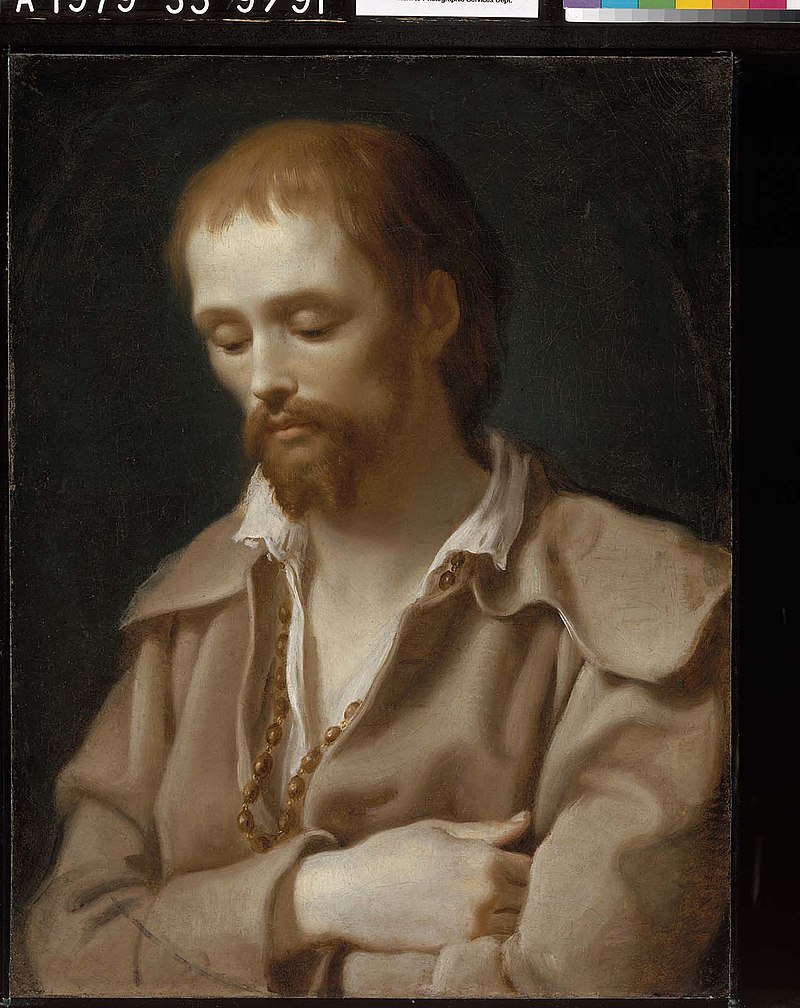
A grace-filled Holy Week to all our readers! As we await and prepare for the Resurrection about to dawn upon us, we might keep in mind two Benedicts: Pope Emeritus Benedict XVI, requiescat in pace, elected on this day in 2005; and today’s commemoration of the mystic pilgrim, Benedict Joseph Labre, who died on this[…]Continue reading→

My Name is Bernadette
April 16th is a propitious day, for besides the anniversary of Father de Valk’s death, who founded Catholic Insight in its print form decades ago, and the commemoration of the ‘two Benedicts’, mentioned in accompanying posts, today we also recall Saint Bernadette Soubirous, the young visionary to whom the Virgin Mary appeared numerous times at[…]Continue reading→
Presidential Pardon of Weronika Krawczyk
As a good news, follow-up to our story from Poland, of the persecution of Weronika Krawczyk for her pro-life views, we heard that she has been granted a presidential pardon. One might still wonder why one needs a presidential pardon for simply holding the long-held belief that the child within the womb is a child,[…]Continue reading→
Saint Lydwina of Schiedam and Suffering Joyfully
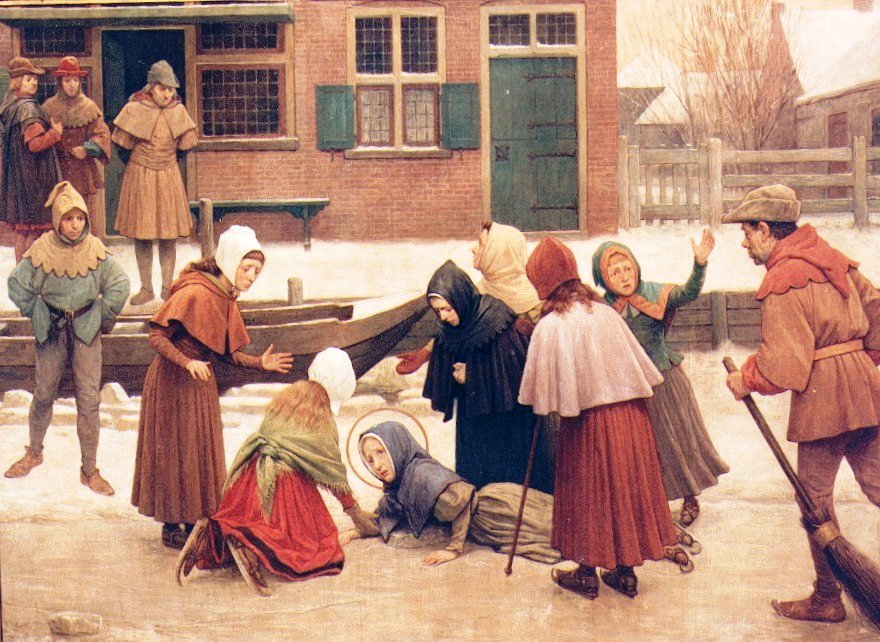
Saint Lydwina of Schiedam (1380 – 1433) was one of the countless and glorious ‘victim souls’ in the history of the Church, those whose lives are filled with suffering, often of an unimaginable intensity, but who suffer joyfully. She was a fifteen-year old Dutch girl, out skating one day, when she fell and broke one[…]Continue reading→
The Glorious Martyrdoms of Martin and Maximus
As we enter into Eastertide, we recall on this 13th of April Pope Saint Martin I (+655), one of the noblest, if most tragic, of the successors of Saint Peter. Born in Umbria, Italy, he was of noble lineage, with great intelligence combined with charity and love of the poor and the Church. While still[…]Continue reading→
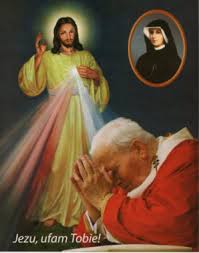
Canonizing Sister Faustina and Divine Mercy
HOMILY OF THE HOLY FATHER MASS IN ST PETER’S SQUARE FOR THE CANONIZATION OF SR MARY FAUSTINA KOWALSKA Sunday, 30 April 2000 1. “Confitemini Domino quoniam bonus, quoniam in saeculum misericordia eius”; “Give thanks to the Lord for he is good; his steadfast love endures for ever” (Ps 118: 1). So the Church sings on the Octave of[…]Continue reading→
Pope Leo and a Rosary for Peace
Pope Leo XIV has asked Catholics across the world to join him in a Rosary for peace today, at 18:00 Rome time (6 pm), which would be noon from where I write (EST). If you are able, whether at that time or another, and in whatever way you pray, to join in intercession with the[…]Continue reading→
Payette’s Payout
I was glancing through some headlines, and noticed a mention of Julie Payette – engineer and astronaut and sometime the Queen’s representative in Canada – which brought back vague memories. She was appointed Governor-General by Justin Trudeau in 2017. Ms. Payette resigned in 2021, amidst claims that she created a ‘toxic work environment’, with allegations[…]Continue reading→