
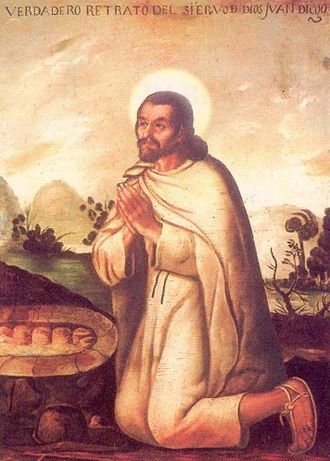
Saint Juan Diego, Hidden Keeper of the Tilma
Amare nesciri – ‘love to be unknown’ – exhorted Saint Philip Neri (+1595), founder of the Oratorians, who himself was an unknown young tutor in Florence, living in a loft, in the early 16th century. At the same time, thousands of miles across the ocean in the mountainous region outside of what is now Mexico city, on a cold December morning, the middle-aged and even more unknown Saint Juan Diego was granted the rare privilege of seeing the Virgin Mother of God.
Juan Cuauhtlatoatzin – he adopted the name Diego after he and his wife converted from paganism, and were baptized as adult converts into the Catholic Church in 1524 – was a humble peasant who lived a quiet life, who ‘loved being unknown’, attending Mass, devoted to prayer and whatever good works needed doing. His wife, Maria Lucia, died two years after their conversion, with Juan continuing to live more or less as a hidden hermit.
He achieved unsought fame five years later, when he met a mysterious lady on the side of a mountain, who requested Juan to ask the bishop to build a chapel on the remote spot.
We know the story, which we will recount more fully on the twelfth of this month: Juan was nonplussed, and wondered what the woman could mean. After trying to avoid her on his next trip – rushing to get help for his sick uncle – the Lady intercepted him. She said not to worry about his uncle (who was miraculously healed).
Juan finally acceded, asking for a sign. Hence, the beautiful roses – apparently impossible in winter – gathered into his tilma, spilled out before the bishop and the miraculous image, which defies description.
The chapel was constructed, a small one at first, to house the image of the Lady, and Juan slipped back into obscurity, caring for the shrine which was built on the site of the apparitions. But Juan soon became renowned for his humility, holiness, devotion to prayer and to the Virgin Mother, and this reputation continued to grow after his death in 1548, throughout Mexico and beyond. Some doubted, and resisted the call for his canonization, but at the dawn of the new millennium, Pope John Paul II canonized Juan Diego in the very basilica dedicated to the Virgin of Guadalupe, on July 31, 2002, saying, in part:
The church was built in honour of the Queen of Heaven. Juan Diego, moved by piety, left everything and dedicated his life to looking after this tiny hermitage and to welcoming pilgrims. He trod the way to sanctity through love and prayer, drawing strength from the eucharistic banquet of our Redeemer, from devotion to his most holy Mother, from communion with the holy Church and obedience to her pastors. Everyone who met him was overwhelmed by his virtues, especially his faith, love, humility, and other-worldliness.
Peruse the Pope’s decree in today’s Office of Readings.
Our Lady of Guadalupe brought millions of souls into the Church, sort of a balance, as some Church historians say, of the millions who were leaving in the Protestant ‘reformation’. Luther had pinned his 95 ‘theses’ to the church door at Wittenberg in October 1517, beginning a revolt against the Church, which by 1531 was in full swing across Europe. Henry VIII and many other kings and potentates attempted to dismantle the very Church of God, or so they thought. At least as many souls entered the Church in the new world of the Americas as left her in the old world of Europe. God always knows how to balance things out, just right and just so, but that will only be revealed at the end of time, as Pope Benedict XVI so eruditely explained in his beautiful encyclical Spe Salvi. A beneficial read during Advent, the season of hope and expectation.
San Juan Diego, ruega por nosotros!
Carney’s Amoral Majority
After five defections – euphemistically described as ‘crossing the floor’ – and three by-elections, Mark Carney and his Liberals how have their coveted majority. One wonders what bowls of pottage were offered in back-room deals. In the archaic monarchical system that is the Dominion of Canada, this majority allows the newly-minted Prime Minister to rule[…]Continue reading→

Saint Kateri , Canada’s Protectress
This was the title given to Saint Kateri Tekakwitha, by Pope Benedict XVI, when he canonized her on October 28th, 2012, along with six others, in Saint Peter’ Square (she had been beatified by Pope John Paul II back in 1980). With Saint Joseph as our protector, along with the Canadian martyrs, we seem to[…]Continue reading→
A Tale of Two Benedicts
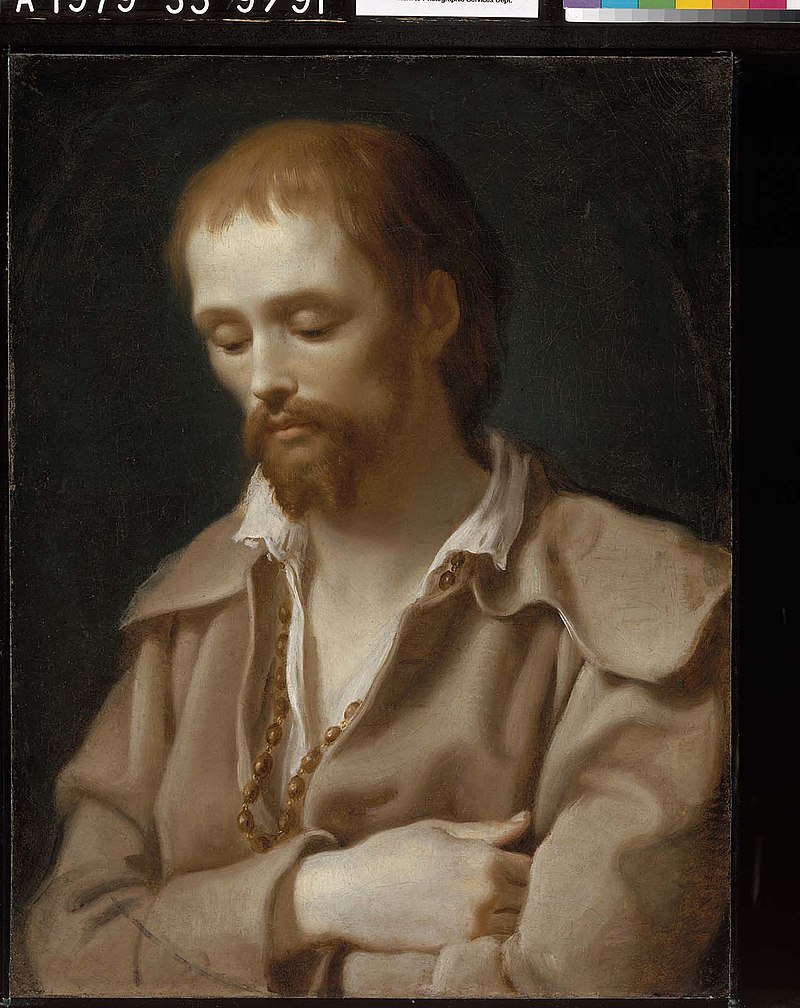
A grace-filled Holy Week to all our readers! As we await and prepare for the Resurrection about to dawn upon us, we might keep in mind two Benedicts: Pope Emeritus Benedict XVI, requiescat in pace, elected on this day in 2005; and today’s commemoration of the mystic pilgrim, Benedict Joseph Labre, who died on this[…]Continue reading→

My Name is Bernadette
April 16th is a propitious day, for besides the anniversary of Father de Valk’s death, who founded Catholic Insight in its print form decades ago, and the commemoration of the ‘two Benedicts’, mentioned in accompanying posts, today we also recall Saint Bernadette Soubirous, the young visionary to whom the Virgin Mary appeared numerous times at[…]Continue reading→
Saint Lydwina of Schiedam and Suffering Joyfully
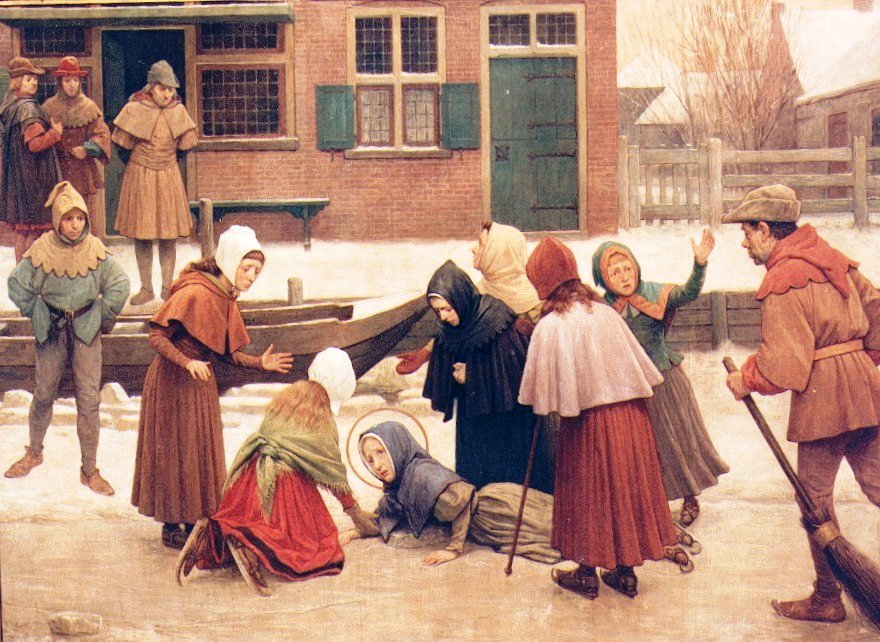
Saint Lydwina of Schiedam (1380 – 1433) was one of the countless and glorious ‘victim souls’ in the history of the Church, those whose lives are filled with suffering, often of an unimaginable intensity, but who suffer joyfully. She was a fifteen-year old Dutch girl, out skating one day, when she fell and broke one[…]Continue reading→
The Glorious Martyrdoms of Martin and Maximus
As we enter into Eastertide, we recall on this 13th of April Pope Saint Martin I (+655), one of the noblest, if most tragic, of the successors of Saint Peter. Born in Umbria, Italy, he was of noble lineage, with great intelligence combined with charity and love of the poor and the Church. While still[…]Continue reading→
Canonizing Sister Faustina and Divine Mercy
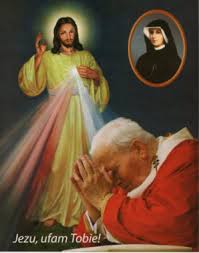
HOMILY OF THE HOLY FATHER MASS IN ST PETER’S SQUARE FOR THE CANONIZATION OF SR MARY FAUSTINA KOWALSKA Sunday, 30 April 2000 1. “Confitemini Domino quoniam bonus, quoniam in saeculum misericordia eius”; “Give thanks to the Lord for he is good; his steadfast love endures for ever” (Ps 118: 1). So the Church sings on the Octave of[…]Continue reading→

Saint Stanislaus of Szczepanów
We celebrate Saint Stanislaus today (+ April 11, 1079), in light of this Easter Octave, a bishop and martyr who accepted the episcopacy only at the direct order of Pope Alexander II. He proved a wise and courageous leader of his flock, put to death by his own king, Boleslaus, for rebuking the monarch’s ‘immoral[…]Continue reading→
Saint Gemma Galgani
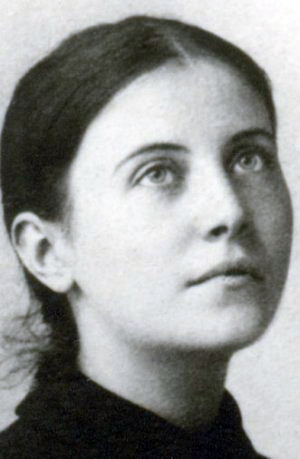
On this April 11th, in 1903 – the same year that the Italian Guiseppe Sarto was elected Pope later that summer as Pius X – a lovely, young Italian woman died, by the name of Gemma Galgani. She lived a brief life of 24 years, as did a number of other young saints, including Pier[…]Continue reading→
An Ideological and Improper Translation
I noticed something odd with the psalm reading at Mass the other day. Our bishops’ conference here in Canada has decreed that the Mass in English – Novus Ordo – use the ‘NRSV’, the ‘New Revised Standard Version’, an ‘updated’ translation of the original RSV, first published in 1952. This ‘new translation’ has the tendency[…]Continue reading→