
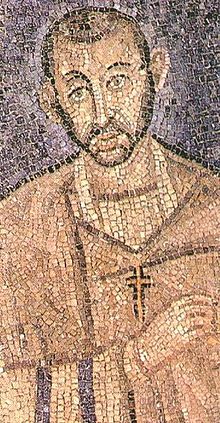
Pope Benedict and Saint Ambrose
BENEDICT XVI
GENERAL AUDIENCE
Saint Peter’s Square
Wednesday, 24 October 2007
Saint Ambrose of Milan
Dear Brothers and Sisters,
Holy Bishop Ambrose – about whom I shall speak to you today – died in Milan in the night between 3 and 4 April 397. It was dawn on Holy Saturday. The day before, at about five o’clock in the afternoon, he had settled down to pray, lying on his bed with his arms wide open in the form of a cross. Thus, he took part in the solemn Easter Triduum, in the death and Resurrection of the Lord. “We saw his lips moving”, said Paulinus, the faithful deacon who wrote his Life at St Augustine’s suggestion, “but we could not hear his voice”. The situation suddenly became dramatic. Honoratus, Bishop of Vercelli, who was assisting Ambrose and was sleeping on the upper floor, was awoken by a voice saying again and again, “Get up quickly! Ambrose is dying…”. “Honoratus hurried downstairs”, Paulinus continues, “and offered the Saint the Body of the Lord. As soon as he had received and swallowed it, Ambrose gave up his spirit, taking the good Viaticum with him. His soul, thus refreshed by the virtue of that food, now enjoys the company of Angels” (Life, 47). On that Holy Friday 397, the wide open arms of the dying Ambrose expressed his mystical participation in the death and Resurrection of the Lord. This was his last catechesis: in the silence of the words, he continued to speak with the witness of his life.
Ambrose was not old when he died. He had not even reached the age of 60, since he was born in about 340 A.D. in Treves, where his father was Prefect of the Gauls. His family was Christian.
Upon his father’s death while he was still a boy, his mother took him to Rome and educated him for a civil career, assuring him a sound instruction in rhetoric and jurisprudence. In about 370 he was sent to govern the Provinces of Emilia and Liguria, with headquarters in Milan. It was precisely there that the struggle between orthodox and Arians was raging and became particularly heated after the death of the Arian Bishop Auxentius. Ambrose intervened to pacify the members of the two opposing factions; his authority was such that although he was merely a catechumen, the people acclaimed him Bishop of Milan.
Until that moment, Ambrose had been the most senior magistrate of the Empire in northern Italy. Culturally well-educated but at the same time ignorant of the Scriptures, the new Bishop briskly began to study them. From the works of Origen, the indisputable master of the “Alexandrian School”, he learned to know and to comment on the Bible. Thus, Ambrose transferred to the Latin environment the meditation on the Scriptures which Origen had begun, introducing in the West the practice of lectio divina. The method of lectio served to guide all of Ambrose’s preaching and writings, which stemmed precisely from prayerful listening to the Word of God. The famous introduction of an Ambrosian catechesis shows clearly how the holy Bishop applied the Old Testament to Christian life: “Every day, when we were reading about the lives of the Patriarchs and the maxims of the Proverbs, we addressed morality”, the Bishop of Milan said to his catechumens and neophytes, “so that formed and instructed by them you may become accustomed to taking the path of the Fathers and to following the route of obedience to the divine precepts” (On the Mysteries 1, 1). In other words, the neophytes and catechumens, in accordance with the Bishop’s decision, after having learned the art of a well-ordered life, could henceforth consider themselves prepared for Christ’s great mysteries. Thus, Ambrose’s preaching – which constitutes the structural nucleus of his immense literary opus – starts with the reading of the Sacred Books (“the Patriarchs” or the historical Books and “Proverbs”, or in other words, the Wisdom Books) in order to live in conformity with divine Revelation.
(To continue reading, please see here).

Saint Kateri , Canada’s Protectress
This was the title given to Saint Kateri Tekakwitha, by Pope Benedict XVI, when he canonized her on October 28th, 2012, along with six others, in Saint Peter’ Square (she had been beatified by Pope John Paul II back in 1980). With Saint Joseph as our protector, along with the Canadian martyrs, we seem to[…]Continue reading→
A Closed, Unsustainable, Descending Loop
As a follow-up to my thoughts on Payette’s payout, here be a stark image of where are here in Canada. As the graph shows in, well, graphic terms, since 2025, the public sector has contributed to 95.5% of economic growth. The private sector – which funds the public sector, or is supposed to – has[…]Continue reading→
A Tale of Two Benedicts
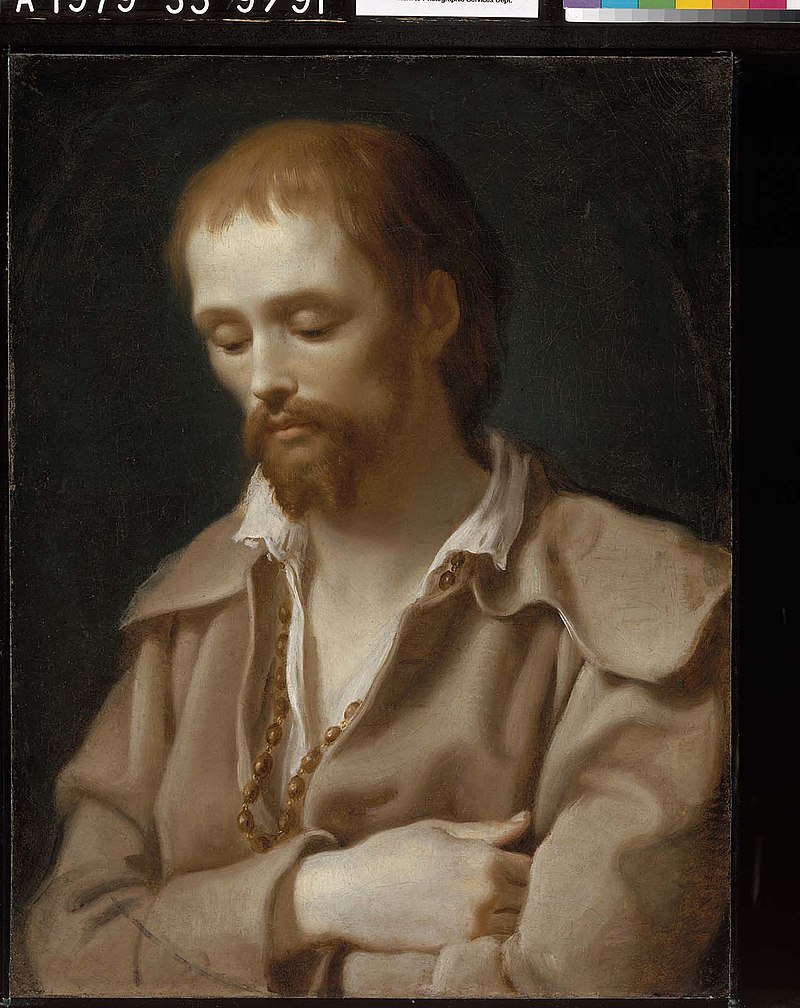
A grace-filled Holy Week to all our readers! As we await and prepare for the Resurrection about to dawn upon us, we might keep in mind two Benedicts: Pope Emeritus Benedict XVI, requiescat in pace, elected on this day in 2005; and today’s commemoration of the mystic pilgrim, Benedict Joseph Labre, who died on this[…]Continue reading→

My Name is Bernadette
April 16th is a propitious day, for besides the anniversary of Father de Valk’s death, who founded Catholic Insight in its print form decades ago, and the commemoration of the ‘two Benedicts’, mentioned in accompanying posts, today we also recall Saint Bernadette Soubirous, the young visionary to whom the Virgin Mary appeared numerous times at[…]Continue reading→
Presidential Pardon of Weronika Krawczyk
As a good news, follow-up to our story from Poland, of the persecution of Weronika Krawczyk for her pro-life views, we heard that she has been granted a presidential pardon. One might still wonder why one needs a presidential pardon for simply holding the long-held belief that the child within the womb is a child,[…]Continue reading→
Saint Lydwina of Schiedam and Suffering Joyfully
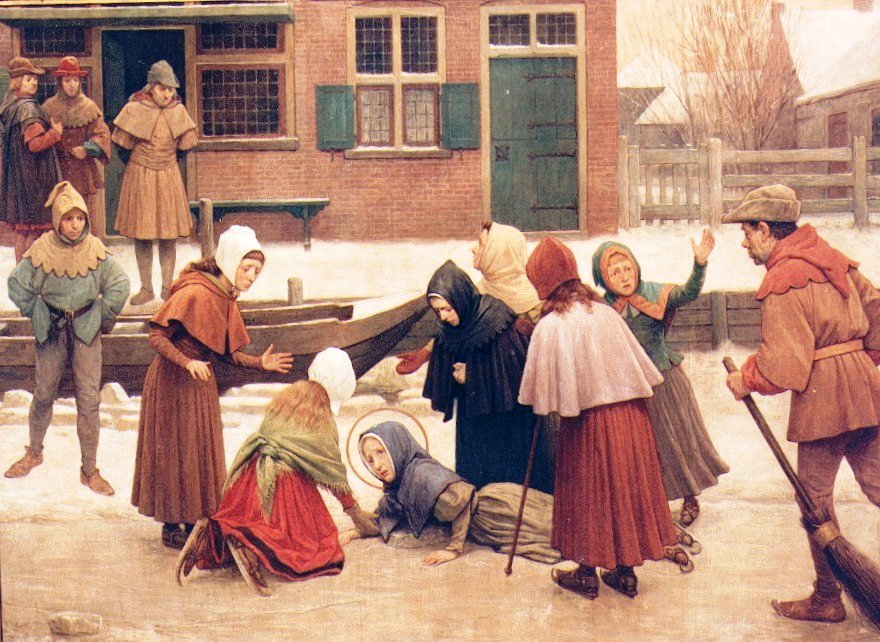
Saint Lydwina of Schiedam (1380 – 1433) was one of the countless and glorious ‘victim souls’ in the history of the Church, those whose lives are filled with suffering, often of an unimaginable intensity, but who suffer joyfully. She was a fifteen-year old Dutch girl, out skating one day, when she fell and broke one[…]Continue reading→
The Glorious Martyrdoms of Martin and Maximus
As we enter into Eastertide, we recall on this 13th of April Pope Saint Martin I (+655), one of the noblest, if most tragic, of the successors of Saint Peter. Born in Umbria, Italy, he was of noble lineage, with great intelligence combined with charity and love of the poor and the Church. While still[…]Continue reading→

Canonizing Sister Faustina and Divine Mercy
HOMILY OF THE HOLY FATHER MASS IN ST PETER’S SQUARE FOR THE CANONIZATION OF SR MARY FAUSTINA KOWALSKA Sunday, 30 April 2000 1. “Confitemini Domino quoniam bonus, quoniam in saeculum misericordia eius”; “Give thanks to the Lord for he is good; his steadfast love endures for ever” (Ps 118: 1). So the Church sings on the Octave of[…]Continue reading→
Pope Leo and a Rosary for Peace
Pope Leo XIV has asked Catholics across the world to join him in a Rosary for peace today, at 18:00 Rome time (6 pm), which would be noon from where I write (EST). If you are able, whether at that time or another, and in whatever way you pray, to join in intercession with the[…]Continue reading→
Payette’s Payout
I was glancing through some headlines, and noticed a mention of Julie Payette – engineer and astronaut and sometime the Queen’s representative in Canada – which brought back vague memories. She was appointed Governor-General by Justin Trudeau in 2017. Ms. Payette resigned in 2021, amidst claims that she created a ‘toxic work environment’, with allegations[…]Continue reading→