

First Sunday of Advent: Let us Go to the House of the Lord
For out of Zion shall go forth instruction, and the word of the Lord from Jerusalem (Lk. 21: 36).
The first Sunday of Advent marks the beginning of a new liturgical year. In the cycle of the sacred liturgy, this is Year A, during which the Sunday Gospel readings will be taken from the Gospel of St. Matthew. This is the first book of the New Testament; and as such it presents Jesus Christ Our Lord as the long awaited Messiah whom the Prophets foretold and who came not to destroy the Law but to fulfill it. This notion of fulfillment pervades the whole of this Gospel. Our Lord is also presented to us as the Saviour of the world, the Son of God, the Son of David, the New Moses; He is Emmanuel, God-with-us, now and until the end of the world.
The presence of Our Lord with us now is what ought to engage us as we commemorate the events and mysteries of Our Lord’s life in our Sunday celebrations of the Holy Sacrifice of the Mass. The words of the Psalmist give focus and purpose to our presence here: Let us go rejoicing to the house of the Lord (Ps. 122). We rejoice in the Lord’s presence and in the gift of salvation. There are fundamental truths that we can deduct simply from our presence in church, the House of the Lord: God can be known; and we have a capacity or ability to know Him. For this reason the Prophet Isiah declares: In days to come the mountain of the Lord’s house shall be established as the highest of the mountains…all nations shall stream towards it….For out of Zion shall go forth instruction, and the word of the Lord from Jerusalem (Is. 2:1-5). God can be known and He has revealed Himself, that is, He has made Himself known definitively in His Son, Our Saviour Jesus Christ.
The Epistle to the Hebrews begins with these words: In many and various ways God spoke of old to our fathers by the prophets; but in these last days, He has spoken to us by a Son (1:1-2). The words that are the content of Sacred Scripture lead us and all of humanity to the Word of God, Jesus Christ. Commenting on this text, the great mystic, St John of the Cross explains: In giving us His Son, His only Word … [God] spoke everything to us at once in the sole Word – and He has no more to say … because what He spoke before to the prophets in parts, He has now spoken all at once by giving us the All Who is His Son (The Ascent of Mount Carmel, 2, 22, 3-5). As we celebrate the Liturgy of Advent, we reflect on what was spoken to the prophets in parts; the ancient expectancy of the Messiah is made present, and in recalling the long preparation for the Saviour’s first coming, we renew our ardent desire for His second coming (Cf. Catechism of the Catholic Church, 524). God can be known and we have a capacity to know Him, for man, explains St. Augustine, is capax Dei; the human person is capable of receiving God.
Our Saviour comes to teach all of humanity this fundamental truth that ennobles every one of us. So the Prophet declares that all nations shall stream towards the House of the Lord. Every parish church is truly the House of the Lord for at its very centre is the Tabernacle, where God dwells among us as Emmanuel – God-with-us. Here we come to learn from Him. Our prayer is in fact a conversation with Him. It might be said that what we are about is serious conversation leading to blessed communion (Walter Brueggeman). We come here to encounter the living God in Christ: to speak to Him and to listen to Him, and no matter how old or how young we may be, all of us are here to expand and deepen our capacity for God so that we might experience the blessed communion, that enables us to become partakers of the divine nature (2 Pet. 1:4).
As the mysteries of the life of Christ Our Lord are recalled, time and eternity, Christ and the Church, the divine and the human, these are all interwoven in the course of the liturgical year; such that, our bodies, that is, our bodily existence on earth becomes a living sacrifice united to the Sacrifice of Jesus. This transformation expresses the purpose and goal of our worship: our transformation in Christ. In the sacred liturgy we encounter the living God and by means of His grace and our conformity to the mysteries of the life of Christ, our Father looks upon us and sees in us the Face of His Son. This is the mystical element of the sacred liturgy that can only be accessed by a sober and serious attitude that enables us to grow and mature; such that ultimately, we seek nothing more than the greater glory of God and the salvation of souls; for nothing else really matters.
In the sacred liturgy, we transcend the limits imposed on us by time and we already partake in the eternal realities that give our earthly existence supernatural meaning and scope. The Advent liturgy especially recalls humanity’s yearning and hope for the salvation of God; and the fulfillment of this hope in Christ Our Saviour. The liturgical commemorations of the life, death and resurrection of our Saviour encompass the ultimate destiny of man and the world. This is what we begin anew today; and we do so with attention, reverence, dignity and devotion so that we may always be ready, for the Son of Man is coming at an unexpected hour (Mt. 24:44).
Let us profit from the mysteries that we commemorate; so that as we walk amid passing things along the path of devout humility, Our Lord Himself may teach us by them to love the things of heaven and hold fast to what endures (Prayer After Communion, First Sunday of Advent; The Roman Missal). Especially during this Advent season we entrust our interior lives to the care and protection of Our Lady and St. Joseph through whom in the fullness of time, God sent forth His Son, born of a woman…so that we might receive adoption as sons (Gal. 4:4-5).

Remembering Father Alphonse de Valk
(Today marks the sixth anniversary of the death of Father Alphonse de Valk, C.S.B., a faithful, courageous and indefatigable Basilian priest, pro-life-and-family apostle, and the founder of Catholic Insight magazine. Here is what we wrote those on his entering into eternity five years ago, as we continue to remember him in our prayers and thoughts)[…]Continue reading→

Divine Mercy Sunday – An Echo of Every Mass
Reach out your hand and put it in my side. Do not doubt but believe’… ‘My Lord and my God!’ (Jn. 20:18)). Today is Divine Mercy Sunday, and as we celebrate the end of the Easter Octave, we contemplate the wounded side of our Saviour, the Church’s source of life. On Good Friday in the[…]Continue reading→

Saint Stanislaus of Szczepanów
We celebrate Saint Stanislaus today (+ April 11, 1079), in light of this Easter Octave, a bishop and martyr who accepted the episcopacy only at the direct order of Pope Alexander II. He proved a wise and courageous leader of his flock, put to death by his own king, Boleslaus, for rebuking the monarch’s ‘immoral[…]Continue reading→
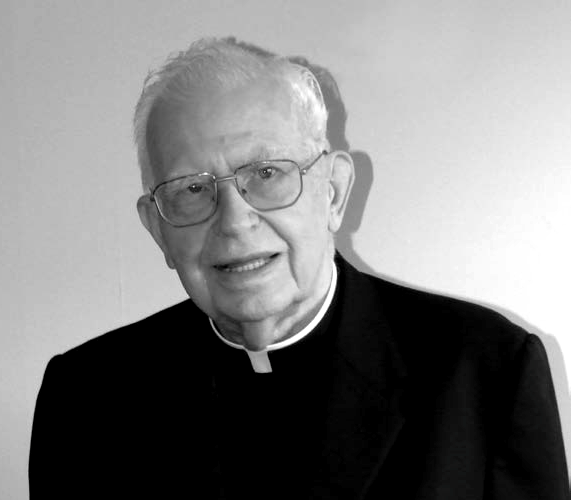
First Holy Communion: Sermon from May 16, 1943
Here is a sermon from the good old days by +Rev. Msgr. Vincent Nicholas Foy (August 14, 1915 – March 13, 2017), from 1943. Readers may recall that Pope Saint Pius X, by the decree Quam Singulari in 1910, lowered the customary age of reception of Holy Communion – after the rigours of the plague[…]Continue reading→
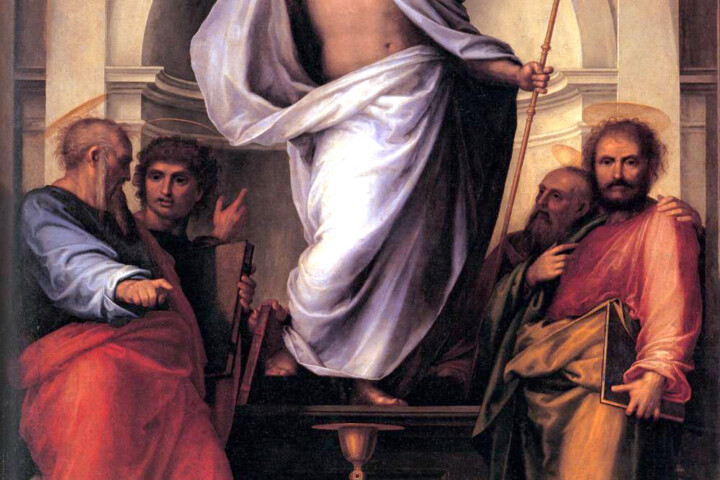
In the Glorious Light of Easter, Alleluia!
Set your minds on things that are above, not on things that are on earth, for you have died, and your life is hidden with Christ in God. When Christ who is your life is revealed, then you also will be revealed with him in glory (Col. 3:3-4). The Resurrection of Our Lord and Saviour[…]Continue reading→
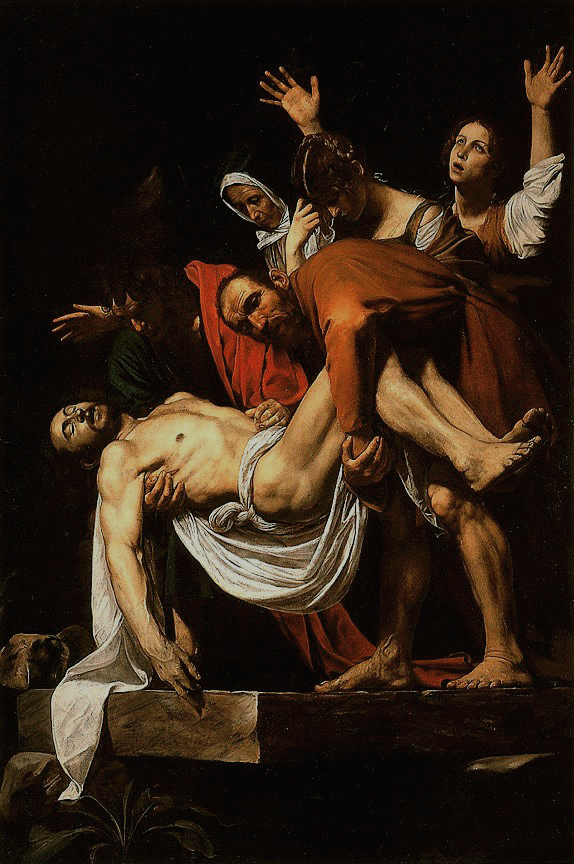
An Ancient Homily for Holy Saturday
The time between Good Friday and Easter Sunday is one of waiting, in silence, as the world wonders – anticipates – what will happen, after the death of Christ. We re-live this time each year in the anamnesis of our liturgy, and in turn look forward to the glorious re-creation of all things at the[…]Continue reading→
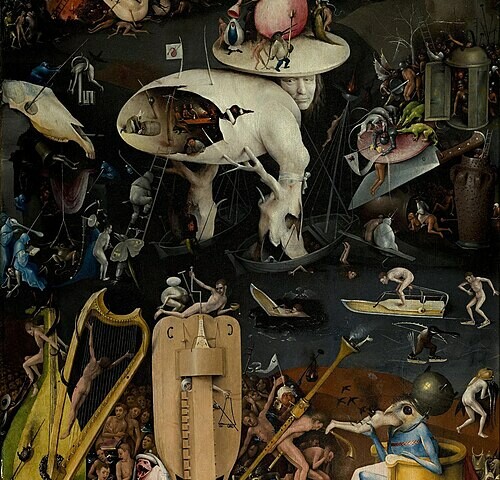
Europe’s Long Descent
(As we meditate on this day on Christ’s burial, and His descent into hell, it is fitting to ponder here with contributor Peter Marcus how the world seems to be heading there as well. The difference is that, although God cannot ‘redeem’ hell, nor those therein, He can and did redeem the world. There is[…]Continue reading→
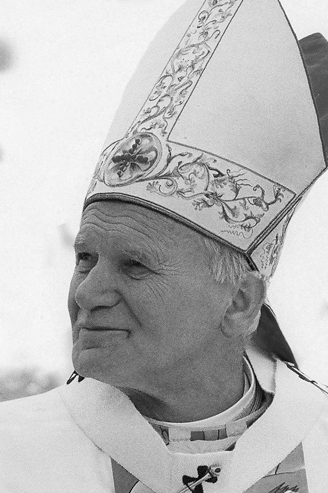
Pope Saint John Paul II’s First Good Friday Homily
ADDRESS OF HIS HOLINESS JOHN PAUL II AT THE CONCLUSION OF THE STATIONS OF THE CROSS AT THE COLOSSEUM Good Friday, 13 April 1979 When we make the Way of the Cross from one station to the next, in spirit we are always at the spot wherethis journey had its “historical” place: where it[…]Continue reading→
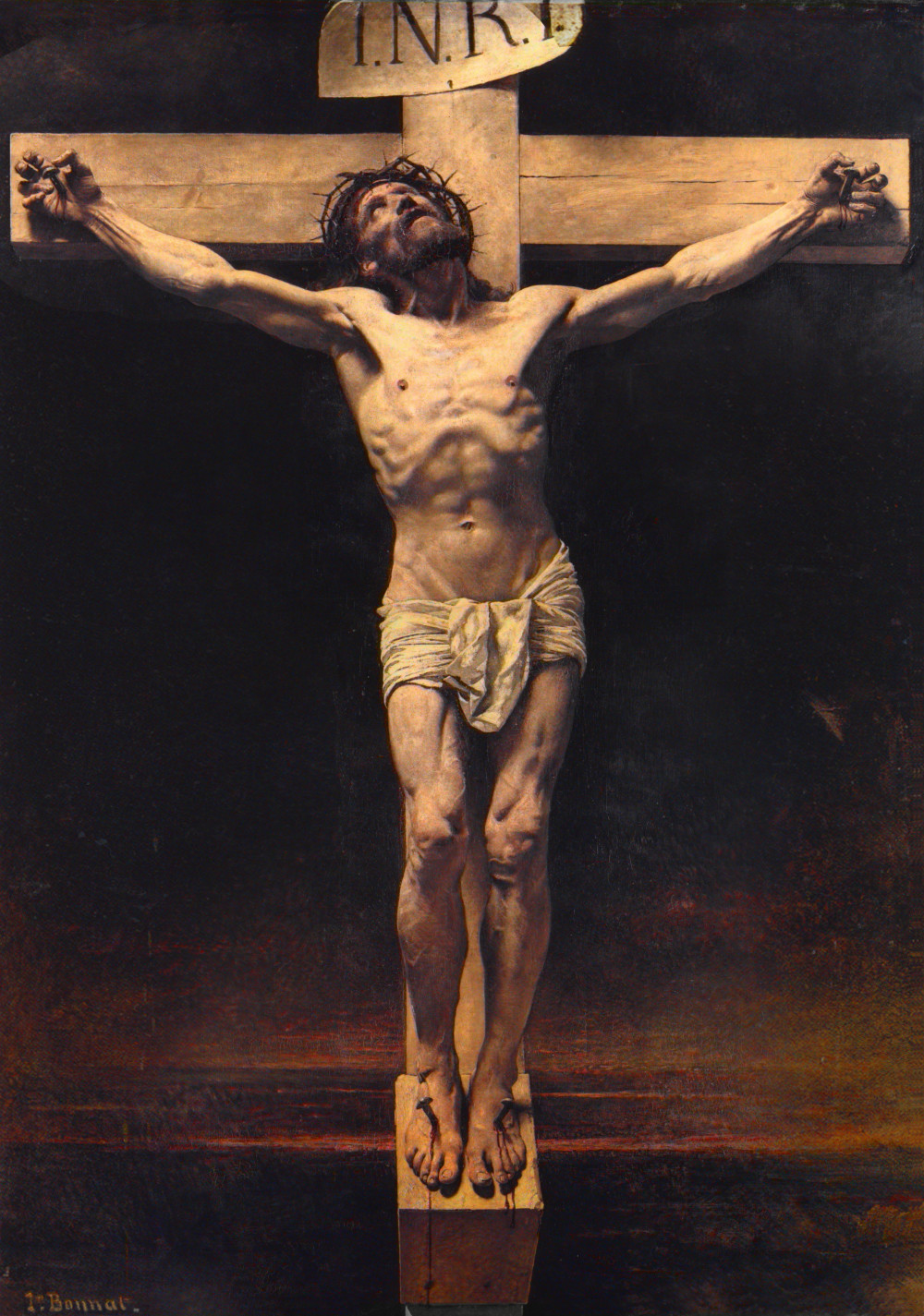
A Meditation for Good Friday: How To Undo the Effects of Sin?
Cardinal Newman, now Saint John Henry Newman, was a towering figure of nineteenth-century Catholicism who is almost universally admired. I say “almost” because not everyone likes him. I knew a priest once, Arthur Caulkins, who has become disenchanted with Newman. As an undergraduate Arthur had been enamoured of Newman, and this interest continued when he[…]Continue reading→
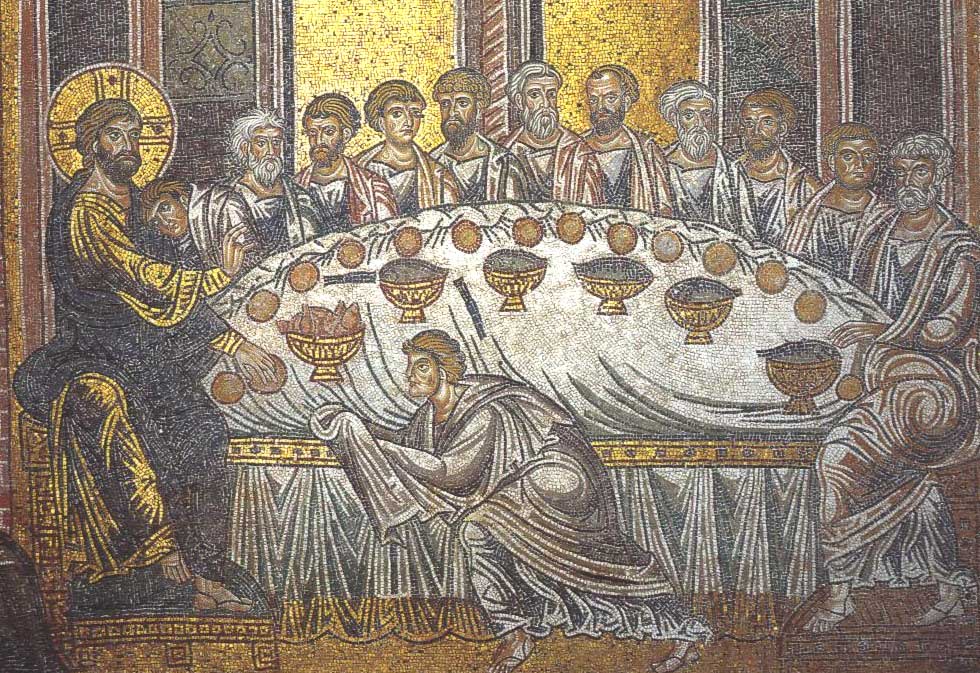
Pope Benedict’s Last Holy Thursday Homily
MASS OF THE LORD’S SUPPER HOMILY OF HIS HOLINESS BENEDICT XVI Basilica of St John Lateran Holy Thursday, 5 April 2012 Photo Gallery (Video) Dear Brothers and Sisters! Holy Thursday is not only the day of the institution of the Most Holy Eucharist, whose splendour bathes all else and in some ways draws it to[…]Continue reading→