
A Triptych of Saints: Clement, Columba and Pro
We commemorate three saints on this November 23rd, Saints Clement of Rome, Columba and Miguel Pro, muted this year on the Solemnity of Christ the King. These three intercessors and examples from three different eras all lived, and two gave their lives, for the truth of their God. Their joyful fidelity in the midst of their struggles contra mundum should lift our spirits in this last week of the liturgical year, just before Christ the King, and as we look forward to Advent. We must keep our eyes on eternity in these tumultuous times.
Saint Clement of Rome (+99 A.D.) was either the first, second or third Pope after Saint Peter, depending on how you count them, and whether ‘Cletus’ and ‘Anacletus’ are the same person. One way or the other, Clement was likely ordained by Saint Peter himself, the fisherman-turned-fisher-of-men. Clement’s letters offer strong evidence of the papal primacy and prerogative from the very beginning of the Church, one of the things that prompted Cardinal Newman’s famous dictum that to delve into history is to cease to be Protestant. Clement’s letters to the people at Corinth – which used to be read at Mass in those nascent days. They were never adopted as canonical Scripture, although they nearly were so. The early Bishop of Rome’s words also signify that the Church Christ founded was ‘Catholic’ from the beginning, with a Pope, who had, and knew he had universal authority and jurisdiction. We may add that in those first years after the Apostles there were bishops, priests, the Mass, the Eucharist and all the other sacraments, all much as we know them now. Ecclesia Catholica stat in aeternum!
Under Emperor Trajan, Clement was exiled to the mines at Chersonesus on the Crimean peninsula, and, after miraculously providing for his fellow prisoners with a spring of water, himself gained the martyr’s crown by being cast into the depths of the Black Sea tied to an anchor.
Saint Columban (+615) was an Irish monk – not to be confused with the earlier Columba or Columbkille (+597) who set up the abbey at Iona – but who like the latter, travelled over the sea from Ireland, to Scotland. Columban, however, continued down into France and Italy, in which latter regions he spent the remainder of his life, setting up monasteries, the most famous being those at Luxeiul and Bobbio, both of which are still standing. As he journeyed, he preached the Faith, rebuking and converting kings and queens, battling bishops, refuting the still-remaining traces of Arianism and Nestorianism, all the while supported in his vast and wide-ranging apostolic work with a life of deep prayer and discipline.
Not insignificantly, Columbanus also testifies to the enduring Tradition of Catholicism, and fidelity to the Holy Father as the authority over all Christendom, writing to Pope Boniface IV in the midst of one of his controversies:
We Irish, though dwelling at the far ends of the earth, are all disciples of Saint Peter and Saint Paul … we are bound to the Chair of Peter, and although Rome is great and renowned, through that Chair alone is she looked on as great and illustrious among us … On account of the two Apostles of Christ, you are almost celestial, and Rome is the head of the whole world, and of the Churches.
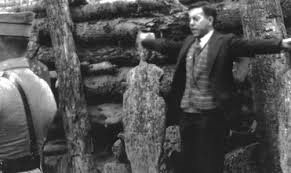
And the third saint also testifies to fidelity to all that ‘Rome’ stands for: Blessed Miguel Pro was a charismatic, joyful young Jesuit during the savage persecutions by the communist government in Mexico in the early 20th century, put to death by firing squad on this day in 1927 under orders of president Plutarco Elias Calles, on false charges of plotting to assassinate former president Alvaro Obregon. Both Calles and Obregon were vehement anti-Catholics, hell-bent on destroying the Church, with an especial animosity for priests.
As everyone knew, Father Miguel, for all their own desire to kill him, was innocent, desiring only their conversion and their good.
From his earliest years, Miguel was known for his high intelligence, his infectious joy, and his sparkling wit, which yet was never coarse nor mean. This charisma was perfected by, and the fruit of, a deep and abiding spirituality. There was the ‘playful Pro’, full of joy and laughter, and the ‘prayerful Pro’, spending long hours in the chapel.
After studies and formation with the Jesuit Order – in exile in California, since such education was illegal in Mexico – he went back to his native country in 1926, and a year in fruitful apostolic work. He evaded capture with disguise and ingenuity, saying Mass and hearing thousands of confessions in secret. He was helped by his youthful looks and natural ability as an actor to avoid the spies, until his arrest in 1927, after which he was executed by firing squad, after a farce of a show trial. One of the soldiers – a Catholic, with some flicker of a conscience – asked the priest for forgiveness for what he was about to do. Father Pro responded, ‘Not only do I forgive you, but I thank you’. For the Jesuit used to quip to the nuns whose confessions he heard, that they must pray he be martyred, for it was the only way he was going to make it to heaven.
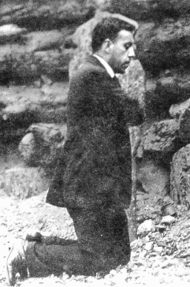
The priests’ only request as he faced imminent death was that he be permitted to spend some time in prayer, and the picture of him kneeling in deep reflection is profound, offering his sufferings for his beloved native land. As he stood, with arms outstretched in cruciform waiting to die, he prayed: May God have mercy on you! May God bless you! Lord, Thou knowest that I am innocent! With all my heart I forgive my enemies…
He then cried out Viva Cristo Rey! as the bullets smashed into his body. President Calles thought the side of his dead body would deter the Catholics, but instead, it inspired them beyond measure. Tens of thousands lined up to see a glimpse of his remains at his funeral, which filled the tyrant Calles with dread, like Antiochus of old.
The witness of the saints is, in the end, invincible.
At his beatification as a martyr on September 25, 1988, Pope John Paul II had this to say about Father Miguel:
Neither suffering nor serious illness, nor the exhausting ministerial activity, frequently carried out in difficult and dangerous circumstances, could stifle the radiating and contagious joy which he brought to his life for Christ and which nothing could take away. Indeed, the deepest root of self-sacrificing surrender for the lowly was his passionate love for Jesus Christ and his ardent desire to be conformed to him, even unto death
And so must we all – be conformed to Christ, unto death – for only so we may one day truly live.
Orate pro nobis! +

Carney’s Amoral Majority
After five defections – euphemistically described as ‘crossing the floor’ – and three by-elections, Mark Carney and his Liberals how have their coveted majority. One wonders what bowls of pottage were offered in back-room deals. In the archaic monarchical system that is the Dominion of Canada, this majority allows the newly-minted Prime Minister to rule[…]Continue reading→

Saint Kateri , Canada’s Protectress
This was the title given to Saint Kateri Tekakwitha, by Pope Benedict XVI, when he canonized her on October 28th, 2012, along with six others, in Saint Peter’ Square (she had been beatified by Pope John Paul II back in 1980). With Saint Joseph as our protector, along with the Canadian martyrs, we seem to[…]Continue reading→
A Closed, Unsustainable, Descending Loop
As a follow-up to my thoughts on Payette’s payout, here be a stark image of where are here in Canada. As the graph shows in, well, graphic terms, since 2025, the public sector has contributed to 95.5% of economic growth. The private sector – which funds the public sector, or is supposed to – has[…]Continue reading→

A Tale of Two Benedicts
A grace-filled Holy Week to all our readers! As we await and prepare for the Resurrection about to dawn upon us, we might keep in mind two Benedicts: Pope Emeritus Benedict XVI, requiescat in pace, elected on this day in 2005; and today’s commemoration of the mystic pilgrim, Benedict Joseph Labre, who died on this[…]Continue reading→

My Name is Bernadette
April 16th is a propitious day, for besides the anniversary of Father de Valk’s death, who founded Catholic Insight in its print form decades ago, and the commemoration of the ‘two Benedicts’, mentioned in accompanying posts, today we also recall Saint Bernadette Soubirous, the young visionary to whom the Virgin Mary appeared numerous times at[…]Continue reading→
Presidential Pardon of Weronika Krawczyk
As a good news, follow-up to our story from Poland, of the persecution of Weronika Krawczyk for her pro-life views, we heard that she has been granted a presidential pardon. One might still wonder why one needs a presidential pardon for simply holding the long-held belief that the child within the womb is a child,[…]Continue reading→

Saint Lydwina of Schiedam and Suffering Joyfully
Saint Lydwina of Schiedam (1380 – 1433) was one of the countless and glorious ‘victim souls’ in the history of the Church, those whose lives are filled with suffering, often of an unimaginable intensity, but who suffer joyfully. She was a fifteen-year old Dutch girl, out skating one day, when she fell and broke one[…]Continue reading→

The Glorious Martyrdoms of Martin and Maximus
As we enter into Eastertide, we recall on this 13th of April Pope Saint Martin I (+655), one of the noblest, if most tragic, of the successors of Saint Peter. Born in Umbria, Italy, he was of noble lineage, with great intelligence combined with charity and love of the poor and the Church. While still[…]Continue reading→

Canonizing Sister Faustina and Divine Mercy
HOMILY OF THE HOLY FATHER MASS IN ST PETER’S SQUARE FOR THE CANONIZATION OF SR MARY FAUSTINA KOWALSKA Sunday, 30 April 2000 1. “Confitemini Domino quoniam bonus, quoniam in saeculum misericordia eius”; “Give thanks to the Lord for he is good; his steadfast love endures for ever” (Ps 118: 1). So the Church sings on the Octave of[…]Continue reading→
Pope Leo and a Rosary for Peace
Pope Leo XIV has asked Catholics across the world to join him in a Rosary for peace today, at 18:00 Rome time (6 pm), which would be noon from where I write (EST). If you are able, whether at that time or another, and in whatever way you pray, to join in intercession with the[…]Continue reading→