
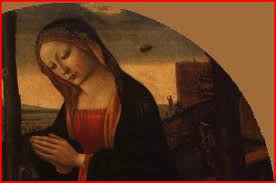
Musings on Mater Fidelis and the Munificence of God
Munificentissimus Deus is the title of Pope Pius XII’s Apostolic Constitution declaring that Our Lady was assumed body and soul into heaven. In English, the ‘most munificent God’, which is to say, a God who give presents and gifts, who rewards us far beyond our desserts. To choose a Jewish maiden, and exalt her as the greatest of His creation, far above all the angels and every man or woman who has ever lived, to assume her body and soul into heaven, to leave no trace or relic, seems crazy.
But our religion is sort of crazy. Not in an ir-rational sort of way, but supra-rational, beyond its pale, unexpected and disconcerting. God does not leave us complacent. The saints give ample evidence of this, from Simon Stylites living on his pillar, to the radical wandering freedom of Francis’ poverty, to the austere enclosed beauty of the cloistered Carmelites. And what of going two miles, when one will do, or giving one’s tunic, when all someone asks for is your cloak? Forgiving seventy times seven times? Blessed are those who weep and mourn? And is heaven really worth two mites?
As a wise woman said to me once, our God is a God of surprises, and is not stingy with his recompense – His gifts – for our giving all to Him. When Han Solo asked Princess Leah how much of a reward he would get for rescuing her, she replied, ‘more than you can imagine’, to which Solo quipped, ‘I can imagine quite a bit’. If that applies to earthly gifts, what are we to say of heaven, which will be, and already is, far, far beyond anything anyone can imagine, even mystics like Saint Paul and Saint Thomas Aquinas? After the barest glimpse of the after-life, where Leo XIII said we will really begin to live – everything to them in this passing world seemed like dross or straw.
Reflecting upon the recent instruction on the Virgin Mary, Mater Fidelis Populi, issued by the DDF – the Dicastery for the Doctrine of the Faith, what came to my own mind is that, perhaps, it doesn’t imagine enough. The most controversial section cautions Catholics to avoid the traditional terms Mother of All Graces and Co-Redemptrix for the Mother of God (which it still allows). They’re not condemned, but apparently shouldn’t be used due to possible theological confusion and the diminishing of Christ’s own role. But more than one Pope has referred to Our Lady with those titles, with prayers and days of devotion. And what of the common patristic dictum, death through Eve, and life through Mary?
We should sentire cum ecclesia – think with the Church – but the Church does not exist in some given, present-tense moment, but through the ages, and through many Magisteria. One also has to wonder to whom this document was primarily addressed. Is ‘Marian maximalism’ the primary problem in the Church? One would think some exhortation to be more Marian devotion might be in order. How many Catholics faithfully pray their Rosary? And there are any number of what seem more pressing problems facing the Church.
But God has His ways, or at least permits others to have theirs, and brings good therefrom. There are scholarly critiques of the document, which I won’t try to replicate in these few words. Only to say that the arguments against the two controversial titles make a certain kind of sense. But that may well be part of its problem – perhaps the words make too much sense, with their tendency to reduce Our Lady to one amongst all the other members of the Mystical Body. Sure enough, we are all ‘co-redeemers’ with Christ, making up what is lacking in His sufferings, and we all, with the saints in heaven, intercede for each other for the graces we need.
But Mary is unique, given special privileges and a mission to go along with that. The Church has traditionally bestowed upon her many exalted titles, as the document itself admits. Certainly, we should understand these in the right way and context, for every word points to some deeper metaphysical reality. That reality, however – to reiterate the point – is mysterious and marvelous, flowing from that infinite munificence of God. Why, we may ask, would God not exalt the most humble and hidden, so that she becomes the greatest and most exalted? Why not make His Mother the channel of His gifts to others, and the primary co-redeemer with Him of this sinful world, in a way that no other of His creatures could?
For my thoughts are not your thoughts, neither are your ways my ways, says the LORD. For as the heavens are higher than the earth, so are my ways higher than your ways and my thoughts than your thoughts. (Isaiah, 55:8)
Carney’s Amoral Majority
After five defections – euphemistically described as ‘crossing the floor’ – and three by-elections, Mark Carney and his Liberals how have their coveted majority. One wonders what bowls of pottage were offered in back-room deals. In the archaic monarchical system that is the Dominion of Canada, this majority allows the newly-minted Prime Minister to rule[…]Continue reading→

Saint Kateri , Canada’s Protectress
This was the title given to Saint Kateri Tekakwitha, by Pope Benedict XVI, when he canonized her on October 28th, 2012, along with six others, in Saint Peter’ Square (she had been beatified by Pope John Paul II back in 1980). With Saint Joseph as our protector, along with the Canadian martyrs, we seem to[…]Continue reading→

Remembering Father Alphonse de Valk
(Today marks the sixth anniversary of the death of Father Alphonse de Valk, C.S.B., a faithful, courageous and indefatigable Basilian priest, pro-life-and-family apostle, and the founder of Catholic Insight magazine. Here is what we wrote those on his entering into eternity five years ago, as we continue to remember him in our prayers and thoughts)[…]Continue reading→
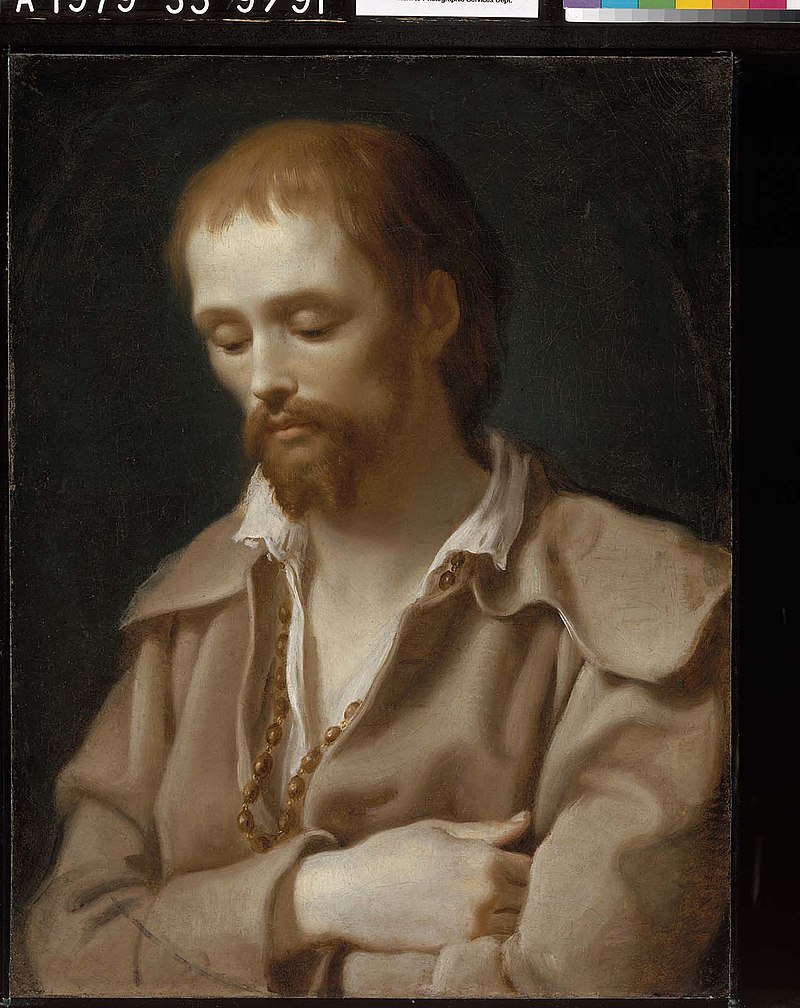
A Tale of Two Benedicts
A grace-filled Holy Week to all our readers! As we await and prepare for the Resurrection about to dawn upon us, we might keep in mind two Benedicts: Pope Emeritus Benedict XVI, requiescat in pace, elected on this day in 2005; and today’s commemoration of the mystic pilgrim, Benedict Joseph Labre, who died on this[…]Continue reading→

My Name is Bernadette
April 16th is a propitious day, for besides the anniversary of Father de Valk’s death, who founded Catholic Insight in its print form decades ago, and the commemoration of the ‘two Benedicts’, mentioned in accompanying posts, today we also recall Saint Bernadette Soubirous, the young visionary to whom the Virgin Mary appeared numerous times at[…]Continue reading→
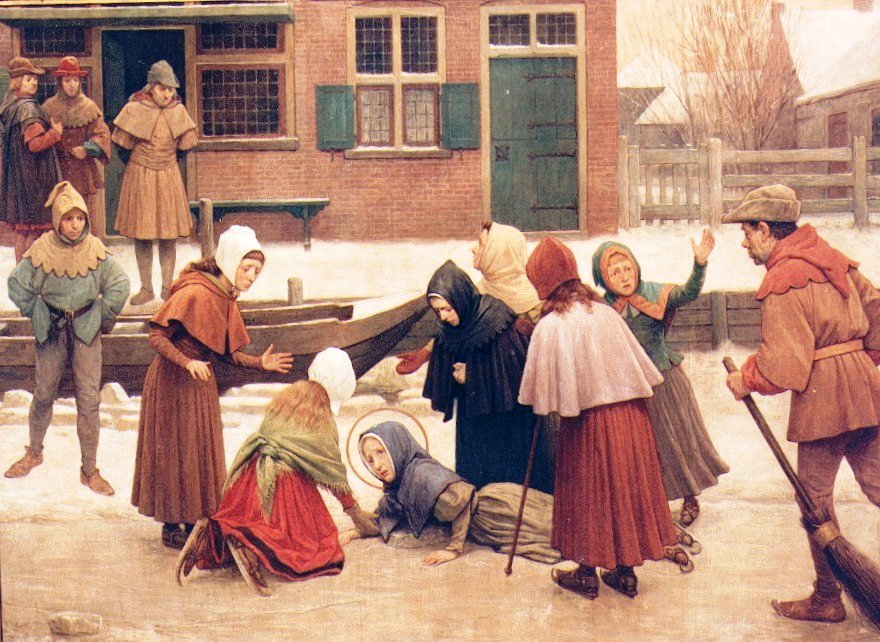
Saint Lydwina of Schiedam and Suffering Joyfully
Saint Lydwina of Schiedam (1380 – 1433) was one of the countless and glorious ‘victim souls’ in the history of the Church, those whose lives are filled with suffering, often of an unimaginable intensity, but who suffer joyfully. She was a fifteen-year old Dutch girl, out skating one day, when she fell and broke one[…]Continue reading→
The Glorious Martyrdoms of Martin and Maximus
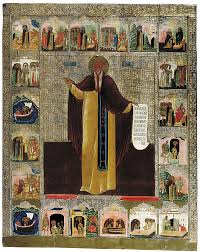
As we enter into Eastertide, we recall on this 13th of April Pope Saint Martin I (+655), one of the noblest, if most tragic, of the successors of Saint Peter. Born in Umbria, Italy, he was of noble lineage, with great intelligence combined with charity and love of the poor and the Church. While still[…]Continue reading→
Canonizing Sister Faustina and Divine Mercy
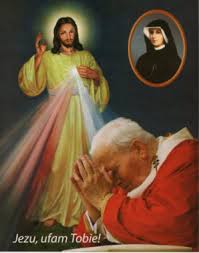
HOMILY OF THE HOLY FATHER MASS IN ST PETER’S SQUARE FOR THE CANONIZATION OF SR MARY FAUSTINA KOWALSKA Sunday, 30 April 2000 1. “Confitemini Domino quoniam bonus, quoniam in saeculum misericordia eius”; “Give thanks to the Lord for he is good; his steadfast love endures for ever” (Ps 118: 1). So the Church sings on the Octave of[…]Continue reading→

Divine Mercy Sunday – An Echo of Every Mass
Reach out your hand and put it in my side. Do not doubt but believe’… ‘My Lord and my God!’ (Jn. 20:18)). Today is Divine Mercy Sunday, and as we celebrate the end of the Easter Octave, we contemplate the wounded side of our Saviour, the Church’s source of life. On Good Friday in the[…]Continue reading→
Saint Gemma Galgani
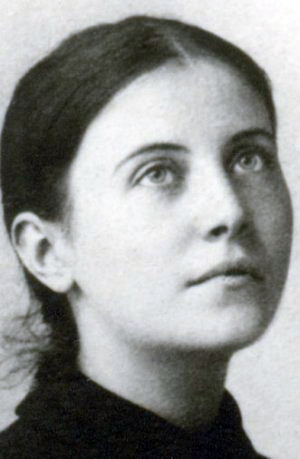
On this April 11th, in 1903 – the same year that the Italian Guiseppe Sarto was elected Pope later that summer as Pius X – a lovely, young Italian woman died, by the name of Gemma Galgani. She lived a brief life of 24 years, as did a number of other young saints, including Pier[…]Continue reading→