
Saint Josaphat, Martyr for Unity
Our Lord seems to have been speaking of our modern crisis when he warns in yesterday’s Gospel that scandals are sure to come, and woe to him by whom they come, with the finishing touch about millstones and the depths of sea.
It is also a propos that the Apostles then ask that their faith be increased. For the most tragic of scandals are those that lead people not just to sin – which is bad enough – but to give up their faith, the very principle and foundation of everything else.
It was this scandal that our saint today, Josaphat, bishop and martyr, fought with all of his might and main, namely, that of schism, the rending of the very Body of Christ. Long ago, in the first millennium of Christianity, the Church was more or less one, even if there were struggles and controversies, and transient divisions over discipline and even at times dogma, which were healed, all very complex and fraught.
But this all changed on July 16th, 1054, when Patriarch Michael Cerularius of Constantinople and the two papal legates of Leo IX ‘excommunicated’ each other – hence, the ongoing division between the two Churches.
To this day, the ‘Orthodox’ continue in a state officially of schism, refusing proper obedience and submission to the Holy Father, the successor of Peter, the Bishop of Rome. They still have bishops, priests, the Eucharist and all the sacraments, and hence are a true and proper ‘Church’, but are missing that theological, historical and, most importantly, metaphysical and spiritual connection to the Vicar of Christ, the rock, even if that rock seems at times a bit crumbly from our limited earthly perspective.
It may seem tempting to some to jump over to the apparent stability of ‘Orthodoxy’, as some prominent Catholics have done of late, driven by our own current scandals. But beware, for the truth is not always what it may seem to be on the surface, and we should not lose faith in the Church Christ founded, even if – especially if – she is battered and bruised. Without the vicar of Christ, prescinding from the virtues or lack thereof in any given pope, there would be no Church. Ironically, the very papacy they impugn holds the Church – ‘Orthodoxy’ included – in existence and on the straight and narrow path, in some mysterious, sacramental way.
Various reconciliations have been attempted over the years, at the II Councils of Lyons in 1272 and at Florence in 1439, with the final and most definitive one at the Council of Brest in 1596, which formed what we now know as the Eastern Catholics, or ‘Uniates’, who reunited with Rome, keeping all of their noble traditions and liturgies.
It was sometime before this partial re-union of 1596 that our saint, Ioann Kuntsevych, was born, around 1580, into an ‘Orthodox’ family, giving himself from an early age to devotion, study and asceticism. He entered a Basilian monastery in his twenties, and, seeing that full truth lay in union with the Roman See, he was ordained an Eastern-rite Catholic priest. Eventually, his spiritual and intellectual gifts clearly seen, he was chosen as bishop of Vitesbk and coadjutor of the Archeparchy of Polotsk, achieving near-unbelievable apostolic success along the way. In his 1923 encyclical on Saint Josaphat, Pope Pius XI calls him what his enemies did, the ‘raptor animarum’ – the raptor of souls – which evokes some interesting analogies.
Things were all tangled up in politics, Church-State relations, biases, and historical resentments, and there were those in the schismatic party of the Orthodox who resented Bishop Josaphat’s work in bringing so many souls into the full membership in the Church. For the ‘other’ raptor of souls – the demonic velociraptor, devoid of love, mercy or pity -wants to bring them not to heaven but to the other place where he dwells in his own misery, hates with all his angelic ferocity those who get in his way.
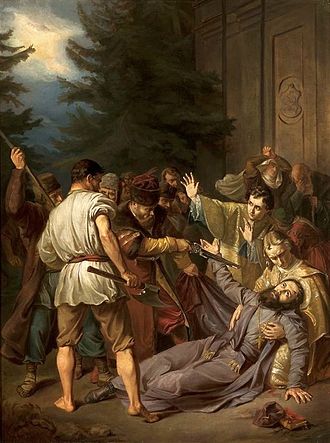
Hence it was that on this day in 1623 an angry mob burst into Bishop Josaphat’s residence and sent him to heaven by splitting his head open with an axe, mangling and dragging his naked body through the streets and plunging it into the depths of the Dvina river, tied down with rocks. Here is the contemporary account:
The ringing of cathedral bells and the bells of other churches spread. This was the signal and call to insurrection. From all sides of town masses of people – men, women, and children – gathered with stones and attacked the archbishop’s residence. The masses attacked and injured the servants and assistants of the archbishop, and broke into the room where he was alone. One hit him on the head with a stick, another split it with an axe, and when Kuntsevych fell, they started beating him. They looted his house, dragged his body to the plaza, cursed him – even women and children. …They dragged him naked through the streets of the city all the way to the hill overlooking the river Dvina. Finally, after tying stones to the dead body, they threw him into the Dvina at its deepest.
His body was later fished out, properly buried, and, five years later, was found incorrupt. The saint now rests in the Basilica of Saint Peter’s in Rome, fittingly the centre of Christendom, under the altar of the great Eastern Father and Doctor, Saint Basil the Great, whose religious rule he lived to the end. Josaphat was canonized a martyr on June 28th, 1867 by Pope Pius IX. See the latter’s 1928 encyclical Mortalium Annos on Pius’ generally dim view of ecumenism, while prohibiting some of its practises, which may offer some perspective on our own more latitudinarian view.
In an ironic way, if it was ‘scandal’ that Josaphat brought, it was one similar to Christ’s own, that leads not to sin, as real scandals do, but to be released therefrom. An anti-scandal, if you will. As with Christ, Josaphat’s very goodness and sanctity enraged some, leading them to destroy him, as the opening lines of the book of Wisdom prophesied, but also brought many others onto the straight and narrow way.
Saint Josaphat would have welcomed Pope Paul VI’s pilgrimage to the Holy Land, and quasi-reconciliation with Patriarch Athenagoras. They embraced each other, and ‘cast into oblivion’ the excommunications of 1054. At the close of the Second Vatican Council, they together released a statement, which reads in part:
Grateful to God, who mercifully favored them with a fraternal meeting at those holy places where the mystery of salvation was accomplished through the death and resurrection of the Lord Jesus, and where the Church was born through the outpouring of the Holy Spirit, Pope Paul VI and Patriarch Athenagoras I have not lost sight of the determination each then felt to omit nothing thereafter which charity might inspire and which could facilitate the development of the fraternal relations thus taken up between the Roman Catholic Church and the Orthodox Church of Constantinople. They are persuaded that in acting this way, they are responding to the call of that divine grace which today is leading the Roman Catholic Church and the Orthodox Church, as well as all Christians, to overcome their differences in order to be again “one” as the Lord Jesus asked of His Father for them…
And, in a famous phrase that echoes the hopes of the Council:
They likewise regret and remove both from memory and from the midst of the Church the sentences of excommunication which followed these events, the memory of which has influenced actions up to our day and has hindered closer relations in charity; and they commit these excommunications to oblivion.
But, alas, the division – the schism – still persists:
Pope Paul VI and Patriarch Athenagoras I with his synod realize that this gesture of justice and mutual pardon is not sufficient to end both old and more recent differences between the Roman Catholic Church and the Orthodox Church.
But there is hope, that one day, by the grace of God and the blood of martyrs such as Josaphat, we may soon rediscover that initial unity for which Christ prayed, the full communion of faith, fraternal accord and sacramental life which existed among them during the first thousand years of the life of the Church.
Saint Josaphat is an intercessor and source of this hope, that the enduring scandal of this schism may one day soon be healed. As Pope John Paul prayed in a rather fitting analogy – and on which he wrote an encyclical in 1995 – may the Church once again breathe with ‘both of her lungs’, East and West, signifying that deep and lasting unity for which Christ prayed at His own Last Supper: Ut Unum sint. And amen to that.
Saint Josaphat, ora pro nobis, et pro unitati!+
Carney’s Amoral Majority
After five defections – euphemistically described as ‘crossing the floor’ – and three by-elections, Mark Carney and his Liberals how have their coveted majority. One wonders what bowls of pottage were offered in back-room deals. In the archaic monarchical system that is the Dominion of Canada, this majority allows the newly-minted Prime Minister to rule[…]Continue reading→

Saint Kateri , Canada’s Protectress
This was the title given to Saint Kateri Tekakwitha, by Pope Benedict XVI, when he canonized her on October 28th, 2012, along with six others, in Saint Peter’ Square (she had been beatified by Pope John Paul II back in 1980). With Saint Joseph as our protector, along with the Canadian martyrs, we seem to[…]Continue reading→
A Tale of Two Benedicts
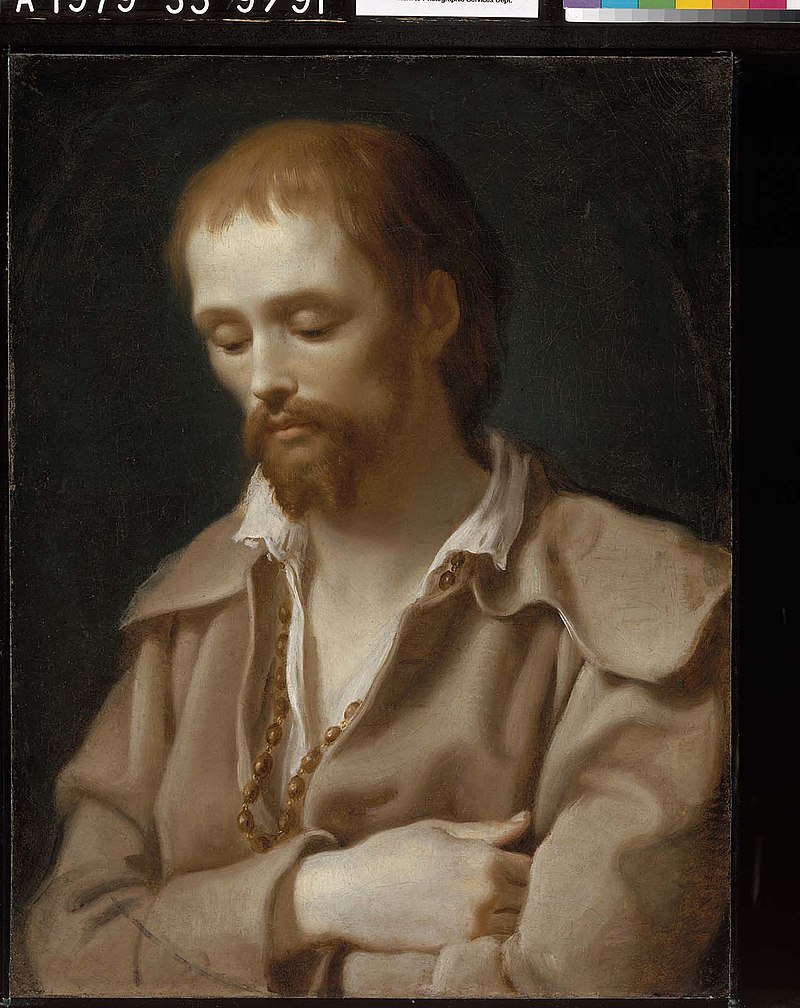
A grace-filled Holy Week to all our readers! As we await and prepare for the Resurrection about to dawn upon us, we might keep in mind two Benedicts: Pope Emeritus Benedict XVI, requiescat in pace, elected on this day in 2005; and today’s commemoration of the mystic pilgrim, Benedict Joseph Labre, who died on this[…]Continue reading→

My Name is Bernadette
April 16th is a propitious day, for besides the anniversary of Father de Valk’s death, who founded Catholic Insight in its print form decades ago, and the commemoration of the ‘two Benedicts’, mentioned in accompanying posts, today we also recall Saint Bernadette Soubirous, the young visionary to whom the Virgin Mary appeared numerous times at[…]Continue reading→
Saint Lydwina of Schiedam and Suffering Joyfully
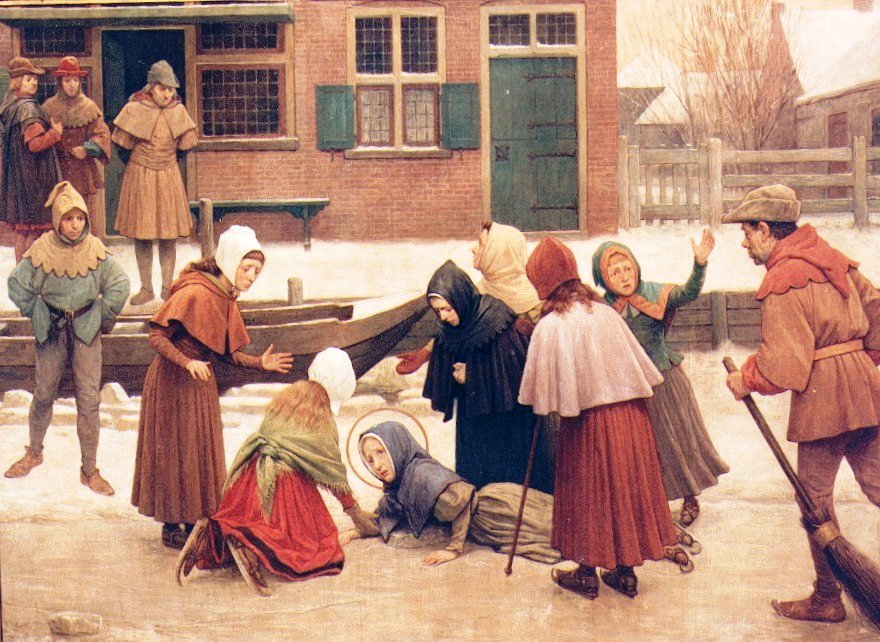
Saint Lydwina of Schiedam (1380 – 1433) was one of the countless and glorious ‘victim souls’ in the history of the Church, those whose lives are filled with suffering, often of an unimaginable intensity, but who suffer joyfully. She was a fifteen-year old Dutch girl, out skating one day, when she fell and broke one[…]Continue reading→
The Glorious Martyrdoms of Martin and Maximus
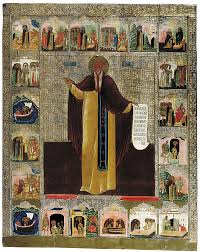
As we enter into Eastertide, we recall on this 13th of April Pope Saint Martin I (+655), one of the noblest, if most tragic, of the successors of Saint Peter. Born in Umbria, Italy, he was of noble lineage, with great intelligence combined with charity and love of the poor and the Church. While still[…]Continue reading→
Canonizing Sister Faustina and Divine Mercy
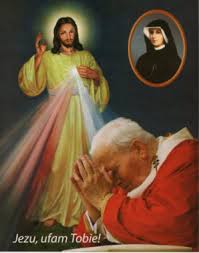
HOMILY OF THE HOLY FATHER MASS IN ST PETER’S SQUARE FOR THE CANONIZATION OF SR MARY FAUSTINA KOWALSKA Sunday, 30 April 2000 1. “Confitemini Domino quoniam bonus, quoniam in saeculum misericordia eius”; “Give thanks to the Lord for he is good; his steadfast love endures for ever” (Ps 118: 1). So the Church sings on the Octave of[…]Continue reading→

Saint Stanislaus of Szczepanów
We celebrate Saint Stanislaus today (+ April 11, 1079), in light of this Easter Octave, a bishop and martyr who accepted the episcopacy only at the direct order of Pope Alexander II. He proved a wise and courageous leader of his flock, put to death by his own king, Boleslaus, for rebuking the monarch’s ‘immoral[…]Continue reading→
Saint Gemma Galgani
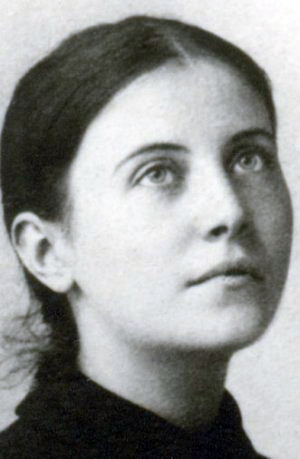
On this April 11th, in 1903 – the same year that the Italian Guiseppe Sarto was elected Pope later that summer as Pius X – a lovely, young Italian woman died, by the name of Gemma Galgani. She lived a brief life of 24 years, as did a number of other young saints, including Pier[…]Continue reading→
An Ideological and Improper Translation
I noticed something odd with the psalm reading at Mass the other day. Our bishops’ conference here in Canada has decreed that the Mass in English – Novus Ordo – use the ‘NRSV’, the ‘New Revised Standard Version’, an ‘updated’ translation of the original RSV, first published in 1952. This ‘new translation’ has the tendency[…]Continue reading→