
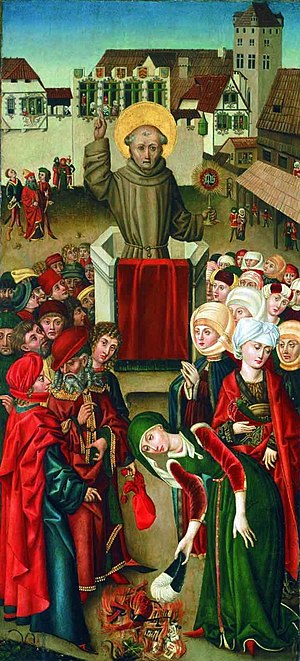
The Fightin’ Friar of Capistrano
John of Capistrano (+1456) lived a life very much in the ‘world’ at first, studying law, and becoming involved with the political machinations of the fractious fifteenth century. He was appointed as ambassador from Perugia to the quarrelsome family of the Maletestas – which, ironically, means ‘evil heads’ – to broker peace, a mission which landed him in prison.
Like his forebear, Saint Francis, this enforced time alone with his own thoughts allowed him to reflect upon his life – a salutary practice later advocated by Blaise Pascal, who claimed that the world’s problems could be solved by people just spending half an hour in alone in a quiet room (so unplug that i-phone!). John’s newly-awakened conscience opened a window to the ‘still, small voice’ of the grace of God, prompting him, suaviter et fortiter, to seek out the austerity of the Franciscan Order, which he entered on the founder’s feast day, October 4th, 1416. The zeal he had shown in lay life was doubled in his religious path, and Friar John soon became one the most fervent of friars, with his deep prayer life, rigorous asceticism, and his fiery sermons attracting such multitudes that no church could hold them. Recognizing his ability, or the grace of God working through him, the Church sent Friar John on numerous diplomatic missions, in which he was unbending in his refusal to compromise the truths of the Faith.
His life was controversial: There are claims his sermons tended, shall we say, to what we now call the ‘anti-Semitic’ (admittedly, an ambiguous term), as his condemnation of the Jewish religion went beyond what some might consider prudent boundaries; but, at least, a religious syncretic Father John was not, and a fervent supporter of the Inquisition. Also controversially, he was gung-ho in gathering together and leading troops into battle against the Ottoman Turks. Like his near contemporary Joan of Arc (+1431), Friar John did not fight, nor was he armed; his mission was to exhort the troops, and provide what spiritual ministrations were required.
Just so, he helped lift the siege of Belgrade in 1456, as the Muslim hordes, fresh from their conquering of Constantinople in 1453, attempted the conquest of Europe. The reader may listen to this talk on the incredible story of this fateful battle – with a group of inexperienced Christian men, armed primarily with the grace of God and the rightness of their cause, against a war-hardened array of Islamic warriors, trusting in the Holy Name of Jesus, which was their battle cry.
Father John was insistent that his fellow priests also not fight in any way, nor even offer material assistance, such as handing over weapons – rather, their arms and armour were to be purely spiritual, praying, hearing confessions, interceding. Few could keep up with the septuagenarian cleric, as he ran to and fro, scarcely sleeping, until, by a miracle, the Turks were routed, fleeing in disgrace.
The Holy Father ordered that the final day of victory – August 6th – be the day chosen to celebrate the Transfiguration, in honour of the miracle.
It was a few months after the strain of this endeavour, when he was already 76, that he caught the bubonic plague raging through the camp, and died on October 23rd of that year, 1456. It’s good to know that saints can be holy, yet still be ‘men of their age’, with all the limitations thereof. We could use a few more men who refuse to compromise or please, who don’t much care about being ‘liked’, and are willing to stand up for, even fight if need be, for what they believe. There is hope, then, for us all, who are mired in the maelstrom of our own fractious and unsettled time, that even if we don’t do the perfect thing, God provides for what is lacking, so long as our hearts and minds are founded in Him.
Saint John of Capistrano, ora pro nobis!
Carney’s Amoral Majority
After five defections – euphemistically described as ‘crossing the floor’ – and three by-elections, Mark Carney and his Liberals how have their coveted majority. One wonders what bowls of pottage were offered in back-room deals. In the archaic monarchical system that is the Dominion of Canada, this majority allows the newly-minted Prime Minister to rule[…]Continue reading→

Saint Kateri , Canada’s Protectress
This was the title given to Saint Kateri Tekakwitha, by Pope Benedict XVI, when he canonized her on October 28th, 2012, along with six others, in Saint Peter’ Square (she had been beatified by Pope John Paul II back in 1980). With Saint Joseph as our protector, along with the Canadian martyrs, we seem to[…]Continue reading→
A Tale of Two Benedicts
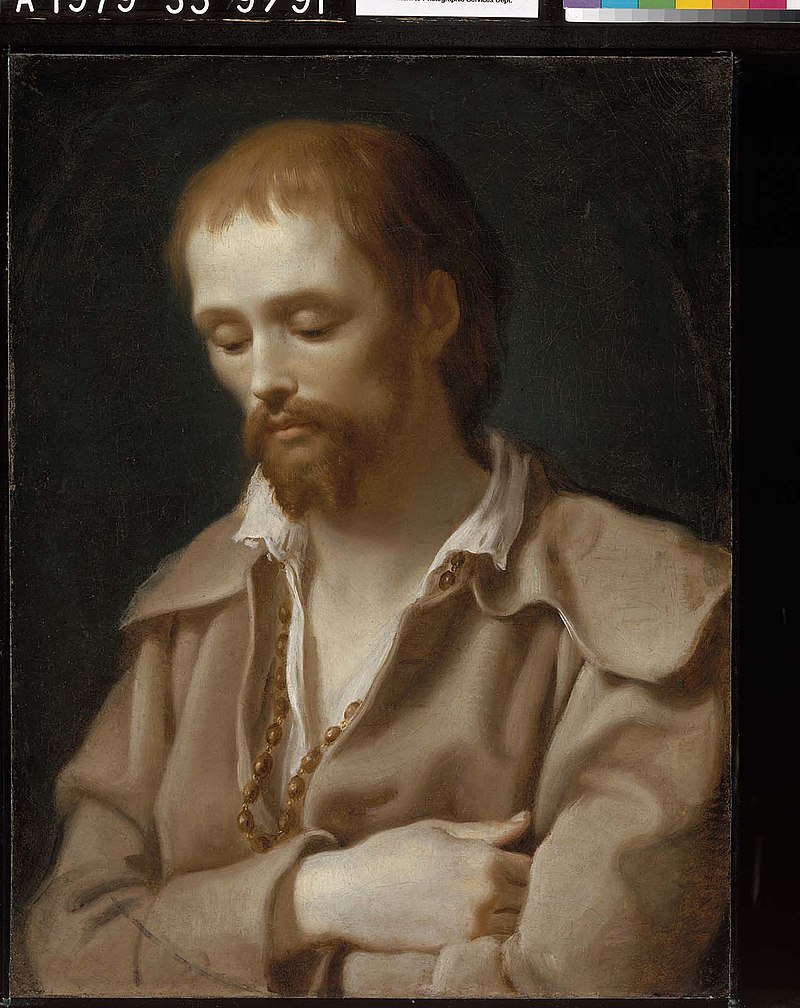
A grace-filled Holy Week to all our readers! As we await and prepare for the Resurrection about to dawn upon us, we might keep in mind two Benedicts: Pope Emeritus Benedict XVI, requiescat in pace, elected on this day in 2005; and today’s commemoration of the mystic pilgrim, Benedict Joseph Labre, who died on this[…]Continue reading→

My Name is Bernadette
April 16th is a propitious day, for besides the anniversary of Father de Valk’s death, who founded Catholic Insight in its print form decades ago, and the commemoration of the ‘two Benedicts’, mentioned in accompanying posts, today we also recall Saint Bernadette Soubirous, the young visionary to whom the Virgin Mary appeared numerous times at[…]Continue reading→
Saint Lydwina of Schiedam and Suffering Joyfully
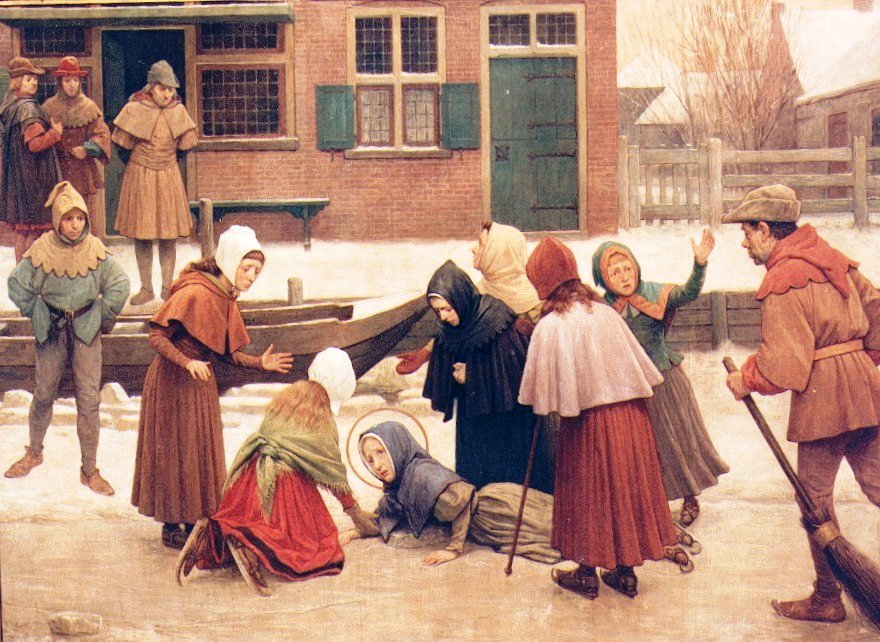
Saint Lydwina of Schiedam (1380 – 1433) was one of the countless and glorious ‘victim souls’ in the history of the Church, those whose lives are filled with suffering, often of an unimaginable intensity, but who suffer joyfully. She was a fifteen-year old Dutch girl, out skating one day, when she fell and broke one[…]Continue reading→
The Glorious Martyrdoms of Martin and Maximus
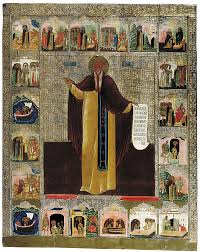
As we enter into Eastertide, we recall on this 13th of April Pope Saint Martin I (+655), one of the noblest, if most tragic, of the successors of Saint Peter. Born in Umbria, Italy, he was of noble lineage, with great intelligence combined with charity and love of the poor and the Church. While still[…]Continue reading→

Canonizing Sister Faustina and Divine Mercy
HOMILY OF THE HOLY FATHER MASS IN ST PETER’S SQUARE FOR THE CANONIZATION OF SR MARY FAUSTINA KOWALSKA Sunday, 30 April 2000 1. “Confitemini Domino quoniam bonus, quoniam in saeculum misericordia eius”; “Give thanks to the Lord for he is good; his steadfast love endures for ever” (Ps 118: 1). So the Church sings on the Octave of[…]Continue reading→

Saint Stanislaus of Szczepanów
We celebrate Saint Stanislaus today (+ April 11, 1079), in light of this Easter Octave, a bishop and martyr who accepted the episcopacy only at the direct order of Pope Alexander II. He proved a wise and courageous leader of his flock, put to death by his own king, Boleslaus, for rebuking the monarch’s ‘immoral[…]Continue reading→
Saint Gemma Galgani
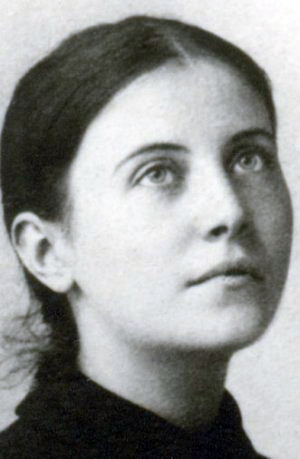
On this April 11th, in 1903 – the same year that the Italian Guiseppe Sarto was elected Pope later that summer as Pius X – a lovely, young Italian woman died, by the name of Gemma Galgani. She lived a brief life of 24 years, as did a number of other young saints, including Pier[…]Continue reading→
An Ideological and Improper Translation
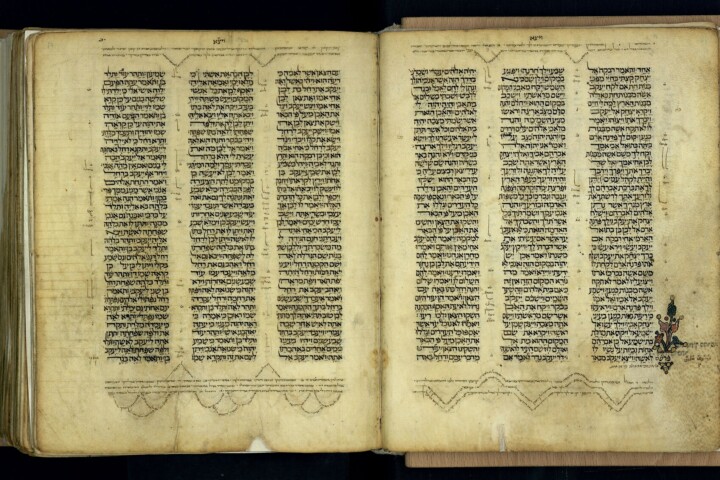
I noticed something odd with the psalm reading at Mass the other day. Our bishops’ conference here in Canada has decreed that the Mass in English – Novus Ordo – use the ‘NRSV’, the ‘New Revised Standard Version’, an ‘updated’ translation of the original RSV, first published in 1952. This ‘new translation’ has the tendency[…]Continue reading→