
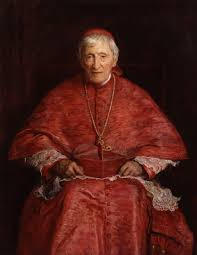
Newman the Kindly Prophet
Although John Henry Cardinal Newman died on August 11th, in 1890, the Church commemorates him on this October 9th. For it was on this day in 1845 that the former Anglican minister, halfway through his earthly journey, finally convinced of the truth, converted to the fullness of the Faith and was received into the Church by a fellow saint, Blessed Dominic Barberi.
Newman had spent years striving to find in Anglicanism a via media – a halfway house, if you will – between the low liturgy and stark beliefs of latitudinarianism (a kind of English Calvinism with stripped-down liturgy typified by Oliver Cromwell) and what many saw at the other extreme as the ‘excesses’ of Roman Catholicism. But as his keen mind delved into the early Fathers and Church history, Newman realized that the fullness of Roman Catholicism – the Mass, all the sacraments, the priesthood and hierarchy, devotion to the Mother of God and the panoply of saints, all the beauty of liturgy and chant – had been there from the very beginning. As he was to say, to delve into history is to cease to be a Protestant.
And so, he did – cease to be a Protestant, that is – and two years later, in 1847, was ordained a Catholic priest. Choosing the gentle and cultured path of Saint Philip Neri, he founded the Oratory of Saint Philp Neri in London, then in the industrial city of Birmingham, remaining superior there until his death. Hence, we find an indirect connection to the saint who shares his feast, Giovanni Leonardi, as mentioned, himself a directee of Saint Philip’s.
Newman was devoted to the truth, not only in theory, but in practice, striving to find God’s will in the hic et nunc, the here and now, a path open to each one of us:
God has created me to do him some definite service; He has committed some work to me which he has not committed to another. I have my mission; I never may know it in this life, but I shall be told it in the next. I have a part in a great work; I am a link in a chain, a bond of connection between persons. He has not created me for naught. I shall do good, I shall do His work; I shall be an angel of peace, a preacher of truth in my own place, while not intending it, if I do but keep His commandments and serve Him in my calling.
Newman’s long and full life of 89 years spanned nearly the whole Victorian era, a life impossible to encapsulate in a brief few paragraphs. He wrote some of the finest prose in the history of the English language, on a whole variety of subjects, even if a tad flourishing for our ears attuned to a less complex structure and layering. His sermons are models of clarity and piety, and still very relevant. His analysis of conversion and belief, not least his autobiographical Grammar of Assent, are masterpieces of what ‘faith’ really is. Newman valued highly his friendships; even if his sensitive soul could take offence quite easily, he was always ready to reconcile, and he has left us the treasure of a vast correspondence to personages high and low. A proficient violinist, he wrote hymns – Praise to the Holiest in the Height being prominent, even if its leap of notes require more preparation than I often have leading it at Mass – as well as novels and poetry, the text of one of the latter, the Dream of Gerontius, put to ineffable melodies by Elgar.
In 1854, he was tasked with founding a Catholic university in Dublin, Ireland, at which he laboured for a thankless five years, coming into conflict, for various reasons, with the Irish hierarchy. One of main controversies was over how Catholicism should be instantiated in the life of the college. Newman saw the university not as a lay seminary, but for the formation of ‘gentlemen’, and his thoughts on this time period comprise the basis for his famous Idea of a University, a sort of architectonic overview of what a Catholic university – the only sort of real and complete university – should aim to do:
The purpose of a liberal arts education is to open the mind, to correct it, to refine it, to enable it to know, and to digest, master, rule, and use its knowledge, to give it power over its own faculties, application, flexibility, method, critical exactness, sagacity, resource, address (and) eloquent expression.
A truly great intellect…is one which takes a connected view of old and new, past and present, far and near, and which has an insight into the influence of all these one on another; without which there is no whole, and no centre.
Newman’s prophetic and far-reaching thoughts, which some found difficult to accept at the time (as is oft the case with prophets) adumbrated many of those of the Second Vatican Council, not least his reflections on the dignity and esteem of the individual human conscience, which must give a personal account of itself before God. As he put it quite vividly: We can believe what we choose. We are answerable for what we choose to believe. Hence, we are called – indeed, duty bound – to use our wits and our reason, formed and educated as we have opportunity, to lead ourselves and others to the gates of paradise through the thickets and thorns of this life. At the close of his famous Letter to the Duke of Norfolk, he writes:
I add one remark. Certainly, if I am obliged to bring religion into after-dinner toasts (which indeed does not seem quite the thing) I shall drink—to the Pope, if you please,—still, to Conscience first, and to the Pope afterwards.
A toast with which we beleaguered Catholics might now agree more than we might once have hoped. At the same time, Newman was insistent that conscience only has rights, because it first has duties, and weighty ones at that: Woe to those who reject the truth once it has been made known to them, who choose darkness rather than light.
We may rejoice that John Henry Cardinal Newman chose the light, led kindly thereto by the God of mercy, who responds swiftly to those to who respond to Him. Newman was beatified on September 19th, 2010, by Pope Benedict XVI during his pilgrimage to Britain, and was canonized two years ago, on Sunday, October 13th, 2019, by Pope Francis in Rome.
As we celebrate this great saint, perhaps take some time to peruse Newman, his sermons, his meditations, his reflections on the Fathers, including his favorite, the indomitable Athanasius, his essays – including a four-part series on the Antichrist, perhaps fitting for our times, or his hymns, his poems, his thoughts on education. And converse with him, in accord with his own motto, cor ad cor loquitur, heart speaks to heart. For it is in the heart that a man’s true treasure is found.
Saint John Henry Newman, ora pro nobis! +

Carney’s Amoral Majority
After five defections – euphemistically described as ‘crossing the floor’ – and three by-elections, Mark Carney and his Liberals how have their coveted majority. One wonders what bowls of pottage were offered in back-room deals. In the archaic monarchical system that is the Dominion of Canada, this majority allows the newly-minted Prime Minister to rule[…]Continue reading→

Saint Kateri , Canada’s Protectress
This was the title given to Saint Kateri Tekakwitha, by Pope Benedict XVI, when he canonized her on October 28th, 2012, along with six others, in Saint Peter’ Square (she had been beatified by Pope John Paul II back in 1980). With Saint Joseph as our protector, along with the Canadian martyrs, we seem to[…]Continue reading→

A Tale of Two Benedicts
A grace-filled Holy Week to all our readers! As we await and prepare for the Resurrection about to dawn upon us, we might keep in mind two Benedicts: Pope Emeritus Benedict XVI, requiescat in pace, elected on this day in 2005; and today’s commemoration of the mystic pilgrim, Benedict Joseph Labre, who died on this[…]Continue reading→

My Name is Bernadette
April 16th is a propitious day, for besides the anniversary of Father de Valk’s death, who founded Catholic Insight in its print form decades ago, and the commemoration of the ‘two Benedicts’, mentioned in accompanying posts, today we also recall Saint Bernadette Soubirous, the young visionary to whom the Virgin Mary appeared numerous times at[…]Continue reading→

Saint Lydwina of Schiedam and Suffering Joyfully
Saint Lydwina of Schiedam (1380 – 1433) was one of the countless and glorious ‘victim souls’ in the history of the Church, those whose lives are filled with suffering, often of an unimaginable intensity, but who suffer joyfully. She was a fifteen-year old Dutch girl, out skating one day, when she fell and broke one[…]Continue reading→

The Glorious Martyrdoms of Martin and Maximus
As we enter into Eastertide, we recall on this 13th of April Pope Saint Martin I (+655), one of the noblest, if most tragic, of the successors of Saint Peter. Born in Umbria, Italy, he was of noble lineage, with great intelligence combined with charity and love of the poor and the Church. While still[…]Continue reading→

Canonizing Sister Faustina and Divine Mercy
HOMILY OF THE HOLY FATHER MASS IN ST PETER’S SQUARE FOR THE CANONIZATION OF SR MARY FAUSTINA KOWALSKA Sunday, 30 April 2000 1. “Confitemini Domino quoniam bonus, quoniam in saeculum misericordia eius”; “Give thanks to the Lord for he is good; his steadfast love endures for ever” (Ps 118: 1). So the Church sings on the Octave of[…]Continue reading→

Saint Stanislaus of Szczepanów
We celebrate Saint Stanislaus today (+ April 11, 1079), in light of this Easter Octave, a bishop and martyr who accepted the episcopacy only at the direct order of Pope Alexander II. He proved a wise and courageous leader of his flock, put to death by his own king, Boleslaus, for rebuking the monarch’s ‘immoral[…]Continue reading→
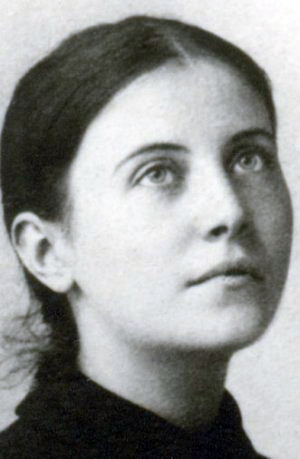
Saint Gemma Galgani
On this April 11th, in 1903 – the same year that the Italian Guiseppe Sarto was elected Pope later that summer as Pius X – a lovely, young Italian woman died, by the name of Gemma Galgani. She lived a brief life of 24 years, as did a number of other young saints, including Pier[…]Continue reading→
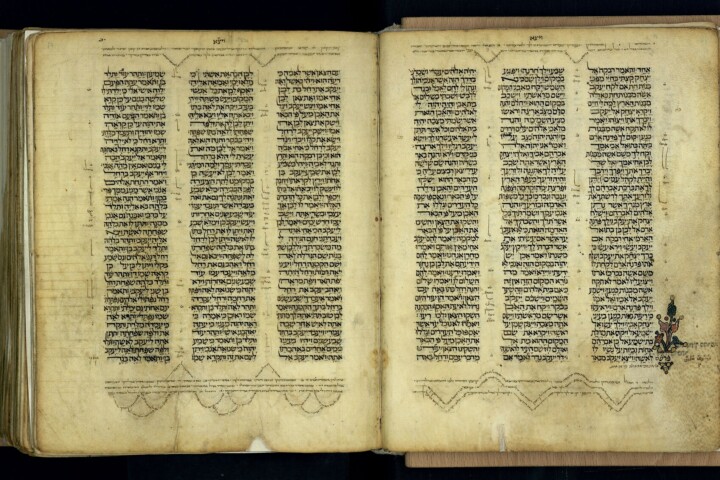
An Ideological and Improper Translation
I noticed something odd with the psalm reading at Mass the other day. Our bishops’ conference here in Canada has decreed that the Mass in English – Novus Ordo – use the ‘NRSV’, the ‘New Revised Standard Version’, an ‘updated’ translation of the original RSV, first published in 1952. This ‘new translation’ has the tendency[…]Continue reading→